


This week's summary covers the main events that took place from Friday 11 Jumada al-Akhira to Friday 18 Jumada al-Akhira 1446 AH in the Muslim world.
Palestine
Gaza Strip
The Gaza Health Ministry announced that the toll of the Israeli aggression has risen to 45,129 martyrs and 107,338 injuries since 7 October 2023.
Among the Israeli massacres this week:
- The occupation committed two massacres in the Strip, claiming 55 martyrs -as we count them- and 170 injured within 24 hours.
- Gaza Health Ministry: the occupation committed 5 massacres in Gaza, from which 46 martyrs and 135 injured reached hospitals within 24 hours.
- More than 50 martyrs within 24 hours, and the targeting of 4 schools sheltering displaced people.
- The occupation committed 7 massacres in the Strip, from which 52 martyrs and 203 injured reached hospitals within 24 hours.
- The Israeli occupation is committing 4 massacres against families in the Gaza Strip, from which 32 martyrs and 94 injuries reached hospitals within 24 hours.
The Director General of the Gaza Health Ministry said: 1,151 martyrs from the Strip's medical staff, including more than 165 doctors, have been killed as a result of the Israeli aggression since 7 October 2023. The occupation has arrested 350 medical staff in the Strip since 7 October 2023, and 3 of them were martyred inside occupation prisons.
The director of Al-Aqsa Martyrs Hospital said last Friday: Most of the injuries among those hurt in the Nuseirat massacre are severe, and some had their limbs amputated as a result of the shelling, and 45 martyrs in central Gaza within 24 hours.
The Gaza Health Ministry stated that Israeli army forces completely destroyed the Abu Shabak Health Center in Jabalia al-Balad. The center provides third-level primary care services and includes a community mental health center.
The spokesperson for the Gaza Civil Defence said that the bodies of the martyrs were completely charred at the Khalil Awida school in Beit Hanoun, and that more than 40 martyrs -as we count them- were killed in a massacre inside the Khalil Awida school in Beit Hanoun.
The Israeli army burned dozens of homes in the Khulafa area of the Jabalia camp in northern Gaza.
The director of the field hospitals at the Gaza Health Ministry said the situation is catastrophic, the hospitals are full of the wounded and injured, there are no specialist doctors, no services, no medicines, and no medical supplies, and our patients are dying because medicines are unavailable and oxygen has run out.
Also, the mayor of Deir al-Balah, engineer Diyab al-Jaru, was martyred -as we count him- in an Israeli strike that targeted the municipality building in central Gaza.
Released Gaza prisoners reveal what they were subjected to inside Israeli occupation prisons
On Thursday, the Israeli army released 43 Palestinians whom it had detained in Gaza at various times during its military operations, within the continuing genocide on the Strip since 22 Rabi al-Awwal 1445 AH (7 October 2023).
The Palestinian "Prisoners' Media Office" stated in its statement that "a number of the prisoners released by the Israeli army arrived at the European Gaza Hospital in Khan Younis in the south of the Strip," via buses belonging to the International Committee of the Red Cross.
One of those released said, "The conditions were very difficult, and I suffer from pain all over my body, due to constant beating and frequent transfers from one prison to another."
Another, speaking about the conduct of occupation soldiers during the period of captivity, said, "Severe beating, insults against my mother and wife, with little food, and beating during transfer from one prison to another. Injustice is injustice, and there is no power or strength except with God," according to news agencies.


The photojournalist Shadi al-Salfiti and Wasim al-Shawa were martyred -as we count them- and others were injured in an occupation strike in central Gaza City. Photographer Abdulrahman al-Qassas -as we count him- of Palestine University was martyred and remained missing under the rubble for a period. Journalist Muhammad Jabr al-Qreinawi, his wife and children were also martyred due to the occupation's bombing of his home in the Bureij camp in central Gaza.
The Gazan child Rafeef Abu Taleb, who had cancer in the head due to the closure of crossings and the unavailability of treatment, was also martyred. Her father had previously appealed for her treatment to be expedited abroad.
The Civil Defence announced the martyrdom of fire officer Suhaib Sami al-Yazji -as we count him- during the Israeli army's shelling of a group of citizens in the Beit Lahia project area in northern Gaza.
The physician at al-Mamadani Hospital, Abdullah Habib -as we count him- was martyred in an occupation raid on the al-Darraj neighborhood in Gaza City.
The physician at Kamal Adwan Hospital, Ashraf Matar, bids farewell to his children and family after they were martyred -as we count them- following an occupation strike on Al-Nafaq Street in Gaza City.


Sheikh Khaled Nabhan -as we count him- who became known for the phrase "the soul of the soul," was martyred in the occupation's bombing of the Nuseirat camp in central Gaza Strip.

"He showed me what true faith is. God guided me to Islam through this man." A Christian announces his conversion to Islam, influenced by the martyrdom of Sheikh Khaled Nabhan -as we count him-
In another message: "Thanks to you I discovered Islam, and thanks to you I embraced Islam in June. Today is a very sad day for me; I had hoped to meet you and embrace you one day. It did not happen that way… but we will meet again. May God accept you in the highest ranks of Paradise."
Administration of Kamal Adwan Hospital in northern Gaza:
- The situation at the hospital and its surroundings is catastrophic and tragic, as a result of the continued targeting and siege by the occupation.
- Medical teams are unable to recover the martyrs and wounded from the hospital gate and its surroundings to save them.
- Serious damage was inflicted on the hospital due to explosions of booby-trapped robots in its vicinity.
- Occupation drones continue to shell the hospital without pause.
- The hospital faces an imminent catastrophe due to the depletion of flour, with insufficient aid entering, whether medical or food.
The occupation army arrested the men at the Khalil Awida school in Beit Hanoun and forced the women and children to displace by force.
A martyr one day after his birth.
"The man's head flew off and we have not found it until now": testimonies of survivors of the massacre committed by the occupation at the Hamad bin Abdulaziz school affiliated with UNRWA.
Entire families burned after occupation forces committed a massacre by targeting a school over the heads of displaced people.
Bodies of martyrs -as we count them- charred from occupation aircraft shelling a house adjacent to the Jabalia bus station in the al-Darraj neighborhood of central Gaza City.
"There were 19 people in the house and only two came out".. A survivor of the al-Tabatibi family massacre inspects the martyrs of his family, among them his children.

Palestinian Central Bureau of Statistics: a sharp rise in the cost-of-living index by 490% in the Gaza Strip, amid the continuing war of extermination.
The UNRWA Commissioner-General said: "We do not have enough words to describe the situation in Gaza. Those who return from there describe the environment as resembling a post-apocalyptic world, where people live amid garbage, sewage and rubble, struggling every day against death, hunger and disease."
On 27 Jumada al-Ula (29 November), Dr. Ahmed Ziad al-Kahlout -as we count him- was martyred by a direct strike from a quadcopter drone while on his way to work at Kamal Adwan Hospital, and today his family is being erased from the civil registry.
In a massacre against residents in the Lahia project at dawn today, the occupation targeted a house sheltering displaced people from the al-Kahlout and al-Mafluh families, and more than 15 martyrs -as we count them- were killed, and they cannot be recovered due to the army's incursion into the area.
Last week, 25 Palestinians from the al-Kahlout family were martyred by the occupation's bombing of their home in Izbet Beit Hanoun, and they were buried in a mass grave.
After his release following 20 years of imprisonment in American prisons on charges of financing Palestinian resistance, Mufid Mashal, brother of Hamas leader Khaled Mashal, says, "These [Americans], no matter what they do, will remain dwarves."

The Al-Qassam Brigades published: "We do not surrender; we win or we die," with an image from the Falluja ambush it carried out against trucks and military vehicles west of the Jabalia camp some days ago.
Al-Qassam Brigades:
- We finished off 3 soldiers at point-blank range in a clash with a Zionist force west of the Jabalia camp, and helicopters were seen evacuating the dead.
- We succeeded in detonating a booby-trapped house on a Zionist force of 11 soldiers, inflicting casualties among them, killed and wounded, in the middle of the Jabalia camp.
- One of our mujahideen finished off a Zionist soldier beside a "Merkava" tank, seized his weapon, and threw two hand grenades inside the tank west of Beit Lahia city in northern Gaza Strip.
- Our mujahideen finished off 5 Zionist soldiers at point-blank range near al-Khulafa Mosque in the middle of the Jabalia camp in northern Gaza Strip.
Palestinian prisoner institutions said: Detainees held in the newly established Israeli "Menashe" camp have for days been carrying out protest steps, and when they appeared before the court via video conference, they informed their lawyers that they had begun a hunger strike in protest against the harsh and difficult detention conditions they face.
Menashe detention camp, north of the occupied West Bank, is one of several camps the occupation has established in light of the escalating arrest campaigns in the West Bank since the start of the war of extermination. It is located near Salem camp and holds about 100 detainees.
The Red Cross also reported the martyrdom of prisoner Muhammad Anwar Labad Abu Ramzi -as we count him- a resident of the Jabalia camp in northern Gaza Strip, as a result of torture in occupation prisons.
The West Bank and Jerusalem
Former Israeli Defense Minister Yoav Gallant said: Control of the West Bank is a security and strategic necessity for Israel's existence. Supporting settlements and preventing illegal construction is necessary to maintain Israel's security and sovereignty.
A group of resistance fighters targeted an occupation vehicle with an explosive device, disabling it in the Balata camp.
Clashes between the "Palestinian Authority" and resistance fighters in the Jenin camp
Violent clashes erupted this week between Authority security forces and fighters of the Jenin Brigade and residents. So far, they have resulted in the martyrdom of a fighter from the Saraya al-Quds -as we count him- and a boy aged 13.
The fighter wanted by the occupation and a leader of the Jenin Brigade, Yazid Jaayisa -as we count him- according to Israel's Channel 12, Yazid was wanted by "Israel," and had previously carried out a number of attacks against the Israeli occupation army after 7 October 2023.

As for the boy Muhammad Imad al-Amer, his father said: when my son Muhammad was executed, my other son Lu'ay, the disabled one with crutches, "has been injured for a year, and his entire leg is made of platinum," tried to rescue his brother, the martyr Muhammad, and a sniper of the Authority fired at Lu'ay as well, while he lies in Ibn Sina Hospital.

Several injuries also occurred among residents in the Jenin camp from the fire of Palestinian Authority forces that attempted to storm the camp. This led to violent clashes between the resistance and Authority forces in the Tulkarm camp as well.
The security services of the "Palestinian" Authority declared the area around al-Amal Hospital in Jenin a closed military zone and asked journalists to leave. Authority forces targeted the electricity transformer and disabled it after the electricity company had repaired it several times in recent days.
The spokesperson for the "Palestinian Authority" security forces, Anwar Rajab, said on 13 Jumada al-Akhira (14 December): "We launched the penultimate stage of the 'Protecting the Homeland' operation in the Jenin camp at five o'clock in the morning."
The Prime Minister of the Palestinian Authority, Muhammad Mustafa, said that the Jenin camp belongs to us and we do not want anyone to kidnap it, and there are those who want to sabotage… enough patience and enough wisdom, and instructions have been issued by the President to rescue Jenin and rescue the homeland.
An official in the Palestinian Authority told Israel's Channel i24: Abu Mazen directed the Palestinian security forces to take control of the Jenin camp "at any cost."
The newspaper "Yedioth Ahronoth" quoted officials in the "Palestinian" Authority: we must remove the cells of Hamas and Islamic Jihad from among us. The newspaper also reported:
- The Israeli security establishment is acting in accordance with the decision of the "Cabinet" and is working to stabilize the Palestinian Authority from the standpoint of Israeli security interests, and is following closely what is currently taking place.
- The security services are operating on the "Nablus model," which was spoken of by the head of the civil administration of the Israeli occupation army, meaning the entry of Authority security services into areas that the occupation army had stormed and in which it had weakened the resistance's infrastructure.
- There is an official Israeli decision to maintain the stability of the Palestinian Authority and prevent its collapse.
Palestinian youths closed the main street at the entrance of the Nur Shams camp in Tulkarm in protest against the continuation of the military operation by Authority security services against the resistance in Jenin and its camp.
Palestinian security forces fired tear gas canisters at a march organized by mothers of martyrs in the Jenin camp. The Hebrew website "Walla" quoted a Palestinian source: the Jenin operation is a moment of victory or failure for the Palestinian Authority.
The spokesperson for the Jenin Brigade said to the Palestinian Authority: We will not hand over the weapons of the resistance. Who will protect our homes if we surrender ourselves and our weapons?! Protect us from the settlers and the occupation and expel them from Palestine, and then we will present you with our rifles.
The website "Axios" quoted officials: President Abbas ordered the commanders of the Authority's security services to launch the operation to take control of Jenin and its camp, and some of them expressed reservations, so he told them: whoever disobeys orders will be dismissed.
The spokesperson for the Palestinian Authority security forces, Anwar Rajab, said: I reject the use of the term clashes between the resistance and the security services, because these are not resistance fighters but a band of outlaws, mercenaries and hirelings who have sold themselves to suspicious and non-national agendas that intersect with regional projects and with the statements of the occupation.
The Palestinian Authority's security services arrested the young man "Walaa Habroun" from the new Askar camp east of Nablus in the occupied northern West Bank.
The suffering of the residents of the Jenin camp due to power and water outages, coinciding with the continued siege of the camp and the continuing clashes between Authority security services and the resistance.

Earlier material, months ago: the "Vinzel" security plan, the Palestinian Authority's course to eliminate the resistance in the West Bank.
The prisoner Muhammad al-Bahri from the city of Qalqilya was released after an arrest lasting 10 years in occupation prisons.
The two young men -as we count them- Diaa Salmi and Muhammad al-Ashqar were martyred after the occupation opened fire on them near the Separation Wall in the city of Qalqilya in the West Bank.
The occupation army killed the unborn child Janin in her mother's womb from the town of Nahhalin west of Bethlehem, after an occupation checkpoint at the entrance to the town obstructed her arrival at the hospital.
A resistance fighter opened fire and hit the vehicle of an Israeli army reservist as he headed to an outpost near the "Ariel" settlement north of Salfit in the West Bank, and the perpetrator withdrew from the area. A correspondent for Israel's Channel 14 said: the perpetrator of the Salfit operation was wearing a helmet and military vest, and fired from a distance of 5 meters at the Israeli vehicle and hit it near the "Ariel" settlement, but no human casualties occurred, and the perpetrator withdrew from the area.

The occupation issued a demolition order against a third mosque within one month in occupied Jerusalem, as part of its ongoing war on mosques. The occupation demolished 8 homes and reduced them to rubble in Anata and Silwan in occupied Jerusalem.
Settlers also set fire to parts of the Birr al-Walidain mosque and painted anti-Palestinian slogans in the town of Marda, Salfit district.
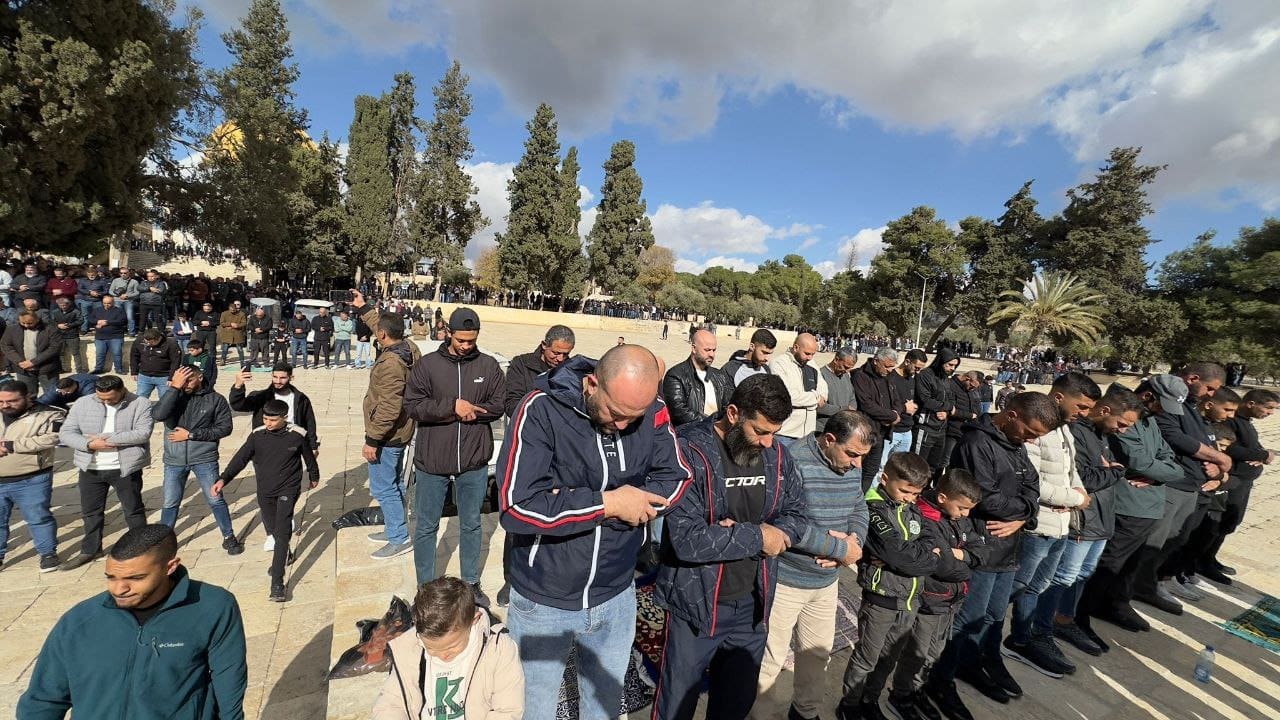
50,000 worshippers performed Friday prayers at al-Aqsa Mosque.


The Palestinian Authority's security services in Nablus arrested the freed prisoner and wanted man "Asid al-Khurraz" and assaulted him severely.
They also arrested the head of the student council of An-Najah National University, Amr Qawariq, and the medical student Muhammad Shantour, from their university residence, after they organized a seminar on the Al-Aqsa Flood, and assaulted them.
Syria
Celebrations spread across Syrian cities on the first Friday after the fall of the criminal regime.
The first Friday prayer after liberation was held at the Umayyad Mosque in Damascus, led by the head of the interim government, Mohammed al-Bashir.
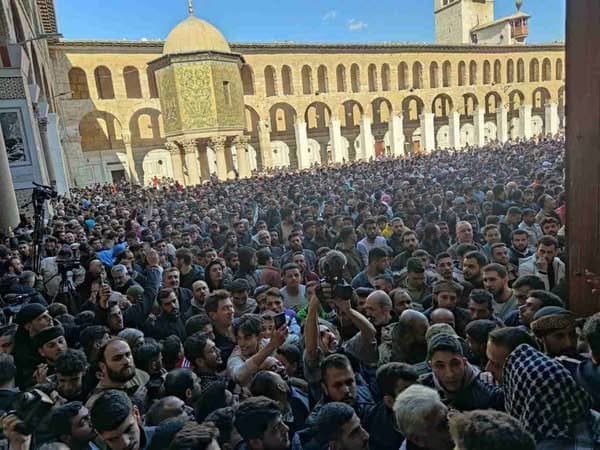
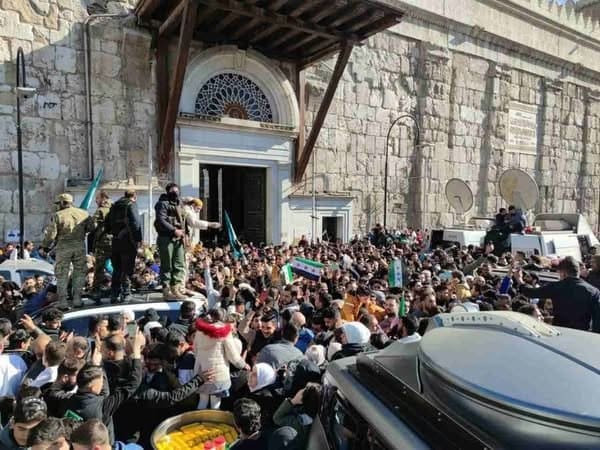
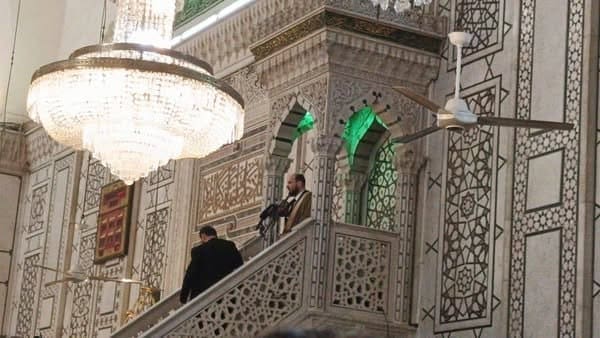
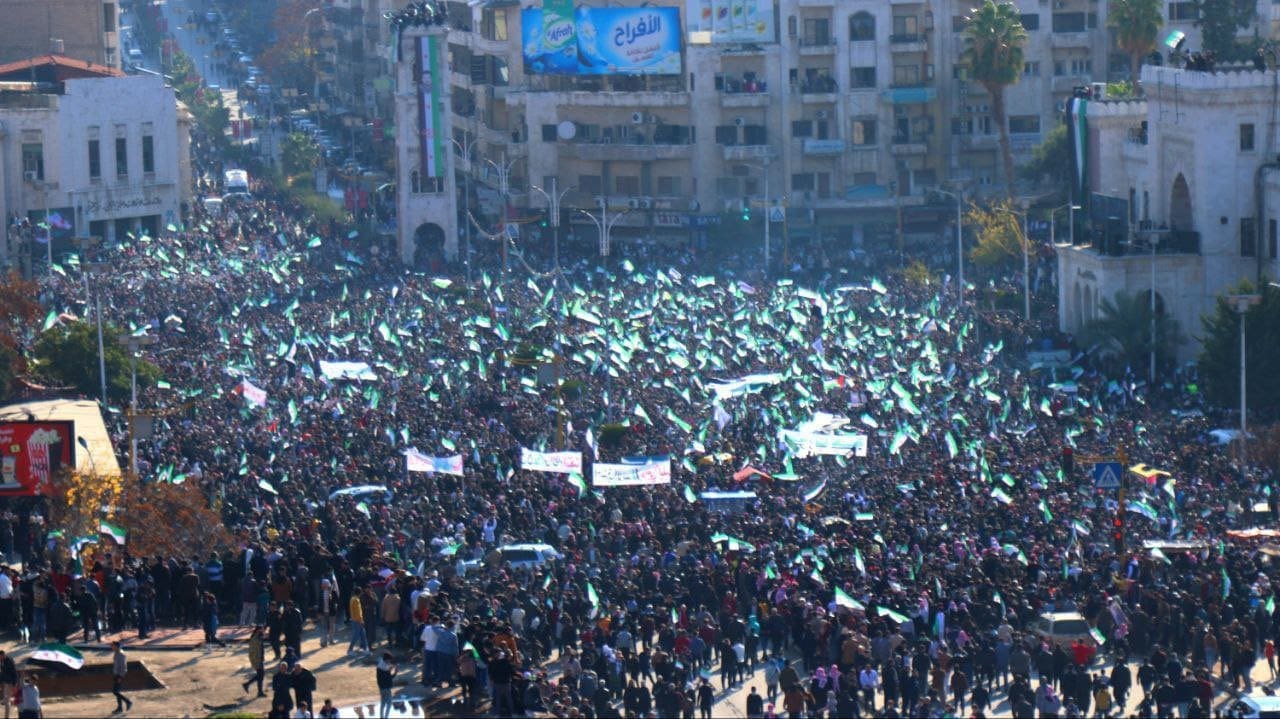
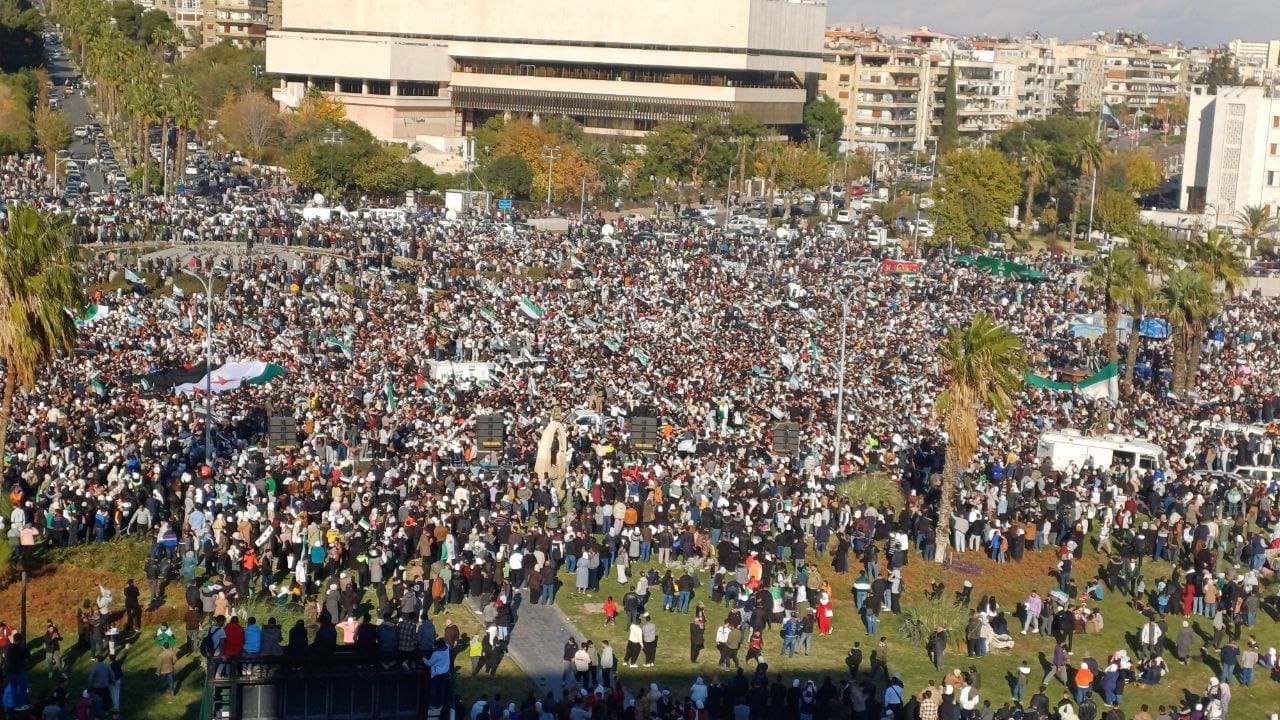
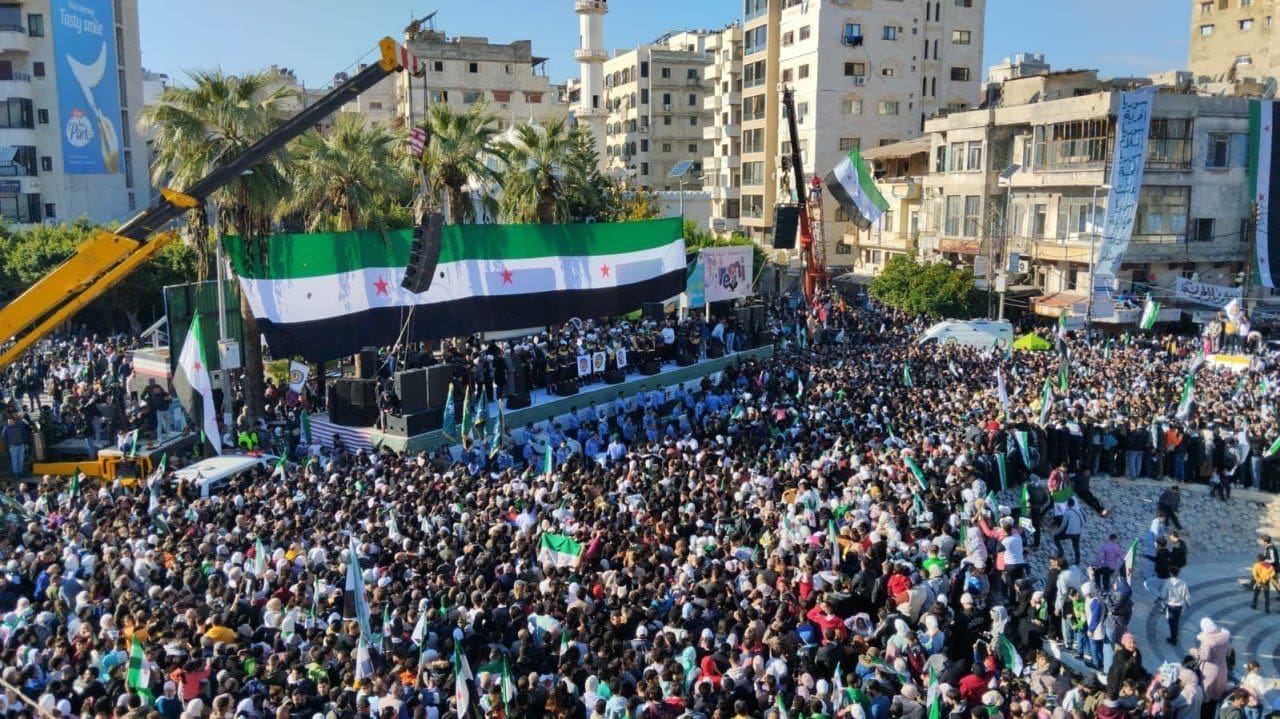
Images from various Syrian cities on the first Friday.
"Labbayka ya Allah.. Allahu Akbar" from Umayyad Square in Damascus.
The name of the Khomeini Mosque in Sayyida Zeinab was removed and replaced with the name of Sayyida Aisha, may God be pleased with her, in Damascus.
Students returned to their schools and universities in the Syrian capital, Damascus, in the early morning hours of Sunday, after the new Syrian authorities announced the resumption of classes following the overthrow of the regime of Bashar al-Assad.
Military Operations Command forces also took control of the town of Mu'dan in the eastern countryside of Raqqa.
The Civil Defence announced the death of 6 civilians, including 3 children from the same family, from the village of al-Rahiyya in the eastern countryside of Hama, due to the explosion of a landmine left over from the criminal regime. A child was also killed and another person injured yesterday by artillery shelling by the SDF near the Tishreen Dam in the countryside of Manbij.
A civilian was killed and another injured today, Thursday, when a landmine exploded under a vehicle they were riding in, in the Bashmura area in the countryside of northern Aleppo, #Syria.
The "Syrian Civil Defence" documented the deaths of 20 civilians, including eight children and a woman, and the injury of nine others, from explosions of war remnants and landmines in Syria since the 27th of last month through Thursday, calling on residents not to return to areas where clearance and removal operations have not been completed.
The Civil Defence warned that war remnants and landmines threaten the lives of civilians and impose a difficult reality that prevents displaced people from returning to their homes and working their farms.
The International Organization for Migration said: during the past week, 250,000 Syrians returned to their homes, including 100,000 who had been living outside the country.
Ahmed al-Sharaa said: Syrian nationality will be withdrawn from all those whom the regime naturalised on a sectarian basis, and their real estate property will be reviewed and returned to its rightful owners from whom it was seized by force and intimidation.
He said that a new currency will be issued in Syria after the current currency stabilises and improves in value. There will be no compulsory conscription in Syria, and raising salaries by 400% is under study. He added that all factions will be dissolved and there will be no weapons except in the hands of the state. He said the first priority is rebuilding destroyed homes and returning the displaced until the last tent.
He added that the foreign fighters who fought alongside us deserve reward, their numbers are not very large, and many countries in the world grant citizenship to those who live on their territory for 5 years, and we will study that.
A statement from the head of an organisation said:
- The entire Saydnaya prison building has been inspected and there are no living people in it.
- Our teams confirmed that there are no prisons or secret cellars inside the Saydnaya prison building.
- We are investigating the possibility of mass graves in the vicinity of Saydnaya prison.
The first train carrying fuel oil departed from the Khirbet station to Aleppo to supply the Rudwaniyya power station.
Notables of Quneitra Governorate announced their rejection of the ambitions of the "Israeli" occupation in Syrian territory and its forcing of residents of a number of villages to evacuate them.
Military Operations Command carried out a campaign of arrests targeting former army officers in the city of Jableh.
Turkish Interior Minister Ali Yerlikaya also announced on Sunday the return of more than 7,600 Syrians to their country via the Turkish border, in the five days following the fall of the ousted president Bashar al-Assad's regime. Yerlikaya said in a post on the "X" platform that the total number of Syrians "who returned voluntarily from Turkey" between 9 and 13 December reached 7,621 people.
In a painful incident: the Saydnaya Prisoners' League found a mass grave containing approximately 6,000 bodies located on the Northern Ring Road in Damascus.
Mass graves in Syria
Human Rights Watch said the case of a mass grave in Damascus and testimonies from people living in the surrounding area indicate that the area is a mass crime scene and may have been the site of summary executions.
Human Rights Watch visited the site in the Tadamon neighbourhood south of Damascus on 11 and 12 December 2024, and found large numbers of human remains at the site of a massacre that took place in April 2013 and others scattered throughout the surrounding neighbourhood.
Residents of the Tadamon neighbourhood said executions were common in the area. In interviews conducted in 2022, they described at least 10 other incidents of summary killings between August 2012 and January 2014 in Tadamon, Daraya, Moadamiyet al-Sham, and the surrounding areas. This evidence indicates that other bodies were buried in and around the area. The area was also the scene of armed clashes between Syrian government forces and opposition fighters affiliated with the "Free Syrian Army" at several points between 2012 and 2013.
The head of a Syrian human rights organisation based in the United States also said on Monday that a mass grave outside Damascus contains the bodies of no fewer than 100,000 people killed by the government of the ousted president Bashar al-Assad.
Mustafa, head of the Syrian Emergency Task Force, said that "one hundred thousand is the most conservative estimate" of the number of bodies buried at the site. He added: "It is a very conservative estimate, and almost unfair."
Mustafa said: "We have been able to speak to the people who worked in these mass graves and who fled Syria on their own or whom we helped to escape."
His group spoke to bulldozer drivers who were forced to dig the graves, and he said they "often, on orders, crushed the bodies to fit their size and then covered them with soil."
Director of the Syrian Emergency Organisation:
We have begun collecting samples from the Qutayfa cemetery north of Damascus, where tens of thousands of detainees' bodies are estimated to be.
The witness "gravedigger" revealed in 2021 the cemetery where the Assad regime began burying the bodies of detainees between 2012 and 2018.
The workers who did the digging, whom we helped escape years ago and who gave their testimonies, today provided details about burial sites.
The Qutayfa cemetery contains trenches 6-7 metres deep, 50-150 metres long and 3-4 metres wide.
The digging workers confirmed that 4 trucks transported bodies twice a week, and each vehicle carried 100 bodies, meaning that 800 bodies were buried weekly over 7 years.
The "Israeli" occupation carried out more than 17 raids on missile depots of the Syrian army of the ousted regime in Qalamoun.
The Hamdaniyah stadium in the city of Aleppo was also burned by remnants of the ousted Assad regime.

A statement from the people of Raqqa, the first governorate capital to be liberated in 2013, whose people today suffer under the occupation of the "Qandil" gangs.
The SDF militia also opened fire on protesters in Maskanah, and a number of martyrs — as we count them — and several wounded were killed days ago.
Study reveals the impact of Syrians' departure on the German economy
A study published last Friday revealed that the return of Syrian refugees from Germany to their country could exacerbate the labour shortage crisis in vital sectors, particularly health, transport and logistics.
The Syrian community in Germany — which includes about one million people, most of them refugees who fled the war since 2015 — is the largest gathering of Syrians in the European Union.
The study issued by the Institute for Employment Research explained that Syrian refugees "work in sectors suffering from a labour shortage and of great importance, such as health, transport and logistics" in the largest European economy, which faces a structural shortage of the workforce.
The study warned that the return of these workers to Syria "may not have an impact at the macroeconomic level, but it may leave very tangible effects at the regional and sectoral level," according to news agencies.
The "Caesar Families" League warns detainees and their families of behaviours that could lead to their deaths
The "Caesar Families League" provided a set of tips and recommendations to the families of former Syrian detainees on how to deal with them after years of detention, torture and scarce food in the prisons of the ousted regime.
The League said in a post on Thursday that the health of survivors of detention is "an urgent humanitarian issue," noting that "torture and neglect leave serious effects on their bodies, including chronic diseases."
Through a series of recommendations, the League warned that feeding freed detainees indiscriminately could lead to their deaths.
It explained: "Surviving detainees are likely to suffer severe malnutrition, so indiscriminately introducing food may cause metabolic disorders that in some cases may be fatal," noting that these disorders typically appear 3 days after feeding begins.
The League also warned that former detainees may be infected with scabies, and therefore recommended washing all their belongings at a high temperature for 3 days, and trying to stay away from the infected person until they recover, as Al Jazeera Mubasher reported.
A detainee describes the horrors of torture he endured in the Latakia and Saydnaya prisons
Amjad Shaker al-Masri, from the southern countryside of Idlib, described the horrors he experienced in the Latakia prison, then in Saydnaya prison in the countryside of Damascus, until he was freed after the fall of the regime of the ousted president Bashar al-Assad.
Al-Masri told Al Jazeera Mubasher that he was arrested at the Political Security branch in Latakia in 2016, then transferred to a prison in the same city, where he was placed in an underground cellar in which he could see nothing, in a solitary cell numbered two, and remained there for 6 months.
He went on to describe his experience in the Political Security prison in Latakia, saying: "I witnessed all forms of torture in the prison, from beating to electric shock and threats of killing. I was a prisoner with almost no food, and in severe cold without any covering at all, in a situation close to death."
The torture continued after he was transferred to Saydnaya prison in the countryside of Damascus, to a degree he described, saying: "We never expected, while in Saydnaya prison, to leave it one day except by the command of God, the Glorified and Exalted."
He continued: "It was forbidden for us to know the names of the other prisoners, and we were treated as numbers, not as human beings," adding: "They called me by my number, took me by my number, and returned me by my number."
Fadel Abdul Ghany, head of the Syrian Network for Human Rights, also confirmed that the Syrian regime had more than 136,000 people, among detainees and the forcibly disappeared, although the number of prisoners who were released was much lower than this figure.
He added: "We have a fairly accurate approximate picture that only around 31,000 were freed, and therefore there are around 105,000 detainees and disappeared."
Abdul Ghany continued: "Most of them were killed. As director of the Syrian Network for Human Rights, we have death records for thousands who were killed, and we have other evidence too from the civil registry, data on the forcibly disappeared, and data from families, and we have informed hundreds of families that these people were killed."

From the archive: Rania al-Abbasi, her husband and their six children
Among the best-known stories of detainees in the regime's prisons: the Baathist regime detained them since 2013 and their fate is still unknown, like thousands of other victims. The youngest child in the photo (two years old at the time of arrest). The charge: helping and treating injured civilians whom the criminal bombed.
A scandal involving the SOS (branch) Syria organisation, which claims to care for children and provide humanitarian assistance, but appears to be violating that.
In videos that spread, in which Dr. Rania's brother speaks about the kidnapping of children by Bashar's shabiha in 1435 AH (2013 AD), and asserts that the organisation hides these children, does not hand them over to their families, and changes their names.
It is also said that it hands some children over to Christian families in Europe. The general director is Samer Khaddam, and his deputy is Abdul Qader Niama.
For the first time, congregational prayer at the universities of Damascus and Khalid bin al-Walid in Homs, with severe overcrowding, which was an offence deserving punishment and pursuit under the rule of the ousted Assad regime.
After the fall of Assad... what does the economic situation in Syria look like?
About a week after the fall of the Assad regime, and the entry of the Military Operations Command into Syrian governorates and its assumption of power in Damascus and the appointment of a caretaker government, markets and cities saw a near-normal return, with weak purchasing activity in some areas and rises in others.
Transactions in the markets are still carried out using various currencies: "the Syrian pound, the US dollar and the Turkish lira."
The Minister of Economy in the caretaker government, Bassel Abdulaziz, stated in remarks to Al Jazeera Mubasher that the use of various currencies is still available to residents and no decision has been issued regarding it.
Abdulaziz said the government's current policy is to intervene to stabilise the exchange rate, pointing to a state of popular relief as a result of getting rid of the tolls and taxes imposed by the Assad government previously, which led to increased economic activity in the markets, which in turn led to increased demand for the Syrian pound and an improvement in its value.

Prices of food supplies in the city of Aleppo between last week and today.

Prices of vegetables and fruit in the city of Aleppo between last week and today.
In front of the Republican Guard headquarters in Damascus.
A former prisoner tells of the secret Qur'an circles in Tadmur prison.
"For the first time we pray standing.. the young men pray and their tears are flowing." One of the detainees who was freed from Saydnaya.


Documents mentioning banned books in the era of the ousted regime in Syria.

An official document issued by Saydnaya military prison dated 8 Rabi' al-Thani 1441 AH (5-12-2019 AD), bearing number 4709, containing an administrative order from the director of the First Military Prison ordering the execution of death sentences against a number of detainees inside the prison.
The document refers to the assignment of a non-commissioned officer to blindfold those detained before execution begins, with emphasis on the necessity of secrecy in the specified time and place. The document is signed by a lieutenant doctor and the director of Saydnaya prison.

A document from the General Intelligence Directorate requesting a detailed report on the results of monitoring an Alawite young man who married a Sunni woman.

A document obtained from the Political Security unit, containing a report on the performance of a group of students of Baath University performing congregational prayer in the university building. The report was submitted to the security division to take the necessary security measures against them.
A scene from the reception of Turkistani fighters on their return to Idlib governorate, following their participation in the last series of decisive battles, after which Syria was liberated from the grip of the Nusayri Assad regime, after nearly 53 years of Assad family rule over the country.
A US economic expert: Syria's wealth is enough for 80 million people to live in full comfort with an income higher than Europeans!
Jeffrey Sachs, the American economist and professor at Columbia University, wrote an article in The Wall Street Journal stating that Syria could support 80 million people with a per-capita income equal to that of the Netherlands and Belgium. In the article, he listed what Syria contains:
- The Conoco field in Deir ez-Zor, which could meet the gas needs of 20 million people
- The Shaer field in Homs, which could meet all of Syria's needs, and from which the state could export vast quantities
- The Jbeisseh field in al-Hasakah, which has the capacity to generate electricity from the gas turbines located there, owing to the strong flow of gas
- The Rmeilan field in al-Hasakah, which could make Syria a Qatar in terms of the enormous quantities of liquefied gas it contains
- The Omar field in Deir ez-Zor, one of the largest and richest oil fields in the Middle East
- The Tanak field in Deir ez-Zor, from which oil flows like a waterfall in reverse: imagine a waterfall rising up to 12 metres above the ground. It is located in the Hijan desert
- The Kbeibeh field in al-Hasakah, where experts cannot raise the pump pressure beyond 50% for fear of disasters or flooding in the area
- The Taym field in Deir ez-Zor, which could raise the income of the Syrian citizen to that of a European or Gulf citizen
- The coastal strip, which, if invested in properly, would today make Syria a Dubai
- Two-thirds of the world's antiquities are in Syria (tourism)
- Marble, stone and granite mountains of the highest quality worldwide, enough to pave the globe ten times, extending from Rankous to the Eastern Lebanon mountain range
- Crossings that connect East and West, such as the Bab al-Hawa crossing linking Turkey with Europe and the Nassib crossing linking Jordan with the Gulf, with an annual income estimated in billions of dollars
- Syrian phosphate, the highest quality worldwide
- Silicon fields, the highest quality worldwide
- Enormous fish wealth and open maritime borders
- The fourth country in the world in cotton cultivation and the third in cultivating the highest-quality durum wheat worldwide
- The second country in the world in olive and olive oil production
- The third country in the world in citrus and vegetable cultivation and export
- Hard coal mines in Deir ez-Zor
- Gold mines, with areas in the northern region
- An enormous young human reservoir, with 70% of the Syrian population under the age of thirty.
Quoted from The Wall Street Journal.
Israeli occupation plans to double the population of the occupied Golan due to threats from Syria
Israel approved on Sunday doubling its population in the occupied Golan Heights, while saying that threats from Syria remain, despite the moderate tone of those who overthrew President Bashar al-Assad a week ago.
Prime Minister Benjamin Netanyahu said in a statement, "Strengthening the Golan is a strengthening of the State of Israel, which is especially important at this time. We will continue to hold on to it, work to make it prosper, and settle in it."
Israeli Defence Minister Israel Katz said in a statement that recent developments in Syria had increased the threat facing Israel "despite the moderate image that the rebel leaders claim to present," according to Reuters.
"Their bodies turned black": Syrian chlorine victims can finally speak openly
For six years, fearing reprisals, the city mourned in silence for its loved ones lost in the chemical attacks and the countless others killed by conventional weapons.
"No one came out of that basement alive. Their bodies turned black, their clothes turned green and burned, crumbled and stuck to their bodies. The clothes looked like wood," said one witness. "We threw away all our clothes, but you can still see the effect on the curtains."
For more on the site: here
Lebanon
Martyrs of Ahl al-Sunna, as we count them, in Lebanese prisons: victims of psychological and physical torture and medical neglect.
A demonstration took place in Lebanon, and protesters gathered in front of Bilal ibn Rabah Mosque, demanding the closure of the "file of Islamist detainees" in Lebanon and their immediate release.
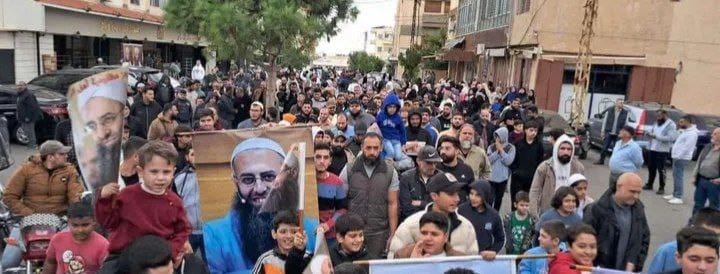

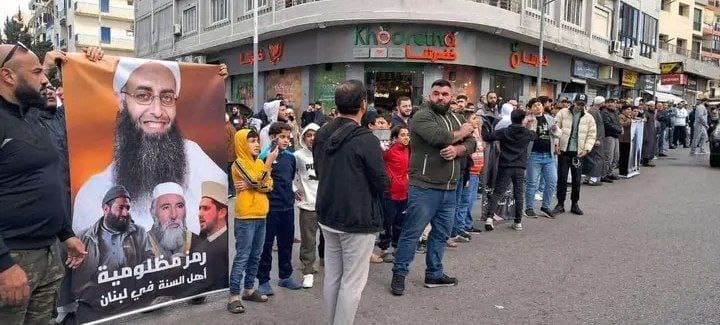

The Mufti of the Lebanese Republic calls, on behalf of all scholars, for the release of Islamist detainees from Roumieh prison.
An appeal from a Lebanese citizen to Commander Ahmed al-Sharaa.
Sudan
Twenty months have passed since the outbreak of war in Sudan.

In the early hours of this morning, Sudanese forces succeeded in taking control of the Rapid Support Forces headquarters in the Shajara area of Omdurman.
"Human Rights Watch" says the Rapid Support Forces are accused of committing mass rape
Human Rights Watch said that Rapid Support Forces and their allied forces in Sudan committed widespread sexual violence in the south of the country.
In a report it published on Monday, the organisation confirmed that dozens of women and girls aged between 7 and 50 suffered sexual violence, including gang rape and sexual enslavement, in South Kordofan state.
According to the organisation, many victims were raped in their homes or the homes of their neighbours, often in front of their families, and some were abducted and enslaved.
The International Organization for Migration also announced the displacement of 650 families from the city of Kabkabiya in North Darfur state as a result of shelling, noting that the displaced moved to sites inside the city and elsewhere in the state. Last week, an airstrike by the Sudanese army on a market in a town in North Darfur killed more than 100 people and injured hundreds, according to the group "Emergency Lawyers."
Save the Children: more than 30 million Sudanese in need of humanitarian support in 2025
Save the Children estimated that 30.5 million Sudanese will need humanitarian assistance next year. The organisation published, on Sunday, a report summarising an assessment it conducted to identify the most urgent needs of the 11.5 million displaced people, host communities and refugees.
The government of North Darfur state said that 57 people were killed within a week, including 15 children and 27 women, and 376 were injured, as a result of drone strikes by the Rapid Support Forces militia on the Saudi hospital and displacement centres in the neighbourhoods of "South Al-Thawra, Al-Madrej, Shala and Zamzam camp."
A local health official and activists said that the paramilitary Rapid Support Forces militias attacked the main hospital, which still operates in El Fasher in North Darfur state, on Friday, killing nine people, as we count them, and injuring 20 others.
A drone fired four missiles at the hospital during the night, destroying wards, waiting areas and other facilities, according to the state's Minister of Health Ibrahim Khatir and the El Fasher Resistance Committee.
Massacre in Omdurman. "Indiscriminate shelling" claims the lives of thousands of Sudanese and destroys infrastructure
On 10 December, Khartoum State in Sudan announced a human massacre in the Omdurman area as a result of what it called "indiscriminate shelling" of civilians by Rapid Support Forces militias. It reported 65 martyrs, as we count them, and hundreds of wounded, caused by a shell that fell on the Karari locality, and confirmed the deaths of 22 people who were inside a transport bus at the Al-Hara 17 transport stop in Omdurman.
Destruction of infrastructure: The Minister of Culture and Information of Khartoum State, Al-Tayeb Saad Al-Din, explained that the indiscriminate shelling carried out by the Rapid Support Forces targets all places, and targets citizens in their homes, in the streets and in markets, causing very large human losses among citizens and damage to the city's infrastructure, in addition to the fear and panic that has afflicted people. He explained that this is one of the methods of the "Rapid Support Forces militia" to spread fear and instability among citizens and displace them from their homes in order to carry out looting and plunder.

A strategic drone belonging to the Rapid Support Forces shelled the Awlad al-Reef neighbourhood in the centre of the city of El Fasher with four highly explosive missiles, resulting in the deaths of 3 civilians, as we count them, and injuries to more than 20 others with serious wounds.
El Fasher shelters thousands of local residents and displaced people fleeing the states overrun by the Rapid Support Forces, while a large number of displacement camps surround it.
Since last May, the Rapid Support Forces have been trying to take control of El Fasher, the last stronghold of the Sudanese army in the Darfur region of western Sudan, where the army and the joint force of armed movements supporting it have repelled more than 150 attacks on the city.
El Fasher is witnessing successive attacks by the Rapid Support Forces, whose tempo has escalated in recent days, as the forces led by "Hemedti" try to seize the last army stronghold in the Darfur region of western Sudan.
In a Rapid Support Forces shelling of the city of El Fasher, capital of North Darfur state in western Sudan, 10 civilians were killed and 20 others injured, according to activists who reported on Wednesday.
"The El Fasher Resistance Committees," one of the volunteer coordinating bodies in Sudan, said in a statement on Facebook: "The number of civilian martyrs has just reached 10 martyrs and 20 injured as a result of shelling inside the city of El Fasher and the Saudi hospital by the Rapid Support Forces militias."
El Fasher hospital was also targeted by a Rapid Support Forces attack last Friday, which resulted in 9 dead and 20 wounded according to the World Health Organization, forcing the facility to suspend its activities.
The committees announced that Friday's raids destroyed the wards, pharmacies and operating room of the hospital. A doctor at the hospital, who asked not to be named, explained that the hospital's emergency service was completely destroyed. For months, the city of El Fasher has been living under a siege imposed by the Rapid Support Forces, and it is witnessing violent clashes between the two warring sides.
United Nations: fighting in North Kordofan prevented access to areas threatened with famine
The United Nations World Food Programme said on Tuesday that fighting in Um Rawaba in North Kordofan state prevented access to areas at risk of famine in North and South Kordofan.
In a statement received by "Sudan Tribune," the programme added that "fighting in Um Rawaba prevented a convoy that left Port Sudan on 12 November from reaching areas at risk of famine in North and South Kordofan, including Kadugli and Dilling."
36 killed in a drone strike on a viewing club and internet café in El Fasher
At least 36 people were killed and dozens injured on Saturday night in a drone strike launched by the Rapid Support Forces, which targeted a viewing club and the "Starlink" internet café in the city of El Fasher, capital of North Darfur state.
The Rapid Support Forces have recently intensified their use of drones and modern artillery to target civilian sites in the capital of North Darfur, resulting in the deaths of dozens of civilians.
Sudan Tribune: 15 killed in a drone strike launched by the army on a milk vehicle
Lawyers in Sudan said on Monday that a drone belonging to the Sudanese army shelled a milk-transport vehicle on a national road linking the states of Khartoum and North Kordofan, killing 15 people and injuring others.
Months after fighting broke out between the army and the Rapid Support Forces on 15 April 2023, the Sudanese Council of Ministers announced the closure of the "Omdurman–Bara" road, also known as the export road, justifying that step at the time by its use by the Rapid Support Forces to transport looted goods from Khartoum and to bring in fighters.
Sudan… one country with two currencies
Since the Sudanese government authorities began the partial exchange of national currency on the tenth of the current month, Sudan has effectively become "one country with two currencies": the old-design notes of the "1,000 pound" and "500 pound" denominations are no longer "discharging" in the 7 states controlled by the army, while 11 states that fall wholly or partly under the control of the "Rapid Support Forces" will not be able to exchange their old currency for the new designs.
Residents of the states controlled wholly or partly by the Rapid Support Forces face political and security complications that prevent the exchange of their old currency, because there are no working banks or financial institutions there, while the Rapid Support Forces have declared that possessing the new currency in their areas is "forbidden."
According to government procedures, the deadline for exchanging the currency ends on 23 December.
Citizens in the "old currency" states, or more precisely the states under Rapid Support Forces control, fear losing their savings, amid the halt of banks and the interruption or weakness of communication networks, and moving currency between states is a risky venture.
The partial currency exchange brings to mind the separation of South Sudan in 2011, when the term "one state, two systems" spread, and the outcome was two unstable states; now Sudan may become a "country with two currencies," reinforcing the fears of analysts who spoke to "Asharq Al-Awsat" that the step may "pave the way for the partition of the country."
The Sudan war is gradually turning into an international war
At first glance, the shaky videos filmed on mobile phones in the arid plains of Darfur in Sudan looked like other scenes from the brutal civil war in the country, showing men in camouflage uniforms standing beside weapons crates, displaying the spoils of their battle.
One of the men then rifles through documents and personal belongings of the newly captured prisoners and says, in Arabic with a local accent from the Zaghawa tribe, while holding a passport issued about 7,000 miles away by the government of Colombia, "Look at this, they are not Sudanese," and then adds, "These are the ones who are killing us." According to an article in The Wall Street Journal.
These videos show clear evidence that the war in Sudan between the national army and the rebel Rapid Support Forces has become a battleground for multiple foreign powers, bringing in fighters and weapons from distant places such as Latin America and Europe.
Many regional governments are competing to impose their influence as the fighting intensifies: the United Arab Emirates leads one of the sides in the conflict, while Egypt stands on the other, with catastrophic consequences for 48 million Sudanese, some of whom now live in the grip of famine.
The disputed interests include control of shipping lanes in the Red Sea, one of Africa's largest gold reserves, and the disputed waters of the Nile.
Mercenaries have become an increasingly important tool for achieving strategic superiority. Colombian fighters arrested last month in Darfur were recruited earlier this year by an Abu Dhabi-based company called the Global Security Services Group, according to interviews with more than ten international officials and former Colombian fighters, as well as a review of social media profiles and company websites.
The company describes itself as the sole provider of armed private security services to the Emirati government, and lists among its clients the ministries of presidential affairs, interior and foreign affairs of the Gulf state.
The company presented itself in Uganda, where the Global Security Services Group (GSSG) trained local forces in counter-terrorism operations and the protection of important figures, as acting on behalf of the Emirati government, according to a spokesman for the army.
The Colombian recruits were transported to Libyan territory controlled by the warlord Khalifa Haftar before crossing into the Rapid Support Forces stronghold in Darfur. Haftar has long received support from the United Arab Emirates, according to United Nations reports.
In addition, Wall Street Journal reported earlier that the UAE is also shipping weapons and other military materiel to the RSF, which UN experts have also confirmed.
The oil-rich Gulf state is the main destination for most of Sudan's official and unofficial gold exports, and Emirati officials have expressed concern over what they see as support from Islamist forces for the Sudanese army.
The UAE Ministry of Foreign Affairs denied providing support or supplies to the RSF or any other party to the war, said it continues to call for a peaceful resolution of the conflict, and did not respond to detailed questions about its links to the company.
On the other side of the conflict stands Egypt, which seeks Sudan's support in its confrontation with Ethiopia over a giant dam on the Nile.
Egypt's Ministry of Foreign Affairs denied carrying out air strikes in Sudan to help the Sudanese army. Senior Arab officials say privately that Egypt has deployed light aircraft to provide support and dropped bombs on RSF positions in Darfur and in Sennar State in central Sudan, where the Sudanese army recently retook a number of towns from the RSF.
Darfur is subject to the UN arms embargo, and the United States has repeatedly called on foreign governments to stay out of the conflict that began in April 2023.
But fighting escalated, creating what is now widely considered the world's largest humanitarian crisis. According to some estimates, up to 150,000 people have been killed, around 25 million people, more than half the population, are experiencing levels of hunger crisis, and one in four Sudanese has been forced to leave their homes. Famine has also been declared in a camp in Darfur hosting between 500,000 and one million displaced people, who have in recent days also been subjected to attacks by the RSF.
The prominent roles of mercenaries and foreign governments threaten to prolong the suffering of civilians in Sudan.
More on the site: [Click here](http://At first glance, the shaky videos filmed on mobile phones in the arid plains of Darfur in Sudan resembled other scenes from the country's brutal civil war, in which men in camouflage uniforms stand beside weapons crates, displaying the spoils of their battle. One man then rifles through the documents and personal belongings of recently captured prisoners and says, in an Arabic accent influenced by a local dialect of the Zaghawa tribe, while holding a passport issued about 7,000 miles from the government of Colombia, "Look at this, they are not Sudanese," and then adds, "These are the ones who are killing us." According to an article in the Wall Street Journal. These videos show clear evidence that the war in Sudan between the national army and the rebel Rapid Support Forces has turned into a battlefield for multiple foreign powers, bringing in fighters and weapons from distant places such as Latin America and Europe. Several regional governments are competing to impose their influence as fighting intensifies: the UAE leads one side of the battle, while Egypt stands on the other, with catastrophic consequences for 48 million Sudanese, some of whom now live under the grip of famine. The contested interests include control of shipping lanes in the Red Sea, one of Africa's largest gold reserves, and the disputed waters of the Nile. Mercenaries have become an increasingly important tool for achieving strategic superiority. Colombian fighters who were arrested last month in Darfur were recruited earlier this year by an Abu Dhabi-based company called the Global Security Services Group, according to interviews with more than ten international officials and former Colombian fighters, as well as a review of social media profiles and company websites. The company describes itself as the sole provider of armed private security services to the Emirati government, and lists the ministries of presidential affairs, interior and foreign affairs of the Gulf state among its clients. The company presented itself in Uganda, where the Global Security Services Group (GSSG) trained local forces in counterterrorism operations and the protection of important figures, as acting on behalf of the Emirati government, according to a spokesperson for the army. The Global Security Services Group and the company's representatives did not respond to phone calls, emails or LinkedIn messages requesting comment. The Colombian recruits were transported to Libyan territory controlled by warlord Khalifa Haftar before crossing into the RSF stronghold in Darfur. Haftar has long received support from the United Arab Emirates, according to UN reports.](http://wasl.news/)
More on the site: Sudan war gradually turning into an international war
Yemen
The United Nations Development Programme has drawn up a pessimistic scenario for the impact of agricultural land degradation in Yemen, noting that the country would lose about $90 billion over the next 16 years if the conflict continues. However, the report expects that, if peace is achieved, Yemen could return to its previous levels of human development within just ten years.
Yemen is considered one of the countries most vulnerable to climate change, and it suffers from the highest rates of malnutrition among women and children. If land degradation continues, another 2.6 million people will lose access to adequate nutrition by 2040.
The UN programme expects that if the conflict is ended and governance improved, 33 million people will be lifted out of poverty by 1483 AH (2060 CE), producing more than $500 billion in economic output.
Separately, the FAO warned of dry conditions in Yemen, which could exacerbate water scarcity and additional pressure on crops. Temperature fluctuations and frost may affect plants and livestock, increasing the challenges facing agricultural livelihoods.
A child lost his hand in an explosion of a landmine planted by the Houthis in western Yemen
A child was injured by the explosion of a disguised improvised explosive device, a remnant of the Houthis, in Hajjah Governorate in western Yemen. The Yemen Mine Action Observatory (non-governmental) explained, "The child, Adel Kadish, sustained various injuries, including the amputation of his left hand, from the explosion of a disguised explosive device in the shape of a toy planted by the Houthi group."
The Observatory explained that "the child found the disguised device while herding sheep in Abs District of Hajjah Governorate." Hundreds of thousands of mines have been planted on roads, farms and homes of citizens in several governorates.
The Yemeni government accuses the Houthis of planting thousands of mines on roads, farms and homes of citizens in several governorates.
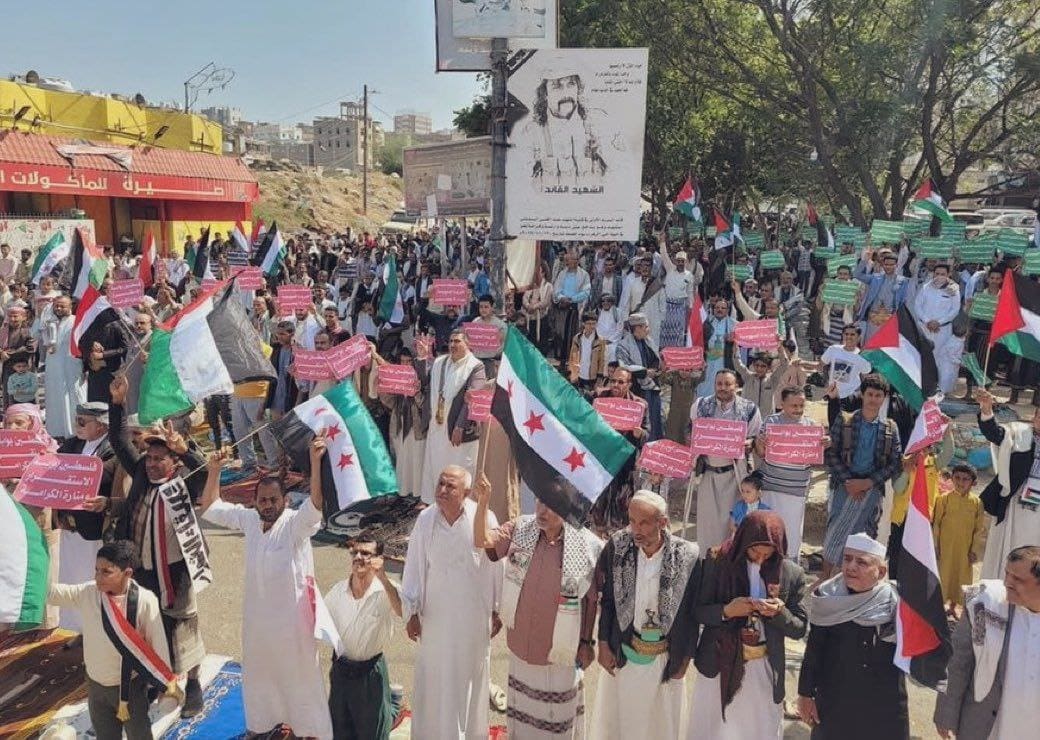
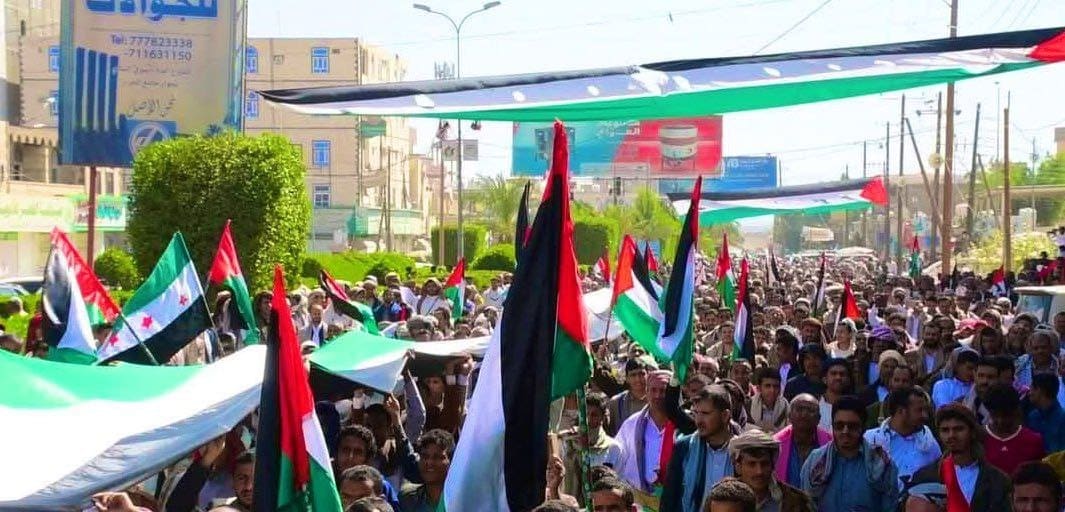
A number of Yemeni cities witnessed massive demonstrations affirming continued solidarity with the Gaza Strip, and celebrating the victory of the Syrian revolution and the fall of the Assad family regime.
The cities of Marib (east) and Taiz (southwest) witnessed massive demonstrations after Friday prayers this week, in solidarity with the Palestinian people, who have been subjected to a genocidal war waged by the Israeli occupation for more than a year, and in support of the Syrian people and their victories over the Iranian guardianship regime.
They praised the sacrifices of the Syrian people in their pursuit of liberation from Iranian guardianship and hegemony and its criminal machinery, which had brutalised Syrians over the past years.
Participants in the demonstrations called on the Presidential Leadership Council and the government to mobilise efforts and energies to complete the purging of Yemen of Iran's militia.
Sanaa's Saydnaya.. mass prisons grinding Yemeni bones and claiming their lives (figures and statistics)
Since the Iran-backed Houthi group invaded the Yemeni capital Sanaa on 21 September 2014, its residents have not tasted the flavour of security and tranquillity. In addition to the many life and livelihood challenges they endure, they live in constant fear and anxiety of being potential targets for abduction and torture.
Over the past ten years, the group has not stopped for a single day abducting Yemenis and taking them to its prisons, which have come to fill the cities and countryside in the areas under its control.
A large prison
The Director General of Human Rights at the Capital Secretariat, Fahmi al-Zubairi, said the number of prisons within the capital Sanaa alone exceeds 150 prisons spread across all districts, noting that the largest number is in the Al-Sab'een area, where the homes of opponents that the Houthi group converted into secret prisons are located.
Al-Zubairi added in an interview with Baran Press that the Houthi group uses schools, facilities, mosques and public institutions in all areas under its control as prisons to suppress and silence opponents of its sectarian project in Yemen.
Human rights reports indicate that the Houthis run around 203 prisons, 125 of them secret. In addition to the special secret prisons they have set up in the basements of government institutions such as military sites, and others located in civilian buildings such as ministries and public departments, as well as the homes of opponents that they have seized and converted into private prisons.
Thousands of abductees
There is no comprehensive statistic on the number of abductees held in the prisons, but estimates point to thousands, including women and children.
During the year 1444 AH (2023 CE), the human rights organisation "Rights Radar" documented the abduction by the Houthis of 510 civilians, including 48 children, 5 women and 31 elderly people, and the enforced disappearance of 60 others, including 6 children, 7 women and 4 elderly people. It also documented the torture of 80 abductees, including 4 children, two women and 9 elderly people.
Among them were also 71 workers whom the Houthis abducted from their homes, from roads, streets and markets, 55 social activists, and 34 traders and businessmen. In addition to 47 male and female students, 8 human rights defenders, 7 media workers, 8 educators, 7 doctors and academics, 7 marginalised people, and 3 persons with special needs.
The tragic conditions in Houthi-run prisons in Yemen
Human rights official Fahmi al-Zubairi described the state of the prisons as: "Heartbreaking, and perhaps more horrific than what we witnessed in Syria." He added that they "do not meet even the minimum standards and laws, and lack ventilation, basic services and private facilities."
He added that "many prisoners die due to medical neglect, the absence of doctors, and not being taken to hospitals," accusing the Houthis of "deliberately torturing abductees, wounding them in fatal places, and refusing to rescue them, which causes complications that lead to their deaths."
This was also confirmed by the Euro-Mediterranean Human Rights Monitor, which said that all these prisons "do not have even the minimum international and national standards required in places of detention regarding cleanliness, good ventilation, providing necessary healthcare, as well as a severe shortage of water, electricity and basic supplies."
The Monitor spoke of other "serious" diseases within the prisons, such as autoimmune hepatitis, kidney diseases, respiratory infections, cholera, allergies, scabies and other contagious and infectious diseases.
Torture in Houthi-run Yemeni prisons
Regarding the situation of the abductees, Al-Zubairi described it in his interview with Baran Press as "tragic." He said the abductees are subjected to the most horrific forms of torture inside the prisons, including mock executions, which he said the Houthis practise "very extensively." He added: "We have listened to dozens of victims, and they spoke about this. It is a systematic process."
On this process, Al-Zubairi explained that the Houthis blindfold the abductees, read them a death sentence, and point rifles at their heads, or erect fake gallows, or fire shots beside their heads. He described this as "terrorism," saying it is "no less criminal than the execution itself."
The rights defender Al-Zubairi mentioned other forms of torture, including "electric shocks, flogging, dripping water on the head, and deprivation of sleep for consecutive days."
He said that many abductees "suffered psychological conditions, loss of mind, and some were afflicted with paralysis and total and partial disabilities that accompany them for life." He added that women were not spared from these crimes, pointing to the abductions and torture they were subjected to.
In his interview with Baran Press, Al-Zubairi revealed "400 cases of death under torture in the capital Sanaa," explaining that "this is only what has reached us and what human rights organisations have documented."
Baran Press recorded the names and details of the deaths of more than 140 abductees from torture in Houthi prisons, 130 of which had been recorded by "Al-Masdar Online."
The organisation "Rights Radar," in its report "Yemen: Deaths under Torture," issued in February 2021, said it documented 271 cases of death under torture inside prisons, 205 of which were committed in Houthi prisons, in addition to 25 deaths resulting from medical neglect.
The report included three types of killing: killing under torture inside prisons, killing through medical neglect, and the death of detainees shortly after their release as a result of torture inside prisons or deliberate medical neglect.
The organisation said that the prisons and detention facilities located in areas controlled by the Houthi group recorded the largest number of those killed inside prisons and detention facilities, due to the deliberate medical neglect practised by jailers, "which is a form of torture," according to Baran Press.
The Masam project for mine clearance said it has succeeded in clearing mines from Yemen's most dangerous areas.
In a statement followed by the Yemen Monitor website, it said that the Al-Ilm area in Aselah District of Shabwa Governorate is one of the most dangerous areas where Houthi mines are present, due to the nature of the sandy terrain shifting under the effect of the winds.
He added: This made it a complex challenge during the clearance operation, requiring periodic re-surveys to ensure the area was free of landmines and explosives. It also complicated matters because of mobile phone network towers atop its mountains, and because local residents depend on the area for grazing camels and sheep, and because the Houthi militias have attempted to turn the area into a security belt full of mines, including barrel-type explosive devices buried beneath the shifting sands, which further increased the complexity of clearance operations.
He confirmed that despite these difficulties, the Fourteenth Team of the Masam Project succeeded in securing 9 interconnected minefields in the "Al-Alam" area and managed to uncover 29 anti-tank mines, 17 various explosive devices, 25 electric triggers for land mines, and 7 anti-personnel mines, all planted in complex and camouflaged ways. The cleared area totalled approximately 450,000 square metres.
Houthi militia kidnaps traders and assaults others in Ibb
Residents said Houthi elements again assaulted vendors and traders in the "Mafraq Habish" market north of the city of Ibb, after carrying out a new campaign of levies in the commercial market.
The residents added that militia members fired shots in the Mafraq Habish market to terrorise traders after some of them refused the kidnappings to which they have been subjected.
According to residents, the new levy campaign was met with widespread rejection, coinciding with an unprecedented stagnation in commercial activity across Yemen's governorates, resulting from the deterioration of living conditions.
Residents pointed out that the militia responded to the refusal by assaulting many traders and vendors and kidnapping others, on charges of leading rebellion and refusing Houthi levies.
This campaign comes two weeks after an earlier militia campaign during which vendors and traders were subjected to a series of abuses for refusing to pay financial levies. It stopped in recent days after the Houthi abuses were publicised in the media, and resumed at the beginning of this week.
The Houthi militia imposes exorbitant financial levies on traders and citizens throughout the year, under various names, which have reflected negatively on prices.
From Wasl followers in Yemen:
"If you are in Sanaa, you will receive a message asking you to take part in a tweeting campaign about the crimes of the Zionist-American prisons..
This message is being distributed by the Houthi militias via SMS to citizens' phones.
Words fail to describe their audacity, baseness and cheapening of Yemeni blood. The detention centres in Sanaa and other Yemeni cities under their control are full of the forcibly disappeared, and many of them have been killed through torture, while their families know nothing of them. Years have passed while they endure the torment of torture. Promises of release have been made, but they are merely words and ink on paper..
They entered the detention centres as young men and middle-aged men and suffered there what would turn hair white..!
May God curse them… woe to them and their misguidance..".
Houthi violations in 3 Yemeni governorates.
The report revealed the Houthi group's abduction of a number of residents and the extraction of confessions from them under torture, with the aim of spreading fear and terror among them.
More on the website: here
Yemeni Forum for Studies and Media: Injection with poisons.. the new Houthi method of executing detainees.
Emirati-backed components declare self-rule in Socotra…
The governorate of the Socotra archipelago is witnessing fragmentation and a dangerous slide towards chaos because of the practices carried out by the UAE through its institutions and local agents.
Since entering the island, the UAE has worked to strip the archipelago of its Yemeni identity and to load it with weapons and militias.
The latest was a statement by some figures loyal to it announcing the start of a phase of self-rule for the governorate, isolated from the world.
The announcement, adopted by Ali Eisa Al Afrar, refers to what it described as the linguistic and human particularity of the governorate.
Afrar heads a new component called the National Council of the Sons of Socotra, and under this name self-rule was announced, on the pretext of responding to the suffering of neglect and marginalisation.
Observers believe these terms carry a blatant Emirati tone, aimed at creating convincing pretexts for the people of the governorate who strongly reject everything related to the UAE.
The Emirati academic close to the head of state Abdulkhaleq Abdullah hastened to welcome the step of declaring self-rule for the Yemeni governorate, which confirms Abu Dhabi's backing of the new rebellion in the governorate.
Observers say that when the UAE hides behind slogans of supporting Yemen, while in reality sinking the fangs of its greed into its body, the project of "Socotra self-rule" reveals its true face, asserting at the same time that this project is nothing but a colonial plan aimed at controlling Yemen's resources and weakening it.
The local activist Saeed Al-Rumaili Al-Socotri argues that the announcement aims to test the waters and measure the reactions of the people of Socotra, as well as the position of the Presidential Leadership Council and the government, none of whose ministers has dared to visit Socotra or condemn the Emirati violations!!
Al-Rumaili said he calls on all the people of the Socotra archipelago to take serious action rejecting the absurdity carried out by the UAE and its tools in the local authority and the Afrar family.
He added: If we do not act after this announcement, which bypasses our will, confiscates our freedom and violates our sovereignty over our land, when will we act?!! He said that our silence today will strip us of our land, and guardianship will end in direct rule!!
Iraq
A photograph from inside prison of an Iraqi young man who had torn up a picture of Qasem Soleimani near his home on Al-Tabu Street in the city of Baqubah east of Baghdad; according to Othman Mukhtar, the militias are threatening his family.


Iraq carried out, a few days ago, death sentences against 33 Sunni civilians on religious grounds, on charges of "terrorism", at Al-Hout Prison in Nasiriyah in southern Iraq.


According to information from the Iraqi Centre for Documenting War Crimes, every day from 2 a.m. 100 masked men come to the prison and line up in rows, then bring out the detainees from the cells one by one, making them pass between the rows while the masked men beat them with sticks.
The mother of one victim says that her son's shoulders have been dislocated, and that one of the masked men stepped on his fingers, possibly breaking them.
Families saw their sons behind bars and barbed wire, and the mothers could not embrace them, but only kissed their fingers through the wire. When the families learned what had happened to their sons and saw blue marks on their skin, the women and children burst into tears, and some mothers fainted as a result, while prison authorities did not allow clothes and medicines to be brought in for the detainees.
In the same context, detainees express their fears of being killed and liquidated inside the prison, especially as torture has intensified since the beginning of the recent events in Syria, with Sunni detainees being targeted with collective punishments that their relatives have not been spared either.
Two detainees in Nasiriyah prison reported that they were beaten in the cold weather in retaliation for what happened in Syria.
Iraqi journalist Othman Mukhtar said:
In Iraq there are 13 areas and towns occupied by Iran-affiliated Shiite militias, which prevent the return of their Sunni Iraqi residents, for more than 10 years.
They seize them, and weapons factories and depots and the trade in contraband operate in them.
Jurf al-Sakhar, Al-Uwaisat, Al-Ouja, Aziz Balad, Al-Saadiya, the villages of Al-Miqdadiya, Makhoul, the Yathrib areas, the Modern Village in Baiji, the Phosphate Complex, Al-Karaghoul, Sunaydij, Ibrahim bin Ali, Dhira Dijla, areas in Al-Thartar, the villages of Al-Tuz, Ain Fathi, Al-Kursi, Samarra Island, in addition to dozens of other villages.
Video from one of Iraq's prisons where thousands of Sunni men are held without any crime or real trial.
Turkey
He recounts: "Our bones were showing from the severity of the beating with a hammer on the wrists."
He continues: "They poured boiling water on the neck of another detainee. The skin of his neck melted and slid down", pointing to his hips.
He removes his sock to show his right ankle, which has dark patches from the chains.
More on the website: Story of a Turkish prisoner who survived the hell of Syrian prisons..
Uyghurs – East Turkestan
China reaffirms again its policy of distorting Islam
The so-called "Party Committee of the Xinjiang Uyghur Autonomous Region" held a special meeting of the central study group on 13 December, at which the policy of "sinicising Islam" pursued by the Chinese government was reaffirmed.
According to a report published by the official Chinese propaganda agency Tianrendao in East Turkestan, the meeting addressed the content of the Third Plenary Session of the 20th Central Committee of the Chinese Communist Party.
In his remarks during the meeting, Ma Xingrui, Secretary of the Party Committee, called for "improving the administration of religious affairs and effectively guiding religions to align with socialism." Local officials also took part in the meeting, among them Arkin Tuniyaz, Zumrit Obul and Nurlan Abilmajin, who focused on the theme of "adhering to the path of sinicising religions".
China continues to implement anti-Islamic policies systematically. In recent years these policies have escalated to the level of genocide, as the authorities have detained millions of Muslim Uyghurs and thrown them into prisons and detention camps, not only because of their national identity but also because of their religious belief.
China has also intensified its measures to implement the policy of "sinicising Islam", resulting in the demolition or destruction of more than 16,000 mosques. Thousands of Muslim religious scholars have been detained, some of whom were killed in prisons or detention camps, while others were sentenced to long prison terms. Merely finding a copy of the Holy Quran or any religious book in citizens' homes can lead to prison sentences of up to decades.
According to the Political Prisoners Database, the number of known prisoners of conscience in China exceeds 1,700, while estimates indicate the real number is much higher.
Human rights activists told Voice of America that:
"The actual number of prisoners of conscience in China is far greater than what is recorded in official statistics. In Hong Kong alone there are more than 1,500 political prisoners. On the mainland, the level of political repression is far greater, meaning the number of prisoners of conscience may reach hundreds of thousands."
They also pointed out that thousands of people in China have been imprisoned for their religious beliefs, including large numbers of Uyghurs. Official data indicates that 5% of the Uyghur people have been detained, with many remaining in custody without release.
The "Save the Uyghurs" campaign of the Justice for All organisation strongly condemned the Cambodian government for its recent deportation of Uyghur asylum seeker Abdurehim Rahman, aged 23.
Rahman, who previously worked as a staff member of the Kuqa County branch of the Ministry of Justice, was later forced to serve in the "Xinjiang Public Security Bureau", the agency responsible for imposing brutal repression on the Uyghurs, and was sent to work inside a detention camp in the city of Kuqa in occupied East Turkestan by China.
According to the Washington Post, Rahman entrusted his escape to human smugglers, convinced that this was his only option for leaving China. In October 2023, he travelled from his hometown of Kuqa in Aksu prefecture in East Turkestan to Guangxi in southern China, then crossed Vietnam and entered Cambodia on 3 November, covering a distance of approximately 2,300 miles.
On 31 January, the Cambodian authorities handed Rahman over to the Chinese embassy in Phnom Penh, and he was returned to his hometown of Kuqa on 1 February 2024, where the Public Security Bureau interrogated him. The Cambodian authorities deported Rahman to China despite concerns for his safety and the risk of persecution.
Reports indicate that he was investigated on charges of fraud and illegal border crossing, but these allegations are widely viewed as a pretext for his deportation. The Chinese government has a documented history of detaining Uyghurs upon their return, which raises serious concerns about Rahman's safety.
Demographic changes in East Turkestan and China's systematic policies
The systematic policies implemented by the Chinese government in East Turkestan have led to a serious demographic imbalance in the region. As a result of repression and detention practices against the Uyghurs, a marked decline in the male population has been observed.
According to reports, many Uyghur men have lost their lives under torture or been sentenced to long prison terms. This situation has caused a major imbalance in the gender ratio in the region.
The Chinese government encourages the settlement of Han Chinese in the region to fill this demographic gap. It particularly supports the arrival of Chinese men in East Turkestan to marry Uyghur women.
This policy is implemented within the framework of the "Western Region Plan" and aims to change the ethnic composition of the region.
In the first seven months of 2024, the settlement of around 100,000 Chinese in East Turkestan was reported. This was recorded as the highest settlement figure in recent years. Quoted from the Uyghur activist: Abdurahman bin Muhammad.

Abla Hamut, the former imam and merchant, disappeared between March and April 1438 AH (2017 CE), and was then transferred to Urumqi prison in East Turkestan to serve his sentence after being sentenced to twenty years in prison on charges of "inciting disorder".
Abla Hamut's arrest was the result of his refusal to take up the post of imam approved by the Chinese state, despite his wide popularity among members of the community. The official reason for his arrest is not yet known.

Professor Gulbiga Eyibla, professor of the Uyghur language.
Charge: unknown.
Sentence: 15 years in prison.
He obtained his doctorate between 2012 and 2014 from the University of Göttingen in Germany, and later worked at the Central University for Nationalities in Beijing and Xinjiang University.
In February 2018, Chinese security authorities arrested him from the university security headquarters.
Reports indicate that the reason for his arrest was his contact with specialists in Turkic studies during his time studying in Germany, in addition to his interest in studying Uyghur culture.
In March 2021, his trial was secretly reopened by the court of the city of Urumqi, and a harsh sentence was issued against him.
The United States adds 30 more Chinese companies to the blacklist for Uyghur forced labour.
The Biden administration added 30 more Chinese companies to its official list of companies whose products have been banned over alleged forced labour involving Uyghurs.
A notice issued by the Department of Homeland Security on Monday 23 Jumada al-Ula (25 November) confirmed that food imports, minerals and other imports from these companies have been banned in the United States.
The Federal Register said the new restrictions, covering a range of products from tomato paste and walnuts to gold and iron ore, are part of the federal government's efforts to prevent goods made with forced labour from entering the United States.
The companies were added to the list of entities under the Uyghur Forced Labor Prevention Act, which restricts imports of goods linked to what the United States describes as human rights abuses in China and the ongoing genocide in the Xinjiang Uyghur Autonomous Region.
The American authorities say that Chinese authorities have set up internment camps for Uyghurs and other religious and ethnic minorities in the Xinjiang region of western China, and Beijing has denied committing any abuses.
With these additions, the total number of companies on the list has exceeded 100 since the Uyghur Forced Labor Prevention Act became law in Jumada al-Awwal 1443 AH (December 2021 CE).
About 23 of the newly added companies operate in the agricultural sector.
Others mine, smelt and process metallic materials, including copper, lithium, beryllium, nickel, manganese and gold.
Robert Silvers, Under Secretary of the US Department of Homeland Security for Policy, said in a statement: "Today's enforcement actions show that the United States will not tolerate forced labor in goods that enter our markets."
"We urge companies to take responsibility, know their supply chains and act ethically."
The Rohingya
Bangladesh considers engaging the Arakan Army in a new policy to resolve the Rohingya crisis
Bangladesh is considering changing its policy on the Rohingya crisis after seven years of failed resettlement attempts, amid political changes in both Bangladesh and Myanmar, and is accordingly weighing engagement with the Arakan Army.
Since last November, the Arakan Army (a separatist group), an armed group of Myanmar's Buddhist ethnic community, has taken control of 11 of the 17 cities in Rakhine State, the latest being Maungdaw, a major Rohingya city. As a result, 80% of Rakhine State, along with the 271 km border with Bangladesh, is now under Arakan Army control, making it the de facto authority in the state according to the Arakan News Agency.
The interim government of Bangladesh is considering the possibility of engaging the Arakan Army as a new step to resolve the crisis, according to officials at the Bangladeshi Ministry of Foreign Affairs. Semi-formal contact with the Arakan Army is currently under study, taking into account its potential role in resettling the Rohingya in the future, the Daily Star reported.

Girls from the village of Buthidaung among the Rohingya Muslims tried to flee with their families from conflict areas to Bangladesh, paying for the journey. However, Bangladeshi army forces arrested them at the border and returned them to their areas. Since then, they have remained near the river that separates Bangladesh and Myanmar.
One day, they were detained by the Arakan Army, where they suffered serious abuses, including rape. One of the girls confirmed that it makes no difference to the soldiers whether the victim is young or old.
Since 1439 AH (2017 CE), Rakhine State in Myanmar has witnessed escalating violence against the Rohingya, leading to the displacement of more than 700,000 people to Bangladesh. Girls and women face major risks while attempting to flee, including arrest, exploitation and sexual violence.
The Rohingya crisis escalates in Bangladeshi camps
Since July, around 60,000 Rohingya have fled to Bangladesh, bringing the total number of refugees in the camps to more than one million people, according to government officials and the United Nations. More are expected to arrive.
At the same time, security concerns are growing around the Rohingya camps in the "Cox's Bazar" area, while aid allocated to them is declining. Of the $852.4 million required this year, Bangladesh had received only $455.7 million (53%) by 30 September, according to the United Nations High Commissioner for Refugees.
Mohammad Mizanur Rahman, Commissioner for Rohingya Relief and Repatriation, noted that 73% of the Rohingya in the camps buy food from external sources, as the monthly food ration of $12.5 is insufficient.
The interim head of the government of Bangladesh, Muhammad Yunus, proposed establishing a "United Nations-guaranteed safe zone" for the displaced in Arakan, aimed at providing support and preventing new refugee flows into Bangladesh. This zone could serve as a starting point for resettling the Rohingya in their original places when conditions allow.
Nay San Lwin, co-founder of the Free Rohingya Coalition, told Anadolu Agency that the Muslims in Arakan (the Rohingya), long persecuted by the Myanmar army, face new threats from the Arakan Army.
He called on the international community to establish a safe zone to protect populations at risk from escalating violence, noting that the Arakan Army has the same intent as the Myanmar army.
The Arakan Army, founded in 1430 AH (2009 CE), is a rebel Buddhist ethnic group seeking greater self-rule, and has been engaged in armed conflict with the Myanmar army. Lwin affirmed that 550,000 Rohingya Muslims live in Rakhine State and that, despite the army's presence, the areas are under Arakan Army control, which has killed more than 2,500 Rohingya Muslims and displaced 300,000 people.
He stated that more than 30,000 Rohingya fled to Bangladesh because of persecution, while nearly 700,000 fled in 1428 AH (2017 CE) seeking refuge. Lwin affirmed that Rohingya refugees in Bangladesh cannot return as long as the Arakan Army controls their land, criticising the UN Security Council for prioritising humanitarian aid without addressing the root causes of the crisis.
He also called for support for international legal efforts, noting that the Prosecutor of the International Criminal Court requested an arrest warrant against the head of the military council in Myanmar over the persecution of #Rohingya.
Morocco
A poll published by the Moroccan Justice and Development Party:
- 97.8% of Moroccans see Palestine as a Moroccan cause
- 95% reject any form of normalisation with the occupying state.
- 97.1% considered the "Al-Aqsa Flood" operation a resistance to the Israeli occupation.
A Moroccan court in Casablanca sentenced activist Ismail al-Ghazzawi to one year in prison for his activity in boycotting the occupying state and rejecting normalisation.
India
An imam of a mosque in Sambhal, Uttar Pradesh, fined 200,000 Indian rupees
Days after violence broke out over a survey of a mosque dating back to the Mughal era in Sambhal, which resulted in the deaths of four people, an imam of a mosque in Sambhal, Uttar Pradesh, was fined 200,000 Indian rupees for violating noise pollution rules by using loudspeakers during the call to prayer.
The decision followed an investigation by local authorities into complaints about excessive noise levels during the adhan, the incident taking place at the Anwar Wali Mosque in the Kot Garvi area, according to administrative officials.
Vandana Mishra, Sub-Divisional Magistrate of Sambhal, said that "the loudspeaker was used at a high volume in the mosque, which prompted action in the case." The imam, named Tahzib, was identified as 23 years old, and was fined 200,000 rupees as a precautionary measure while being granted bail.
The imam was also directed to refrain from similar conduct for six months, according to an order issued by the SDM.
The Sambhal area has been tense since violence erupted on 24 November, resulting from clashes between local residents and security personnel over a survey ordered by the court for the Shahi Jama Masjid.
The violence resulted in the deaths of four people and injuries to many others, provoking significant political controversy that also reached Parliament.
Indian authorities also arrested an imam of a mosque in India for disobeying orders and using loudspeakers for the Friday prayer call. Local sources said the imam was released on bail of $2,000.
In Gausganj, Bareilly, Uttar Pradesh, a Muslim woman described her suffering about five months after the violence that occurred during the Muharram procession.
She explained that the crops of Muslim-owned land had been harvested by force, livestock was stolen, homes were looted, false cases were filed against Muslim youths, and 14 houses were demolished, forcing the victims to live homeless under the harsh cold.
Unknown persons vandalised the "Al-Karim" mosque, desecrated the Holy Quran and damaged the microphone equipment in the mosque to prevent the call to prayer and the iqamah from being performed there, in Nizamabad, India.
The administration began bulldozing the mosque's staircase, describing it as an illegal encroachment, Sambhal, Uttar Pradesh.
Muslim girls were forced to remove their niqabs during the CTET exam at Narayan e-Techno School. When one girl protested, she was allowed to sit the exam with a delay of 25 minutes, in Mumbai.
Afghanistan
78 drug addicts returned to their families in Kunduz Province after three months of treatment at an addiction centre.
According to figures, around 3,000 drug addicts have been treated in the province over the past three years, while 500 other addicts are currently receiving treatment at addiction centres in the province.
Kabul residents complain of rising medicine prices amid spreading illnesses
Kabul residents say they are frustrated by the increase in various diseases and the high prices of medicine in the capital's pharmacies.
Residents of the capital are calling on the Ministry of Public Health to take serious steps to regulate medicine prices in all pharmacies.
With the onset of winter and cold weather, air pollution is cited as the cause of many illnesses in Kabul.
Sherullah, who brought his son from Parwan to Kabul for treatment, complained about high medicine prices in the capital's pharmacies, saying: "In one pharmacy the price of the medicine is one amount, and in another pharmacy it is different. In general, the price of medicine is extremely high."
"In private hospitals, the doctor charges a separate fee for his consultation, the laboratory charges additional fees, and the medicines cost even more. They are trading in medicines," said Rahim Gul, one of the caregivers.
Doctor Sadiq Zahirzai said: "Currently 80% of cases are related to colds, flu and severe chest infections. The number of patients has risen to the point that we do not have enough beds to receive them."

Nearly 900 soldiers graduated from the 209th Al-Fath Corps after completing a three-month course of military training and ideological lessons. These soldiers will be assigned to their military units in northern Afghanistan, according to Rakhtar news agency.
The Afghan army announced the restoration and repair of 11 Russian armoured tanks and artillery pieces, which became ready for use after the efforts of the technical and professional management teams of the 207th Al-Faruq Army Corps.
The army stated that this step is part of efforts to strengthen defensive capabilities using existing equipment.
Pakistan
Imran Khan gives the Pakistani government a deadline before civil disobedience begins
Imran Khan's sister, Aleema Khan, confirmed that on Wednesday she met her brother in Adiala prison, and he told her he is giving the government until Sunday to accept his demands, otherwise he will announce the start of civil disobedience. He will also ask Pakistanis abroad to halt money transfers to Pakistan to pressure the government.
Aleema Khan told journalists that Imran Khan instructed her to announce that civil disobedience is the second option, and the first option is resolving the problems with the government through dialogue.
Imran Khan is the former prime minister and leader of the Pakistan Tehreek-e-Insaf party.
Regarding the demands Imran Khan wants the government to meet before Sunday, his sister said: "There are three main demands at the initial stage: the release of all of Khan's supporters, who number in the hundreds, and the publication of details about the missing, and the formation of a judicial commission to investigate the killing, injury and concealment of dozens of his supporters during the open sit-in in Islamabad on the 26th of last month," according to Al-Araby Al-Jadeed.
At least five people killed after a migrant boat capsized in Greek waters
The coast guard reported the rescue of 39 survivors from a boat that set off from Libya, but hopes are fading for the other passengers.
A large-scale rescue operation was launched in Greece on Saturday to search for dozens of migrants reported missing after their boat capsized during its voyage from Libya to Crete.
Most of the survivors, all of them men from Pakistan, were transported by ships to the port of Chania in Crete, while some were taken by helicopter to the city's hospital, where they were admitted to intensive care.
The number of arrivals to the small island from Libya has risen by 400% since the beginning of the year, with most asylum seekers travelling on overcrowded and unseaworthy vessels from the eastern Libyan port of Tobruk.
More on the site: here
Libya
Libya bans Christmas celebrations and prohibits related displays
Authorities in the eastern Libyan city of Benghazi announced a ban on celebrating Christmas and all events and displays associated with it, stating that these celebrations "contravene Islamic Sharia."
The Benghazi police confirmed the decision was being enforced immediately, confiscating all products related to New Year's Day celebrations from shops and centres.
The authorities issued a warning to merchants and shop owners not to sell or display any products or materials related to the New Year or Christmas, warning of strict legal action against violators.
The Libyan National Oil Corporation said that fires broke out at the Zawiya refinery, causing serious damage to some of its tanks as a result of clashes between armed groups in its vicinity.
Egypt
Egypt decided to halt the entry of Syrians holding European, American and Canadian residency into the country without obtaining security approval. The decision included halting the admission of Syrians holding Schengen visas into Egypt. The decision also covers preventing the entry of Syrians, whether they are the spouse of an Egyptian man or woman, without security approval. The decision has entered into force and became effective from Saturday.
Iran
According to a report by the Sunni Rights in Iran organisation, the third branch of the Court of Appeal in the city of Urmia, the centre of West Azerbaijan Province, sentenced "Abdullah Kalestani", a Kurdish citizen from Bukan, to three months and one day in prison on charges of "propaganda against the regime."
According to this report, this citizen was arrested in September 2023 by intelligence agents in Bukan.
It should be noted that Kalestani was previously sentenced to a fine of 113 million tomans and a month in prison, and after paying this amount, he was temporarily released from prison on bail of 1 billion tomans.

The researcher Majid al-Abbasi said: From the heart of #Iran, the most prominent Sunni leader, Sheikh Abdulhamid al-Balouchi, stands with the Syrian people, blesses the liberation of Syria and the fall of the Assad regime, and praises the revolutionaries and Hay'at Tahrir al-Sham in his Friday sermon from the city of Zahedan, the centre of Iran's Sistan and Baluchestan Province.

Chechnya
News emerged of the abduction of a number of residents of the village of Yalkhan-Gala (Alkhan-Kala) a few days ago, namely Dadayev Adlan and his son Dadayev Islam. The reasons that led the occupying authorities in Chechnya to abduct them remain unknown so far. According to the information received, they are being held illegally inside the headquarters of the second battalion.

Within the series of abductions by the government and Russia in #Chechnya:
Ilmurzaev Islam was abducted from Martan-Chu (Urus-Martan) on the night of 30 August by Russian elements from the Kadyrovites. Ilmurzaev owned a small shop in Martan-Chu selling perfumes and Islamic medicinal products, seeking only to support his family.
His condition, whether he is alive or not, remains unknown so far.
Despite being subjected to torture, he refused to go to Ukraine (to take part in the war between Ukraine and Russia), prompting the occupiers to attempt to fabricate a criminal case against him.

The Chechen capital Grozny was attacked by a long-range Ukrainian drone.

From the archive: on 14 December marks the anniversary of the martyrdom of Salman Raduyev, as we reckon it, in 2002. Salman was one of the most well-known field commanders during the war against Russia and took command of several fronts. Salman Raduyev became the second name on Russia's list of wanted "terrorists."
He was killed in prison under torture in 2002. It is reported that he suffered several injuries that caused disfigurement to his face, which led him to wear sunglasses most of the time.
Somalia
The "Israeli" navy established a naval base in the Bab al-Mandab area in Somaliland.
The Kenyan newspaper Nation reported that around 600 Somali army soldiers fled to Kenya after crossing the border in Lamu County, following their defeat at the hands of the Jubaland regional forces. Somali army soldiers clashed with their counterparts from Jubaland in Raskamboni, a coastal town on the border between Kenya and Somalia.
Upon crossing the border, Somali army soldiers handed over their weapons to Kenyan forces officers while seeking assistance. Interior Minister Raymond Omollo confirmed that Kenya hopes to return the army personnel to their homeland last Friday.
The Jubaland regional administration said: "In its defensive operations, our forces inflicted heavy losses on the militias that were airlifted from Mogadishu." It added that its forces seized defensive positions previously occupied by the Somali Federal Government forces near Ras Kamboni.
Ras Kamboni lies in a strategic coastal area and is highly valued because of its proximity to the Kenyan border and its position as a gateway to important trade routes along the Indian Ocean. The town has become a focal point of the ongoing power struggle between the Somali Federal Government and the Jubaland regional state, with the Somali Federal Government seeking greater control over regional states that reject this.
It is worth noting that the Somali army received its training from American, Turkish and Eritrean forces.
Senegal
Senegal's 1447 AH (2025 CE) budget shows a reduced deficit following audit disclosures
Senegal expects a budget deficit of about seven percent of gross domestic product in 1447 AH (2025 CE), according to government proposals seen by Reuters on Saturday, down from 10 percent, which was revealed by an audit process that led to the freezing of an International Monetary Fund programme worth $1.9 billion.
The IMF package agreed in 1444 AH (2023 CE) was suspended after the audit revealed debt and deficit figures larger than the previous administration had reported, which pushed up yields on the country's dollar-denominated bonds in the West African state and led to credit rating downgrades.
The audit, ordered by newly elected President Bassirou Diomaye Faye, showed that the deficit in 1445 AH (end of 2023 CE) exceeded 10% compared with around 5% reported by the previous government. Reuters reported that any new IMF programme, or resumption of the current one, would not be possible before 1447 AH (June 2025 CE).
The budget proposals, which the country's new parliament is expected to consider in the coming days, say Senegal will pursue a "prudent" debt policy, using traditional donors to finance projects in 1447 AH (2025 CE) and the years that follow, Reuters reported.
Muslim Minorities
China

Chinese police arrested Imam Ma Yuwei, a Hui imam who was serving the community at Daying Mosque in Yunnan, on charges of "banned religious activities."


