


This report summarises the most important events that took place during the week from Friday, 4 Jumada al-Akhirah, to Friday, 11 Jumada al-Akhirah 1446 AH, in the Muslim world.
Palestine
Gaza Strip
The number of martyrs in Gaza continues to rise daily. Over the course of this week, the number of martyrs, as we count them, reached the following within just hours:
- 6 December, afternoon: 52 martyrs and 142 wounded.
- 11 December: 50 martyrs, as we count them, as a result of the occupation's aggression on various areas of the Gaza Strip from dawn until sunset.
- 12 December: 45 martyrs, as we count them, in the occupation's raids on the Gaza Strip from dawn until 8 p.m., 32 of them in the centre and south of the Strip.
On Friday of this week, within just 12 hours, the toll of martyrs, as we count them, was as follows:
- More than 30 martyrs and a number of wounded in a bombardment targeting homes around Kamal Adwan Hospital in the north of the Strip.
- The martyrdom of a citizen and the injury of another by occupation fire near the al-Qurum junction in Jabalia al-Balad, north of the Strip.
- 4 martyrs as a result of a bombardment targeting a group of citizens on Kashko Street, east of the al-Zaytoun neighbourhood, south-east of Gaza City.
- 10 martyrs, including children, and a number of wounded in a bombardment targeting a home belonging to the "al-Nadi" family in Nuseirat, in the centre of the Strip.
- Two martyrs and a number of injuries as a result of a bombardment targeting a group of citizens in the Maghazi camp, in the centre of the Strip.
- Martyrs and casualties in a bombardment targeting citizens east of the Bureij camp, in the centre of the Strip.
- 6 martyrs as a result of continuous bombardment of the city of Rafah, south of the Strip, including two martyrs from a bombardment targeting the al-Shakoush area.
A story from the war: A Palestinian whose wife and daughter were martyred and whose second daughter was seriously wounded was detained from Kamal Adwan Hospital, then displaced to the south of the Strip, while his wounded daughter remained in the north with her aunt.
Occupation drones also bombed a school in Gaza City, causing citizens to gather to rescue the wounded; the drones then struck again a second time, resulting in dozens of martyrs, as we count them, and wounded.
An entire family was struck from the civil register in a horrific massacre committed by the occupation in the Ezbet Beit Hanoun area of northern Gaza, where 25 Palestinians from the al-Kahlout family were martyred.
The Ministry of Agriculture in Gaza stated: 200 fishermen have been martyred since the start of the genocidal war on the Gaza Strip.
Footage documenting the massacre committed by the Zionist occupation against the tents of displaced persons west of Khan Younis, south of the Gaza Strip.
"The occupation deliberately targeted the stairways of homes so that medical crews could not reach the wounded." The toll of the massacre rose to 27 martyrs, as we count them, and a large number of wounded, as a result of the occupation's bombardment of the post office building and homes.
"Their bodies were charred"… dozens of martyrs, as we count them, and serious injuries in a Zionist bombardment targeting the tents of displaced persons in al-Mawasi, west of Khan Younis, south of the Gaza Strip.
The UNICEF spokesperson in Gaza warned in her statements that children's lives are threatened not only by bullets and bombardment, but also by deteriorating humanitarian conditions. She said the situation in northern Gaza is "horrific" according to the organisation's staff. Essential services have also been disrupted as a result of the bombardment, and Kamal Adwan Hospital has been penetrated by bullets.
Injuries among children were recorded as a result of successive explosions, which led to the suspension of supplies to the hospital. UNICEF colleagues also witnessed children searching for food and collecting plastic materials for heating.
The Gaza Ministry of Health stated that the occupation army targeted the Indonesian Hospital in northern Gaza, injuring 6 patients, one of them seriously.
The martyrdom of Dr. Nasif Abu al-Amrin, his wife, as we count them, and his children, in the occupation's bombardment of his home near Kamal Adwan Hospital in northern Gaza.
The Israeli occupation killed the only orthopaedic surgeon in northern Gaza, Dr. Saeed Jouda, in a bombardment as he was heading to work at al-Awda Hospital in northern Gaza.

The occupation assassinates the only orthopaedic surgeon in northern Gaza, Dr. Saeed Jouda.
- He was targeted by a "quadcopter" drone with direct gunfire as he was heading to al-Awda Hospital to treat patients and the wounded.
- Dr. Jouda had been injured two weeks earlier, but chose to continue his work and serve the wounded and patients.
- His son "Majd" was also martyred, as we count him, a week earlier when a reconnaissance drone targeted him while he was trying to pull relatives from under the rubble in an earlier bombardment.
- The Gaza Ministry of Health called on all health system workers around the world to stand in solidarity with the medical teams in Gaza.
- More than a thousand martyrs, as we count them, from the health workforce, and hundreds of detainees since the start of the genocidal war in Gaza.
Dr. Hossam Abu Safiya speaks about the catastrophic situation at Kamal Adwan Hospital in northern Gaza, especially following the Zionist targeting and the injury of a number of the wounded and of maintenance staff at the hospital.
The director of the field hospitals in Gaza said: We receive many cases of malnutrition, and some of them die. The Strip has reached a catastrophic stage after the occupation adopted a policy of starvation.
The Government Media Office in Gaza stated that 193 journalists have been martyred since the start of the genocidal war on the Gaza Strip.
Clay ovens have returned to baking bread in southern Gaza due to the prevention of cooking gas from entering.
The Palestinian Central Bureau of Statistics: a sharp rise in the cost-of-living index by 490% in the Gaza Strip, with the genocidal war continuing.
The occupation is suffocating the Gaza Strip… the fuel blockade is destroying every component of life.


The moment the occupation army destroyed the al-Istiqama Mosque in the al-Janina neighbourhood, east of Rafah city.
"We will remain here": strong words from a Palestinian sheikh suffering from the ravages of the occupation's war on the Gaza Strip.
Germany is the second-largest arms supplier to the Israeli occupation.
How did Britain take part in Israel's extermination of Palestinians in the Gaza Strip?


Al-Quds Brigades announced that they had shelled occupation soldiers and vehicles advancing into the al-Janina neighbourhood, east of Rafah city in Gaza.


The Qassam Brigades said: We destroyed an occupation troop carrier with a "Shuwaz" device and caused its crew to be killed or wounded in the al-Khulafa area of the Jabalia camp. The Qassam Brigades also said: Our fighters were able to snipe two Zionist soldiers in the "Block 2" area of the Jabalia camp in northern Gaza.
Hamas responded to two of the main demands of the Israeli occupation regarding the Gaza ceasefire agreement, according to Arab mediators, raising hopes of reaching an agreement that could lead to the release of some hostages within days, despite the failure of previous rounds of negotiations. According to the Wall Street Journal.
For the first time, the armed group told the mediators it would agree to a deal that allows Israeli forces to remain temporarily in Gaza when fighting stops. Hamas also submitted a list of hostages, including US citizens, whom it would release under the ceasefire agreement, something it had not done since the first truce in the conflict last year. The new plan, proposed by Cairo and backed by the United States, aims to build on the momentum from the Lebanon ceasefire secured in November, which has generally held despite accusations by both Israel and Hezbollah of violations. The office of Israeli Prime Minister Benjamin Netanyahu declined to comment; Netanyahu said on Monday that there were developments in the ceasefire talks, but that it was too early to determine whether the agreement was imminent.
This progress towards an agreement came after an Egyptian delegation visited occupied Palestine in late November, and after President-elect Donald Trump stated on the Truth Social platform earlier in the month that there would be "terrible consequences" in the Middle East if the hostages were not released before he takes office in January.
The Israeli occupation and Hamas are considering a 60-day ceasefire period during which up to 30 hostages held in Gaza, including US citizens, would be released, according to the mediators. In return, "Israel" would release Palestinian detainees and allow more humanitarian aid to flow into Gaza, the mediators reported.
The West Bank and Jerusalem
Occupation forces opened fire on a young man at the Qalandiya checkpoint in Jerusalem.
The occupation announced the arrest of the perpetrator of a ramming attack near the entrance of the al-Fawwar camp near Hebron.
Violations by the Palestinian Authority's security services
The young man Salih Abu Zina was injured when the Palestinian Authority's security services fired bullets at his vehicle in the city of Jenin. They also detained him from Ibn Sina Hospital before releasing him again.
The Palestinian Authority's services killed the young man Ruhi Shalabi in the Jenin area. The family of the martyr Ruhi al-Shalabi in the Jenin camp confirmed that the Palestinian Authority's security services killed Ruhi at point-blank range, despite his compliance with their members' instructions, and seriously wounded his cousin.

Resistance fighters fired at the headquarters of the Muqata'a and a police station in Tulkarm, threw explosive devices and closed the streets, in protest against the martyrdom of Ruhi and against the security services' policy towards the camp. Residents confirmed that violent clashes broke out between resistance fighters and security services in Tulkarm and on al-Quds Street in the city of Nablus.
This week saw violent clashes in Jenin between the Palestinian Authority and resistance fighters. The Jenin Brigade stated that the Authority had turned the Jenin Government Hospital into a military barracks, fired from it at residents' homes, and attacked us.
Palestinian Authority security services also arrested the brothers Muhammad and Adi Fawwaz Daraghmeh in the city of Tubas. Palestinian Authority security services besieged Thabet Thabet Hospital in the city of Tulkarm and arrested a young man from inside it.
A member of the Palestinian National Security Forces announced his resignation and his disassociation from the Authority's security services following the martyrdom of the young man Ruhi al-Shalabi, as we count him, by the Authority's gunfire in Jenin.
The fugitive Adi al-Shahrouri was also martyred, as we count him, and his mother died on the morning of the day he was martyred. He was martyred alongside Khalil al-Masri, as we count him, in a bombardment that targeted them both in Tubas.
"We received him as a freed prisoner three months ago, and today we receive him as a martyr": the cousin of the martyr Mustafa Mishsha, as we count him, speaks about him after he was martyred in the Balata camp in Nablus.
Occupation soldiers assaulted and abused a child in the village of al-Mughayyir, north-east of Ramallah.
Escalating retaliatory policies against female prisoners in the "al-Damon" prison
Prisoner institutions warned on Sunday of the escalation of hostile and retaliatory policies pursued by the administration of the "al-Damon" prison in dealing with Palestinian women prisoners, and of the immoral and inhuman treatment practised by the guards, who seek to inflict every form of physical and psychological harm on them.
The Commission of Detainees' Affairs said that the visits carried out by its legal team recently to al-Damon prison documented the gravity of the crime being committed by the prison administration, with a major focus on the psychological torture of the female detainees: through constant threats of rape, strip searches, insults, verbal abuse, beatings, starvation, continued deprivation of blankets, clothing, cleaning materials, disinfectants and women's necessities, disregard for their health and medical conditions, and excessive arbitrariness in providing medication and treatment.
It noted that collective punishment of the female detainees is carried out continuously, including deprivation of showers from time to time, locking the rooms, preventing them from going out to the yard, and that any discussion or inquiry by any detainee with the prison administration's police may lead to the entire prison being stormed, and to humiliation, torture and abuse, according to Quds News Network.
Occupation forces demolished the village of al-Araqib in the Naqab, south of occupied Palestine, and arrested a sheikh and his son.
The release of Mufid Abd al-Qader Mashaal, brother of the leader Khaled Mashaal, from American prisons after about 20 years of detention, on charges of working with the "Holy Land Foundation", which is accused of financing the Hamas movement.
Prisoners released from Syrian prisons:
Palestinians of Syria: between enforced disappearance and absence of support
The executive director of the Working Group for Palestinians in Syria, Fayez Abu Eid, revealed in an interview with the "Qods Network" the documentation of around 50 cases of release of Palestinian detainees who had been held in the prisons of the Syrian regime since the start of the "Deterrence of Aggression" battle on the 27th of last month. He noted that the numbers who came out of the prisons are greater than the announced figure, but they could not be precisely counted due to the state of chaos and the difficulty of reaching all Syrian prisons and identifying their locations.

The group's statistics indicate the documentation of 3,085 documented cases of arrest since 2011, at the start of the Syrian revolution, including 127 women, in addition to hundreds of cases who died under torture by the regime's security services: around 37 women died under torture in Syrian prisons, 135 refugees were executed in the field, and 252 children died as a result of the events that followed the revolution.

Abu Eid says the true number of Palestinians missing in Syrian prisons is estimated at 10,000. Abu Eid also pointed out that there are around 50 detainees whose origins are in West Bank cities, specifically Nablus and Jenin, who had been hidden away for about 40 years during the rule of the Hafez al-Assad regime, according to Qods Network.
The liberation of Abu Ja'far al-Jaloudi, "Abu Judat", from Saydnaya prison. He is one of the most prominent military leaders of the Qassam Brigades, the military wing of the Islamic Resistance Movement Hamas. He is the commander of the Aknaf Bayt al-Maqdis brigades affiliated with Hamas, which fought Bashar's forces and the militias of Ahmad Jibril for many long months despite the siege, conspiracy and starvation.
The Palestinian refugee Walid Abu Riya from the Khan al-Sheikh camp in the Damascus countryside sees the light again after being arrested and hidden in the prisons of the Bashar al-Assad regime for 9 years, after his family believed he had died.
The Palestinian detainee Ali Yahya from the city of Jenin is freed from Syrian prisons after the fall of the regime.
The Palestinian Rakan Abu Yusuf from the town of Sanour, south of Jenin, was also released from Syrian prisons, after his whereabouts had been lost two years earlier following his entry into Syria.
The liberation of the Palestinian elder Ibrahim Salim Furaihat, from the town of al-Yamoun, west of Jenin, after 17 years of detention in the regime's prisons in #Syria.
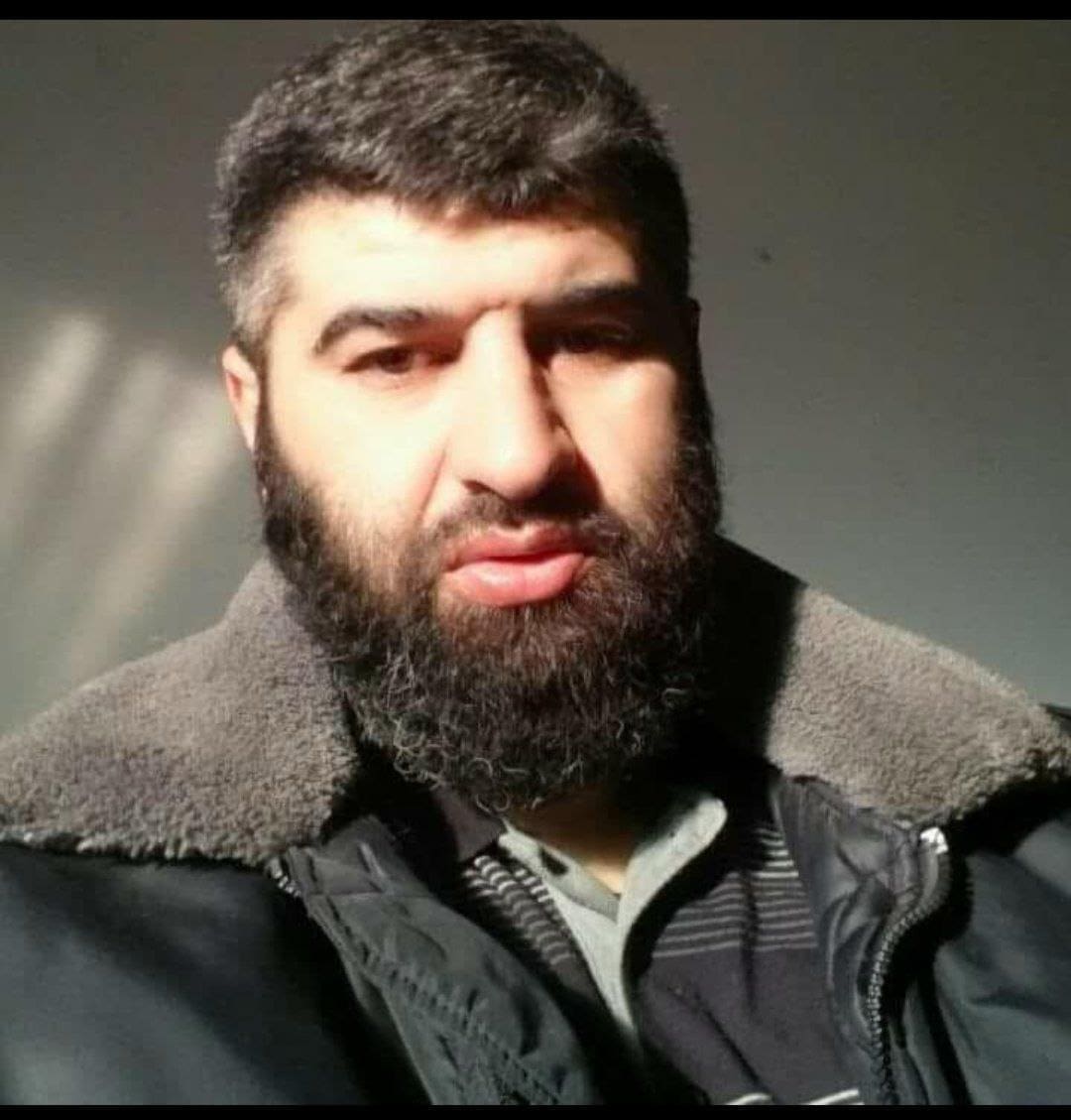
The family of the Palestinian Abd al-Mu'ti Abd al-Aziz Abu Mu'ayliq from Gaza: We thought the former Syrian regime had executed him years ago, but we were informed that he is alive and has come out of Saydnaya prison in Syria.

And after 42 years of disappearance in Syrian prisons… the Jerusalemite Walid Barakat from the village of Nabi Samuel, north-west of Jerusalem, arrives in Jordan.

Syria
Military Operations Command: After 50 years of oppression under Ba'ath rule, and 13 years of criminality, tyranny and displacement, and after a long struggle and battle, and confronting all forms of occupying forces, we announce today, on 7 Jumada al-Akhirah 1446 AH (8-12-2024 CE), the end of this dark era and the beginning of a new era for Syria.

The leader Ahmad al-Sharaa (al-Jolani) said: Ten days were enough to be freed from this nightmare that lasted more than half a century.

The Fall of Damascus Operations Room broadcasts Statement No. 1 after the fall of the regime of Assad the Nusayri from the radio and television in Damascus.
The Syrian television screen.
Also freed were all the prisons the revolutionaries were able to reach, including:
- Saydnaya prison.
- The liberation of the central prison in the city of Izraa, north of Daraa, and the release of the prisoners.
- The liberation of the Suwayda prison.
- The central Homs prison, where 3,500 prisoners were freed.

- The military police prison in the al-Qaboun neighbourhood of Damascus.
Some of the prisoners freed from the prisons of the Syrian regime did not know that Hafez al-Assad was dead, and believed that the Iraqi army under Saddam Hussein had entered Syria, living in complete detachment from reality and recent developments.
The Syrian Political Affairs Administration said following the liberation:
- The liberation of Syria represents the beginning of a new phase of economic reform. We will set priorities for developing vital sectors, creating job opportunities, and encouraging national and international investment.
- The liberation of Syria is a victory for all its sons who sacrificed for the unity of the land and the people. On this occasion, we affirm our commitment to strengthening societal unity and entrenching the principles of justice and dignity among all components of Syrian society.
- We are opening a new page in Syria's history, a page titled construction and renaissance. We will work to draw up a comprehensive plan to rebuild infrastructure and achieve sustainable development, ensuring that life returns to normal.
- We call on all Syrians who were forced by circumstances to leave their homeland to return and contribute to building the future. We will work to create suitable conditions and ensure a safe and stable environment to receive them.
- We will seek a constructive role in the region and the world that achieves security and stability.
A leader in Hayat Tahrir al-Sham said: On the occasion of the great victory and the clear conquest, today we will release Sheikh Abu Shuaib al-Masri along with other detainees.
Eng. Mohammed al-Bashir was appointed as the first head of the transitional government in the new Syria.
The week also saw the return of hundreds of Syrian refugees from Turkey to Syria via the Bab al-Hawa border crossing.
Scenes of vehicles carrying displaced people returning to their villages and towns in the Idlib countryside.
Media figure Taher Omar said: During our visit to the newly liberated areas, most cities and neighbourhoods are heavily destroyed, especially several neighbourhoods in Homs and Deir ez-Zor, several areas in Damascus and its countryside, the countryside of Idlib and Hama, and eastern Aleppo… The displaced whose homes were completely destroyed due to the crimes of the Assad regime and the occupiers will need time to return.
The Israeli occupation army also imposed closed military zones in the Golan Heights on the border with Syria, as part of reinforcing its defences after the fall of the Assad regime. Meanwhile, Russian forces evacuated their equipment from the Hmeimim airbase.
The Israeli occupation targeted in Damascus: the Mezzeh military airport, customs, intelligence and scientific research buildings, and defence facilities.
An Israeli airstrike targeted weapons and military equipment depots at the Mezzeh military airport in Damascus. The Israeli occupation army issued a warning to residents of five Syrian border towns not to move and to stay out of their homes until further notice.
Reuters said: Israel is destroying infrastructure and dozens of helicopters and fighter jets across all of Syria.
The Russian Channel One, citing the Kremlin, said: Deposed Syrian president Bashar al-Assad and members of his family are in Moscow.
The Syrian Civil Defence (White Helmets) said:
"Our teams that reached the Saydnaya prison have not found any of the secret doors being talked about. The teams are working with cutting tools, searching equipment and acoustic probes, with K9 units that include trained dogs. Accompanying us in the search are people who know every detail of the prison, in addition to relying on guidance from people whom families have contacted, who are said to know the prison's entrances and secret vaults. We are working with all our capacity, but so far there is no evidence confirming the presence of detainees within the prison's vaults or tunnels, and we will continue the search until all its sections have been verified with precision."
A young man, as we understand it, was also killed and two civilians were injured when SDF militias fired live bullets at a demonstration in the Ghuwayran neighbourhood of Hasakah.
The moment regime militia aircraft targeted media workers while covering military events in the city of Homs, resulting in the death of a media worker of the Military Operations Command, as we understand it.
Crimes of the Nusayri regime:

Important records and studies were found in one of the security branches, including records of those who attended mosques for the dawn prayer, in addition to studies concerning mosque preachers.
On 13 Muharram 1434 (27/11/2012), a circular was issued by the Syrian Minister of Awqaf requesting the prohibition of circulating the fatwas and writings of Sheikh al-Islam Ibn Taymiyyah, and prohibiting preachers from presenting any ideas based on the fatwas of Ibn Taymiyyah or on "Wahhabism".
A security report on a university student who "publishes offensive writings on her personal account about the country and the Syrian Arab Army".
A memorandum on the outcome of security surveillance of a former professor at Damascus University.
Documents found in the headquarters of the deposed regime prove that Assad's gangs carried out bombings and assassinations in Syria and attributed them to others.
Methods used to conceal Assad's crimes in Saydnaya prison.


Testimony of one of Wasl's followers on the situation in Syria under the rule of the criminal Assad regime:

"As a university student at the Faculty of Arts in Damascus, I used to hold my heart in my hands when I went out to attend classes, because it was possible that I would not return home... We never knew when one of the 'shabiha' might stop us at a checkpoint on some pretext and imprison us. We were afraid to pray at the university, because students were often jailed in the eighties and seventies merely for praying..

In addition, the security personnel, soldiers, officers, and everyone working in the state were strictly forbidden from praying, fasting, or reading the Quran. If any of them wanted to pray, he would pray in secret, and whoever did this was discovered and imprisoned. Many of the detainees in Saydnaya and other prisons and filthy slaughterhouses were state employees imprisoned only because they were caught praying.

Now you will hear stories of detainees from the nineties and eighties who were imprisoned merely for praying. In the nineties and before Bashar, in the days of Hafez al-Assad, schoolgirls were forbidden to wear the hijab or cover their hair, and a schoolgirl who entered school wearing the hijab would be beaten or humiliated and her hijab torn off in front of the school assembly!! (Of course, by hijab here is meant only a head covering, not the enveloping robe).

The greatest matter is that thousands of Syrians were imprisoned underground.. We used to hear sounds at my university that we thought were illusions or jinn, but they were the detainees beneath us.
The witness said that once, while she was in a cultural team, she was shocked by the ignorance of religion among the girls, and when she told them that celebrating Christmas is forbidden in our Islamic religion, they expelled her from the group and labelled her an extremist!
Of course, many preachers were imprisoned, and they succeeded by 70% in this matter, because moral corruption and nudity spread in Syria, and in Damascus in particular, in an unnatural way. Short clothing, not wearing the hijab, in addition to mixing between young men and women, drugs, bars, alcohol—in the latest period alcohol came to be sold openly in the streets!!
I used to wish to travel to a committed country to rest from the disgust I witnessed daily... but thank God, and God willing, Syria will be completely purified of corruption and will become a country committed in full, as I dream and more."
Mai Sabbagh, born in 2007 in the city of Homs, was detained in Homs in 2011, and to this day her fate and that of her family remain unknown.
From the archive: the Ghouta massacre that took place in 1435 AH (2013 CE), in which about 1,400 people were killed, most of them children who were asleep at the time of the attack. They were killed by suffocation from toxic gases, and this massacre is considered one of the most heinous crimes committed by the regime.
From the archive, reports: "Each time they returned me after rape, I would write on the wall (And when My servants ask you concerning Me, indeed I am near. I respond to the invocation of the supplicant when he calls upon Me). Every time. And when I left the detention centre, the verse was written 19 times on the wall."
On the site: Cries of the female captives in the Nusayri prisons in Syria
"Described as human slaughterhouses": an overview of the best-known Syrian prisons, where thousands died under torture and many were detained for many years.
Food of prisoners in Saydnaya prison.
Syrian citizens breaking a statue of Assad.
Takbeers in Daraa after the city was liberated by the Syrian revolutionaries.

"The first slap I received at 64": an elderly Syrian man distributes sweets to mark the advance of the revolutionaries, and recounts being slapped by one of the regime's soldiers for the first time when he was 14 years old.
Toppling of a statue of Hafez al-Assad in the city of Homs.
Destruction of the largest statue of Hafez al-Assad.
Scenes of takbeers from mosques in the city of Homs following its liberation.


Removal of pictures of Bashar al-Assad from Dar al-Shifa hospital on the Al-Adawi highway in the capital Damascus.
From inside the Khalid ibn al-Walid mosque in the city of Homs.
The first moments of the entry of the Military Operations Command into the city of Damascus.
The first news bulletin of Radio al-Thawra from inside the capital Damascus.
A clip showing the grave of Hafez al-Assad burning in Qardaha.
Scenes from the liberation of detainees:
A historic moment: liberation of male and female prisoners from Saydnaya prison.
Scenes of prisoners leaving Saydnaya prison.
The prisoners of Saydnaya thought their release was a pardon, but it turned out to be the fall of the criminal regime.
One of the prisoners of Saydnaya.
Detainees were liberated from Izraa prison in Daraa governorate.
Liberation of Suwayda prison.
"He asked me what my name was and sentenced me to life": a Syrian Television camera meets detainees who came out of the civil prison in Suwayda.
Scenes of prisoners leaving Suwayda prison after its liberation.
Liberation of prisoners from the Homs Central Prison.
The moment of liberating prisoners from the Balloneh prison in Homs.
"I've been sentenced to 13 years for terrorism": Syrian Television meets detainees who came out of the Homs Central Prison after the revolutionaries took control of it.
The Deterrence of Aggression Forces release detainees from the Qatana prison south-west of Damascus.
A liberated prisoner says: "Our execution was today, half an hour before the liberation."
"They thought we were coming to execute them." A young revolutionary describes the condition of the prisoners when the doors were opened to liberate them.
He refused to bomb the city of Hama, so the regime detained him for 42 years without trial. The liberation of the dean of Syrian prisoners, air force pilot Raghid al-Ttlari, from Tartus Central Prison after Bashar al-Assad fled outside Damascus.
A liberated prisoner is astonished to see his face after a long period.
Liberation of prisoners from the SDF militia prisons in Manbij.
Liberation of a Syrian detainee imprisoned since 1419 AH (1998 CE).
"Every day at least 10 bodies were taken out of our wing." A survivor of Saydnaya prison recounts his testimony of 11 years inside it.
Lebanon
The Lebanese General Security issued facilitations for all Syrians wishing to return to their country.
A liberated Lebanese man from "Saydnaya" reveals the torment he endured daily for 33 years

Lebanese Suhail Hamawi said that he breathed torment every day and had no hope of returning to his country, after spending 33 years in Syrian prisons, the last of which was the notorious Saydnaya prison in the Damascus countryside.
Hamawi, the first Lebanese to reach his country after being liberated together with other Lebanese (their number not yet specified) from the detention facilities of the Syrian regime. Hamawi was arrested by Syrian army intelligence personnel in 1991 on charges of belonging to the Lebanese Forces party, known for its opposition to the Syrian presence in Lebanon, and he is among hundreds of Lebanese missing in Syrian prisons, according to Lebanese human rights organisations.
Hamawi recounted three decades of detention, during which he moved between Anjar prison (east Lebanon), which was then under Syrian regime administration, through two prisons in Damascus and Latakia, until reaching the famous Saydnaya prison.
He continued: "During periods of detention I was in solitary confinement for 15 years, before being transferred to Saydnaya prison where I ended up in a collective cell." Some Lebanese were subjected to enforced disappearance without knowing the real reasons for their arrest, particularly during the Lebanese Civil War (1975–1990).
The prisoners in Roumieh prison in Lebanon chant takbeer joyfully at the victories achieved in Syria.
Sheikh Ahmad al-Assir congratulates the people of Syria after the liberation.
Jordan
The media spokesperson for the Jordanian Public Security Directorate announced that laboratory tests and forensic evidence confirmed that the young man returning from Syria is not "Osama al-Bataineh".
- He explained that the final result came after a large number of DNA tests were carried out on members of the al-Bataineh family, which showed no match.
- The relatives of al-Bataineh had suspected that the detainee released from Syrian regime prisons last Sunday might be their son, detained in Syria since 1986, when he was under 17 years of age, after he visited Syria.
- For its part, the Jordanian Ministry of Foreign Affairs reported that the detainee's condition is tragic, as he suffers from memory loss and has not spoken since his release.
- Sources close to the al-Bataineh tribe said they are committed to providing medical care for the person, finding his family, and handing him over to them in coordination with the official authorities.
A sacrificial celebration (dhabihat Kahlawan) marking the fall of the tyrant of Syria, Bashar al-Assad.
Sudan
The Rapid Support Forces militia shelled the city of Omdurman with intense artillery fire.
A Sudanese activist said: After 20 months of war, thousands of missing persons are held in Rapid Support Forces militia prisons in Khartoum State. All of them are detained by force and unjustly and live in very poor conditions, and dozens of them die every day as a result of torture, disease, and lack of food and water.
The emergency room of Umm Badda, west of Omdurman, announced on Sunday the death of 29 people due to malnutrition, while the number of malnutrition cases rose to 6,500. A member of the emergency room added that "the total number of cases reached 6,500, mostly among children, the elderly, and women, especially pregnant women, throughout the locality of Umm Badda." Quoted from Sudan Tribune.
The health authorities in Khartoum State also announced on Saturday the killing of a child and the injury of 14 others in a bombardment carried out by Rapid Support Forces on a medical centre and neighbourhoods of Omdurman, the third-largest city in the capital. The Khartoum State government is trying to rehabilitate and operate hospitals and health centres in areas under army control, despite being subjected to continuous Rapid Support Forces shelling.
Human Rights Watch said on Tuesday that Rapid Support Forces militias killed dozens of civilians and injured, raped and abducted many others in waves of attacks in Habila and Fayu, two towns in South Kordofan State in Sudan, between Jumada al-Akhirah 1445 AH (December 2023) and Ramadan 1446 AH (March 2024).
The governor of the Darfur region announced that 17 civilians, as we understand them, were killed as a result of Rapid Support Forces militia shelling of the city of al-Fashir.

On Wednesday, the Rapid Support Forces militia committed a new massacre in which 24 people, as we understand them, were killed, when it attacked the villages of "Sarhan, al-Adnab, al-Adeed Abu Sawar, al-Hafa'ir Hamad and al-Qal'a" in the al-Huda administrative unit belonging to the al-Manaqil locality in Al Jazirah State.
The Gezira Conference reported that the militia killed 8 citizens in the village of al-Adnab, 10 others in the village of al-Hafa'ir Hamad, and 6 from the residents of the villages of Sarhan and al-Adeed Abu Sawar, and the attack also left more than 30 injured among the citizens. In August last, the militia committed a massacre against the people of al-Adnab and Sarhan, in which more than 40 people, as we understand them, were killed.
Sudan's Rapid Support Forces militia also surrendered a unit in the town of Al-Dabba, along with a number of armoured vehicles in full equipment.
Human Rights Watch said that Rapid Support Forces killed dozens of civilians and wounded and raped and abducted many others in waves of attacks in Habila and Fayu, two towns in Sudan's South Kordofan state, in 1445 AH (between December 2023 and March 2024). The attacks, which mainly targeted civilians from the Nuba ethnic group and were not widely reported, constitute war crimes.
Human Rights Watch documented the killing of 56 unarmed people in these attacks, including 11 women and one child, based on interviews with witnesses. Rapid Support Forces executed people in their homes and shot them in the streets. The actual figures may be much higher, as most people fled in different directions after the attacks.
More on the site: here
Sudan once again tops the International Rescue Committee's watchlist of crises
Sudan topped – for the second consecutive year – the list of global humanitarian crises that will face danger in 1446-1447 AH (2025 CE), issued by the International Rescue Committee on Wednesday, followed by Gaza, the West Bank, Myanmar, Syria and South Sudan.
The report said the humanitarian crisis in Sudan is the largest since records began, and that the country accounts for 10% of all people in need of humanitarian aid, although it is home to only 1% of the world's population.
The remaining fifteen countries on the International Rescue Committee's watchlist are: Lebanon, Burkina Faso, Haiti, Mali, Somalia, Afghanistan, Cameroon, the Central African Republic, Chad, the Democratic Republic of the Congo, Ethiopia, Niger, Nigeria, Ukraine and Yemen.
Yemen
Army forces said on Saturday that the Houthi armed militia had targeted residential neighbourhoods of Taiz with various weapons. The Media Centre of the Taiz Axis said the armed group is targeting residential areas surrounding Al-Khair Mosque, Al-Tashreefat and Aqabat Muneef east of Taiz city with various types of weapons.
A Yemeni human rights observatory also revealed that a civilian was killed and another wounded with scattered injuries from the explosion of a landmine in a truck they were riding in, south of Al-Hodeidah governorate. The Yemeni Mine Observatory said Abdulkarim Abbas was killed while another person was wounded with scattered injuries, as a result of the explosion of an anti-vehicle mine in a truck on a side road in the village of "Al-Suwaidiya" in the Al-Khokha district south of the governorate.
The observatory had earlier urged citizens and travellers to exercise caution regarding mines and other explosive objects, by not driving off asphalt roads and their edges, to protect their lives.
Human Rights Watch affirmed that Yemen has become "one of the largest humanitarian crises in the world," according to United Nations data; this increases the need for funding and greater cooperation between national and international actors to provide essential aid, including food, water and medical supplies.
In a recent statement, the organisation accused the Houthi group of detaining and concealing at least 17 United Nations staff members, in addition to dozens of staff from non-governmental organisations, civil society organisations and private companies, and of continuing to detain them without charge.
Malnutrition threatens the lives of many Yemeni children
Médecins Sans Frontières warned that malnutrition threatens the lives of Yemen's children. The organisation said in its account on the social media platform "X": "The spread of malnutrition among Yemeni children has reached alarming levels, putting countless lives at risk, given the conditions that threaten the lives of many of them."
The organisation added that "from January to October, the Médecins Sans Frontières team treated 3,099 cases suffering from complications linked to malnutrition, including 3,061 cases of severe acute malnutrition and 38 cases of moderate acute malnutrition."
It pointed out that "these children, aged between one month and 14 years, were treated at Abs General Hospital in Hajjah governorate." This hospital is supported by Médecins Sans Frontières and is one of the most important hospitals in Hajjah governorate, most of which is controlled by the Houthi group. Earlier, United Nations reports warned of the threat of malnutrition to the lives of hundreds of thousands of children in Yemen, due to the deterioration of the humanitarian and economic situation in the country.
462 deaths and disappearances of migrants who crossed the sea between Djibouti and Yemen
A United Nations report revealed on Monday the death and disappearance of at least 462 African migrants crossing the sea between #Djibouti and #Yemen during the current year.
It added: "90 other deaths of migrants were also documented along the Eastern Route in 2024, although many people are likely to remain missing and undocumented."
The organisation said that, in response to the escalating humanitarian crisis in Yemen, it is expanding the voluntary humanitarian return programme, providing stranded migrants with a safe and dignified route back home. This expansion comes at a time when more than 6,300 migrants arrived in October, according to the Displacement Tracking Matrix of the International Organization for Migration.
Migrants in Yemen suffer severe deprivation, with limited access to food, healthcare and safe shelter. Many are forced to live in temporary structures or sleep in the streets, and to resort to begging to survive. This extreme vulnerability leaves them exposed to abuse, exploitation and violence.

Muammar Al-Eryani, Minister of Information in the Yemeni government, also confirmed that the Houthi militia executed the citizen Ahmed Taher Ahmed Jamil Al-Sharabi, from the Sharab area of Taiz governorate, under torture in one of its secret detention centres in the city of Al-Salih in the Al-Hawban area.
Al-Eryani explained that the Houthi militia abducted the citizen Ahmed Al-Sharabi and held him forcibly in inhumane conditions, before asking his family on 11 December to come and collect his body after he died under torture. He noted that this brutal crime shows indifference to the lives of Yemenis, and recalls the tragedy of thousands of detainees and forcibly disappeared persons in the Houthis' illegal prisons, including women and children.
The case of the Yemeni doctor "Riyadh Al-Omaisi" stands out. He travelled to Syria in 1428 AH (2008 CE) on a scholarship to study for the Arab Board at Damascus University and worked as part of his study requirements in Daraya in the Damascus countryside, before moving to Al-Mujtahid Hospital inside Damascus. His news was cut off only one month before the final examination, in 1434 AH (2013 CE).
According to the Yemeni embassy's communication at the time and statements from his family, he was arrested and summarily sentenced to death on charges of treating wounded members of the Free Syrian Army and armed groups opposed to the Syrian regime. Later, the sentence was reduced after the intervention of the Yemeni embassy during the government of National Accord headed by Basindwa, but his fate remains unknown to this day, and his family has been unable to learn any further details about his place of detention or his condition since that time.
Tunisia
At least nine killed and six missing after a migrant boat sinks off Tunisia
A judicial official said on Thursday that the Tunisian coast guard recovered the bodies of nine migrants while six others remain missing after their boat sank off the Tunisian coast in the latest migrant boat disaster in the Mediterranean.
Coast guard forces have so far rescued 27 people who were on board the boat when it broke down and sank due to bad weather. According to survivors' testimonies, the boat was carrying at least 42 people when it sank. Judge Farid Ben Jha told Reuters that search operations are ongoing for at least six migrants who were on board the boat when it sank off the coast of Chebba.
All the migrants on board the boat were from sub-Saharan African countries. Tunisia is facing an unprecedented migration crisis, and has become, alongside Libya, a main departure point for Tunisians and people from elsewhere in Africa seeking a better life in Europe.
Iraq
A martyr from Anbar governorate in Iraq, in the Amiriyat al-Fallujah district: Shiite forces and the National Security Service raided his home, clashed with him and his brother, then killed him and his mother and arrested his brother. On 9-12-2024, the martyr, as we reckon him, was broadcasting live when he was raided.

(Large-scale arrest campaigns began in Sunni cities in Iraq because of Sunnis' joy at the downfall of the Nusayri regime in Syria and their support for the people of Syria.)
After the Sednaya scandals… Iraqis speak of secret militia prisons
In the wake of the appalling images that emerged from Sednaya prison in Damascus following the collapse of the former Syrian regime, a number of Iraqis called for the disclosure of secret prisons run by militias, where the most abhorrent crimes of killing, death and torture are committed, away from the eyes of the official authority.
According to Iraqi bloggers, dozens of secret prisons are scattered across many Iraqi governorates, run by armed Shiite militias, where thousands of Iraqis are disappeared without the official authorities being aware of them.
Bloggers stated in posts on social media that many secret prisons exist in areas under militia control, such as Jurf al-Sakhar, where no one knows what is happening after senior state officials were barred from entering.
Others spoke of prisons located on private farms belonging to Shiite militia leaders, as well as other prisons in remote areas.
The bloggers called for Iraq's official authorities to act swiftly to expose these secret detention centres and to pursue and hold accountable all the parties involved, especially since the violations committed there are appalling and may amount to what was revealed in Sednaya prison in Damascus, according to Al-Madaen.
"Sednaya prison awakens the memory of Iraqi suffering"
- Torture, arrest and execution without trials.
- Iraqi prisons have witnessed the death of hundreds of detainees due to the spread of epidemics and diseases and the absence of healthcare.
- 13,000 prisoners languish in Al-Nasiriyah Central Prison.
- Iraq executed more than 140 detainees during the last two months of September and October.
Warning: the video contains scenes that some viewers may find difficult to bear.
Iraqi passports found in the basements and prisons of the former Syrian regime, with the fate of their owners unknown.
From the archive: On (21 Rabi al-Awwal 1439 AH) 10/12/2017 CE, the Yazidi "Lalish" militia, linked to the US-backed SDF militia, carried out a massacre against dozens of Sunni Iraqi civilians.
As residents of the village of Ain al-Ghazal, belonging to the Al-Qayrawan subdistrict north-west of Mosul, were returning, the "Lalish" militia, led by the regiment commander Khal Ali, intercepted the villagers' route to carry out summary executions against them and then burned the bodies.
The operation took place in the presence of the director of the northern subdistrict, a man called Khadida Kujo, and filmed footage broadcast after the operation showed that he was supervising its implementation. 52 Iraqis – as we reckon them – were killed in this massacre, including women and children, most of them from the Bu Mutiyut and Al-Juhaysh tribes, who were on their way back to the village from which they had been displaced.
The militia that carried out the massacre today operates within the "Popular Mobilisation Forces" militias. The Iraqi judiciary has not opened any investigation into the massacre.
A video filmed a few days ago in a camp of exile for Sunni Iraqis from the people of the city of Jurf al-Sakhar, south of Baghdad, which is occupied by Iran-affiliated militias and has prevented its residents from returning for 11 years, who are subject to both exile and media marginalisation, with no one taking up their defence in a country that has been seized by Iran.
Turkey
Once again, a Uyghur mother with no one to support her has been detained!
On 29 Jumada al-Ula 1446 AH (11 December 2024 CE), Bistan Eisa, a mother from East Turkistan living on Gurkan Street in the Çekmeköy district on the Anatolian side of Istanbul, was subjected to a morning raid that ended in her arrest!


The mother, currently held in the Gaziantep... (deportation centre in Çatalca), has two children!
Takbirs in the Fatih Mosque in Istanbul in celebration of the fall of Bashar al-Assad's regime.
South Sudan
"Rapid" spread of cholera in South Sudan
Médecins Sans Frontières warned that the cholera epidemic "is spreading rapidly" in South Sudan, which hosts thousands of refugees. The organisation stated in a statement that at least 737 cases were recorded over one month in Upper Nile state, noting that the epidemic had been confined to Malakal, the capital of this state, which had been a centre of commercial exchange before it sheltered refugees, but had spread to other areas, including the capital Juba.
Malakal has received large numbers of South Sudanese who returned to their country fleeing the conflict in neighbouring Sudan, where more than 37,000 cholera cases have been counted, according to the organisation. A medical source had told Reuters in mid-last month that dozens of residents fleeing the besieged city of Al-Hilaliya in Sudan's Al-Jazirah state had tested positive for cholera, a development that provides a possible explanation for the hundreds of reported deaths there.
While local activists say more than 300 people have died, a group of Al-Hilaliya residents in the diaspora provided Reuters with a list of more than 400 deaths, a figure they say is increasing by the hour according to Al Arabiya TV.
Afghanistan
The Islamic Emirate of Afghanistan said that the Minister of Refugees, Haji Khalil Al-Rahman Haqqani, was martyred, as we reckon him, in an attack it described as "treacherous" inside the ministry building.
The attacker exploited Khalil al-Rahman's compassion for the wounded and his response to their call when he came out of the mosque; he said, "Let him present what he has," and when he approached him, he detonated himself.
"To the descendants of Khalid ibn al-Walid in Damascus, we congratulate you on the victory" – part of the celebrations in Afghanistan of the fall of the Nusayri regime in Syria.
Pakistan
800 Afghan migrants arrested in Pakistan on charges of protesting
The Ministry of Refugees and Returnees said 800 Afghan migrants had been arrested in Pakistan on charges of participating in anti-government protests in the country. The ministry stated in a statement that security forces in Islamabad carried out large-scale operations in recent days to arrest migrants, detaining 800 migrants from Afghanistan on charges of participating in protests by the Pakistan Tehreek-e-Insaf party.
The Ministry of Refugees and Returnees called on the Pakistani government not to use Afghan migrants as political tools. Some Pakistani officials had earlier claimed that a number of Afghan citizens had been arrested for their involvement in the anti-government protests organised by supporters of Imran Khan.
Mirwais Khawarin, an Afghan migrant in Pakistan, said: "Police arrested many migrants who went to the market to solve their problems under various pretexts," according to Tolo News.
India
Tensions erupted at Varanasi college after students protested prayers inside the mosque located on the campus
A tense atmosphere enveloped the renowned Udai Pratap College in Varanasi, where a large number of students staged a demonstration on Friday (6 December) demanding the removal of the mosque located inside the campus. Hundreds of students gathered at the college gate, chanting "Jai Shri Ram" and waving saffron flags. They tried to enter the campus, but police forces at the gate prevented them from doing so.

Fifteen minutes of its own.
Student leader Vivekanand Singh stated that if the land on which the mosque stands is not returned to the Waqf Board, the structure must be removed from there. Amid rising tension, police on Thursday imposed restrictions on the entry of outsiders into the campus, allowing only students with valid university identity cards to enter.
Mohammad Yasin, Assistant Secretary General of the Mosque Management Committee, had previously stated that he sent a letter to the Central Waqf Board in Uttar Pradesh on Tuesday to verify the status of the mosque. Yasin said the Central Waqf Board confirmed that its notification issued in 2018, which claimed the mosque belonged to the Waqf, was cancelled on 18 January 2021.
Hindu calls to demolish Shahi Mosque in India
A historic mosque built nearly 500 years ago, which Hindus falsely and baselessly claim was built over the ruins of their temple. Based on this baseless claim, the regime sent an archaeological survey team, and this government team chanted extremist slogans, so the Muslims rose up and police opened fire, until 3 were martyred - as we reckon them.
Uyghurs
In a video published on 9 Jumada al-Akhirah 1446 AH (10 December 2024 CE) on "X" by Uyghur emigrant Arsalan Hidayat, a group of Uyghur emigrant mujahideen, carrying the Uyghur flag, addressed worshippers in a mosque in Latakia, Syria.
The spokesman of the Turkistan Islamic Party, speaking in Arabic to those present, said they had emigrated to Syria in 1433 AH (2012 CE) at the beginning of the "revolution".
In his address to the worshippers in the mosque he said: "We are your emigrant brothers from East Turkistan. Some of you hear about East Turkistan, some of you do not hear about East Turkistan... East Turkistan is currently under Chinese occupation for 65-70 years, and praise be to God, Lord of the Worlds, there are your Muslim brothers, Ahl al-Sunnah, 35-40 million people, praise be to God, Lord of the Worlds.
We are the sons of East Turkistan, and our Lord, blessed and exalted, favoured us and opened a path for us to His way, glory be to Him.
We had originally emigrated from our country. They expelled us from our country, oppressed us, killed us, imprisoned us and expelled us from our country, and we left the country and came, praise be to God, Lord of the Worlds... We saw the people of Sham, may God preserve them, the people of generosity, the people of benevolence. May God reward you with good, and they welcomed us. You welcomed us until now, right?
Some of us today, it is the first time we see each other, the first time we have met today, but we have been present in Syria, in blessed Sham, since 2012, the beginning of the revolution. When we first came, we met in Aleppo. From Aleppo we spread out; we went towards Ras al-Ayn. We were stationed in Ras al-Ayn, we were stationed in the city of Aleppo, in the north of Hama, and in the last period we were present in Sahl al-Ghab, Jabal Turkmen, Jabal al-Akrad and Jabal al-Zawiya. Praise be to God, Lord of the Worlds, we are here today, and the great victory is from God, Mighty and Majestic. Our Lord, blessed and exalted, has honoured us, our Lord, glory be to Him, has given us, our Lord, glory be to Him, has granted us victory. Some of us had gone to Damascus, reaching Damascus, and they arrived, and the first of them returned to you here, and some of them were going towards the west, towards the country, your beautiful country, may God preserve it; the country is beautiful, as the people are beautiful, may God preserve them, good and generous.
We, your brothers, say: we did not come to disturb you or to harm you. God willing, you will see from us all good, by God's permission, Mighty and Majestic, just as we have seen from you all good since 19 years, by God's permission, Mighty and Majestic. Here your brothers, your sons, have returned, because we, as we said, left a country, left the family, left the mother, left the father, and we found the mother, found the father, found the family here with us in Syria, and you are our family, you are our sons, you are our fathers, you are our brothers; we have none other than you after God, Mighty and Majestic. May God reward you with good and bless you, and each one of us, each one of us, young men, mujahideen of East Turkistan. Peace be upon the people of this country, and everyone who attended with us, and everyone inside Sham and outside Sham, and the whole world, God willing. Peace be upon you, and the mercy of God and His blessings."
Rohingya
Arakan Army forcibly seizes crops from Rohingya farmers
On Saturday, soldiers of the (separatist) Arakan Army began forcibly confiscating crops from Rohingya farmers in Rakhine State in western Myanmar, depriving large numbers of them of their only means of livelihood.
An Arakan News Agency correspondent reported that Arakan Army soldiers confiscated vegetables, coconuts and fruits grown by Rohingya inside their homes and on their land in the town of "Maungdaw", noting that many poor people depend on selling these crops to provide the basic needs of their families.
The correspondent confirmed that these recent developments and violations against the Rohingya add further complications and hardships to their lives, and represent a dangerous shift in the lives of families already suffering from the practices of the Arakan Army.
Since the Arakan Army took control of wide areas of Rakhine State, it has begun carrying out large-scale repression against the Rohingya, including forced recruitment of young people, imposition of exorbitant taxes, blockades and forced displacement, according to the Arakan News Agency.
From a Rohingya refugee camp while waiting to receive water. Limited access to water in refugee camps in Bangladesh is deepening trauma and affecting the mental health of Rohingya refugees.
Arakan Army bans movement on the Naf River on the border with Bangladesh
The (separatist) Arakan Army announced the indefinite ban of all transport on the Naf River, which separates Rakhine State in western Myanmar from Bangladesh, for what it claimed were military purposes. In a statement, the Arakan Army explained that it had decided on Sunday to ban movement on the river to prevent the escape of Myanmar army elements and the armed groups loyal to it.
The Arakan Army said in its statement that elements of the Myanmar army, the Arakan Rohingya Salvation Army (ARSA), the Rohingya Solidarity Organisation (RSO) and the Arakan Rohingya Army (ARA) are trying to flee across the Naf River using boats, adding that other elements are still scattered in the area and are engaged in setting ambushes and carrying out criminal activities, and that clashes with them are ongoing around the "Nakhakha-5" base and in other areas of "Maungdaw".
Rohingya activist Abu al-Qasim told the Arakan News Agency that the Arakan Army's ban on movement on the Naf River cuts another lifeline for the Rohingya, explaining that they used to find ways to cross the river into Bangladesh to obtain medical care or in emergencies.
The violations faced by the Rohingya.
Bangladesh
Celebrations in Bangladesh over the fall of the Syrian regime. Among the chants of the Bengalis: "Our path, our path... jihad, jihad."
Iran

According to a report by the Sunni Rights organisation in #Iran, on Saturday 7 December, Iranian security forces arrested "Amid Hamidi", a teacher at Shahid High School in the city of Kamyaran, and took him to an unknown location.
According to sources, security forces arrested this Kurdish teacher at the school where he worked without presenting any judicial order. According to the source: after Mr Hamidi's arrest, security forces raided his family's home and confiscated some of his personal belongings.
So far there is no information on the reason for the arrest or the charges brought, and despite his family's efforts to learn his fate, these have not produced any result.
Nigeria
Dozens abducted by gunmen in a village in north-west Nigeria


Armed men abducted dozens of women and children in north-west Nigeria, in the latest series of kidnappings that the region has suffered. Police said the incident took place on Sunday in the village of Kaffin Dawa in Zamfara State. Residents reported that men carrying assault rifles moved from door to door, abducting people.
"We found out they abducted more than 50 women, including married women and girls," said Hassan Yau, a resident who managed to escape but whose younger sister was abducted. Another resident, quoted by the Nigerian news site Daily Trust, said: "Fear gripped the entire village as gunfire echoed throughout the operation," and reported that 43 people had been abducted.
Zamfara police said they had deployed additional security forces in the area.
Kidnapping for ransom by armed men, known locally as bandits, is widespread in north-west Nigeria due to high levels of poverty and unemployment and the proliferation of illegal firearms. In March of this year, armed men abducted more than 130 students in the north-west town of Kuriga for ransom.
At that time the government said the students were released "unharmed" several weeks later after intensive negotiations "in the background". At least 1,400 children have been abducted since 1435 AH (2014 CE).
Muslim minorities
A study published recently on Tuesday shed light on widespread bias against Muslims in British media, as GB News accounted for half of the British news channels covering Muslims and Islam, and most of its coverage contains negative imagery.

After a two-year analysis, research produced by the Centre for Media Monitoring (CFMM) showed "structural and systematic bias in GB News reporting on British Muslims". According to the report, the channel's coverage focuses "excessively" on Muslims approaching an "obsession" that "regularly demonises their beliefs".
The report noted that "stories about Islam are overwhelmingly negative" and fail to understand the diverse nature of Muslim communities in the United Kingdom. The findings revealed that GB News mentioned Muslims or Islam more than 17,000 times in its output, representing nearly 50% of total references on UK news channels. BBC News and Sky News accounted for 32% and 21% respectively.
The report said Islamophobia was referenced on GB News on 1,180 occasions, representing 60% of all references when compared with BBC News and Sky News, but it indicated that GB News stories were "overwhelmingly" directed toward "the trash of the concept of Islamophobia".
Coverage during the violent far-right riots
The study showed that during the summer riots, GB News accounted for 62% of all segments on British news channels that linked Muslims to the riots. It said this figure was the highest of any news channel and three times what was broadcast by BBC News or Sky News.
The far-right riots that broke out across the United Kingdom followed a stabbing incident in Southport on 29 July.
The violent disorder fuelled false claims online that the suspect in the stabbing of three children in Southport was a Muslim asylum seeker. The attacker, identified as Axel Rudakubana, 17, from Cardiff and with Rwandan parents, did little to deter the far-right mobs. "GB News repeatedly framed Muslims as perpetrators of violence rather than victims of violence, downplayed attacks on mosques and Muslim communities, contributing to a biased narrative."
More on the site: "Structural and systematic bias" in British media coverage of Muslims
Islamophobia and anti-Muslim racism in Germany
People of migrant background make up around 30% of Germany's population, equivalent to 25 million people, a quarter of whom live in the northern states of Germany. Nevertheless, many of them, especially Muslims, face systematic discrimination.
The media often portray Muslims, especially Arabs, negatively, and publish narratives such as "there are too many of them" or "they must be deported". This discourse has contributed to normalising a degree of racism within society, making it appear acceptable.
A recent report pointed to a notable increase in Islamophobic crimes in Germany, especially after major events such as the floods. For Muslims in Germany, life remains full of challenges. Although they belong to the third generation - born and raised in Germany, with roots going back to their grandparents - their acceptance as Germans remains out of reach.
One testimony shows how a Palestinian family, despite its deep ties to Germany, continues to face racism. The incidents they face include the painting of Nazi symbols (the swastika) on mosques, and the assault of women and pushing them towards railway tracks after being accused of belonging to "Hamas", just examples of the hostility they endure.
Many Muslims feel exhausted by the daily experiences of racism, yet they are reluctant to speak about them out of fear of the consequences. Over the past year, Islamophobia in Germany has seen a significant increase. Pro-Israeli and other right-wing media outlets, along with some politicians, have contributed to inflaming hostility towards the Muslim community.
Press TV.


