


From India and China to Ethiopia, Russia, Europe and the Americas, hundreds of millions of Muslims live outside countries where Muslims are the majority. Some of these communities are older than their modern states themselves, some were formed through migration in recent decades, and others face exceptional circumstances related to citizenship, discrimination, displacement and statelessness. This is a study of the map of Muslim presence outside majority territories, its size, its diversity, and the main challenges it faces.
When "the Muslim world" is mentioned, attention often turns to the Middle East and North Africa, or to countries such as Indonesia, Pakistan and Bangladesh. But this picture reveals only part of the real distribution of Muslims across the globe. Islam is a universal religion, and a large share of its followers live in countries where Muslims do not form the majority of the population.
According to the latest comprehensive reconstruction of the global religious landscape published by the Pew Research Center, the number of Muslims (generally, people affiliated with Islam, without distinction as to the reality of their affiliation) reached about 2.02 billion in 2020, or around 25.6% of the world's population. Their number grew by about 347 million over one decade, making Islam the fastest-growing major religion in the period from 2010 to 2020. Most important for our topic, around 21% of the world's Muslims live as a religious minority within their countries, which corresponds roughly to more than 400 million Muslims. Muslims also form a majority in only 53 countries and territories, while the rest are spread across dozens of other countries.
There is another geographic fact that overturns the common perception: 59% of the world's Muslims live in Asia-Pacific, not in the Middle East and North Africa. In 2020, Asia-Pacific had about 1.2 billion Muslims, compared with about 414 million in the Middle East and North Africa and 369 million in sub-Saharan Africa. For this reason, the study of Muslim minorities cannot be reduced to the Muslims of Europe and America, however important those communities are.
What do we mean by a "Muslim minority"?
This study primarily refers to Muslims living in a country where Muslims make up no more than 50% of the total population. This is a demographic definition, not a judgment on their political or social situation; Muslims may be only 1% of a country's population, or they may be 30 or 40% and still remain a minority at the national level.
Nor does the word "minority" necessarily mean a migrant community or one that is recent to the country. The Muslims of India, China, Ethiopia, Russia, Sri Lanka and southern Thailand, for example, have long historical roots, and in some regions Muslims form a local majority even though they are a minority at the national level. By contrast, a large share of Muslim communities in Western Europe, Canada and Australia were formed during modern waves of migration, followed by second and third generations born in those countries and holding their citizenship.
This distinction is essential, because the situation of a historical minority tied to a land, identity and local language can differ radically from that of an immigrant community, just as the situation of citizens enjoying all the rights of nationality differs from that of a stateless group such as the Rohingya.
Figures also need to be treated with caution. Some countries record religion in their census, some, such as France, do not conduct a comprehensive religious census in the same way, and still other countries provide no recent data at all. Pew based its global estimates on more than 2,700 censuses, surveys and statistical sources covering 201 countries and territories that represent 99.98% of the world's population, but it stresses that the numbers of adherents of religions remain approximate estimates and should not be read with false precision.
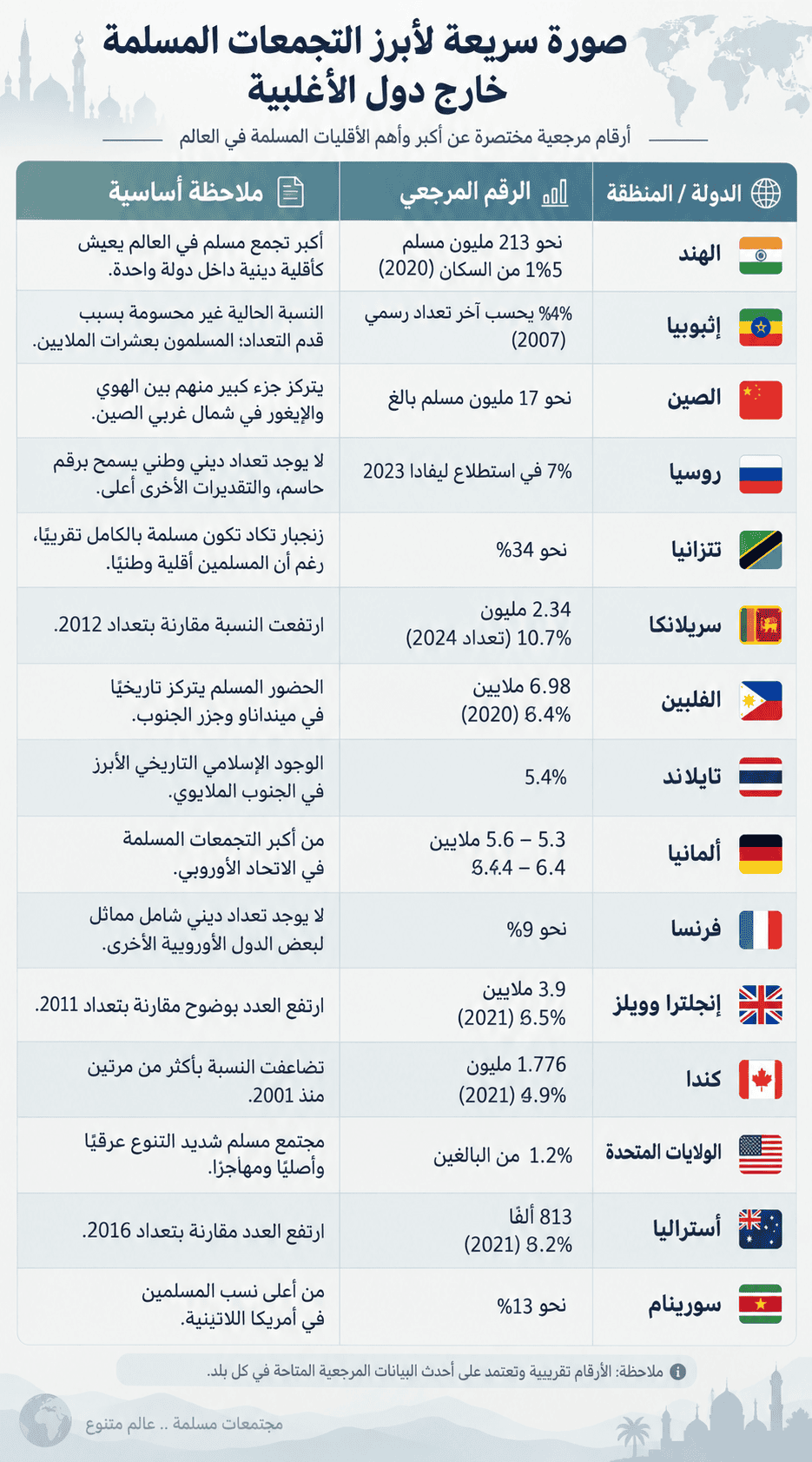
These figures are not a comprehensive list of all minorities, but keys to the most important or most significant communities. There are also millions of Muslims in African countries such as Kenya, Ghana, Cameroon, Mozambique, Ivory Coast and Mauritius, and in European countries such as Italy, Spain, Belgium, the Netherlands, Sweden, Austria and Switzerland, in addition to smaller communities in Latin America, Japan, South Korea, New Zealand and elsewhere.
India: the largest Muslim minority on earth
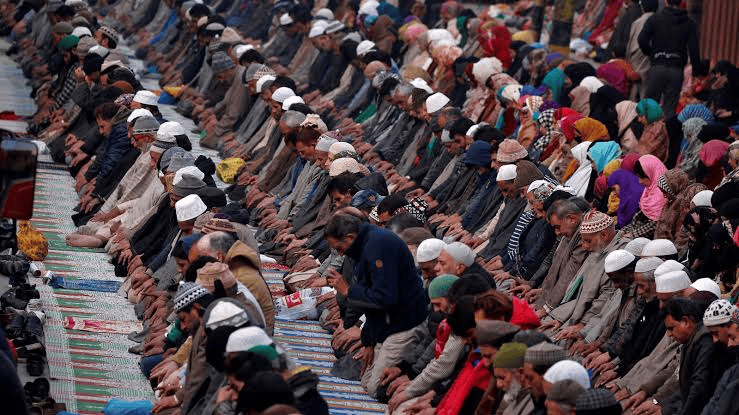
India is the clearest case showing that the term "minority" can be misleading if it is understood to mean a small number. Pew estimated the number of Muslims there in 2020 at about 213 million, or nearly 15% of the population, placing India among the three countries with the largest Muslim populations worldwide that year, alongside Indonesia and Pakistan, even though India is a country with a Hindu majority. It is the only country among the ten largest in terms of Muslim population where Islam is not the majority religion.
The Muslim presence in the Indian subcontinent is not the product of recent migration; it extends across centuries of political, commercial and cultural history. Muslims today live across various states, with varying densities, and form an integral part of Indian society, its languages and its cultures.
But the large population does not mean that the problems of minority status are absent. In September 2024, United Nations special rapporteurs sent a communication to the Indian government regarding allegations of hate speech and incitement to violence and boycott against the Muslim minority. Amnesty International documented 128 demolitions of property in five states during a period it studied from 2022, which it said affected at least 617 people and which it described as punitive demolitions targeting Muslims. These remain characterizations issued by the UN and rights bodies cited, and not a general count of all the experiences of Indian Muslims, which may paint an even more tragic picture.
China: Hui, Uyghurs and the diversity of Muslim experiences
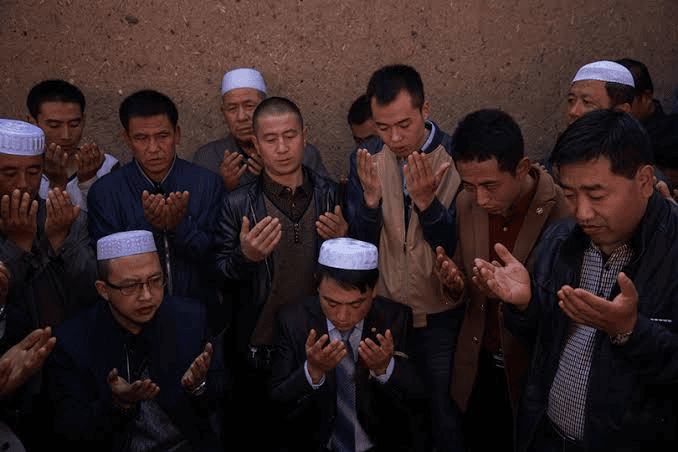
China is likewise a complex case, because "Muslims in China" are not a single ethnic group. The Pew Center points to ten ethnic groups historically associated with Islam, the largest of which are the Hui and the Uyghurs. Muslims are concentrated especially in Xinjiang (East Turkestan), Ningxia, Gansu and Qinghai, with the Hui also present in other broad areas of the country.
Pew estimates the number of adult Muslims at about 17 million, while counting members of the ten ethnic groups with Islamic heritage leads to an estimate of about 18 million adults in 2020. The differences arise because ethnic affiliation does not always equal religious affiliation: not every member of an ethnic group with Islamic heritage is necessarily a practising Muslim or identifies as one, and there are limited numbers of Muslims among the Han.
The situations of the Hui and the Uyghurs differ radically. In Xinjiang (East Turkestan), an assessment issued by the UN Office of the High Commissioner for Human Rights in 2022 concluded that the scale of arbitrary and discriminatory detention affecting Uyghurs and other predominantly Muslim groups may amount to international crimes, in particular crimes against humanity. The Chinese government, for its part, rejects these allegations, saying that its policies in Xinjiang targeted terrorism and extremism, and that accusations of religious persecution or re-education camps as described by its critics are untrue. Nevertheless, Beijing has not been able to refute the human rights documentation which, taken together, points to a genocide with all its elements being carried out against Muslims in East Turkestan.
The Rohingya: when a religious minority meets statelessness
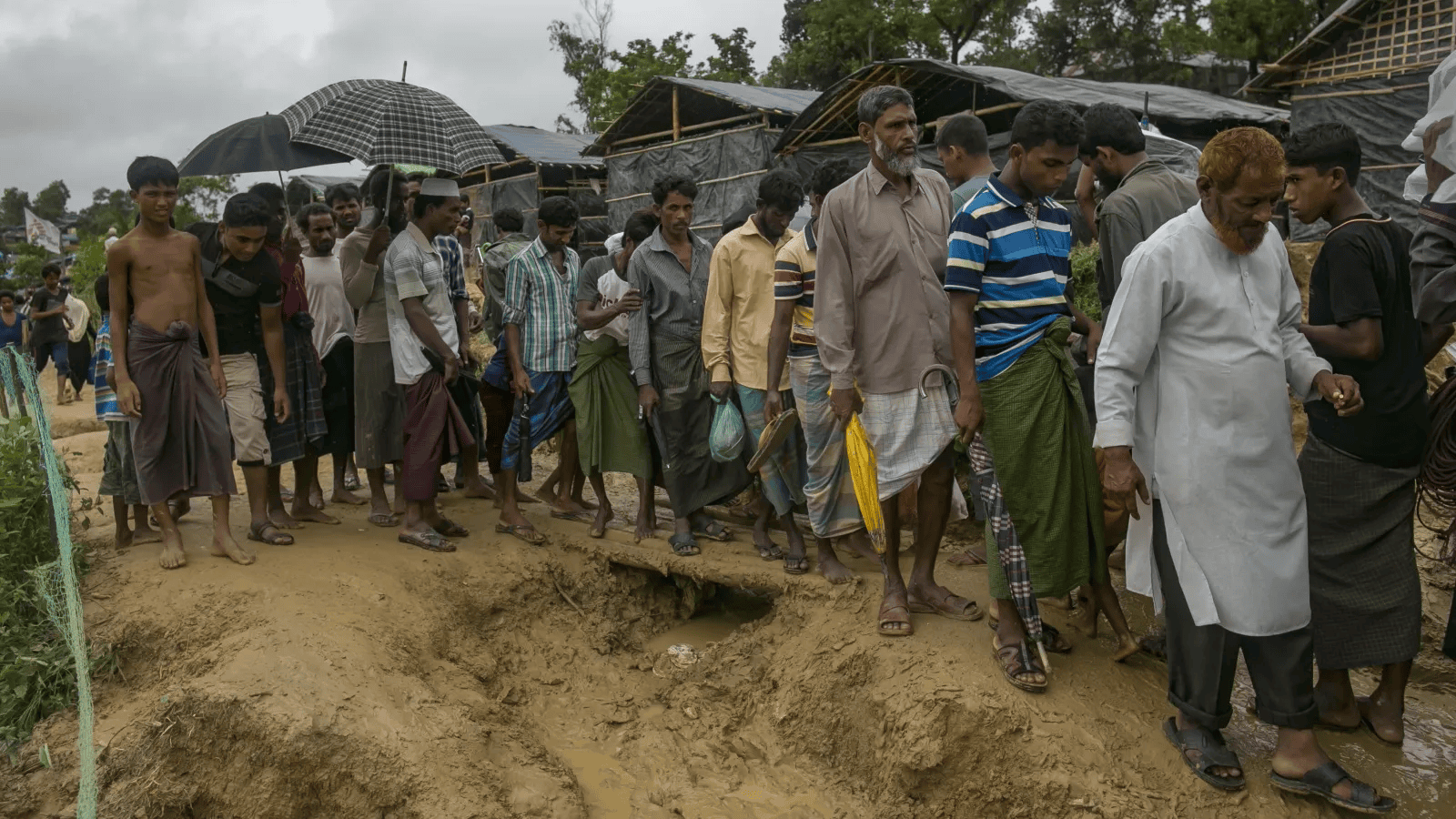
The Rohingya case represents one of the most complex models in the map of Muslim minorities. In Myanmar's 2014 census, the recorded share of Muslims was 4.3% of the population, but the country's religious data alone cannot explain the Rohingya issue, given the problems of enumeration, exclusion and subsequent displacement.
The United Nations High Commissioner for Refugees describes the Rohingya as an ethnic minority denied citizenship in Myanmar, which has made them the largest stateless population in the world. Most of the refugees in Bangladesh fled during the major wave of violence in 2017. By 30 June 2026, the number of registered Rohingya refugees in Bangladesh reached about 1.2 million people, including more than 1.166 million in the Cox's Bazar district and about 33.8 thousand on Bhasan Char island.
Here the matter becomes broader than freedom to practise religion; it is linked to nationality, legal recognition, land, security, return, and access to education, work and basic services.
Southeast Asia: minorities that can become local majorities
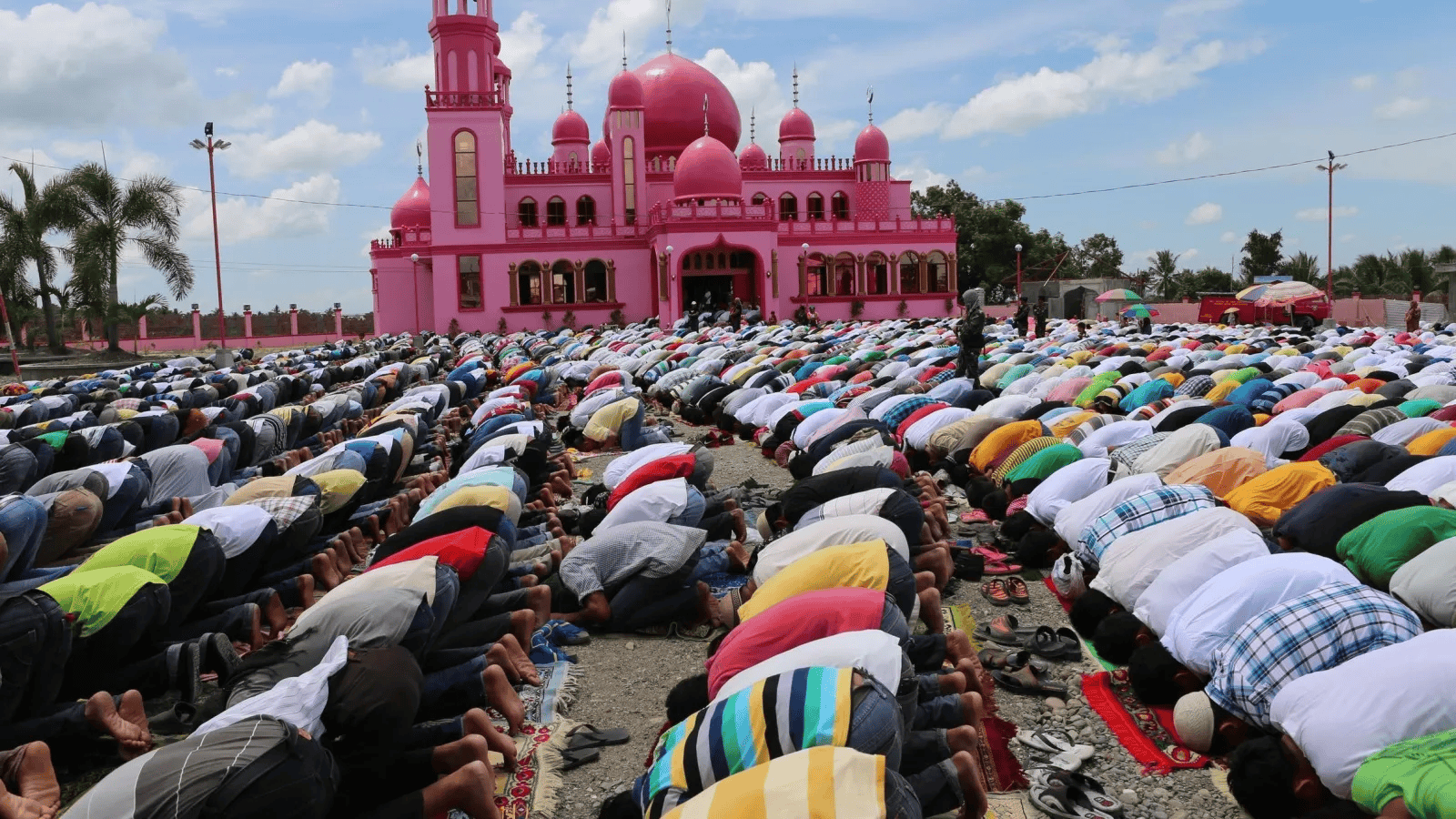
In the Philippines, the 2020 census counted about 6.98 million Muslims, representing 6.4% of the population. At the national level the figure appears relatively limited, but the geographic reality is different: Islam is historically tied to Mindanao and the Sulu archipelago and the Moro communities, and decades of conflict and negotiation led to the establishment of the self-governing Bangsamoro region.
In Thailand, Muslims make up about 5.4% of the population according to an official survey from 2018. The historical Muslim presence is concentrated especially in the far south, where religious identity intersects with local Malay identity. This is another example of the importance of distinguishing between the national share and the regional map: what appears to be a small minority when the whole country's population is counted may be a major component or a majority in a specific area.
As for Sri Lanka, the 2024 census, whose final results were published in 2026, showed 2,337,379 Muslims, representing 10.7% of the population, compared with 9.7% in 2012. These are among the most recent official data available for any large Muslim minority in Asia.
Sub-Saharan Africa: a map no less important than Asia's
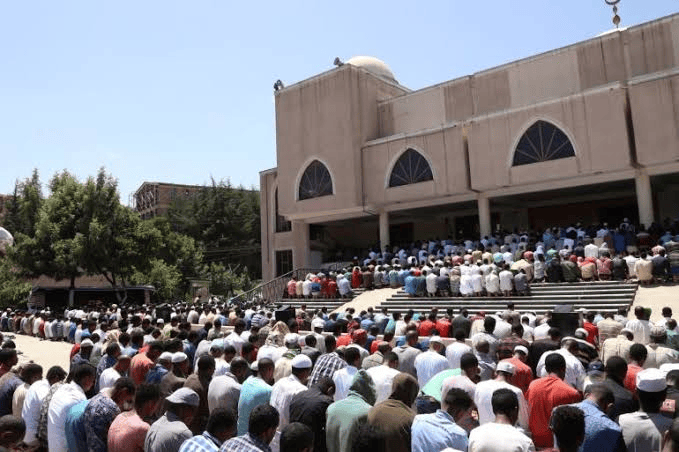
Many media maps overlook the size of Islam outside the Muslim-majority countries of Africa. Sub-Saharan Africa had about 369 million Muslims in 2020, making it the third-largest region in the world by number of Muslims after Asia-Pacific and the Middle East and North Africa.
Ethiopia stands out as one of the most important cases. The most recent comprehensive official religious census is still that of 2007, which recorded Muslims at 34% of the population. Although this figure is old and cannot be mechanically projected onto 2026, the country's large population means that Ethiopian Muslims form one of the largest Muslim communities outside Muslim-majority countries. A more recent demographic report notes that observers believe the Muslim share has risen since the 2007 census, but no new census exists that would allow the extent of change to be determined with confidence.
Ethiopia also holds an exceptional place in early Islamic history, which gives the Muslim community there a historical depth that differs entirely from the model of recent migrant communities.
In Tanzania, sources used in religious freedom reports estimate the Muslim share at about 34%, with a major historical concentration on the coast. The most striking geographic paradox is that Zanzibar is about 99% Muslim, although it is part of a country where Muslims are a minority at the national level.
In Mozambique, Muslims represent an important historical bloc, especially in the north and coastal areas, and earlier official estimates place their share at roughly one-fifth of the population.
Significant communities also exist in Ivory Coast, Cameroon, Ghana, Kenya, Uganda, Malawi, Mauritius and South Africa. These examples show that modern political borders do not always coincide with religious maps: ancient trade routes, internal migrations and historical kingdoms have made Islam extend along geographic belts that cross today's borders.
It is important to exclude Nigeria from the definition of a "Muslim minority" under this study's criteria, even though it often appears on older maps as having Muslims close to half the population. Pew's most recent estimates place Muslims at 56.1% in 2020, about 120 million people, and so, according to these data, Nigeria is a country with a Muslim majority, although the religious balance between Muslims and Christians is very close.
Russia: a vast historical minority that is difficult to count
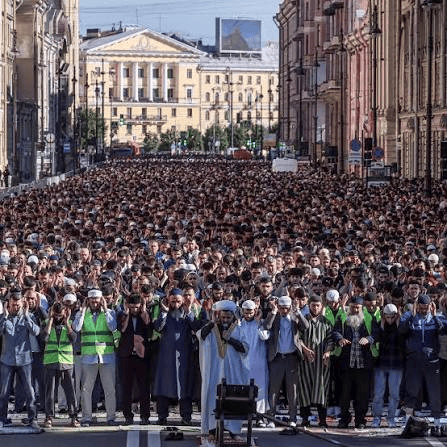
Islam is not a new arrival in Russia; it is an ancient part of the history of the Volga basin, the Caucasus and northern Eurasia. The Russian Muslim map includes the Tatars, the Bashkirs and the peoples of the North Caucasus, as well as millions of migrants and workers arriving from Central Asian countries.
Yet determining the number of Muslims in Russia precisely is difficult, because the census does not provide a direct religious figure that can be relied upon. A survey by the Levada Center published in 2023 found that 7% of respondents described themselves as Muslims, while Russian Islamic institutions give much higher estimates; the head of the Spiritual Administration of Muslims of Russia previously stated that the number reaches 25 million. Estimates also suggest six to seven million migrants from Central Asia, the majority of whom are Muslim. Therefore any single figure for Russia's Muslims must be treated with caution.
Historically, Muslims are concentrated in the North Caucasus and the Volga and Ural regions, alongside large communities in Moscow, Saint Petersburg and Siberian cities. Here again we see that describing them as a "minority" at the level of the Russian Federation does not reflect the fact that they are a majority or a principal bloc in specific republics and regions.
Western Europe: from "communities" to established European societies
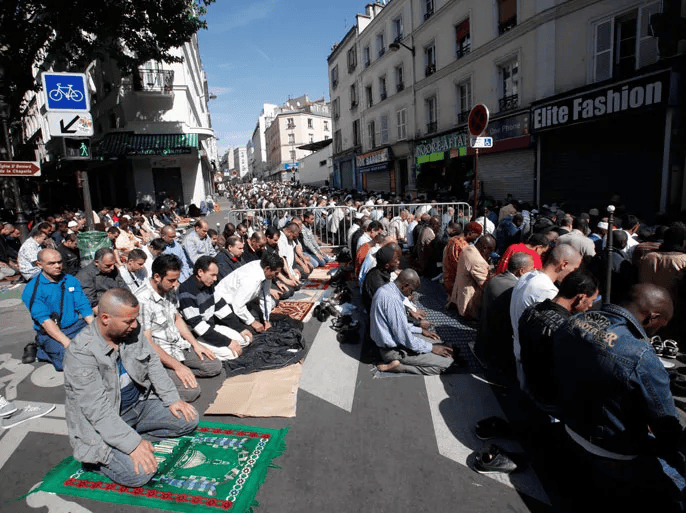
The share of Muslims in Europe as a whole reached about 6% in 2020. But the picture varies sharply from country to country: there are historical communities in the Balkans and Russia, and communities formed primarily through migration in Western and Northern Europe.
In Germany, the Federal Office for Migration and Refugees estimated the number of Muslims with a migrant background from Muslim-majority countries at between 5.3 and 5.6 million people in 2019, that is, between 6.4 and 6.7% of the population, with people of Turkish origin remaining the largest single group, alongside a notable growth in Arab, Asian and Balkan diversity.
In France, it is difficult to give a figure that matches British census figures, for example, because methods of collecting religious data differ. Pew estimated Muslims at around 9% of the total population in 2020, while a joint survey by INSEE and INED in 2019–2020 found that 10% of the population of metropolitan France aged between 18 and 59 identified as Muslim, making Islam the second-largest religious affiliation in this age group after Catholicism. The age-group percentage of the survey cannot be directly converted into a percentage of the entire population of France across all ages.
In England and Wales, the 2021 census provided a more direct figure: 3.9 million Muslims, representing 6.5% of the population, compared with 2.7 million and 4.9% in the 2011 census. In other words, the Muslim community grew by about 1.2 million people over one decade.
The presence is not limited to these three countries. Muslim communities have become a stable element of the demographic makeup of Belgium, the Netherlands, Spain, Italy, Sweden, Austria, Switzerland, Norway and other countries.
Europe also shows that legal integration and citizenship do not necessarily eliminate social discrimination. In a study by the European Union Agency for Fundamental Rights that included 9,604 Muslims, both immigrants and their children, in 13 European countries, 47% said they had experienced some form of racial discrimination in the five years before the 2022 survey, and 35% in the previous year. The figure should be read within the scope of the study itself; it does not mean that 47% of all Muslims in Europe experienced discrimination, but applies to the sample, groups and countries covered by the survey.
This shift from "migrant workers" and temporary communities to European generations born in the country is perhaps the most important change to have occurred in the map of European Islam over the last half century.
North America: Relatively Small and Rapidly Consolidating Communities
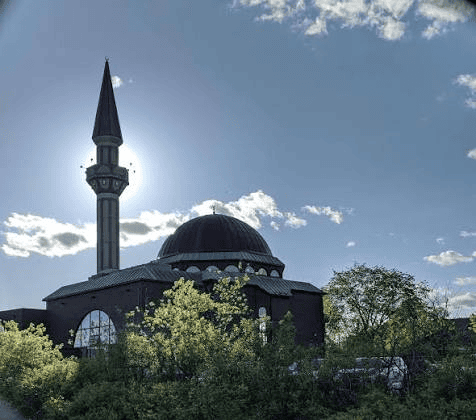
In Canada, the official census provides a clear view of the change. Muslims rose from 579,640 people, or 2% of the population, in 2001, to 1,775,715 people, or 4.9%, in 2021. The largest number is concentrated in Ontario, where Muslims numbered around 943 thousand and 6.7% of the province's population, followed by Quebec with more than 421 thousand. The median age of the Muslim population is also lower than the Canadian average: it was 30 years in 2021, compared with 41 years for the entire population.
In the United States, the federal census does not collect data on religious affiliation in the way some countries do, so figures rely on survey studies. The Pew Research Center's "U.S. Religious Landscape" study for 2023–2024 found that 1.2% of American adults identify as Muslim.
The American Muslim community is highly diverse; according to the same study, no single ethnic group forms a majority among Muslims: around 30% were classified as Asian, 30% as White under the US statistical classification, 20% as Black, and 11% of Latino origin, while 59% of adult Muslims were born outside the United States. This distinguishes the American experience from many European experiences in which Islam has historically been associated with more specific migration routes.
Australia and the Pacific
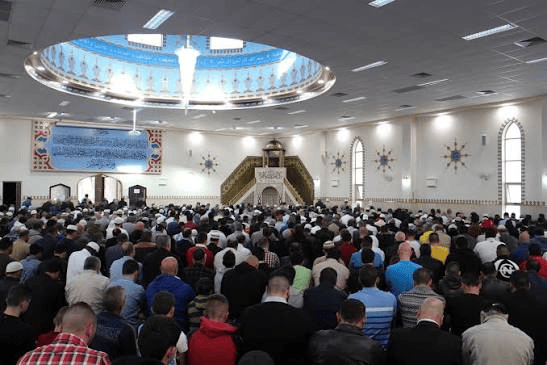
The 2021 census of Australia recorded 813,392 Muslims, or 3.2% of the population, compared with 604,244 Muslims and 2.6% in 2016. This increase reflects both migration and natural growth, within a society of great religious and ethnic diversity.
In New Zealand and other Pacific islands there are smaller communities, while a territory such as the Cocos (Keeling) Islands, an Australian territory, offers an opposite example, as there are local areas with a large Muslim majority even though Muslims are a small minority at the general Australian level.
Latin America and the Caribbean: Small but Long-Standing and Multi-Origin Presence
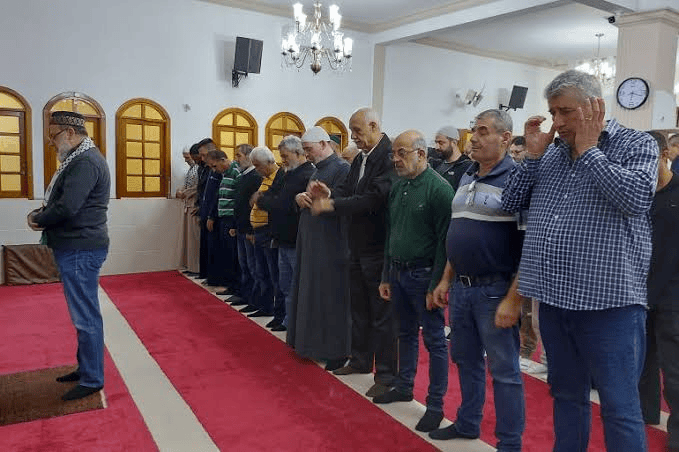
The Islamic presence in Latin America is much smaller than in Asia, Africa, Europe and North America, but the continent is not free of historical Muslim communities. From Arab migrations in the late nineteenth and twentieth centuries to communities of South Asian and Indonesian origin in the Caribbean and northern South America, quite different patterns of local Islam have taken shape.
Suriname stands out in particular: Pew estimated its Muslim population at around 13% of the population in 2020, alongside 53% Christians and 22% Hindus, making it one of the world's most religiously diverse societies and one of the highest proportions of Muslims in Latin America.
Muslim communities also exist in Guyana, Trinidad and Tobago, Brazil, Argentina, Mexico and elsewhere, although their share of the national population remains small.
There Is No "Single Experience" for Muslim Minorities
Perhaps the most important conclusion from this map is that the situation of Muslims outside majority countries cannot be reduced to one story about migration, persecution or integration.
A Muslim from India may have a family that has lived in the region for hundreds of years and does not see himself as part of a "migrant community" at all. A Muslim Ethiopian is part of a Muslim community dating back to the earliest days of Islamic history. A Muslim Tatar in Russia belongs to a people with a homeland, history, a former state and long-established religious institutions. A Malay Muslim in southern Thailand combines religion, language and regional identity. A French or German Muslim may be of the third generation of migrants, or a citizen who converted to Islam, or a recent arrival. A Rohingya may live without a recognised nationality.
Therefore, the conditions of Muslims should be studied through four separate questions: How many are they? Since when have they lived in the country? What is their legal status in terms of nationality and rights? And are they a minority in every part of the state or a majority in a particular region?
These questions are more useful than simply ranking countries by the percentage of Muslims.
Local Geography Is Sometimes More Important Than the National Proportion
National figures can hide a completely different reality. Muslims are a minority in Tanzania but an overwhelming majority in Zanzibar. They are a relatively small minority in the Philippines but a central component in Bangsamoro. They are a minority in Thailand but their presence is dense in the south. They are a minority in Russia but form the majority in the republics of the North Caucasus and a major element in Tatarstan and other regions.
Islam spread through trade routes in the Indian Ocean, East Africa and Southeast Asia, and through kingdoms and empires in India, Central Asia and the Caucasus; then, in the modern era, new networks formed through migration to Europe, the Americas and Australia were added.
Why Do Muslim Minority Populations Continue to Grow?
There are two main factors: age structure and migration. Globally, 33% of Muslims in 2020 were under the age of fifteen, the highest share of children among the major religious groups studied by Pew. This makes natural growth an important factor in increasing the number of Muslims in the long term.
The second factor is international migration. Pew estimates that around 80 million international migrants in the world are Muslim, or 29% of all people living outside their country of birth. However, it is wrong to equate the "Muslim minority" with "Muslim migrants"; a large part of the Muslims who live as minorities are not migrants at all, while many Muslim migrants also live in countries with a Muslim majority.
Between Numerical Strength and Vulnerability
A comparison between India, the Rohingya, France, Ethiopia, China and Canada reveals that numerical size alone does not determine the strength or vulnerability of a minority.
The number of Muslims may reach tens or hundreds of millions and yet they face sharp debates about identity, representation, laws and discrimination. A community may be small but enjoy strong institutions and stable citizenship rights. Muslims may be a majority in a particular region but a minority before the institutions of the central state. In the extreme cases, as with the Rohingya, the issue is fundamentally tied to recognition of nationality and the right to remain and to return.
On the other hand, it is not valid to portray all Muslim communities living as minorities as persecuted or marginalised to the same degree. The differences between countries are vast, as are differences within a single state, between one generation and another, and between one social class and another.
A Map Extending Beyond the "Muslim World"
If there are today around two billion Muslims in the world, about a fifth of them live outside societies in which Islam forms a majority. This means that the future of Muslims is not shaped in Cairo, Istanbul, Jakarta, Islamabad, Riyadh and Rabat alone, but also in New Delhi, Addis Ababa, Beijing, Moscow, London, Paris, Berlin, Toronto, New York, Sydney, Manila and Colombo.
India alone has around 213 million Muslims, a number exceeding the population of most Muslim-majority countries. Ethiopia has a Muslim community numbering in the tens of millions despite the absence of a recent religious census. Europe has become home to Muslim generations born there who know no other homeland. Canada, Australia and the United States are witnessing increasingly diverse Muslim communities, while issues such as the Rohingya and the Uyghurs show the most sensitive face of the minority question when religious identity intersects with ethnicity, nationalism and state policies.
Therefore, speaking of "Muslims around the world" without studying Muslim minorities leaves hundreds of millions of people and an essential part of contemporary Islamic history outside the picture. These communities are not geographical margins of the Muslim world but one of its major components: some are long-established and predate the emergence of modern states, some are new and taking shape before our eyes, and all demonstrate that the Islamic map is far wider than the borders of countries with a Muslim majority.
Note: The national figures in this article do not all belong to the same year; the most recent available national censuses have been used where they exist, alongside Pew's comparative estimates for 2020 and other official sources. Therefore, when using this article as a reference, it is more accurate to attach each figure to the year of its source, and not to turn older estimates into current figures without a more recent census or survey. This point is especially important for Ethiopia, Russia, China and France, where the nature of data sources differs from countries that have direct and recent religious censuses.


