

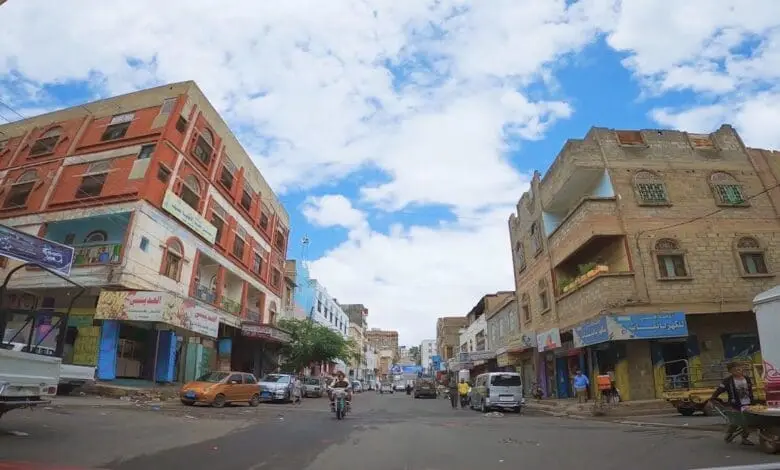
Yemen Monitor: Rising Rents in Taiz… Between Soaring Costs and the Dangers of Frontline Areas
Ali Saeed sits on a dilapidated chair beside a broken window that a war shell pierced years ago. He could find no home to live in other than this decrepit house in the Al-Jahmaliya area east of Taiz, very close to the eastern front lines of the conflict.
Ali Saeed said: "Living here was not my choice. I am forced to because this house is what I can afford financially. Living conditions and high rents in the city centre or in safe areas force us to live in areas where we die a thousand times."
"I lived here through terrifying days and years before the truce. I heard explosions every day, and shells reached me that shook the ground beneath my feet. Every bullet, every shell, carries the possibility that it will be the last one we hear."
After the truce, since 1443 AH (2022 CE), the war has calmed and sniping and shelling have decreased, yet their lives remain fraught with danger. Any advance by any party to the conflict would fall first on the residents of the frontline areas, who took refuge in these areas either by returning to their original homes that they had abandoned because of the war and went to live in safer areas, or because the rent there is relatively lower than in other areas.
Ali adds to the website: "We cannot easily reach water. The solar energy we own has become worn out, and we cannot open most of the windows because they face the Houthi sniper. Children play in the alleys and do not walk in open squares. At night, I cannot sleep. I think about my family, about my son who asks me: why don't we move to a better place? And I find no answer but silence."
Home rents in the city of Taiz reach 300 thousand in foreign currency (Saudi riyal, US dollar), while rents in frontline areas close to the fighting fronts or the Houthi snipers drop to (50–100) thousand Yemeni rials.
Causes of Rising Rents
Abdulrahman Al-Bahr, an economic expert, believes that the rise in rents in Taiz city is primarily due to the lack of urban construction and industrial expansion since the start of the war, owing to the economic deterioration we live in as a result of the war, along with increased demand for housing due to internal displacement from dangerous areas to safer ones.
Al-Bahr points out that the war has destroyed many buildings and houses, and that the absence of housing projects to make up for this shortage, due to high construction costs affected by rising foreign currency prices, in the absence of organised policies regulating the rental market, has led owners to exploit the situation and raise prices excessively.
A Dangerous Life
Suhaila, a mother of three, lives in Asifra north of Taiz city, the first point under the control of the internationally recognised government, where her house is only a few steps from the abandoned Houthi-held areas. A sniper positioned in Houthi areas has claimed the lives of many children in this neighbourhood since the start of the war.
Suhaila continues: "I cannot even light the dim lamp in this room." She points to the larger room in the house. "We cannot even sleep. The sniper fires immediately if he sees any light. He once shot our neighbour who entered his house as soon as he lit the light. All of them have left for the countryside, and many have fled from here, but they have started returning because of the high rents in the city centre."
Suhaila remains extremely frightened when her two daughters go to school until they return. Many children have previously failed to return from their schools or from the places where they used to fetch water, either because of the sniper, indiscriminate shelling, or landmines. As for her eldest son, who used to dream of becoming a doctor, he now collects plastic bottles to help his father, who works riding a motorcycle, so that they can support the family.
The Danger of Living There
Ayman Al-Ariqi, a researcher in the field of peace, states that living in frontline areas exposes citizens to the risks of direct targeting by shells or indiscriminate fire by the Houthi terrorist militia, which repeatedly targets these areas populated by civilians.
In addition, these areas are full of war remnants and landmines planted by the militia, which pose a constant danger to residents, especially children.
Al-Ariqi said: "These areas lack electricity, clean water and healthcare. Children are often deprived of education as a result of insecurity and inadequate infrastructure."
Living in frontline areas causes great psychological pressure on residents, especially children, who suffer deep psychological effects such as chronic fear and sleep disorders. Adults, in turn, suffer from constant tension and anxiety, which affects their physical and mental health, according to Al-Ariqi.


