

Elie Wiesel plans a mission to disrupt the genocide of the Uyghurs in Communist China and the consumer supply chains that benefit from it.
Wiesel wants Congress to restrict imports produced using Uyghur forced labour, impose sanctions, and impose travel bans on East Turkistan officials responsible for the largest detention of a religious ethnic minority since World War II.
Wiesel wants Congress to restrict imports produced using Uyghur forced labour, impose sanctions, and impose travel bans on East Turkistan officials responsible for the largest detention of a religious ethnic minority since World War II.
Wiesel tells The Sun: "We need to reach a wider audience and express how urgent the issue is. I will do that at every opportunity, whether by speaking with government members, companies, or ordinary citizens."
At least 1.8 million Uyghurs and other members of the Turkic majority have been detained in the self-ruling Uyghur Region of East Turkistan since 1438 AH (2017 CE). Wiesel says: "We need to hold the Chinese government accountable. The United States and others must do everything they can to draw attention to the genocide of the Uyghurs in East Turkistan."
He says American consumers also have a role to play. Tesla cars, Nike shoes, and the selfie camera on the iPhone are just a few household goods said to be linked to forced labour in China. Through loopholes and little oversight, 17 or more global industries benefit from what Beijing calls "re-education" or what the US State Department calls genocide.
Wiesel says: "As American consumers, we need to start pressuring American companies that use Uyghur slave labour to produce their products. Companies in many industries, including clothing, automobiles, and agriculture, currently benefit from forced labour. We need to hold them accountable."
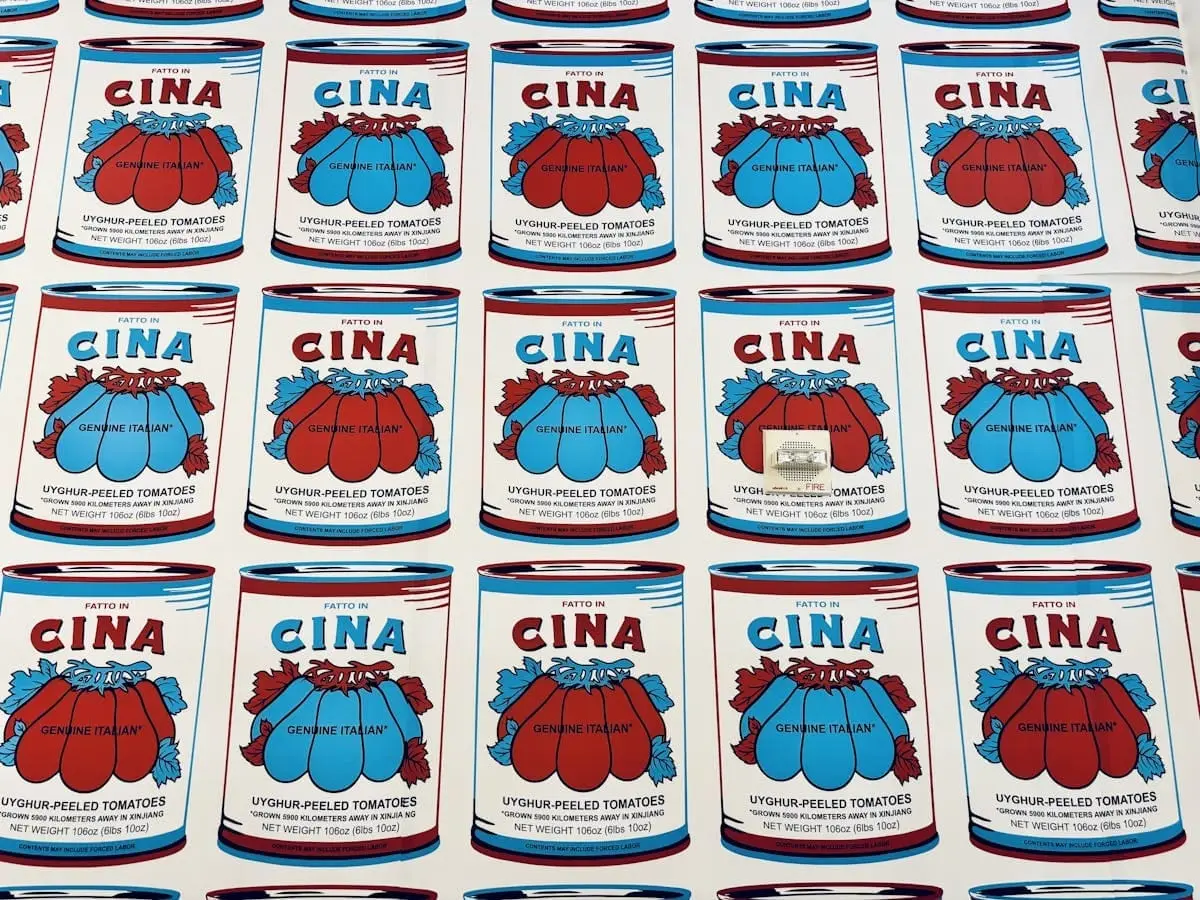
The phrase "Made in China" often means made by Uyghurs. At the largest-ever conference dedicated to "disrupting the genocide of the Uyghurs," held in New York City in Shawwal (April) and hosted by the Elie Wiesel Foundation, the World Uyghur Congress, and the Uyghur Human Rights Project, a can of tomatoes was displayed as a symbol: products are advertised as "authentically Italian," when in fact they are "grown 5,900 kilometres away in East Turkistan."
Retail giants such as Walmart and Amazon sell tomato products made by Uyghurs working for the Chinese company Hebei Tomato Industry. These tomatoes are about 70 percent cheaper than those imported from America. The Wiesel Foundation calls this "eating from prison to table."
The Sun contacted more than twelve companies whose supply chains have been accused of close ties to the East Turkistan government. These include the car manufacturers Tesla, General Motors, Toyota, and Volkswagen, given that much of the coal used to produce aluminium is extracted by Uyghurs threatened with work in coal mines.
Tesla stated in its annual reports that it would "knowingly not accept products or services from suppliers that involve forced labour or human trafficking in any form." However, an analysis by The Washington Post of company records and Chinese media reports in Rabi' al-Awwal (September) found that Tesla's supplier network includes companies that appear to undermine the American ban on products made in East Turkistan.
The Sun also asked Ralph Lauren, Hermès, Walmart, Amazon, Esty, Anustart, Apple, and Nike about this. The companies declined to comment or did not respond. The only company that provided a comment was the drone manufacturer DJI, whose supply chain has been accused of close ties to the East Turkistan government.
DJI's press team told The Sun: "We categorically refute any allegations of involvement in human rights abuses. DJI has not participated in any activities, including sales distribution and product development, that violate or infringe human rights. There is no documented evidence of DJI's involvement in any human rights abuses.
Like other manufacturers, we have no control over how our products are used once they are available in the markets. However, we have demonstrated, through years of investment in product safety and security initiatives, that our products are developed solely for peaceful and civilian use."
Another leading company that has addressed this issue is Nike. When a monitoring group accused it in Muharram (July) last year of being the main client of the shoe manufacturer employing Uyghur workers, Qingdao Taekwang Shoes Co. Ltd., the company denied the allegations. The company stated that it "does not source products from East Turkistan, and we have confirmed with our contract suppliers that they do not use textiles or yarns spun from the region."
However, when it comes to fashion brands, cotton appears to be the harmless culprit. More than one-fifth of the global supply is produced in East Turkistan, according to the advocacy project Save Uyghur. Workers in cotton fields earn at most 15 cents a day, and most receive no pay at all. Prominent fashion brands are implicated in this, according to a display of a pair of suits bearing names such as the Spanish fast-fashion company Zara.
Zara issued a statement in 1441 AH (2020 CE) pledging not to use "East Turkistan cotton," but it has since retreated from this pledge after backlash in the Chinese market. Other brands, such as the Japanese household and consumer goods retailer Muji, have said they do not intend to end their sourcing from the region.
Brands risk commercial losses and reputational damage if they leave China. At the same time, business managers seeking to clarify their supply chains there, as The New York Times reported in 1441 AH (2022 CE), have been met with "escalating secrecy."
For Wiesel, fighting the Uyghur crisis ultimately requires Congress to intensify its efforts. In 1442 AH (2021 CE), Congress passed the Uyghur Forced Labor Prevention Act by an overwhelming majority, to restrict imports produced using forced labour in China. Apple, for example, cut ties with the manufacturer of its selfie camera technology, O-Film, which relies on Uyghur labour.
Wiesel also urges lawmakers to support the Uyghur Policy Act, which has stalled in the Senate after its passage by the House of Representatives on 5 Sha'ban (15 February). It provides a framework for the State Department to access detention facilities and secure the release of Uyghurs, among other steps.
Another policy on the table is the Uyghur Human Rights Protection Act, which would designate some residents of East Turkistan in China as "priority refugees of special humanitarian concern."
Wiesel sees the movement to expose the genocide of the Uyghurs as an extension of the human rights work pioneered by his father, Elie, a survivor of the Auschwitz and Buchenwald concentration camps.
The New York Sun.


