

Washington Post: "What if we let Somalia burn?"; how a reduced US role in Somalia could disrupt global power dynamics
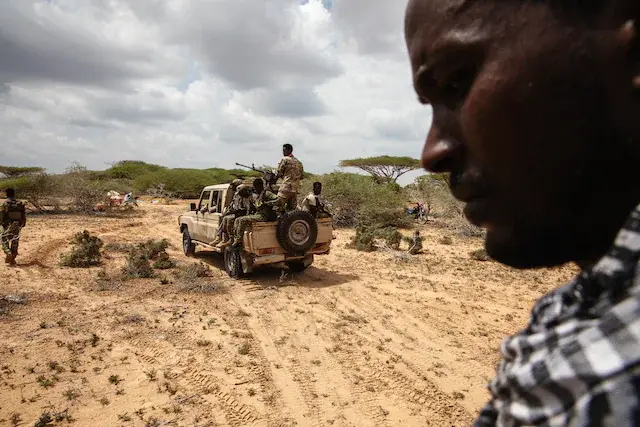
As President Donald Trump reviews US policy in Africa, cutting foreign aid programmes and reducing assistance to allied forces in the region, the fighters of al-Shabaab, the al-Qaeda affiliate with the largest financial resources among the group's branches, continue their advance in Somalia, having retaken important towns from Somali forces over the past three months.
Its fighters had previously attacked a US airport in Kenya and plotted attacks on US soil.
Under Trump's second administration, it is unclear whether Washington believes the fight against the group should remain a priority, or whether the Somali government, long afflicted by corruption, is capable of leading the fight.
"The Trump administration does not appear to be convinced that al-Shabaab poses a direct threat to American interests," said Matt Bryden, founder of the Sahan Research Center, based in Nairobi.
He added that the group gaining further ground "would have far-reaching consequences for US policy in Africa and most of the Middle East."
During his first term, Trump ordered the US military to leave Somalia and to operate from neighbouring countries, a strategy soldiers described as a waste of time and dangerous.
Although US forces have returned, Washington has withdrawn support for Somali special forces and is reconsidering plans to deploy hundreds of US troops across the country.
Most foreign trainers have withdrawn following cuts in security assistance, and morale among local forces is reportedly declining. Meanwhile, tensions between US officials and Somali authorities appear to be approaching a peak.
A former senior State Department official said: "I sat with White House officials, and they asked me: what if we let Somalia burn? Can we contain it?" "I said: No!"
Former US officials interviewed for this report served under multiple presidents, including Trump, and spoke on condition of anonymity, fearing retaliatory consequences that could harm their careers, or out of respect for ongoing political deliberations.
Current officials, diplomats and security contractors also spoke on condition of anonymity to share sensitive information.
A White House official acknowledged growing frustration with the Somali government, telling the Washington Post: "We are concerned about President Hassan Sheikh Mohamud prioritising domestic politics over counterterrorism efforts, particularly amid the growing threat from al-Shabaab."
The US State Department's press office confirmed that the United States "will continue to work closely with Somali forces and African Union forces."
The fractured government in Mogadishu, supported by the United States and an expanded African Union peacekeeping mission, is increasingly turning to Turkey for help in repelling the long-running Islamist insurgency, a sign that a shrinking American focus on Africa is worsening regional security challenges and disrupting global power dynamics.
Ties between Ankara and Mogadishu include a newly revealed oil exploration deal, recent deliveries of powerful Turkish drones, and the arrival of hundreds of soldiers in the Somali capital last April, strengthening Turkey's foothold in the Horn of Africa while giving Somalia another security partner, particularly given the unpredictability of the United States.
Turkish officials did not respond to requests for comment.
The former senior State Department official said that a US withdrawal from Somalia could lead to the expansion of al-Shabaab into neighbouring Kenya and Ethiopia.
Officials and diplomats say any further US withdrawal could deepen political divisions in Somalia and endanger efforts to contain one of the most serious security threats on the continent.
"Our main partner"
Since taking office in 2022, President Mohamud has frustrated his Western allies by insisting on transitioning to a "one person, one vote" electoral system, a strategy Somali politicians have repeatedly used to postpone elections.
He also sidelined some of the country's most effective regional administrations by imposing constitutional amendments aimed at expanding presidential powers.
Electoral cycles in Somalia routinely overlap with operations against al-Shabaab, which is adept at exploiting clan divisions.
In the past, US leadership helped calm such clashes.
Former US ambassador Larry André, who recalled coordinating his clothing with the then beleaguered prime minister in 2022 during a joint press conference, said: "Things always start off well with a new president, and then clan conflicts spoil them."
Hussein Sheikh Ali, Somalia's national security adviser, said the United States helps coordinate Somalia's seven core security partners: Britain, Turkey, the United Arab Emirates and the African Union. Ali added that all of these countries oppose al-Shabaab, but sometimes have conflicting agendas.
The African Union, traditionally regarded as the strongest bulwark, has been reducing its forces for years. African Union troops have not received their salaries since January, and the forces are behind on payments totalling $96 million.
Ali said: "In counterterrorism areas, the Americans are our main partner." This year alone, after coordination with US officials and under the supervision of the new director general of immigration, Somalia began using Interpol watchlist data and sharing details of passengers on international flights.
Now, amid a new round of political turmoil, relations between the United States and Somalia appear increasingly precarious.
A White House official told the Washington Post that US officials had repeatedly "urged" Mohamud to refocus on security cooperation and regional inclusiveness, and had expressed disappointment at the lack of progress. The official added that his focus on centralising power "is hindering progress on counterterrorism, and we believe changing priorities is necessary to confront the escalating threat."
Since February, insurgents have retaken dozens of villages, including the strategic town of Adan Yabaal, and have regained the ability to operate in nearly a third of the territory they lost to federal forces in 2022, according to Hiraan Insight, a risk consultancy.
They also shelled Mogadishu international airport with mortars, and in March, attacked the president's convoy. The president survived, but four others were killed.
Al-Shabaab's attack during Ramadan in March coincided with reduced US support for the Somali special forces, a 2,500-strong unit known as Danab, which has traditionally led the fight against al-Shabaab.
A US government audit last year revealed that Danab had falsified its requests for the purchase of food and fuel.
Food and fuel support ended in April 2024 and March 2025 respectively; in February, the United States stopped paying Danab members, whose salaries had been raised to $400 a month, double what regular Somali soldiers earn.
It is unclear, however, whether the end of the salaries was linked to corruption allegations or to the broader freeze on foreign aid programmes under Trump, which Secretary of State Marco Rubio said would reduce government bloat and allow the administration to focus on domestic priorities.
Some former US officials say the flow of international security funding into Somalia only fuels the corruption entrenched in the country. Others argue that continuing to fund a small, select unit that operates alongside US troops is the best of bad options.
A former senior US military official said: "If we cannot directly support Danab forces, it is highly unlikely that the Somali National Army will be able to support them to the degree needed for maximum effectiveness."
According to a security expert working with the Somali army in Mogadishu, morale within Danab "is not high"; he added that when salaries were cut, "around 100 soldiers went absent for a period."
The security expert noted that most of Danab's foreign advisers returned home after the US cuts.
According to US security officials, plans to deploy around 500 US troops across Somalia to better support the Danab force are currently under review.
Danab is the only Somali federal military unit entitled to request US airstrikes, and it benefited from dozens of US interventions last year.
Under Trump, the United States intensified its airstrikes against the fast-growing Islamic State affiliate in Puntland, a semi-autonomous region in northern Somalia, and continued its air operations against al-Shabaab.
A Western military official said: "Airstrikes are only useful if you have good ground forces that can hold [the gains of those strikes]."
Although fighting in Somalia is arduous and long-term, US leadership in Africa views the spending and the risks faced by US troops as an acceptable cost for containing a potential threat, the former senior US military official said.
He noted that the extent of US influence in the Horn of Africa has steadily declined over the past decade.
Sudan and South Sudan are wracked by conflict; Uganda is at an impasse; Djibouti shares its territory with the Chinese military; and relations with Ethiopia have cooled considerably after the recent war in Tigray.
The former senior US military official said: "The accountant's argument may be that we hand [Somalia] over to the Turks and let them deal with this security problem, but the cost of re-entry is significant, and we would lose our influence over key terrain."
"When you sacrifice that and shift the burden onto an ally … interests and objectives are unlikely to align."
Turkish influence
Turkey's ties with Mogadishu date back to 2011, when Ankara sent food aid by air during a famine that killed some 260,000 people. Since then, Turkey has rehabilitated one of the capital's main hospitals, taken over management of the Mogadishu port and airport, and established a military training academy.
Ankara has built its largest foreign military base in Mogadishu, trained two brigades of soldiers totalling about 6,000 troops, and carried out drone strikes at the request of the Somali National Intelligence and Security Agency.
Berkay Mandıracı, senior Turkey analyst at the International Crisis Group, said: "As traditional powers withdraw from parts of Africa, Ankara sees an opportunity to step in." He added: "Somalia is strategically important for Ankara, sitting on the flanks of major shipping lanes and vital trade routes."
Around 400 Turkish soldiers arrived in Mogadishu last April, the largest Turkish military force so far. Earlier in May, Turkey delivered two Akıncı drones, capable of carrying heavier payloads than the smaller Turkish drones already in the country.
Turkey has a joint command with the Somalis; but other partners said they often do not receive information about Turkish operations.
One diplomat based in Mogadishu said: "Sometimes there were several drones hovering over a single target."
Eyewitnesses told the Washington Post that the new drones represent a significant boost to the Somali government's air power, although Turkish strikes using less powerful drones have killed at least 40 civilians since late 2022 — a number large enough that the African Command, which had previously faced anger over civilian casualties, began announcing each US strike to clarify responsibility.
In January 2023, seven civilians, including an eight-year-old child, were killed in the town of Qarakli after an airstrike targeted a gathering under a tree, according to eyewitnesses and a relative.
On 9 September 2022, eight civilians were killed when an airstrike targeted a group of drivers and street vendors in the town of Mubarak, under al-Shabaab control, according to a local doctor.
Last March, two Turkish strikes killed 23 civilians — many of them young children — northeast of the capital while they were breaking their Ramadan fast.
Mohamed Nur Ahmed (50), who lost three sons and a nephew in the Qarakli strike, because they were "torn to pieces," said: "I could not even wash the bodies of my children."
As al-Shabaab advances, Turkish strikes are likely to increase, and some fear this could help fuel the insurgency, as it may lead to more civilian casualties.
As security ties expand, Turkish companies have signed numerous lucrative contracts. Operating the Mogadishu port and airport generates millions of dollars a month; in April, the details of an oil exploration deal emerged that granted Somalia only 5% of production, angering opposition lawmakers. Turkish survey vessels are also conducting exploration in offshore fields.
André, the former US ambassador, said: "Somalia is rich in resources, but insecurity has prevented their commercial exploitation. If we abandon our partners, others will take our place, and they will reap the benefits once Somalia enjoys peace and prosperity."
The Washington Post


