

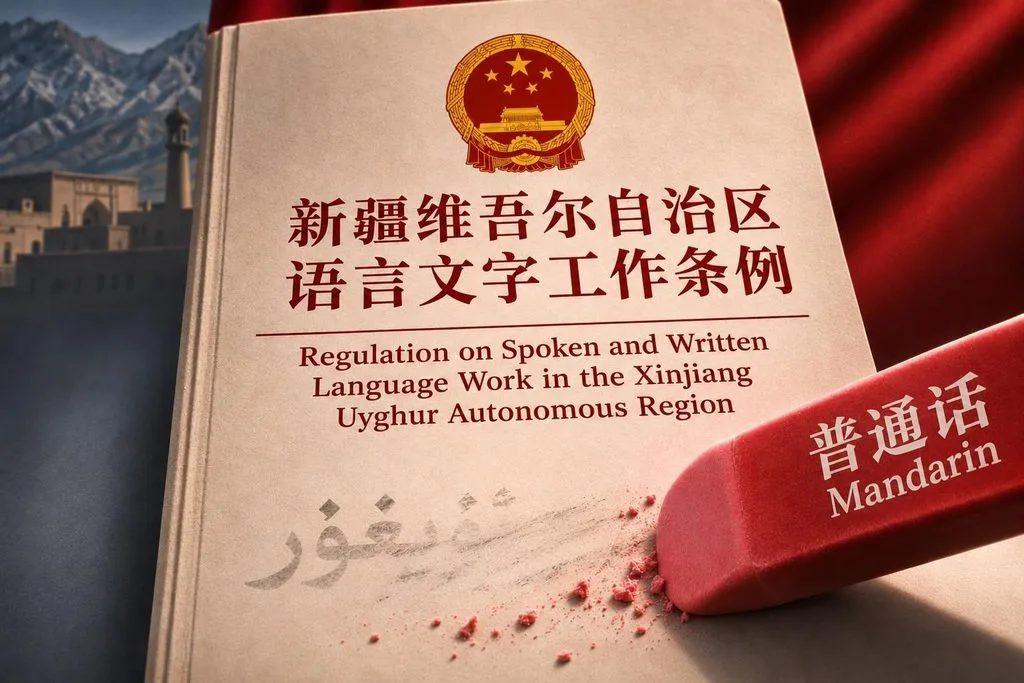
The Uyghur Human Rights Monitor has warned that an amended language regulation in Xinjiang, known to Uyghurs as East Turkestan, could deepen the marginalisation of their language in education, administration, media and public life.
In an analysis published on 6 November 2026, the Monitor explained that the regulation was adopted on 23 September and is set to take effect on 1 January 2027.
According to the analysis, the regulation does not contain an explicit ban on the Uyghur language, but it gives Mandarin institutional priority and removes guarantees that provided for the use of Uyghur alongside Chinese in official affairs.
On education, the Monitor says the amended text makes Mandarin the primary language of instruction and promotes its teaching from the pre-school stage, without retaining a provision similar to the previous guarantee of bilingual teaching.
According to the analysis, the change extends to signage, media production and translation: it gives Chinese preferential placement and size in bilingual displays, and imposes additional conditions on production in minority languages.
The Monitor considers the danger to go beyond the continued use of Uyghur within the home; its declining presence in schools, institutions and cultural content may reduce opportunities to learn, use and pass it on to children.
These effects remain the Monitor's human rights assessment of a regulation that has not yet entered into force, and they are not an announcement of a comprehensive ban on the language.


