

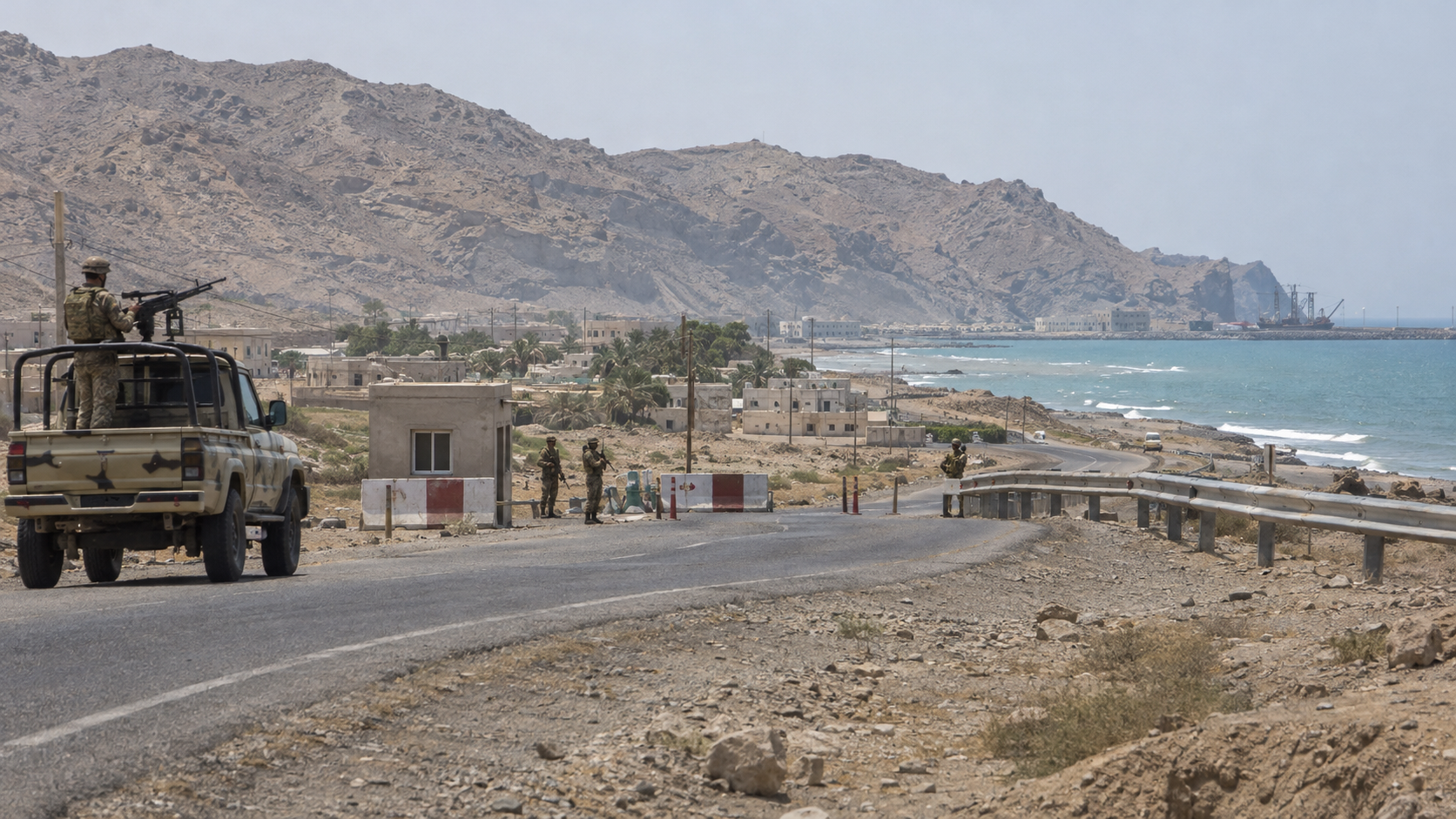
A recent American study has pointed to signs that the activity of armed Baloch groups is expanding in southeastern Iran towards the Makran coast overlooking the Gulf of Oman, a development that could threaten Iranian military and economic facilities near the port of Chabahar and prompt Tehran to redistribute its security and military forces, in parallel with the continuing confrontation with the United States.
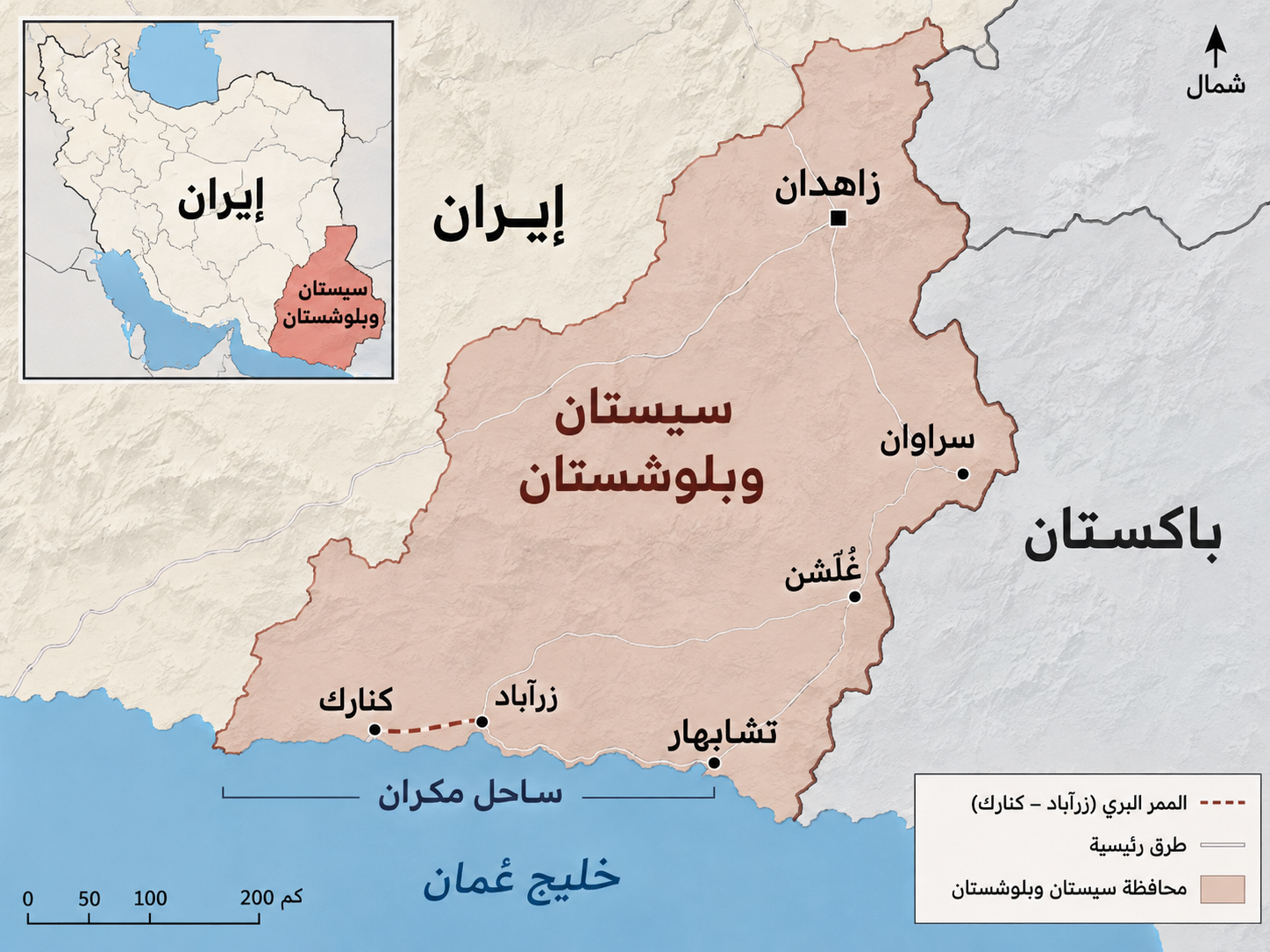
The Institute for the Study of War (ISW), in collaboration with the Critical Threats Project (CTP), reported in an analysis published on Tuesday, 3 November 2026, that the "Mobarizoun Popular Front" (Mobarizoun Popular Front), a coalition including armed Baloch groups opposed to the Iranian authorities, may be expanding the geographic scope of its operations towards the coastal areas of Sistan and Baluchestan Province.
The analysis linked this possibility to attacks the Front claimed responsibility for in Kanarak, Saravan and Gholshan, alongside security operations carried out by Iranian forces in the area, and considered that the continuation of armed activity near the Makran coast may place additional pressure on Iranian military capabilities amid the ongoing regional confrontation.
Attacks near military facilities on the Makran coast
According to the study, on 3 November the Front announced responsibility for an attack that targeted, the previous day, individuals it said belonged to the Afghan "Fatemiyoun Brigade" inside a government school in the coastal area of Kanarak.
The Fatemiyoun Brigade is an armed formation comprising Afghan Shia fighters and is under the control of the Quds Force of Iran's Islamic Revolutionary Guard Corps, while the study points to its participation in security operations within Sistan and Baluchestan Province.
According to what media outlets reported citing the Front's statements, it announced the deaths of six members of the brigade and one of its fighters during the clashes, a toll that could not be independently verified.
In a simultaneous development, the "Quds" operational base of the ground forces of Iran's Islamic Revolutionary Guard Corps announced on 2 November that its forces had ambushed an armed group that was preparing to attack security positions and set up a checkpoint on the Zarabad–Kanarak road, which, according to the official account, resulted in the killing of one gunman and the arrest of others.
The researchers considered it likely that the accounts of the Front and the Revolutionary Guard relate to the same clash, given the closeness of timing and location, but did not rule out that these were two separate incidents, which may indicate wider armed activity in the Kanarak area.
The analysis explained that the Front had previously carried out operations in the vicinity of Khash, Saravan and Zahedan, but no previously announced activity by it in Kanarak had been documented, which gives the new development particular geographic significance.
Saravan and Gholshan: escalating attacks on Iranian forces
The developments were not limited to the coastal areas, as the study recorded a series of attacks against Iranian security and military forces in other parts of the province.
In Saravan, Iranian media reported that an investigations officer of the law enforcement forces was killed by unidentified gunmen on 3 November.
On the same day, the "Mobarizoun Popular Front" announced responsibility for targeting a field commander in the special units of the Iranian police in the city.
The institute considered it likely that the two accounts relate to the same attack, without conclusively determining the identity of the perpetrators independently.
The Front also announced responsibility for an attack in the Gholshan area, which it said resulted in the killing of a commander in the Islamic Revolutionary Guard Corps and three of his escorts.
In another incident, Iranian media reported the killing of a member of the 377th Mobile Offensive Brigade of the ground forces of the Iranian army, and the injury of another soldier, in southeastern Iran, without specifying the party responsible for the attack.
Has Iran begun moving additional forces into Baluchestan?
The American analysis drew attention to the significance of the presence of elements of the 377th Brigade in southeastern Iran, given that this formation is usually stationed in Razavi Khorasan Province in the northeast of the country.
The researchers considered that the observation of members of the brigade in Sistan and Baluchestan may indicate the transfer of forces from outside the province to reinforce security operations and confront the escalation of armed group activity.
However, the study did not confirm the issuance of an Iranian decision to redeploy large military units, but rather presented this as a possibility based on available information about the deployment of forces.
In a report issued on 2 November, the institute had recorded recordings published by the Front showing armed men stopping vehicles and checking the data of their drivers on the Khash–Zahedan road, following a similar operation on the Khash–Saravan road on 25 October.
The researchers said that the establishment of these temporary checkpoints may aim to target members of the security services and undermine state authority in some areas, but acknowledged that they were unable to independently verify how long the gunmen controlled the roads.
In contrast, Iranian media described the recordings as propaganda material, confirming that one of the operations lasted only minutes.
Kanarak and Chabahar: a military and economic importance that exceeds Baluchestan
Developments near the Makran coast carry strategic importance due to the presence of Iranian military facilities in Kanarak and Chabahar, including naval and air bases that support Iranian military operations in the Gulf of Oman.
The Institute for the Study of War explained that these facilities provide capabilities for naval and air operations, including the operation of drones and the execution of attacks on ships, which makes the area of particular importance during the confrontation between Iran and the United States.
On the economic side, Tehran views the Makran coast, and particularly the port of Chabahar, as a main outlet on the Indian Ocean and an important hub for trade routes linking Iran with Afghanistan and the countries of Central Asia.
Therefore, the continuation of armed operations in the surrounding areas may impose additional security costs to protect military facilities, infrastructure and transport routes, even if the ports themselves are not directly attacked.
The researchers confirmed that the expansion of Baloch group activity on the coast may lead to disruption of some Iranian maritime activities and economic projects, as well as compel Tehran to allocate additional forces to secure the area.
Nevertheless, the study provided no evidence that the Port of Chabahar or Iranian naval bases were directly targeted by the Front during the recent operations.
Escalating armed insurgency amid war pressures
These developments come against the backdrop of rising armed activity in Sistan and Baluchestan Province, which has for years witnessed tensions between the Iranian authorities and opposition Baloch groups, amid repeated human rights complaints about discrimination, marginalisation and abuses suffered by residents, most of whom are Sunni Muslims.
Data from the Armed Conflict Location and Event Data project (ACLED) indicate that approximately 70 armed confrontations were recorded between opposition groups and Iranian security forces in the province since the beginning of 2026, the highest annual level recorded by the project in at least a decade.
The project also observed indications of increased coordination among Baloch armed factions, especially after the formation of the "Mobarizoun Popular Front" in late 2025, which includes the "Jaish al-Adl" group and other factions.
However, the escalation of armed operations also raises concerns about civilian safety, particularly as clashes extend to public roads and residential areas, and sites are targeted that armed groups say are used by security forces.
The responsibility to protect civilians remains binding on all parties to the conflict, regardless of the nature of the struggle between the authorities and the armed groups.
A new internal front at a sensitive moment for Iran
The American study concludes that the continued activity of the "Mobarizoun Popular Front" on the Makran coast may pose an additional security challenge for Iran, at a time when it faces mounting external military pressure.
If the expansion of operations towards Kanarak and Chabahar continues, the Iranian authorities may be compelled to strengthen their military and security presence in the southeast to protect bases, facilities and vital trade corridors.
However, these scenarios remain analytical estimates based on open-source information, and do not establish that the armed groups have become capable of threatening naval bases or controlling coastal areas.
The significance of the new development lies in the shift of indicators of armed activity from internal and border areas to the vicinity of Iran's strategic coast, opening an additional security front for Tehran at a stage when its need to concentrate its military capabilities on confronting external threats is growing.
Between the operations announced by the Baloch groups and Iranian security movements, the authorities' ability to contain escalation without widening the confrontations or exposing civilians to further risks will be a key factor in determining the course of conditions in the province in the coming period.


