

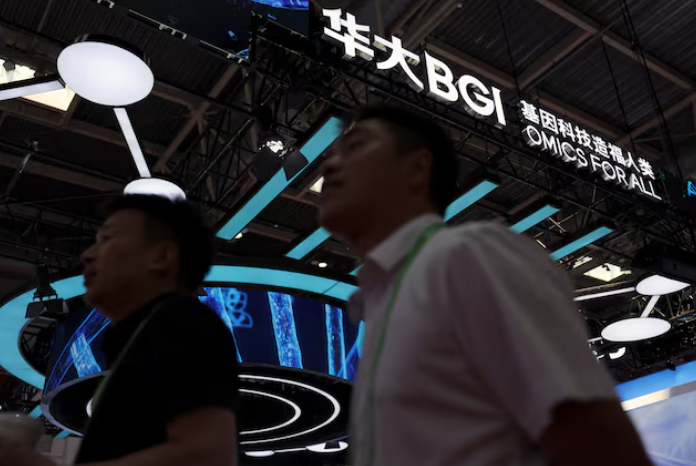
The United States announced on Wednesday, 28 October 2026, a ban on imports of products from three Chinese companies specialising in genetic technologies, after adding them to the list of entities linked to forced labour in the Xinjiang region, also known as East Turkistan, over allegations of assisting Chinese authorities in surveilling the Uyghur Muslim minority and other minorities, and facilitating forced labour practices against their members.
According to Reuters, the decision covers BGI Genomics, MGI Tech and Shenzhen BGI Technology, also known as the BGI Group, all of which operate in the fields of genetic research, biotechnology and medical equipment.
The US Department of Homeland Security said the three companies cooperated with Xinjiang authorities in activities related to genetic testing and the collection of biological data, which, according to its allegations, contributed to facilitating the transfer of Uyghur, Kazakh, Kyrgyz and other minority individuals into forced labour programmes.
Genetic Testing and Allegations of Mass Surveillance
According to the US Department of Homeland Security, BGI Genomics and BGI Group carried out genetic testing in cooperation with the Xinjiang government, while MGI Tech provided devices, equipment and technical capabilities to support those operations.
The department accused the companies of contributing to a mass surveillance system that relies on genetic information and other data, which is used, according to the assessment of US authorities, to support repression measures, forced labour programmes and the detention of members of minorities.
The US government stated that it has specific information providing reasonable grounds to believe that the companies' activities meet the criteria for their inclusion on the list of entities covered by the Uyghur Forced Labor Prevention Act.
These allegations raise concerns about the use of genetic medicine technologies and biological data in monitoring populations, particularly when such data is collected or employed within government programmes targeting specific national and religious groups.
Blocking Products from US Markets
Under the decision, US Customs and Border Protection will prevent products of the listed companies from entering the United States, unless importers can present sufficient evidence to rebut the legal presumption that the products were made using forced labour.
The measure is based on the Uyghur Forced Labor Prevention Act, which targets goods linked to forced labour in Xinjiang and the supply chains connected to it.
The new additions raised the total number of entities on the US list to 190, according to the Department of Homeland Security.
The decision comes at a time when trade relations between Washington and Beijing are in a fragile truce, amid ongoing disputes over technology, trade and human rights.
Chinese Companies Reject the Allegations
For its part, the BGI Group and MGI Tech rejected the US allegations, affirming that they were not involved in forced labour.
MGI Tech said the claims do not accord with the facts and that it adopts a policy of zero tolerance for any form of forced labour.
The BGI Group also affirmed its commitment to international standards on human rights and labour, noting that the scale of its business in the United States is limited and that its inclusion on the list is not expected to have a material impact on its operations.
In a separate statement issued on Thursday, 29 October, BGI Genomics rejected the allegations, stating that it had not participated in any activities related to forced labour.
The Chinese Embassy in Washington described the allegations as a campaign to smear Xinjiang and target Chinese companies, calling on the United States to stop using the issue of forced labour as a tool of political and economic pressure.
The Uyghur File and Continuing Accusations Against China
The United States and international human rights organisations accuse Chinese authorities of implementing broad-scale policies against Uyghurs and other Muslim minorities in Xinjiang, including arbitrary detention, intensive surveillance, forced labour, and restrictions on religious and cultural practices.
Beijing denies these accusations and says its policies in the region aim to combat extremism, achieve stability and promote economic development.
Independent UN experts had expressed concern in January 2026 about the continuation of alleged patterns of forced labour affecting Uyghurs, Kazakhs, Kyrgyz and other minorities in China.
The latest US decision again highlights the role of biotechnology companies in the human rights file in Xinjiang, and the concerns over the use of genetic data for purposes beyond healthcare and medical research.
While the listing of the three companies and the associated ban is a confirmed official measure, the allegations concerning each company's practices remain disputed between US authorities and the relevant Chinese parties.
Sources: Reuters, 28 and 29 October 2026; US Department of Homeland Security; US Federal Register, 29 October 2026; BGI Genomics statement, 29 October 2026.


