

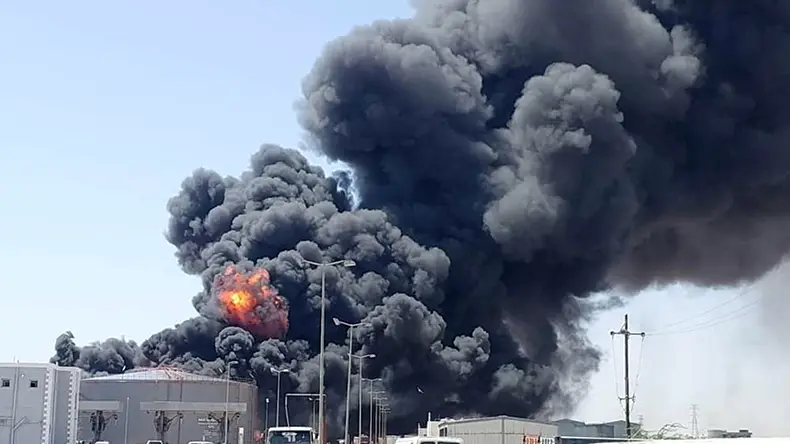
A new report by the UN Human Rights Office reveals that drones have become one of the most prominent causes of civilian deaths in Sudan during 2026, after the Office documented more than 1,630 civilians killed by drone strikes, out of more than 2,230 civilian deaths it was able to verify during the first ten months of the year.
The report, issued on Tuesday, 17 November 2026, warned that the growing use of drones has not only changed the methods of fighting between the Sudanese Armed Forces, the Rapid Support Forces and their allies, but has also extended to threats against markets, hospitals, water sources, and electricity and fuel facilities, widening the dangers facing residents, even in areas far from the direct front lines.
According to the Office, the figures announced represent only the deaths it was able to verify, while the actual toll is likely higher, given the continuation of military operations and the difficulty of access to many affected areas.
More than 73% of civilian deaths caused by drone strikes
The main UN report was based on documentation of human rights violations from January to June 2026, and the Office then attached updated data up to the end of October.
During the first half of the year, the Office documented the killing of at least 1,390 civilians in the conflict, more than 80% of them as a result of drone strikes.
In the following four months, from July to October, it recorded the killing of some 840 additional civilians, including nearly 520 who died in drone strikes.
Thus, the total number of civilian deaths whose cases the Office verified rose to more than 2,230 people over ten months, including more than 1,630 killed by drones, or about 73% of the documented toll.
This proportion points to a major shift in the nature of the risks facing civilians, as unmanned aerial attacks have become responsible for most of the deaths documented by the Office during the period in question.
However, these figures do not represent the full toll of victims of the Sudanese war, nor do they necessarily include all indirect deaths resulting from hunger, disease and the collapse of health services; they are limited to conflict-related killings that the Office was able to verify.
Markets, hospitals and civilian vehicles under fire
The report revealed the widening range of civilian targets hit by drone strikes during the first half of 2026.
The Office documented at least 39 drone attacks on markets, 20 attacks on civilian vehicles, 17 attacks on fuel tanks and depots, and 16 attacks on health facilities.
Schools, water sources and sites sheltering displaced people were also attacked, some of them repeatedly, in areas already suffering from acute shortages of aid and basic services.
The nature of these targets shows that the effects of aerial warfare do not stop at deaths and injuries, but extend to disrupting the activities on which residents depend in their daily lives.
Attacks on markets, for example, not only cause casualties among people buying and selling, but may also deprive local communities of places to obtain food, and disrupt trade, transport and supply movement.
The Office warned that attacks on markets, along with looting and restrictions on movement, have weakened residents' ability to obtain food, at a time when the risk of famine is rising in parts of Darfur and Kordofan.
Kordofan and Darfur: the most affected regions
The report's findings showed that the Kordofan region accounted for more than two-thirds of the civilian losses documented by the Office during the first half of 2026, followed by the Darfur region, where most of the remaining cases were recorded.
This geographic distribution reflects the intensity of military operations in the two regions, where ground clashes overlap with air raids and drone attacks, amid continuous waves of displacement and deteriorating humanitarian conditions.
The attacks were not limited to western and central Sudan, but extended to other states, including White Nile State, where the Office documented the killing of at least 41 civilians during the period covered by the main report.
These findings indicate that the spread of long-range drones has left residents across wide areas exposed to strikes, even when their areas are relatively distant from ground fighting.
29 strikes in two weeks targeting electricity and fuel
Among the most serious developments monitored by the Office was the escalation in targeting energy and fuel facilities in recent weeks.
Between 20 October and 4 November 2026, the Office recorded 29 drone strikes, attributed to the Rapid Support Forces, that targeted electricity facilities and fuel stations in 11 Sudanese states.
These attacks led to widespread power outages and additional fuel shortages, affecting the lives of millions of residents, including people living far from military fronts.
According to the Office, electricity cuts disrupted vital medical services, including kidney dialysis sessions and surgical operations, and also affected access to clean water and food production.
These events highlight one of the most dangerous dimensions of drone warfare: a strike on a single power generation or distribution facility can disrupt an interconnected set of essential services, and endanger large numbers of civilians who are not present at the site of the attack.
Accordingly, the impact of these strikes is measured not only by the number of direct deaths, but also by the scale of the damage they inflict on the capacity to sustain life and services in the affected areas.
How have drones changed the nature of the war?
Since the outbreak of war between the Sudanese Armed Forces and the Rapid Support Forces in April 2023, military operations have undergone a gradual shift in fighting methods, alongside the growing use of offensive and reconnaissance drones.
These aircraft have enabled strikes at long distances from the positions of ground forces, and have become an effective means of targeting military sites, infrastructure and supply routes.
However, their proliferation has also widened the exposure of civilians to danger, as attacks now reach cities and areas that do not necessarily witness direct ground fighting.
The Office affirms that changes in front lines and the development of military means have not been matched by improved protection of residents, and violations and human losses have continued at dangerous levels.
The use of drones in itself does not constitute a violation of international humanitarian law; the legal assessment of any attack depends on the nature of the target, the distinction between combatants and civilians, adherence to the principle of proportionality, and the feasible precautions taken to avoid harming civilians.
Yet the intensity of attacks that hit markets, health facilities and civilian infrastructure raises, according to the Office, serious concerns about the parties to the conflict respecting these rules.
Violations that may amount to war crimes
The report's findings were not limited to drone attacks; it also documented other patterns of violations, including the unlawful killing of civilians, indiscriminate attacks, reprisals against people accused of cooperating with the warring parties, arbitrary detention, and conflict-related sexual violence.
The UN High Commissioner for Human Rights, Volker Türk, said the findings provide further evidence of the continued severe suffering of Sudanese civilians, and of the disregard by the parties to the conflict of their obligations under the laws of war.
He warned that the serious violations of international humanitarian law documented by the Office may amount to war crimes, stressing the need to hold those responsible to account, regardless of their affiliations.
The Office also stressed the importance of limiting the flow of weapons, particularly drones used in attacks that cause grave harm to civilians, and of exerting pressure to halt the transfer of weapons used to violate the rules protecting them.
A war draining the means of life
The UN findings reveal that the most serious consequence of the expanded use of drones in Sudan is not merely a change in the means by which belligerents conduct their operations, but the widening reach of the war's impact.
Markets, hospitals, electricity stations and water sources have all become exposed to harm, while residents pay a price that goes beyond direct human losses to include food shortages, disrupted treatment, collapsing services and renewed displacement.
With fighting continuing in Kordofan, Darfur and other areas, fears are growing that the increasing reliance on aerial strikes will deepen the humanitarian crisis, rather than bring the country closer to a settlement that ends the war.
This is the principal shift the report documents: front lines alone no longer determine where civilians can die in Sudan. Drones have widened the range of danger, making the protection of residents and the facilities they depend on a challenge that extends to areas far from the direct battlefield.


