


In a world where technological pulses race ahead, a silent war is taking shape, a battle in which no gunfire is heard and no blood is seen. It is a war fought in an invisible space, where electromagnetic waves clash and algorithms intertwine in a deadly dance. Imagine a world in which artificial intelligence breathes through the veins of military systems, and in which electronic chips turn into miniature battlegrounds. Here, in this volatile digital scene, two giants confront each other: China and the United States, each seeking to hold the keys to control of this new world.
In this technological epic, we find ourselves before a complex mosaic, where rigorous scientific facts blend with bold predictions and deep analyses, where artificial intelligence is reshaping the rules of the game. From sophisticated jamming systems to deep-learning algorithms that anticipate the enemy's movements, toward a future in which the boundaries between reality and science fiction become blurred. And amid all of this.
In a world where data turns into weapons, and where an idea can be more lethal than any missile, this is the story of electronic warfare in the digital age, a story being written now and shaping our future in ways that may exceed the limits of our imagination.
The Current State of Electronic Warfare Capabilities

The electronic warfare capabilities of both China and the United States have witnessed notable development, reflecting each side's strategic priorities and technological progress. China has developed a range of electronic warfare tools, including radar jamming devices, high-energy laser weapons, and electromagnetic pulse weapons, which poses a significant challenge to the United States, particularly in potential conflict scenarios such as the Taiwan Strait. A report issued by the US-China Economic and Security Review Commission indicates that China is focusing on advanced weapons, including those related to electronic warfare, which reflects a strategic shift toward strengthening its capabilities in this field. In contrast, the United States has been warned of its decline in electronic warfare, as assessments point to a shortfall in readiness to deal with the crowded electromagnetic spectrum. A report issued by the Center for Strategic and Budgetary Assessments (CSBA) also explains that the US military must adopt a more strategic approach to regain superiority in this domain.
A comparative analysis of these capabilities reveals a complex picture: both countries are investing heavily in electronic warfare. The Chinese approach is distinguished by its focus on developing advanced technologies through government funding and technological exchange, while the United States faces the challenge of aligning its doctrine and capabilities with a crowded electromagnetic spectrum environment. The credibility of these assessments rests on multiple sources, including government reports and academic studies, while taking into account that the rapidly evolving nature of technology may cause these insights to become outdated quickly.
The Integration of Artificial Intelligence into Electronic Warfare Systems
The integration of artificial intelligence into electronic warfare systems is a decisive aspect of the technological race between China and the United States. China relies heavily on artificial intelligence, focusing on multi-domain precision warfare that combines AI and big data analysis to detect and target the enemy's weak points. A report issued by the Center for European Policy Analysis (CEPA) points to China's progress in AI-enhanced military systems, which is a matter of urgent concern for US national security. For its part, the United States has made tangible progress in equipping its forces with AI-enhanced systems, particularly in the field of unmanned aerial vehicles (UAVs). A study published by the National Defense University Press stresses the need for the United States to develop AI-enhanced systems for swarm combat and counter-swarm operations, with the aim of confronting China's progress.
An analysis of trends in integrating artificial intelligence into electronic warfare reveals a shift toward more autonomous and intelligent systems. AI algorithms are used to improve radar signal processing, detect jamming devices, and develop anti-jamming techniques, enabling more effective and responsive electronic warfare capabilities. The reliability of these findings rests on academic research and industry reports, although the development of military technology is often secret, which may leave some information incomplete or based on assumptions.
Emerging Models of AI-Influenced Electronic Warfare
The landscape is witnessing the emergence of new models of AI-influenced electronic warfare, which demonstrates the transformative potential of this technology. Intelligent algorithms are employed to strengthen several aspects of electronic warfare, from radar signal processing to identify and classify targets, through the detection of jamming devices, to the development of anti-jamming techniques. A research paper published by the Institute of Electrical and Electronics Engineers (IEEE) addresses AI applications in modern electronic warfare systems, highlighting their role in enhancing autonomous operations, improving decision support, data management and situational awareness. A report issued by the Brookings Institution also discusses the steady increase in the automation of electronic warfare systems and its potential effects on the information domain, stressing the need for greater autonomy in unmanned weapons to confront effective electronic warfare.
Trend analyses of these emerging models point to a future in which AI leadership in electronic warfare grows, with systems capable of rapidly adapting to new threats and providing more effective countermeasures. The credibility of these insights rests on academic research and expert opinion, but the rapid pace of technological development may bring fundamental changes to these models in a short time.
Future Expectations Regarding Electronic Warfare and AI Dominance
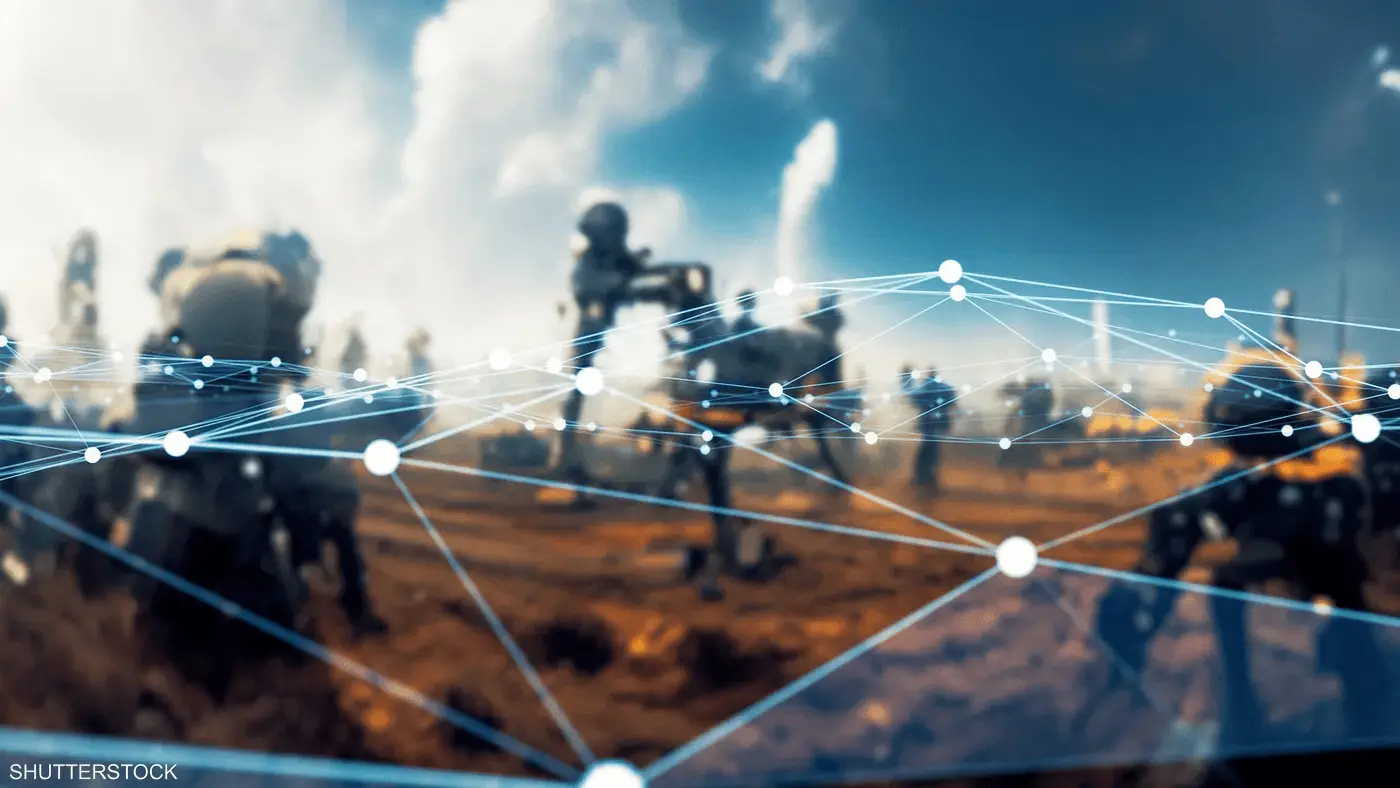
The future prospects of electronic warfare and AI dominance are subject to intense debate and numerous forecasts. Experts believe that artificial intelligence will radically change the face of war, leading to what is called "hyperwar," in which operations are highly automated with limited human intervention. A paper issued by the National Defense University Press indicates that the integration of AI into existing systems will create unpredictable capabilities that outpace traditional deterrence strategies. A study from Chatham House also highlights the acceleration of commercial AI development and its potential to reshape military power and strategic competition, especially between the United States and China.
Forward-looking analyses point to a world in which superiority in artificial intelligence within electronic warfare becomes a key factor, enabling faster decisions and more effective countermeasures. Although these predictions rely on expert opinion and academic research, uncertainty continues to dominate the future, which calls for caution in adopting these perceptions.
Debate in the Fields of Electronic Warfare and Artificial Intelligence
The integration of artificial intelligence into electronic warfare has not been free of controversy. China faces obstacles in military AI, according to a report issued by the Center for Security and Emerging Technology (CSET), which points to the challenges it faces in developing and deploying AI-supported systems. On the other side, the United States has expressed concern about the possibility of falling behind China in developing and deploying these technologies, which heightens tension and strategic competition. A report published by Asia Times addressed China's claims of achieving a breakthrough in AI-supported electronic warfare, which raised concerns about the possibility of escalation.
An analysis of risks in these contested issues reveals a complex landscape where ethical, legal and strategic considerations intersect. The credibility of these insights rests on multiple sources, including government reports and expert analyses, although the secret nature of military technology development may leave some information incomplete or open to interpretation.
Conclusion
In conclusion, the electronic warfare landscape between China and the United States is a vital and changing field, in which artificial intelligence increasingly emerges as a central element. The article has covered the current picture of electronic warfare, the implications of integrating AI into it, the emerging AI-influenced models, future expectations, and the debate surrounding this field. The credibility of these insights rests on diverse sources, including academic research, government reports and expert opinion, although the accelerating pace of technological development may render these insights outdated in a short time. As we move forward in anticipating this future, it is essential to maintain a human touch and a creative spirit, reflecting the depth and complexity of this subject.
Sources:


