

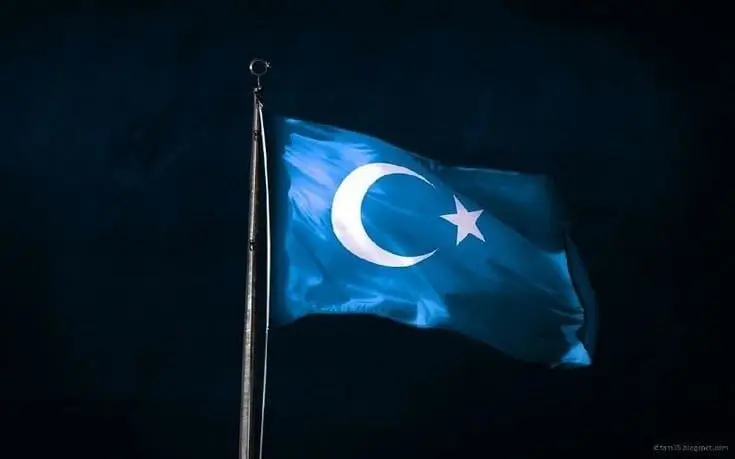
At the Bosnia meeting: World Uyghur Congress elects a new president.
In 1412 AH (1992 CE), the world was horrified to learn of brutal ethnic violence against Bosnian Muslims, including war crimes and ethnic cleansing carried out by Bosnian Serbs led by Milošević. Many of his followers adopted his frenzied nationalist ideology, and the slogan "never again" came to dominate the front pages of free media around the world. Following the breakup of the former Yugoslavia, Bosnian Serbs launched attacks aimed at creating ethnically "pure" Serb territories, including mass killings, forced deportation and systematic rape, particularly in towns such as Srebrenica, where a massacre took the lives of more than 8,000 Bosnian men and boys.
When Professor Sir Geoffrey Nice, KC, worked for the International Criminal Tribunal for the former Yugoslavia to prosecute Slobodan Milošević for war crimes, he could not have imagined that some two decades later he would chair an important tribunal in the British Parliament to examine allegations of genocide against the Uyghurs of Xinjiang (Occupied East Turkistan). The name means "new land".
The Chinese Communist Party (CCP) swept into the region just as it swept into Tibet in 1370 AH (1949 CE), seizing millions of square miles of land where ethnic peoples had built their communities over centuries. Between the Chinese and Soviet Communist Parties, these two communist dictatorships swallowed more lands and states than the British Empire achieved in its 500-year colonial history.
When Geoffrey and his team described what is happening in East Turkistan as cultural genocide, their grounds were strong: in 1442 AH (January 2021 CE), the US State Department, under then Secretary of State Mike Pompeo, announced that China was committing "ongoing genocide" against the Uyghur Muslims of Xinjiang, less than 24 hours before he left office. Geoffrey stressed the importance of conveying the findings on cultural genocide to media, politicians and business leaders interested around the world. He explained that the People's Republic of China intends to eradicate Uyghur culture through forced labour camps and detention, and that this deep-seated hatred on the part of the Chinese government is a mindset held by its leaders from the region all the way up to Beijing.
The eighth General Assembly was set to be a pivotal moment, as leadership was to change, with nearly forty Uyghurs standing for various posts on the World Uyghur Congress executive board. The Chinese human rights movement faced some controversy based on allegations of sexual harassment by some leaders in the movement, including two leaders of the Uyghur movement. However, when the matter was examined carefully, it turned out to be a fragile story that no major media outlet picked up, given its lack of foundation and credibility. Nevertheless, the case gave the leadership an opportunity to improve its operations and procedures, which was indeed done in the months preceding this congress.
It is natural for the Chinese Communist Party to exploit this story in an attempt to tarnish the reputation of the Uyghur movement and the pro-democracy movement: they published the story on their consulate websites and took part in spreading false information about the Uyghurs in particular. They also tried to persuade parliamentarians not to attend, and many leaders faced threats before reaching the congress. The World Uyghur Congress was subjected to a systematic disinformation campaign, with email correspondence hacked and false messages sent to potential attendees from around the world. It is worth noting that security was tight, and thanks to the local authorities and hotel management, all delegates felt very safe during their stay in Sarajevo.
The Sunday Guardian.


