

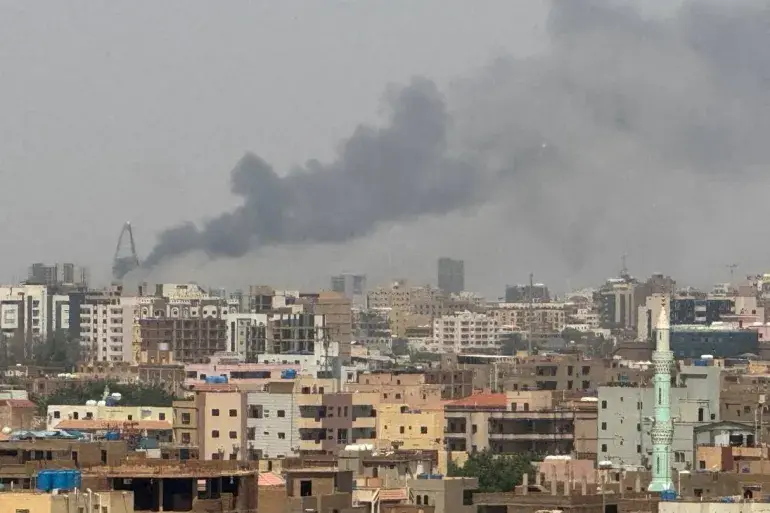
The Sudanese Army has advanced in the central Khartoum axis
Fighting continues between the Sudanese Army and the Rapid Support Forces (RSF) on several fronts in the capital Khartoum, as well as in the states of North Kordofan and White Nile, amid continued army advances in El Fasher and the expansion of its control over strategic positions there. The African Union has warned of the risk of the "partition" of Sudan following the formation of a parallel government.
In the central Khartoum axis, the army seeks to take full control of the city centre, including the presidential palace and sovereign government facilities.
In the East Nile axis, the army has completed its control of the Al-Manshiya and Soba bridges, which link the city of Khartoum to the west and the East Nile area east of Khartoum.
A local source told Al Jazeera that the death toll from RSF shelling in the city of El Obeid yesterday has risen to four civilians. The source added that among the dead were a woman and her child, killed in shelling on neighbourhoods in El Obeid, capital of the state of North Kordofan, on the evening of yesterday.
In Blue Nile State, the army announced its control over a number of cities and towns in the state.
In El Fasher, the Sudanese Army said early today that shelling by what it called the Rapid Support Forces militia on vital areas of the city had killed five children and wounded four women.
The army added that its air defences and the forces supporting it had succeeded in killing eight RSF fighters, noting that sweeping operations across wide areas around the city of El Fasher had led to the seizure of two armoured vehicles.
Earlier, sources told Al Jazeera that clashes had broken out between the army and its allied forces on one side, and the RSF on the other, in several areas of the city.
For its part, the military media in El Fasher said the Sudanese Army, supported by the joint forces, had established control over strategic positions in the city and had deprived the RSF of the ability to carry out its military plans.
Accusations
Meanwhile, the spokesperson for the "Sudan Liberation Movement", Al-Sadiq Ali al-Nour, accused the Rapid Support Forces of committing genocide and forced displacement, and of killing civilians, including women, children and the elderly, as well as systematic looting and the burning of villages, in the locality of "Tawila", west of El Fasher, capital of North Darfur State.
According to the spokesperson, this has complicated the humanitarian situation through further displacement and forced expulsion, in an attempt to achieve political gains.
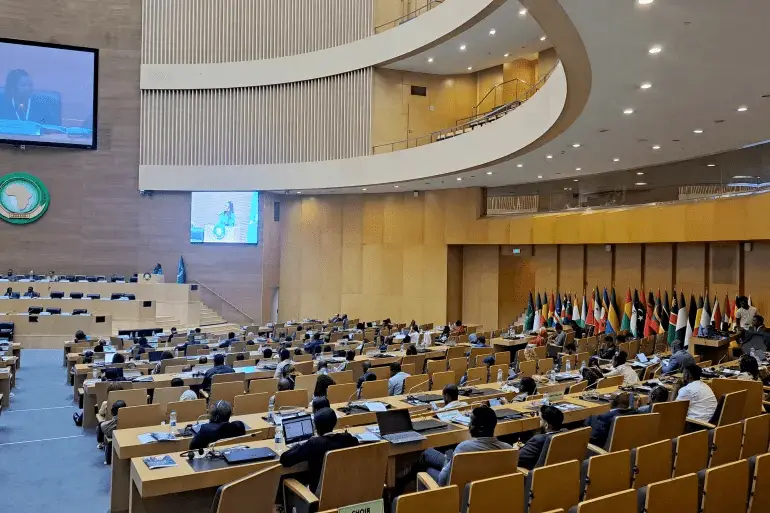
The headquarters of the African Union in the Ethiopian capital, Addis Ababa
The African Union confirmed that it does not recognise the so-called parallel government in Sudan (Al Jazeera)
African warning
This comes as the African Union yesterday, Wednesday, expressed "deep concern" over the Rapid Support Forces and their allies forming a parallel government in Sudan, warning that the step threatens the "partition" of the country, where a war has been raging for more than two years.
In a statement, the bloc condemned "the announcement by the Rapid Support Forces and the political and social forces linked to them of the formation of a parallel government in the Republic of Sudan", and said it does not recognise it, warning that this step represents "a tremendous risk of partitioning the country".
The African Union called on all its member states, as well as the international community, to "not recognise any government or parallel entity aimed at partitioning the Republic of Sudan or its institutions and governing part of its territory".
The bloc reaffirmed its commitment to the African roadmap for resolving the Sudanese crisis, which the council adopted in May 2023.
On Tuesday, the European Union stated in a declaration that the parallel government threatens Sudanese democratic aspirations, in a position similar to a statement issued by the UN Security Council last week.
Last month in Nairobi, the Rapid Support Forces and their allies signed a "founding charter", through which they expressed their intention to form a "government of peace and unity" in the areas they control.
They also pledged "to build a decentralised democratic civil state, based on freedom, equality and justice, without any cultural, ethnic, religious or regional bias".
In early March, the same parties again signed a "transitional constitution" in Nairobi.
Fighting between the Sudanese Army and the Rapid Support Forces has been ongoing since April 2023, creating a massive humanitarian crisis, in which more than 12 million people have been displaced from their areas, and United Nations agencies face difficulties in delivering humanitarian aid.
Source: Al Jazeera + agencies


