

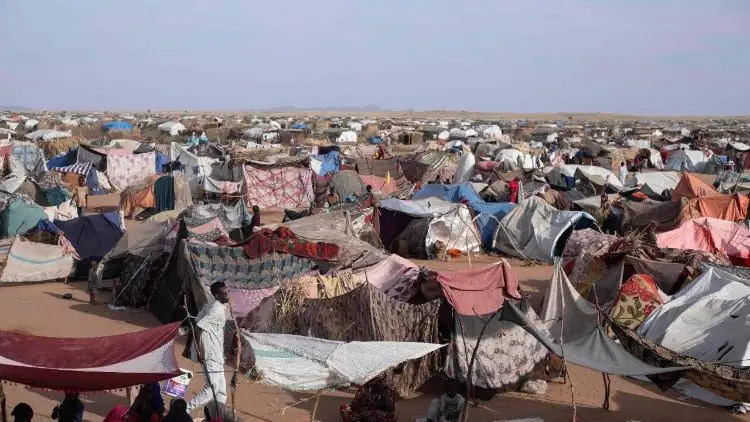
Activists and humanitarian response groups in North Darfur State in western Sudan have issued an urgent appeal to rescue hundreds of families forced to flee their homes after attacks by the Rapid Support Forces, according to local sources, on several areas in Umm Baru locality, causing thousands of civilians to flee amid acute shortages of food, water and shelter.
The Sudan Tribune reported on Saturday, 7 November, that during the past week the attacks targeted the areas of Mazbad, Arori, Umm Muraheik and Abu Haraz in Umm Baru locality, an area inhabited mainly by groups from the Zaghawa tribe.
Local sources accused the Rapid Support Forces of committing widespread violations against civilians during the attacks, including killings and arrests on the basis of ethnic affiliation, as well as the destruction of service facilities.
According to the same sources, a hospital in the Mazbad area was destroyed, and a water source in the Arori area was damaged, further hindering residents' access to health services and drinking water.
It has not been possible to independently verify all of these allegations or to determine the exact number of victims.
Families Under Trees Without Covers
The North Darfur Emergency Rooms Council announced that families who fled combat areas are sleeping in the open or sheltering under trees, without tents or blankets to protect them from the cold, amid deteriorating humanitarian conditions and scarce aid.
The council explained that women, children and the elderly face growing risks as temperatures drop, particularly as many families were displaced without being able to carry their basic necessities.
It noted that the displaced suffer severe shortages of drinking water, food and shelter materials, in addition to difficulty accessing healthcare.
The council called for urgent humanitarian intervention to provide safe corridors for evacuating civilians from the affected areas, and to deliver aid including food, water, medicine, tents and blankets.
Repeated Displacement and Fears of a Widening Catastrophe
Umm Baru locality, located in North Darfur, is witnessing a volatile security situation as armed confrontations continue. Areas there had previously been subjected to attacks that caused large numbers of residents to move towards safer areas, including neighbouring Chadian territory.
According to the Sudan Tribune, the locality remains under the control of the Sudanese Army and the Joint Force allied with it, despite attacks by the Rapid Support Forces.
The new displacement comes at a time when Darfur is suffering a worsening humanitarian crisis, due to the widening scope of fighting, the destruction of infrastructure and difficulty in delivering aid to affected communities.
Allegations concerning the targeting of civilians on the basis of ethnic affiliation raise additional concerns about the safety of residents, particularly in areas that have witnessed repeated waves of violence and displacement.
As families are forced to remain in the open without adequate protection from the cold, local response groups have warned that the crisis will worsen unless urgent assistance is provided and access routes are secured for humanitarian organisations to reach those affected.
These developments highlight the plight of thousands of civilians for whom fleeing combat zones does not necessarily mean reaching safety, as after surviving the attacks they face the risk of hunger, thirst, disease and loss of shelter.


