


The dismissal of two senior officials of Israel's Mossad intelligence agency has sparked wide debate within the intelligence establishment, after the Israeli leadership linked the move to the failure to implement a plan aimed at changing the regime in Iran. Accounts from within the agency, however, offer a markedly different explanation, placing Prime Minister Benjamin Netanyahu and former Mossad chief David Barnea at the heart of responsibility for the plan and its outcomes.
According to political sources in Tel Aviv, the decision by current Mossad chief Roman Gofman to remove prominent officials has created a state of unrest within the agency and prompted a number of its senior staff to consider leaving their posts, amid a growing belief that the dismissals are not solely related to a professional assessment of the Iranian plan, but to a broader struggle over influence and political responsibility for its failure.
Dismissals Fuel the Dispute
The two officials affected by the decisions are the head of the Intelligence Division at the Mossad, who had spent only a short period in the post, and the head of the Iran department in the agency, known by the letter "Y".
The account circulating in Israeli circles held that the two officials had played a central role in preparing the final version of a plan aimed at changing the regime in Tehran, and that its failure had diminished the image of the Israeli leadership in the eyes of the United States and foreign intelligence services.
However, this account has not gained wide acceptance within the Mossad. Officials argue that holding the two men responsible for the plan's failure ignores the nature of the political decision behind it, as well as the direct role played by the prime minister and the agency's former head in shaping and presenting it to American allies.

Counter-Narrative: Netanyahu and Barnea Behind the Plan
Sources within the Mossad say the plan was not a separate initiative by the two officials who were dismissed, but was directly linked to the agency's top leadership and to Netanyahu.
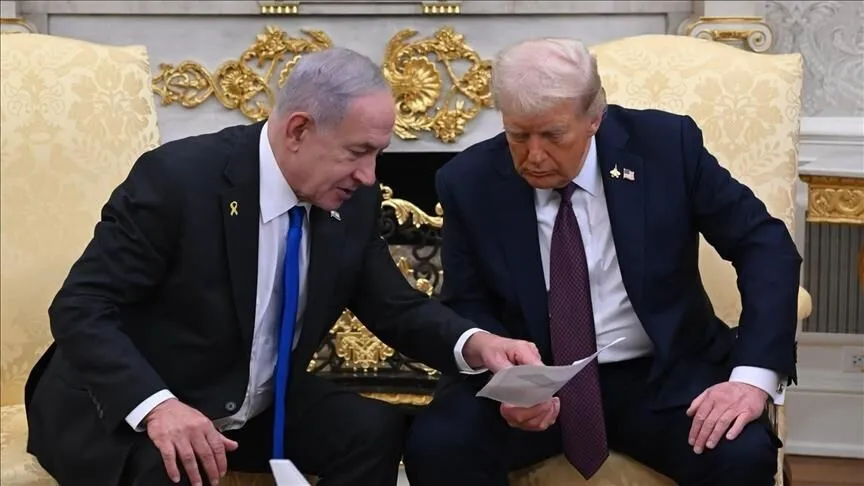
According to this account, Barnea and his deputy were among the most prominent architects of the operational concept, before Netanyahu adopted it and presented it to a number of international leaders, foremost among them US President Donald Trump.
The account indicates that some American officials who reviewed the plan considered it unrealistic, but that Trump gave the Israeli leadership an opportunity to pursue it after receiving assurances from Netanyahu regarding the presence of Iranian elements that could contribute to a process of power change in Tehran.
Ahmadinejad at the Heart of the Regime-Change Plan
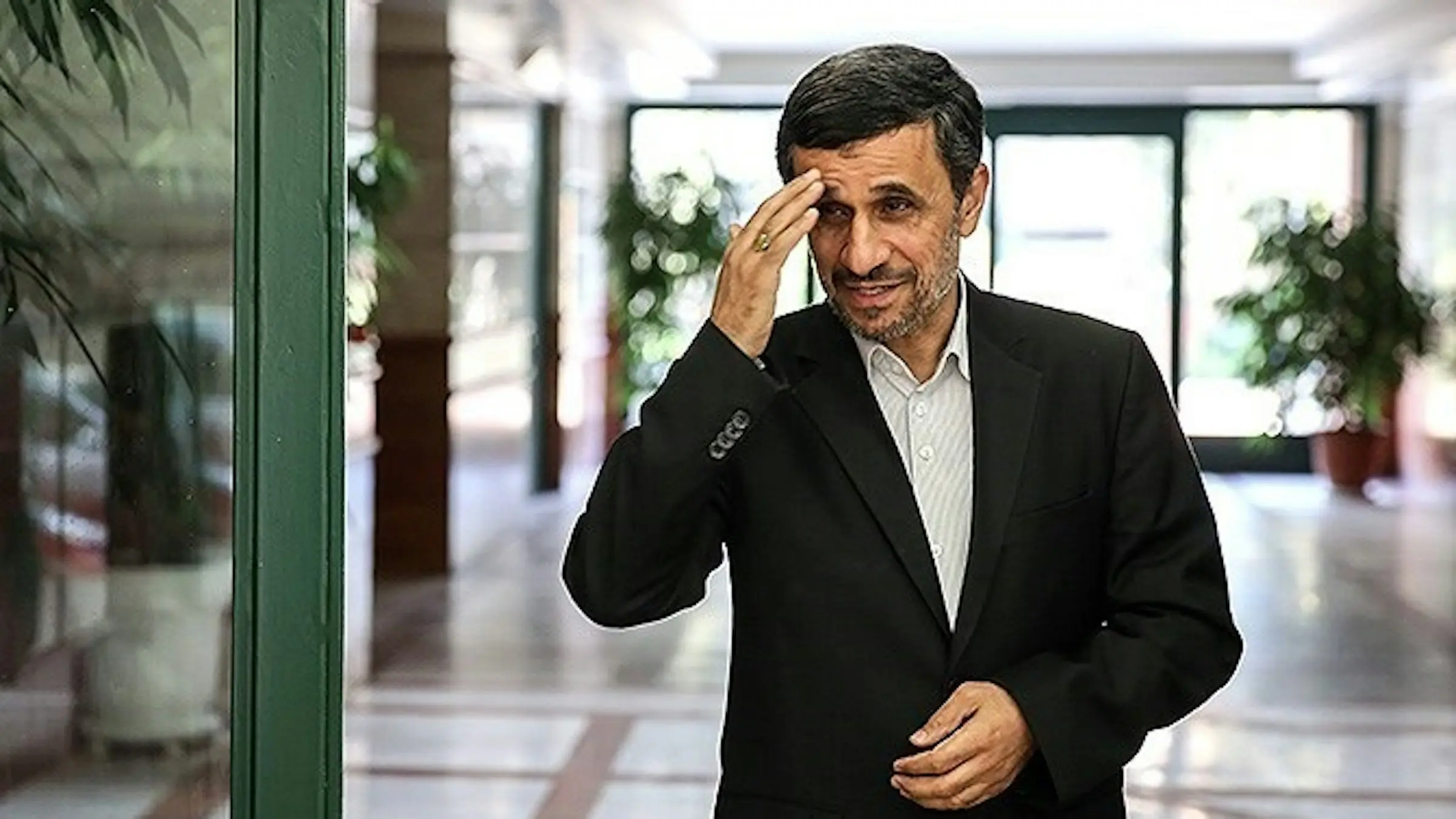
One of the most controversial aspects of the plan was its reliance on former Iranian president Mahmoud Ahmadinejad as a figure who could play a role in a post-regime-change phase.
Israeli sources that spoke about the plan say Netanyahu told Trump that Israel had succeeded in recruiting Ahmadinejad, and that he could serve as one of the elements of an alternative Iranian leadership given his past background and his relations within state institutions and the Revolutionary Guards.
However, the plan suffered an early blow when an Israeli strike hit Ahmadinejad's residence in Tehran at the beginning of the war, according to an account reported by American press outlets.
The same account indicates that the incident led Ahmadinejad to reconsider his cooperation with the plan, before relations deteriorated further, while the Israeli side moved to expose his link to the project.
Why Did the Israeli Plan Collapse?
Developments following the start of the war raise a fundamental question about the realism of Israel's wager on changing the Iranian regime through military pressure.
According to accounts circulating within the agency, the Mossad did not treat the overthrow of the regime as a result that could be achieved through a single military strike, but as a lengthy process beginning with weakening Iran's military capabilities and demonstrating the leadership's inability to protect its institutions and senior officials, then exploiting this vulnerability at a later stage.
However, the transition from weakening the Iranian state to toppling its political system has proven more complex than initial estimates.
Israeli sources say the plan also ran into political and military factors, including the non-implementation of some of its ground elements, which weakened the premise on which the project had been built from the outset.
Gofman Reorganises the Mossad
By contrast, another account offers a different explanation for the dismissals, linking them to an attempt by Roman Gofman to consolidate his grip on the Mossad and reshape the top leadership according to his own vision.
This account indicates that since taking over the agency's leadership, Gofman has carried out internal changes, including to the Mossad's deputy head, and that the recent decisions are part of a broader effort to rearrange power centres within the institution.
According to informed sources, the two officials who left their posts were not necessarily dismissed because of the failure of the Iranian plan, and their departure may have resulted from disagreements with the new approach Gofman seeks to impose within the agency.
Accounts circulating in Mossad circles suggest that the two men enjoyed wide professional respect and that their departure came within the framework of an understanding, rather than as a direct punishment for the failure of the regime-change operation in Iran.
Is Netanyahu Trying to Shift Responsibility?
The internal debate has not been confined to the Mossad, but has extended to Netanyahu's office, which hastened to present the dismissals as a direct result of the failure of the plan agreed upon with the American administration.
Sources within the agency see this explanation as serving a political goal beyond the intelligence establishment, namely easing pressure on the prime minister, especially now that it has become clear that the plan did not achieve the objectives set for it.
These sources say Netanyahu was the highest political decision-maker, and that the Mossad operates under the authority of his office. Therefore, in their view, placing responsibility for the failure of a strategic project of this scale on mid-level or senior intelligence officials does not reflect the true chain of decision-making.
A Political Deal Behind the Redistribution of Responsibility?
Security and strategic analyst Ronen Bergman went further, raising the possibility that the reorganisation of the Mossad leadership is linked to a prior understanding between Gofman and Netanyahu.
According to this view, the new Mossad chief may be keen to present himself as a decisive leader who deals firmly with those he considers responsible for misleading the government and American allies, in exchange for providing political cover to Netanyahu in Washington.
This hypothesis carries particular weight given the complex relationship between Netanyahu and Trump, especially as the American president now faces an outcome different from the expectations on which the Israeli plan was built.
How the Israeli-American Plan Against Iran Began
The roots of the operation, according to available information, go back to a joint plan drawn up in detail by Israel and the United States, before entering the implementation phase at the end of February.
However, one of the most important elements of the plan, according to Israeli accounts, required ground action inside Iran, which was linked to the role of Kurdish groups backed from abroad.
With this element stalling, the project lost a fundamental part of its structure, especially since air strikes alone were not sufficient to produce the political collapse the planners had anticipated.
The Failed Plan Shakes the Image of the Israeli Leadership
The dispute within the Mossad concerns not only identifying those responsible for the dismissals, but extends to a broader assessment of the Israeli leadership's performance during the war.
If the plan was designed on the basis that military weakening of Iran would open the way to political change in Tehran, then the regime's survival and its continued ability to function represent a failure of the core premise on which the operation rested.
Moreover, the failure of the bet on an internal element capable of leading a post-regime phase compounds the problem, because any operation to change power requires a political and security alternative able to fill the vacuum, not merely the weakening of existing institutions.
Netanyahu and Trump Face Mounting Political Costs
The current crisis within the Mossad reflects, in part, an attempt to redistribute responsibility for a project that developments have shown to be more complex than Israeli and American estimates assumed.
Accordingly, removing officials from the Mossad and presenting the move as a punishment for the plan's failure may not end the debate, and could instead open the door to further questions about which body made the fundamental decisions and who bears responsibility for assessing the chances of their success.
An Internal Battle Beyond the Dismissals
Jewish media outlets have revealed that the Mossad's current crisis is larger than a mere change in leadership names, pointing to a struggle over how events are interpreted and over who should bear the cost of the failure.
While the official narrative seeks to present the dismissals as accountability for officials who failed to implement a highly sensitive project, accounts from within the agency offer a different picture, namely that the plan was the product of a broader political and intelligence decision, and that blaming two officials for its outcomes may be an attempt to close a larger file.
As the repercussions of the war continue and questions grow about the wisdom of betting on changing the regime in Tehran, the battle over responsibility within Israel appears likely to escalate, particularly if the dismissals turn into a wider wave of resignations or further details about the plan begin to surface publicly.
Source: Jewish media outlets
Also read:


