

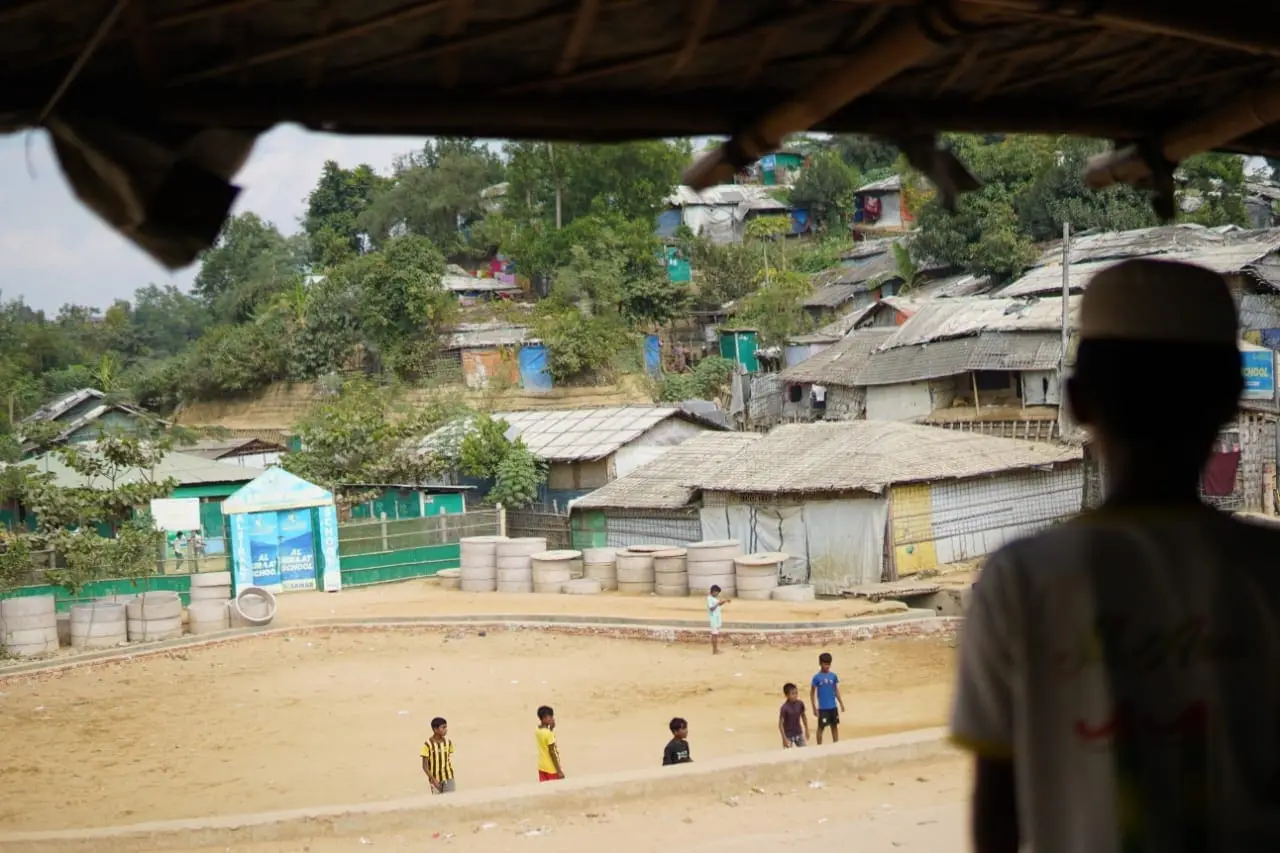
In 1446 AH (December 2024 CE), a delegation from "Justice for All" visited the Kutupalong refugee camp in Cox's Bazar, Bangladesh, where more than one million Rohingya refugees have taken shelter in what is the largest refugee camp in the world. The Rohingya arrived in Bangladesh from Myanmar (Burma), fleeing the ongoing genocide against Rohingya Muslims. The delegation met with our staff in the camps and had the opportunity to hear directly from recently arrived survivors of the genocide. They also interviewed Rohingya women who had been surveyed before the visit about their experiences of living in the camp since 1438 AH (2017 CE), as well as individuals who had taken part in major initiatives within the camps.
As they walked through the various camps of Kutupalong, which comprise 33 camps, the delegation observed the dire conditions and overcrowding, the fragility of houses built from bamboo and plastic, and the collapse of structures weakened by repeated fires, landslides and floods. Attention was also drawn to the open sewage flowing in shallow trenches between the shelters, which has repeatedly been damaged by flooding. Many spoke of losing their homes and everything they owned in a single moment when fire broke out, a painful reminder for many Rohingya whose homes were destroyed in Myanmar (Burma).
In 1439 AH (August 2017 CE), the Myanmar military launched a large-scale campaign in Rakhine State in Myanmar (Burma), where the Rohingya are indigenous inhabitants. The Rohingya, most of whom are Muslim, were targeted by Buddhist Rakhine, in cooperation with the Myanmar army, who took part in driving them from their homes and lands. More than 750,000 Rohingya were affected and were forced to cross the Naf River to flee the genocide, finding refuge in Bangladesh.
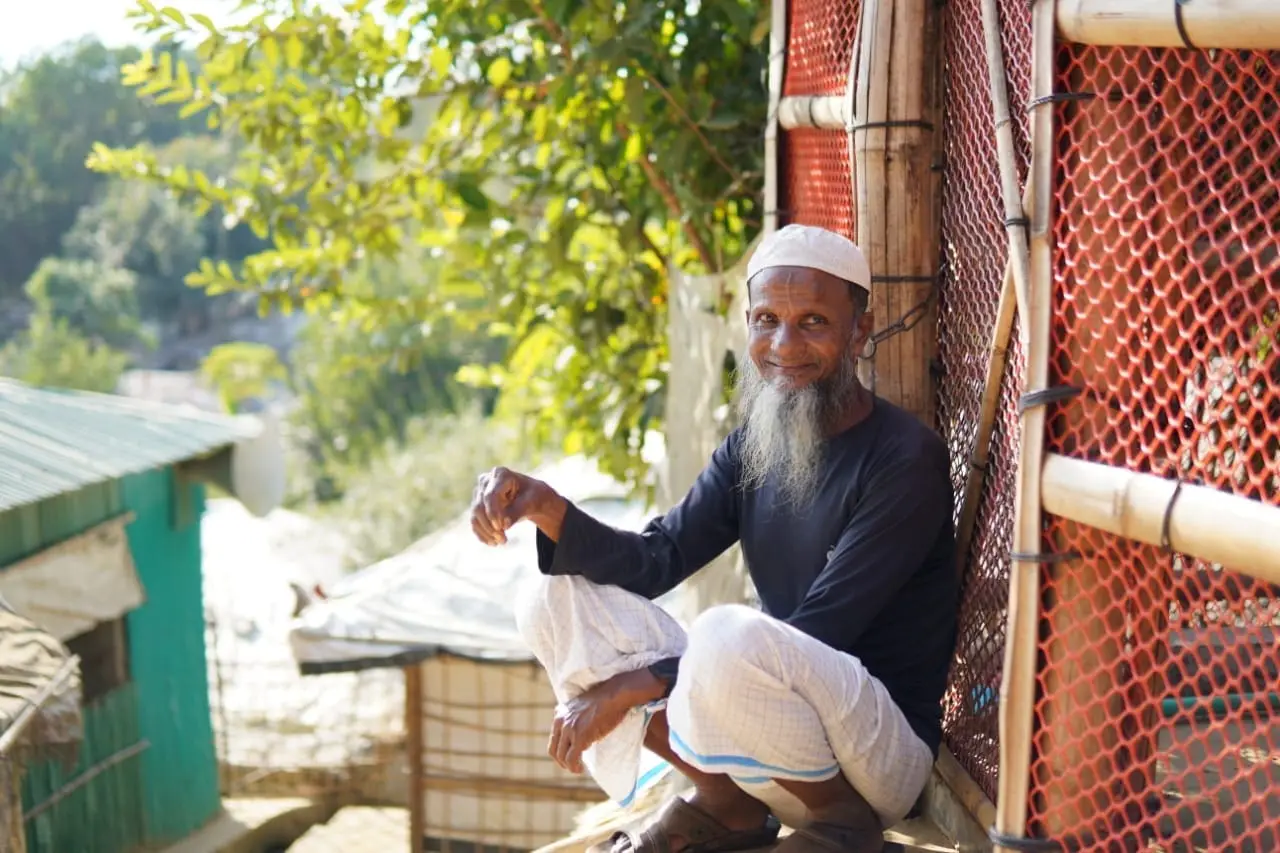
Moving forward to 1444–1445 AH (2023–2024 CE), conditions in Myanmar underwent many changes. The government of Aung San Suu Kyi fell to the military council, while the strength of the Arakan Army grew in its call for self-determination for Rakhine State in Myanmar. However, this only led to a worsening of the situation for the Rohingya. Over the past two years, the Rohingya, a community made up mostly of farmers and fishermen, have been targeted by both the Myanmar army and the Arakan Army. This has resulted in fresh displacement of Rohingya from Myanmar, with around 60,000 new refugees flowing into the camps in Bangladesh.
Purpose of the visit:
The delegation's aim in visiting was to bear witness to the genocide suffered by the Rohingya, to get closer to their suffering, their current conditions in the camps, and their aspirations. The delegation conducted three types of interviews:
They interviewed women who responded to a questionnaire we conducted before the visit, which included 1,000 Rohingya women, coordinated by "Justice for All" staff in the camps, about their current conditions since arriving at the camps seven years ago. They interviewed new refugees to gather firsthand testimonies about what happened in their villages in Arakan, what took place during their escape journeys, and their current conditions after arriving at the camps in Bangladesh.
They also interviewed individuals involved in core initiatives: educational, healthcare, and vocational training centres. Visitors to the camps are required to present an entry permit. Visiting hours are limited to the period between 9 a.m. and 3 p.m.
Summary of interviews with new arrivals:
Delegation members met with new arrivals to the camps. The common characteristics of those who recently fled and reached the camps can be summarised in the following points:
Targeting and violence in Myanmar (Burma):
- Targeting by the Myanmar military and the Arakan Army: New arrivals reported being targeted by both the Myanmar military and the Arakan Army, who have recently taken control of Rakhine State in Myanmar (Burma).
- Ethnic and religious persecution: Muslims were the main target of the violence. In some cases, Muslims and Buddhist Myanmar nationals were separated within the same village, and Muslims were killed. Muslims were used as human shields in the conflict.
- Targeting of men and boys for execution: Men and boys were specifically targeted for execution.
- Sexual violence: The Arakan Army specifically targets girls for sexual assault. Some women knew victims of rape; most had heard of such incidents.
- Displacement within Myanmar: Some individuals were moved from one village to another before being forced to flee Myanmar (Burma) altogether.
- Loss and psychological trauma: Almost everyone knew someone who was killed while trying to flee.
Flight and the journey to Bangladesh:
- A harrowing escape: Many new arrivals were forced to walk over the bodies of the dead while fleeing the violence. One said he passed a lake containing at least 400 bodies, many of whom he knew from his village.
- Abandoning property: They were unable to take any of their belongings while fleeing.
- Rejection by Myanmar authorities: They were told explicitly that Myanmar (Burma) was not their country and were ordered to leave.
Border problems with Bangladesh:
- Refusal by the Border Guard Bangladesh (BGB) to allow crossing: The border guard often refuses to allow crossing of the Naf River. Fleeing people sometimes have to pay bribes to guard personnel in order to be allowed to cross.
- Boat demands: Boat owners often demand large sums of money to facilitate the crossing, although some help fleeing people free of charge.
Arrival in Bangladesh:
- No shelter: Most new arrivals are not allocated shelter upon arrival and must rely on the generosity of earlier refugees to host them. It must be acknowledged that earlier refugees themselves live in overcrowded and impoverished conditions.
- Lack of access to food: New arrivals are not given food rations by the United Nations Relief and Works Agency (UNRWA), which prevents them from accessing food. Some had previously received food vouchers, but these were stopped by the Refugee Relief and Repatriation Commissioner (RRRC). Some new arrivals went three days without food.
- Abduction and enforced disappearance: New arrivals, along with other refugees, fear abduction and enforced disappearance, which have become increasingly common in the camps.
Summary of interviews with surveyed Rohingya women:
Women members of the delegation, divided into two teams of two, interviewed Rohingya women who had been surveyed before the delegation's visit and who indicated their willingness to provide further testimony. The survey, conducted with one thousand Rohingya women, included questions about their experiences of living in the camps over the past seven years since their arrival in 1438 AH (2017 CE), focusing on areas such as basic needs, healthcare, security, education and work.
Some of the challenges shared by Rohingya women during their interviews and group discussions are highlighted below:
- Dependence on aid and scarcity of work opportunities: Women reported that food rations were insufficient to feed their families and that they lacked job opportunities to earn income, forcing them to rely entirely on aid. Some also noted that rations had been reduced compared with when they first arrived. They lack vegetables and proteins, and pointed out that the rations do not include non-food items such as clothing and hygiene products. They receive a small box of rice, lentils, oil and salt each month.
- Women expressed concern that they cannot afford the dowry, which forces them either to marry their daughters to older men who require a lower dowry or to send them abroad. We observed that there was only one woman whose child wore nappies; she works as a seamstress.
- Lack of access to education and poor quality of education: Women expressed concern about the quality of education their children receive. In the learning centres, they said their children only learn the alphabet and how to write their family names. One sister was selling part of her rations each month so she could send her daughter to a private community school, where she feels the education is far better than in the learning centres. Women also reported that there are no opportunities for higher education, with their children receiving only basic education, and they hope their children can learn more. Girls, upon reaching puberty, are not allowed to go to school. They expressed frustration at boredom, as they are forced to stay in their shelters all day without resources or activities to occupy their time.
- Lack of privacy in communal toilets: Women described their suffering regarding privacy when going to communal toilets, as most do not have a private bathroom. Some fear harassment or attack on their way to the toilet at night. They also find it difficult to see the path due to lack of lighting. As a result, women often avoid using the toilet, leading to repeated urinary tract infections and other health problems. One woman noted that around 100 people use 2–3 toilets in her camp, so she often has to wait in a long queue.
- Concern about security: Women reported that their children had been abducted and held hostage, and that they could only pay ransom by borrowing from neighbours. They had witnessed many killings by day and by night, and fear leaving their shelters. Some women's husbands were in hiding because they refused to join gangs and were threatened. Others reported that their teenage sons received similar threats from gang members and fled to Malaysia through arduous journeys across the open sea, paying exorbitant sums to smugglers. Some who attempted to escape died at sea without reaching their destination. In Malaysia, they do not have refugee status and struggle to survive in hiding. Women and their daughters also fled to Malaysia to escape attempts by gang members to force them into marriage. Some of their male relatives were forcibly recruited by gangs, causing the women to suffer high levels of psychological stress that affected their mental and physical health.
- Limited healthcare: Women reported being unable to obtain any medicine other than paracetamol, which is provided to treat all illnesses regardless of their type, and being unable to pay for treatment.
- Repeated fires: Women reported losing their shelters and everything they owned several times due to fires that broke out in the camps, some while they were asleep. They expressed intense fear of fires.
- Restrictions on movement: Women stated that they were previously able to move freely between camps, but the government has recently imposed restrictions on any movement between camps.
- Facing challenges with faith: Women said they cope with their challenges by placing their trust in God, knowing that they have no helper but God and that no one other than God is able to assist them. They also find strength in supporting their neighbours and feel reassured with their husbands and children.
Summary of interviews with imams:
- Trust:
- The Rohingya trust imams as a primary source of information.
- They trust in sending their children to religious schools (Islamic madrasas).
- Recognition of madrasas:
- There is no direct means of recognising madrasas in the design of the United Nations High Commissioner for Refugees.
- The madrasas are self-funded by the community itself.
- Bangladesh ranks second in the number of religious madrasas after Indonesia.
- Number of madrasas and students:
- There are more than 250 religious madrasas across all the camps.
- 39 madrasas are dedicated to female students.
- The number of students per madrasa ranges from 150 to 1,000.
- More than 80,000 students attend madrasas across all the camps, on a full-time or part-time basis.
- Students' ages range from 7 to 32 years.
- Challenges:
- Recognition of schools: The madrasas are not recognised, exposing them to closure. Nevertheless, the Bangladeshi government and camp administrators tolerate them because they provide a safe environment.
- Electricity: There is no electricity in the camps.
- Subjects: Non-religious subjects are not taught in the madrasas.
- Work: Parents express concern about the scarcity of job opportunities for their children, as there is only daily labour and some informal trade.
- Vocational schools: There are some vocational schools, such as tailoring, solar light installation and stove maintenance, but attendance is low.
- Efforts by imams:
- Imams have sought to address several issues in Friday sermons and other gatherings.
- They expressed their need for more information and vocational training.
- They voiced concern about speaking out against human trafficking for fear of becoming targets for gangs.
- They affirmed that the community would benefit greatly if provided with vocational training in the field of education.
Burma Task Force


