

Rising Above Hatred: Indonesia Confronts Disinformation Against Rohingya Refugees
Around the world, dangerous rhetoric targeting religious groups, minorities, migrants, refugees, political opponents and any group seen as "the other" is systematically entrenched and increasingly fuelled by bigotry on social media.
Indonesia has not been immune to this global phenomenon: fake social media accounts linked to the UN Refugee Agency (UNHCR) spread disinformation and a flood of hate messages against Rohingya refugees, and a local uprising against refugees arriving in the province of Aceh in the far west of Indonesia.
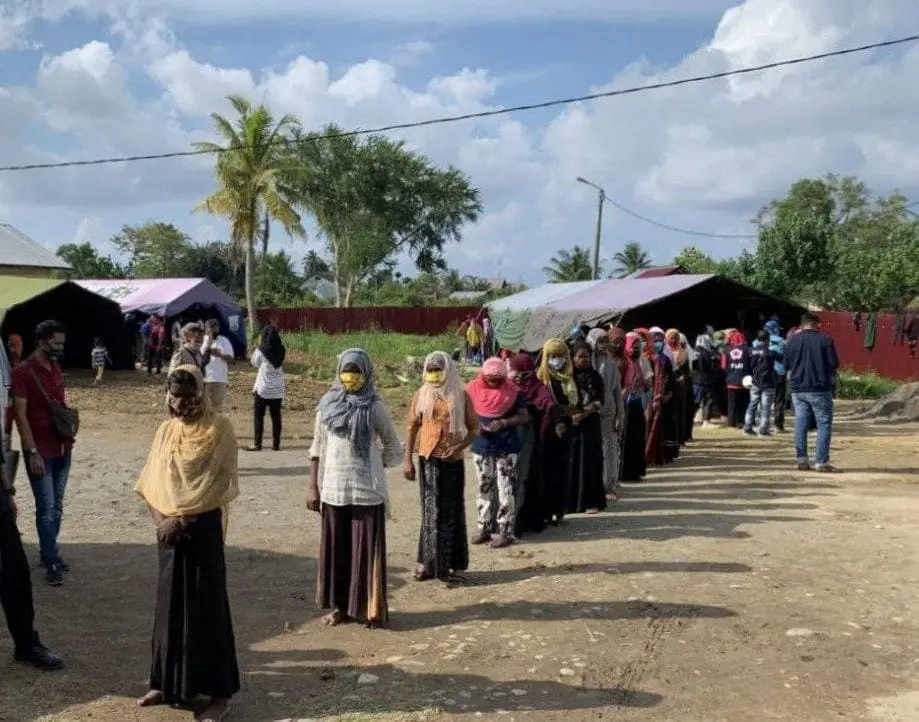
This was the reality Indonesia faced in Jumada al-Awwal 1445 AH (mid-November of last year), when rickety boats carrying Rohingya refugees fleeing insecurity and overcrowding in refugee camps in Bangladesh began arriving on Indonesian shores.
The Rohingya remain among the most vulnerable ethnic groups in the world: they have been stripped of their citizenship in Myanmar, forced to move, and to seek asylum in several countries of the region, where they face further rejection.
This was the first time the UNHCR had been subjected to such an attack anywhere in the world. It was also the first time the UN Resident Coordinator in Indonesia had seen how UNHCR struggles to counter such levels of disinformation and hate speech.
The Resident Coordinator's office led efforts to combat disinformation and hate speech, according to an article it published, and worked with social media companies, the Ministry of Communication and Information, media outlets, academia and civil society organisations.
He said: "We made the fullest use of the internal expertise of UNHCR, the International Organization for Migration and the UN Information Centre in a joint strategy to address disinformation and hate speech and to reduce their impact on how refugees, the vast majority of whom are women and children, are viewed by local communities and the state more broadly."
A Shift in Perceptions of Refugees
For UNHCR, the arrival of a few hundred refugees each week is a small number. Yet a wave of scathing criticism and disinformation distorted this figure to portray the presence of refugees in a country of more than 270 million people as a "flood."
In previous years, when Rohingya refugees arrived during the so-called "sailing season" with favourable winds for this perilous journey, they were welcomed by local residents. Not this time. Much of the change in sentiment was driven by disinformation and online hate speech, broadcast on TikTok, Instagram and X (formerly Twitter) as part of an organised campaign.
Mobs were organised, boats were pushed away as they tried to land, and refugees died, including a mother and a child.
"Sounding the Alarm"
According to the Resident Coordinator, through text analysis and research, it can be demonstrated that social media posts were part of an organised campaign rather than a spontaneous popular outcry against refugees. The Resident Coordinator shared these findings with the social media companies and the Ministry of Communication and Information, which issued their own statements describing many of the posts as a "hoax." Some of the most abusive posts were subsequently removed and the fake accounts were deleted.
The Resident Coordinator alerted the traditional media to the findings on online hate speech; they conducted their own investigations and reached the same conclusions.
An article in Indonesia's most influential weekly newspaper revealed the account that was the source of the hate messages. Slowly but steadily, the disinformation campaign was exposed and shown for what it was: "a fierce and organised attack against helpless refugees and the United Nations."
"Exposing the Lies"
The Resident Coordinator provided information to the media and communicated directly through the UN's social media channels, sharing facts about the refugees and their plight, and also ran videos to introduce them. The videos showed that the refugees are not monsters, but ordinary women and men, husbands and wives, mothers and fathers, girls and boys.
The videos featured a refugee who had memorised the Holy Quran by heart, a meaningful achievement for a people in the world's largest Muslim-majority country. Another was a talented cartoonist, and a mother of four spoke and explained that all she wants is a better life for her children than the one she has lived so far.
Academics and non-governmental organisations also organised events to express solidarity with the refugees. They were supported by providing basic information about the refugees and their lives in Bangladesh, and facts about the harmonious coexistence between local residents and refugees who had arrived in previous years, according to the Resident Coordinator.
While the challenges remain immense, the tide has begun slowly to turn. More and more sympathetic voices have spoken out, including local leaders, religious figures and human rights organisations.
The Coordinator said: "I met with an influential organisation of Acehnese diaspora living in Jakarta and elsewhere in the country, who subsequently wrote a letter to the President requesting protection for the refugees."
When a crowd of students stormed a refugee shelter in late Jumada al-Akhirah (December) and threw crying children into trucks to remove them, more Indonesians spoke out against such an appalling act and supported the refugees.
News of the violence in Indonesia also reached the camps in Bangladesh, shattering the hopes of many Rohingya refugees for a better life, and no boats have arrived over the past month.
As the journey against disinformation continues, the collective hope is that a more compassionate and enlightened narrative will prevail, one that is fairer and more humane in understanding the plight of the Rohingya.


