

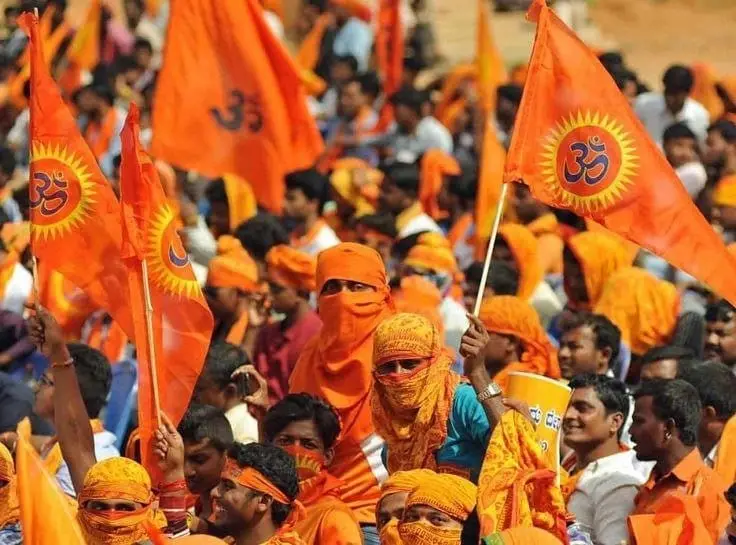
Religious divisions shape voting in Indian district that saw deadly riots
Hostility between Hindus and Muslims has given way to peace in an Indian district that was torn by deadly riots a decade ago, but religious divisions still affect residents who cast their votes on Friday in a general election in which Hindu nationalism is a major issue.
Villages are largely segregated by religion in the Muzaffarnagar district and its surroundings, in the northern and most populous state of Uttar Pradesh, but people say there is no longer tension between the Hindu majority and the Muslim minority.
Violent clashes erupted here in 1434 AH (2013 CE) after two Hindu men stabbed a young Muslim man to death, accusing him of sexually harassing their sister. The two men were subsequently beaten to death by a mob of Muslims, which sparked riots that left some 65 people dead, most of them Muslims, and thousands displaced.
Violence has not returned to the region, known as the country's sugarcane belt, but political divisions remain, with Hindus typically voting for the Bharatiya Janata Party led by Prime Minister Narendra Modi, and Muslims voting for the opposition.
Ramesh Chand, a Hindu biscuit baker in the city of Kairana near Muzaffarnagar, said Modi's government "controls the Muslims".
Critics of the nationalist Bharatiya Janata Party say it targets the country's Muslim minority, numbering 200 million, to appease its hardline Hindu base. The party denies this.
Modi is widely expected to win a third term, on the back of strong growth, prosperity and his personal popularity, despite some concerns over unemployment, rising prices and rural distress.
Ramesh Chand said Modi had improved the security situation in the area. "We can live in peace, whether or not we have jobs... We can sleep with our doors open."
There were also opposing views.
In the village of Jola, sugarcane farmer Mohammed Irfan (50) said that "Modi's oppression of Muslims", as well as unemployment and inflation, were the main reasons that led him to vote for the opposition Samajwadi Party.
Uttar Pradesh elects 80 members to the 543-seat Lok Sabha, the lower house of parliament, making it the largest state, and a strong performance here is crucial to the national result.
Support for Modi was evident in the village of Kutba Kutbi, the centre of the 1434 AH (2013 CE) riots.
Vinay Kumar Baliyan, 43, a farmer who said he supports Modi for boosting economic growth and raising India's global standing, said that although there was now "brotherhood" between the two communities, almost all Muslim families had left the village after the riots.
But Mohammed Irfan said Muslims were expected to vote in greater numbers this time, as Eid celebrations this month brought many migrant workers and students home.
Reuters


