

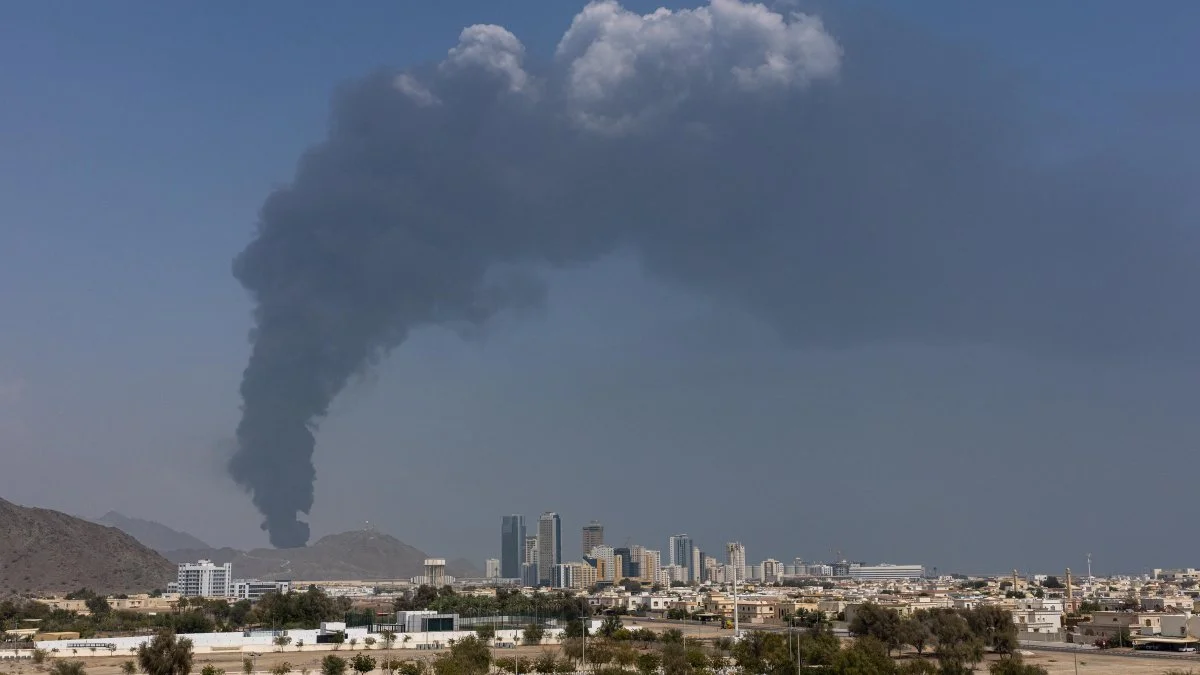
From cloud computing hubs in the Gulf to telecommunications networks in Ukraine and the undersea cables linking the continents, modern wars are no longer confined to military sites and traditional frontlines. Companies that run data, communications and logistics have become part of the infrastructure on which armies depend in their operations. A recent US study warns that civilian institutions face risks they were not prepared for, and reveals how a strike on a digital facility can extend its effects to banks, telecommunications and essential services, even beyond the zone of fighting.
The dividing lines between the civilian economy and military operations are no longer as clear as they were in conventional wars. Institutions that provide internet, cloud computing, telecommunications, satellite, transport and supply services have come to play essential roles in sustaining armies' activities, even when they are not defence companies and do not manufacture weapons.
In return, these institutions face growing threats, including airstrikes, cyberattacks, sabotage and supply disruption, in addition to the legal and financial risks and political pressures that accompany armed conflicts.
A recent study issued by the US Center for Strategic and International Studies (CSIS) warned that the evolution of contemporary warfare has shifted a significant part of military risks onto civilian companies, as the operation of armed forces increasingly depends on digital and commercial infrastructure run by private institutions.
The center published its report on 23 October 2026, titled "No Front Lines: A Decision-Making Guide for Companies Caught in Conflicts," prepared by researchers Emily Harding, Julia Dixon and Oeshing Bostasiri.
The study is based on a simulation conducted by the center with the participation of business and government officials, in addition to two case studies on the role played by Microsoft in Ukraine, and the attacks on Amazon data centres in the Gulf during the war on Iran.
The report does not merely describe the risks. It provides a five-step framework to help companies assess their options, whether continuing operations, scaling back their activities, or withdrawing from conflict zones.
It also offers recommendations regarding the responsibility of the US government to protect companies whose services have become part of states' military capabilities.
How did war reach data centres?
The study's central idea rests on the transformation of the nature of the infrastructure that modern armies need.
In earlier wars, the role of the industrial sector was relatively clear: factories produced tanks, aircraft and munitions, while transport and food companies supplied the needs of the armed forces.
Today, military capabilities no longer depend on weapons, vehicles and ammunition alone. They have become linked to complex systems of data, communications, computing and reconnaissance.
The information gathered by satellites and drones requires systems to transmit and process it, and command and control operations rely on communication networks capable of working continuously.
Military institutions also use cloud computing to store information, run applications and coordinate operations, alongside cybersecurity services that protect their systems from intrusion and disruption.
In many cases, armies do not own all of these infrastructures independently, but obtain essential services from civilian technology companies.
Here emerges the dilemma the report discusses: a company established to serve consumers and commercial institutions may find itself performing an important function in an armed war, without possessing the protective means or the military expertise needed to deal with the resulting risks.
However, the potential military importance of some company services does not mean that all their facilities have become legitimate military targets. The status of a facility and its protection remain governed by the rules of international humanitarian law, not merely by one party to a war declaring it a target.
The Gulf in 2026: when cloud computing came under drone fire
The study devotes a significant part of its report to the attacks on cloud computing facilities in the Gulf during March 2026, as an example of how commercial digital infrastructure became a target or was directly affected by the military conflict.
On 1 March, facilities belonging to Amazon Web Services (AWS) were damaged during Iranian attacks on Gulf states.
According to data issued by the company and reported by Reuters, drone strikes hit two of its facilities in the UAE directly, while a strike near another facility in Bahrain caused material damage to its infrastructure.
The incidents led to structural damage, power outages and fires, in addition to damage caused by water used in firefighting operations.
The effects of the strikes were not limited to the damaged buildings; they extended to cloud services relied on by companies, financial institutions and digital platforms in the region.
Amazon announced that some of its services experienced outages and disruptions, and warned that full restoration could take time due to the scale of the physical damage.
It also called on its customers to shift some workloads and data to other operating regions that were not affected.
This incident reveals a fundamental difference between cyberattacks and explosions that strike the physical infrastructure of the internet.
A company may be able to recover data from backups or transfer services to other centres, but it cannot relocate a data centre building or its power and cooling systems simply by changing software settings.
Thus, the cloud infrastructure that appears to the user as a digital service unconnected to any specific place remains, in the end, dependent on physical facilities that can be destroyed or disabled.
From the UAE and Bahrain to Tehran: banks enter the military equation
The incidents addressed by the study were not limited to facilities of US companies in the Gulf.
On 11 March 2026, a data centre belonging to the Iranian bank "Sepah" in Tehran was struck by an attack that the report attributed to a party considered likely to be Israeli.
The researchers noted that the targeted facility held records relating to the salaries of Islamic Revolutionary Guard Corps and Iranian army personnel, and that the attack led to disruptions in banking services and military salary payments.
This incident highlights the dual nature that some financial systems may take: they provide civilian banking services, but may also contain data or functions linked to the military institution.
On the same day, a media outlet linked to the Iranian Revolutionary Guard published a list of 29 potential technological targets in Bahrain, Israel, Qatar and the UAE.
The list included facilities or offices linked to major US companies, among them Amazon, Microsoft, Google, IBM, Palantir, Nvidia and Oracle.
The publishing party presented these locations as legitimate targets, based on allegations of links between the companies' services and US and Israeli military operations.
However, publishing the list does not prove that attacks occurred on all the facilities mentioned in it, and a company's engagement in government or military contracts does not automatically make all its civilian assets military targets.
The two incidents reveal the widening scope of threats to include banking and digital infrastructure, and the damage that targeting them may cause beyond military institutions to civilian users.
Ukraine: when Microsoft became part of defensive capacity
The Russia–Ukraine war provides the second example on which the report relies to understand the relationship between companies and modern warfare.
After Russia launched its full-scale invasion of Ukraine in February 2022, US technology companies found themselves facing difficult decisions concerning the continuity of their services in both countries.
Microsoft was among the most prominent of these companies, as it helped support Ukraine's cybersecurity and protect networks and institutions from large-scale cyberattacks.
Cloud services also played an important role in keeping some systems running and protecting data from damage that could affect the physical infrastructure.
On the other hand, the company began scaling back its activities in Russia, and then imposed graduated restrictions on certain products and services.
The study notes that this course led to financial costs for the company, in addition to challenges related to dealing with employees, customers and legal obligations.
Yet Microsoft's experience also highlights a deeper question: does a company remain merely a civilian service provider when some of its technologies become essential to a state's ability to resist a military attack?
The report reviews statements by Microsoft President Brad Smith, in which he explained that the company views protecting states from cyberattacks as part of its responsibility, while distinguishing between supporting the defence of systems and participating in attacks.
It also points to the company's continuing interest in not cutting essential services to civilian hospitals and clinics in Russia.
This approach shows that companies' decisions during wars can combine security, economic and humanitarian considerations, and are not limited to choosing a political or military side.
Six simulations reveal company leaders' confusion in the face of war
One of the most notable aspects of the CSIS report is that it did not rely on theoretical analysis alone. It conducted six simulations in which officials from the business sector and governments took part.
Participants were presented with a hypothetical scenario in which one country is invaded by a neighbouring country, while international companies have activities and interests in both countries.
They had to make decisions about continuing operations, withdrawing, or providing services to one of the parties, while assessing political, military and economic risks.
The results revealed significant differences in judgements about the extent to which companies become involved in conflicts.
Of the participants asked, 38% considered that the company in the scenario might be directly participating in the conflict, while 41% rejected this characterisation, and the question was not put to the remaining participants in some rounds of the simulation.
When participants were asked which services were most likely to lead to companies being viewed as engaged in fighting, 35% pointed to smart logistics services, 27% to satellite communications, 24% to cybersecurity services, and 14% selected cloud computing.
These results show that participants did not agree on a clear definition of the role that makes companies' services part of the war effort.
However, these percentages represent the answers of participants in a research simulation, not a representative survey of all global companies, and they do not determine the legal status of those services.
Should companies stay or withdraw from conflict zones?
The simulation also revealed a major divergence in the decisions participants made regarding the future of companies' operations.
About 49% chose to continue activities in both warring countries, 39% decided to support only the country that had been invaded, and 9% chose to withdraw from both markets.
These results suggest that withdrawal does not always appear to be the easiest or least costly option.
Some companies may provide services essential to civilian populations, such as communications, payments and logistical assistance.
Their sudden withdrawal may disrupt services on which millions of people depend, even if the aim is to protect employees or avoid political entanglement.
Conversely, continuing operations may expose employees and facilities to danger, or lead to facing sanctions, legal proceedings and public protests.
An additional problem arises when a company's leadership announces a clear political position on one of the parties to a war, because this announcement may change the warring parties' perceptions of the nature of its activity.
Hence, the report does not offer a single option suitable for all companies, but calls for assessing the scale of exposure to risks and the nature of the services each institution provides.
Four types of risk facing the civilian sector
The report divides the risks facing companies in conflicts into four main categories.
Physical risks: These include the safety of employees, and the likelihood that offices, factories, warehouses and data centres will be struck, sabotaged, or have essential supplies disrupted.
Financial risks: These relate to loss of revenue, disruption of markets, rising costs, and difficulty transferring money and obtaining banking and insurance services.
Legal and compliance risks: These include international sanctions, trade restrictions, contractual obligations, and the possibility of legal action concerning a company's activities in conflict zones.
Reputational risks: These are linked to the positions of customers, investors, employees and public opinion regarding the continuation of a company's activities or its cooperation with one of the parties to a war.
The report does not treat these categories as entirely separate.
A cyberattack may turn into a major financial loss, a legal decision may trigger a reputational crisis, and the disabling of a physical facility may halt digital services the company provides around the world.
The report pays particular attention to information security and software supply chains, including reliance on external services or technical components that may be compromised or interrupted.
This approach indicates that institutional security during wars now requires an integrated understanding of military, digital and economic threats.
Five steps for decision-making under the threat of war
The report proposes a practical five-stage framework to help company boards deal with conflicts.
The first stage begins with gathering information and identifying knowledge gaps, including studying the course of the war, the scale of the company's presence in the affected areas, the number of employees, and the value of the assets at risk.
The second stage addresses considerations that are difficult to express in numbers, such as the company's responsibility towards its employees and customers, and the extent to which decisions align with its declared principles.
In the third stage, risks are assessed using a model devised by the researchers, which includes twenty questions covering financial, legal, physical and reputational aspects.
Answers are scored according to a simplified system, such that a greater number of risk factors indicates the need for more cautious measures.
The report considers recording more than 15 points an indicator of a very high level of risk within the proposed model, but it is not a legal standard or a definitive scientific measure of a facility's safety.
The fourth stage involves making an initial decision: continuing, scaling back activities, separating defence-related business, or withdrawing from one of the warring countries or both.
The fifth stage tests the risk-reduction plan, determining whether it is feasible and at acceptable cost, before the final decision is adopted.
The proposed measures include preparing evacuation plans for employees, securing backup energy sources, distributing services across multiple locations, protecting data, and developing crisis response plans.
The report also suggests making use of artificial intelligence tools to gather information and analyse scenarios, while protecting sensitive data and not relying solely on these tools' outputs to make final decisions.
Undersea cables: when the internet becomes part of national security
The significance of this study extends to the infrastructure that connects data centres to the rest of the world, foremost among which are undersea telecommunications cables.
According to the International Telecommunication Union, more than 99% of international data traffic passes through undersea cables, which form the backbone of global communications and the digital economy.
وتعتمد المصارف وشركات الشحن ومنصات التجارة والخدمات الحكومية على استمرار عمل هذه الشبكات، بما يجعل انقطاعها المحتمل مصدرًا لأضرار اقتصادية وخدمية واسعة.
وفي منطقة الخليج، تكتسب هذه الكابلات أهمية خاصة بسبب وجود ممرات بحرية ضيقة، وارتباطها بمراكز مالية وتقنية تعتمد على الاتصال المستمر بالأسواق العالمية.
وفي السادس من نوفمبر 2026، نشرت صحيفة «فايننشال تايمز» تحقيقًا بشأن تحركات غير اعتيادية لأربع سفن مرتبطة بإيران قرب مسارات كابلات اتصالات بحرية في خليج عُمان.
واستند التحقيق إلى بيانات تتبع السفن وصور الأقمار الصناعية وتحليلات شركة «ويندوارد» المتخصصة في المعلومات البحرية.
ووفقًا للصحيفة، أبطأت بعض السفن سرعتها، أو دارت قرب مسارات الكابلات، أو أوقفت بث بيانات تتبعها في فترات محددة.
وأثارت هذه التحركات مخاوف من احتمال مراقبة مسارات الكابلات أو التحضير لاستهدافها، في ظل تهديدات إيرانية سابقة للبنية الرقمية.
لكن التحقيق لم يقدم دليلًا يثبت وقوع تخريب أو زرع متفجرات، كما أن التحركات المرصودة قد تكون لها تفسيرات أخرى.
ويعد هذا التطور إضافة تحليلية مستقلة إلى ما ناقشته دراسة CSIS، إذ نُشر بعد التقرير الأصلي بأسبوعين تقريبًا.
وتوضح الواقعة كيف أصبحت حماية البنية الرقمية تشمل منشآت منتشرة على اليابسة، وشبكات تمر عبر البحار، ولا تقتصر على حماية الخوادم والبرمجيات من الاختراق.
الطاقة والنقل والخدمات اللوجستية.. سلسلة واحدة من الاعتماد المتبادل
لا تعمل مراكز البيانات بصورة مستقلة عن بقية الاقتصاد.
فهي تحتاج إلى إمدادات كهربائية مستقرة، وأنظمة تبريد ومياه، وشبكات اتصالات، وخدمات صيانة ونقل، إلى جانب المعدات والكوادر المتخصصة.
وقد يؤدي تعطل أي عنصر أساسي من هذه المنظومة إلى توقف الخدمات، حتى إذا لم يتعرض مركز البيانات نفسه لهجوم مباشر.
وينطبق الأمر أيضًا على شركات النقل والخدمات اللوجستية.
فالمستودعات والموانئ وشركات الشحن المدني قد تكون ضرورية لنقل السلع الغذائية والأدوية والوقود، لكنها قد تقدم في الوقت نفسه خدمات نقل أو إمداد تحتاج إليها القوات المسلحة.
وهنا لا تنشأ المخاطر فقط من احتمال التعرض لضربة مباشرة، بل من تعطيل الموانئ وشبكات الطاقة والطرق والاتصالات التي تعتمد عليها الشركات في ممارسة أعمالها.
ويحذر التقرير من أن أثر الحرب قد يمتد عبر سلاسل التوريد، بحيث تتضرر شركات تقع خارج منطقة القتال نتيجة تعطل منشأة أو خدمة في دولة أخرى.
وهذا يفسر أهمية النظر إلى مرونة البنية الاقتصادية كاملة، بدل الاكتفاء بحماية منشأة محددة أو نقل بعض البيانات إلى خوادم بديلة.
هل يصبح مركز البيانات هدفًا عسكريًا بمجرد استخدامه من الجيش؟
تعد هذه المسألة من أكثر القضايا القانونية حساسية في النقاش بشأن دور الشركات المدنية خلال الحروب.
فالقانون الدولي الإنساني يحمي المنشآت والأعيان المدنية من الهجمات المباشرة، بما فيها مراكز البيانات وشبكات الاتصالات المستخدمة للأغراض المدنية.
لكن بعض المنشآت قد تؤدي وظائف مدنية وعسكرية في الوقت نفسه، ما يستدعي تقييمًا دقيقًا لطبيعة استخدامها.
ووفقًا للجنة الدولية للصليب الأحمر، فإن استخدام جزء من البنية الرقمية المدنية لأغراض عسكرية لا يؤدي تلقائيًا إلى تحويل المنشأة بأكملها إلى هدف عسكري مشروع.
بل يتطلب الأمر التحقق من مساهمة المنشأة الفعلية في العمل العسكري، ومن وجود ميزة عسكرية محددة يمكن تحقيقها من استهدافها، مع احترام قواعد التمييز والتناسب والاحتياطات الواجبة.
وحتى إذا أصبح جزء من البنية التحتية هدفًا عسكريًا بموجب الشروط القانونية، فإن ذلك لا يلغي ضرورة تقدير الأضرار المحتملة بالمدنيين والخدمات التي يعتمدون عليها.
فمركز البيانات الذي يخدم نظامًا عسكريًا قد يستضيف أيضًا خدمات لمستشفيات ومصارف ومؤسسات إنسانية.
وقد يؤدي تعطيله إلى أضرار غير مباشرة تمس السكان الذين لا علاقة لهم بالنزاع.
ولهذا تدعو اللجنة الدولية للصليب الأحمر إلى الفصل، حيثما أمكن، بين البنية الرقمية المدنية والاستخدامات العسكرية، لتقليل احتمالات تعريض الخدمات الأساسية للخطر.
ومن المهم التمييز هنا بين موقف طرف متحارب يعلن منشأة ما هدفًا مشروعًا، والتقييم القانوني المستقل الذي يحدد ما إذا كانت شروط الاستهداف قد تحققت فعلًا.
هل تلتزم الحكومات بحماية الشركات التي تدعم مجهودها العسكري؟
تصل الدراسة إلى معضلة سياسية واستراتيجية تتعلق بمسؤولية الحكومات.
فإذا أصبحت الشركات المدنية تقدم خدمات ضرورية لاستمرار العمليات العسكرية، فهل يجب على الدول حمايتها كما تحمي قواعدها العسكرية ومنشآتها الاستراتيجية؟
وتشير الباحثات إلى أن الشركات التكنولوجية تمتلك أنظمة متقدمة للأمن والحماية السيبرانية، لكنها لا تمتلك جيوشًا أو شبكات دفاع جوي قادرة على اعتراض الصواريخ والمسيّرات.
كما لا تملك غالبًا القدرات الاستخباراتية الواسعة التي تستخدمها الحكومات لتقييم التهديدات العسكرية.
وفي المقابل، قد يكون انسحاب الشركات من منطقة النزاع سببًا في إضعاف قدرات الدولة التي تعتمد على خدماتها.
ولهذا يقدم التقرير مذكرة افتراضية موجهة إلى الرئيس الأمريكي، تقترح إعلان سياسة ردع تعتبر الهجمات على الشركات الأمريكية، في سياق نزاع محدد، اعتداءً على المصالح الأمريكية يستدعي ردًا مناسبًا.
لكن الباحثات تحذرن أيضًا من مخاطر تبني التزام مفتوح بحماية جميع الشركات الأمريكية في أنحاء العالم، لأن ذلك قد يستنزف الموارد العسكرية ويدفع الولايات المتحدة إلى مواجهات أوسع.
وتناقش الدراسة ضرورة التمييز بين شركة صغيرة تقدم خدمة محدودة، ومؤسسة كبرى تشغل بنية تحتية ضرورية للدفاع الوطني.
كما تؤكد أن مستوى الحماية وطبيعة الاستجابة يجب أن يرتبطا بظروف كل نزاع ومدى اتصال أنشطة الشركة بالمصالح الحكومية.
وهذه التوصيات تمثل تصورًا بحثيًا قدمه معدّو التقرير، وليست إعلانًا عن سياسة أمريكية جرى اعتمادها رسميًا.
سؤال يتجاوز حماية الشركات.. من يحمي المدنيين الذين يعتمدون عليها؟
رغم تركيز الدراسة على المخاطر التي تواجه الشركات الأمريكية، فإن نتائجها تفتح نقاشًا أوسع بشأن حماية السكان المدنيين.
فالمصارف والمستشفيات وشبكات الكهرباء والاتصالات والمنصات التي تنقل المساعدات لا تعمل بمعزل عن البنية الرقمية والتجارية.
وقد يؤدي تعطل الخدمات السحابية إلى صعوبة إجراء المدفوعات، أو تأخر معاملات مالية، أو انقطاع خدمات يعتمد عليها الأفراد والشركات والمؤسسات العامة.
وفي البلدان التي تعاني أصلًا ضعف البنية التحتية أو النزوح الواسع، قد تكون آثار التعطيل أشد، لأن السكان يمتلكون بدائل أقل للحصول على الخدمات الضرورية.
ومن هنا، فإن حماية البنية التحتية الرقمية ليست قضية تخص الشركات الكبرى وحدها، بل ترتبط أيضًا باستمرارية الخدمات الأساسية وحقوق السكان المدنيين.
ولا يعني ذلك أن كل عطل في الخدمات الرقمية أثناء الحرب ناتج بالضرورة عن هجوم عسكري، إذ قد تنشأ الانقطاعات عن أعطال فنية أو اضطراب الطاقة أو الضغط على الشبكات أو الهجمات السيبرانية.
لكن تداخل هذه الأخطار يجعل الاستعداد لها أكثر صعوبة، ويزيد الحاجة إلى خطط طوارئ تشمل الشركات والجهات الحكومية والمؤسسات الإنسانية.
الخلاصة.. الحرب لم تعد تصل إلى الشركات عرضًا
تكشف دراسة مركز الدراسات الاستراتيجية والدولية عن تحول في العلاقة بين القوة العسكرية والاقتصاد المدني.
فالشركات التي تقدم خدمات البيانات والاتصالات والنقل والأمن السيبراني لم تعد مجرد جهات تعمل خلف الجبهة؛ إذ أصبحت بعض خدماتها ضرورية لعمليات الرصد والقيادة والتنسيق والإمداد.
وفي المقابل، باتت منشآتها وموظفوها وعملاؤها عرضة لأخطار تتجاوز ما اعتادت المؤسسات التجارية الاستعداد له.
وقد أظهرت الهجمات التي تعرضت لها مراكز بيانات أمازون في الإمارات والبحرين خلال مارس 2026 أن البنية التحتية الرقمية ليست بمنأى عن الضربات المادية، وأن الأضرار التي تلحق بها قد تمتد إلى قطاعات مالية وخدمية واسعة.
كما كشفت تجربة مايكروسوفت في أوكرانيا عن دور متزايد للشركات في حماية الشبكات واستمرار الخدمات، إلى جانب المخاطر السياسية والاقتصادية التي ترافق الانخراط في النزاعات.
وتؤكد المحاكاة التي أجراها المركز أن قادة الشركات أنفسهم لا يمتلكون دائمًا تصورًا موحدًا لمستوى المخاطر، أو للحظة التي تصبح فيها خدمات المؤسسة مرتبطة بصورة مباشرة بالعمليات العسكرية.
لكن النتيجة الأهم لا تتعلق بإزالة الحماية القانونية عن المنشآت المدنية، بل بضرورة المحافظة عليها في بيئة أصبحت فيها الاستخدامات المدنية والعسكرية متداخلة بصورة متزايدة.
وهكذا، فإن السؤال الذي تطرحه الدراسة لم يعد مقتصرًا على قدرة الجيوش على حماية مواقعها العسكرية، بل امتد إلى قدرتها، إلى جانب الحكومات والشركات، على حماية البنية الاقتصادية والرقمية التي يعتمد عليها المجتمع بأكمله.
ومع تنامي أهمية مراكز البيانات والكابلات البحرية والطاقة والاتصالات، قد يصبح أمن هذه الشبكات عاملًا مؤثرًا في استمرارية الاقتصادات وقدرة الدول على إدارة الأزمات والنزاعات.
ففي الحروب الحديثة، لم تعد الجبهة مكانًا جغرافيًا ثابتًا؛ وقد تصل آثار القتال إلى خدمات يستخدمها الملايين، دون أن يعيش هؤلاء على مقربة من أي ساحة معركة.
المصدر الأساسي: مركز الدراسات الاستراتيجية والدولية الأمريكي (CSIS)، تقرير «لا خطوط أمامية: دليل لاتخاذ القرارات للشركات العالقة في النزاعات»، إميلي هاردينغ وجوليا ديكسون وأوشينغ بوستاسيري، 23 أكتوبر 2026.
مصادر إضافية للتحقق والتوسّع: وكالة رويترز، 2 مارس 2026؛ اللجنة الدولية للصليب الأحمر، 23 أبريل 2026؛ الاتحاد الدولي للاتصالات، 10 يوليو 2026؛ صحيفة فايننشال تايمز، 6 نوفمبر 2026.


