

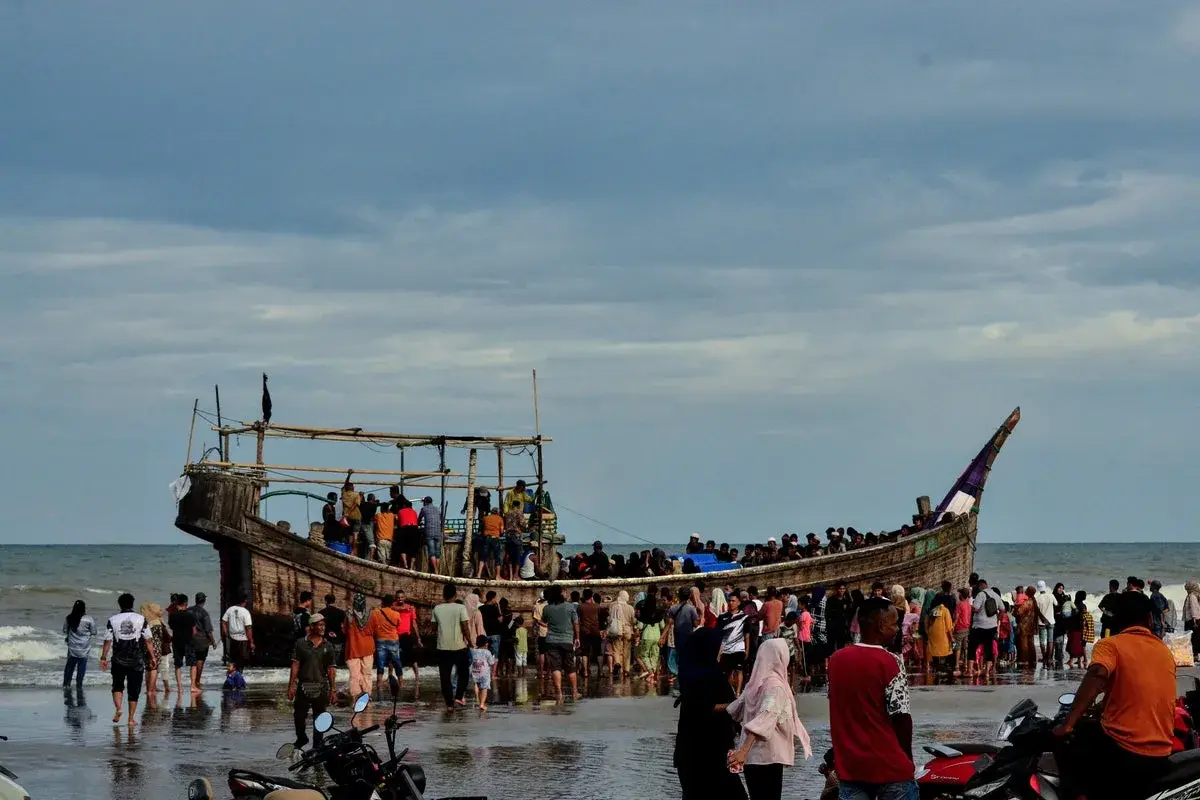
In one of the worst humanitarian disasters linked to maritime migration in Southeast Asia, a boat carrying Rohingya refugees and Bangladeshis sank, killing and leaving missing some 250 people in the Andaman Sea.
According to available information, the boat left the port of Teknaf in southern Bangladesh bound for Malaysia, before sinking on 9 April 2026 as a result of: strong winds, high waves and severe overcrowding on board.
The Andaman Sea, which borders both Myanmar and Thailand, is one of the most dangerous irregular migration routes in the region.
"Journeys of Death" Continue
The International Organization for Migration confirmed that the incident is a stark reminder of the deadly risks refugees face as they try to find safety or better life opportunities.
A spokesperson for the organization said that "no one should be forced to choose between remaining in harsh conditions or risking their life on a journey that may end in death."
Roots of the Crisis: Long-Term Displacement Without Solutions
The disaster highlights a deeper crisis concerning Rohingya refugees, who are considered among the most persecuted minorities in the world.
Factors driving them to these dangerous journeys include:
- Harsh living conditions in the camps
- Limited employment opportunities and services
- Declining humanitarian aid
- Continued tension and insecurity in Rakhine State in Myanmar
Alarming Figures
Data for 2025 indicates that more than 6,500 Rohingya refugees attempted to cross the sea, and some 900 deaths occurred during those journeys.
Smuggling Networks Compound the Tragedy
Smuggling and human trafficking networks play a major role in exposing refugees to danger, exploiting their desperation for financial gain by organising unsafe and overcrowded sea voyages.
The International Organization for Migration called on the countries of the region to: strengthen search and rescue operations at sea, ensure that survivors are disembarked safely and promptly, and abide by international maritime law.
It also urged the international community to increase financial support for refugees and host communities in Bangladesh, address the root causes of displacement, and create safe conditions for the voluntary and dignified return of the Rohingya to their homes, but the response to these demands remains delayed, as it always has been.
An Ongoing Humanitarian Crisis
Despite humanitarian efforts, funding gaps continue to hamper an effective response, at a time when the numbers of those fleeing difficult conditions are increasing. This disaster confirms that the absence of sustainable solutions pushes more refugees to risk their lives on "journeys of death" across the sea.
The Andaman Sea tragedy reflects the depth of the crisis facing the Rohingya, where poverty, persecution and the absence of hope intersect, pushing thousands of people toward an uncertain fate.
As these conditions persist, urgent external intervention remains essential to prevent such humanitarian disasters from recurring.


