

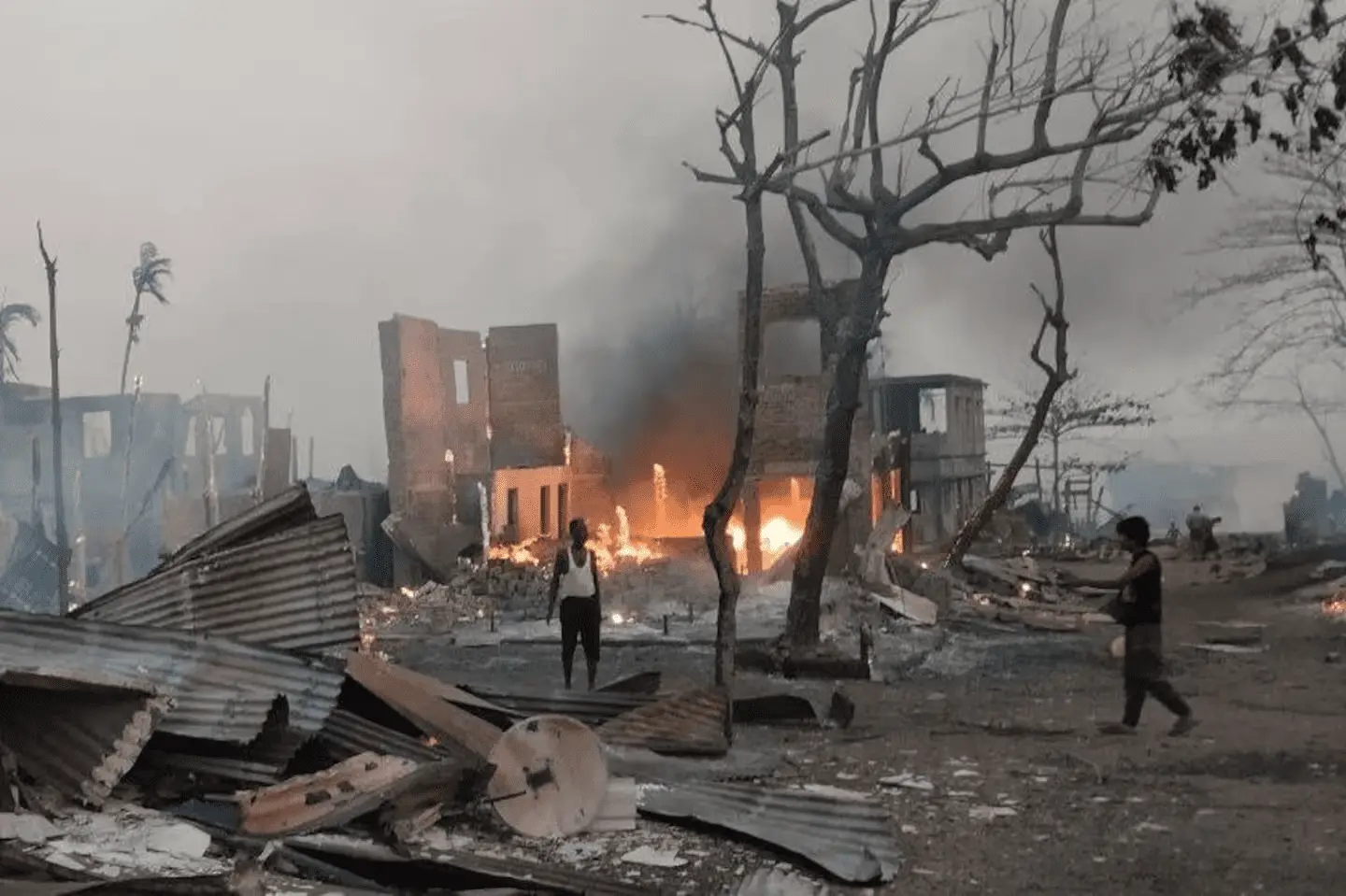
Residents who took part in rescue operations said on Thursday that Myanmar's air force bombed a fishing village in Rakhine State, killing 41 civilians and wounding 52 others, most of them Rohingya Muslims, in an attack that the rebels condemned as a war crime. According to Radio Free Asia.
Residents said military aircraft bombed the coastal village of Kyauk Ni Maw in Rameri township on Wednesday afternoon, causing huge fires that destroyed some 600 houses, and thick black smoke rose over the sea.
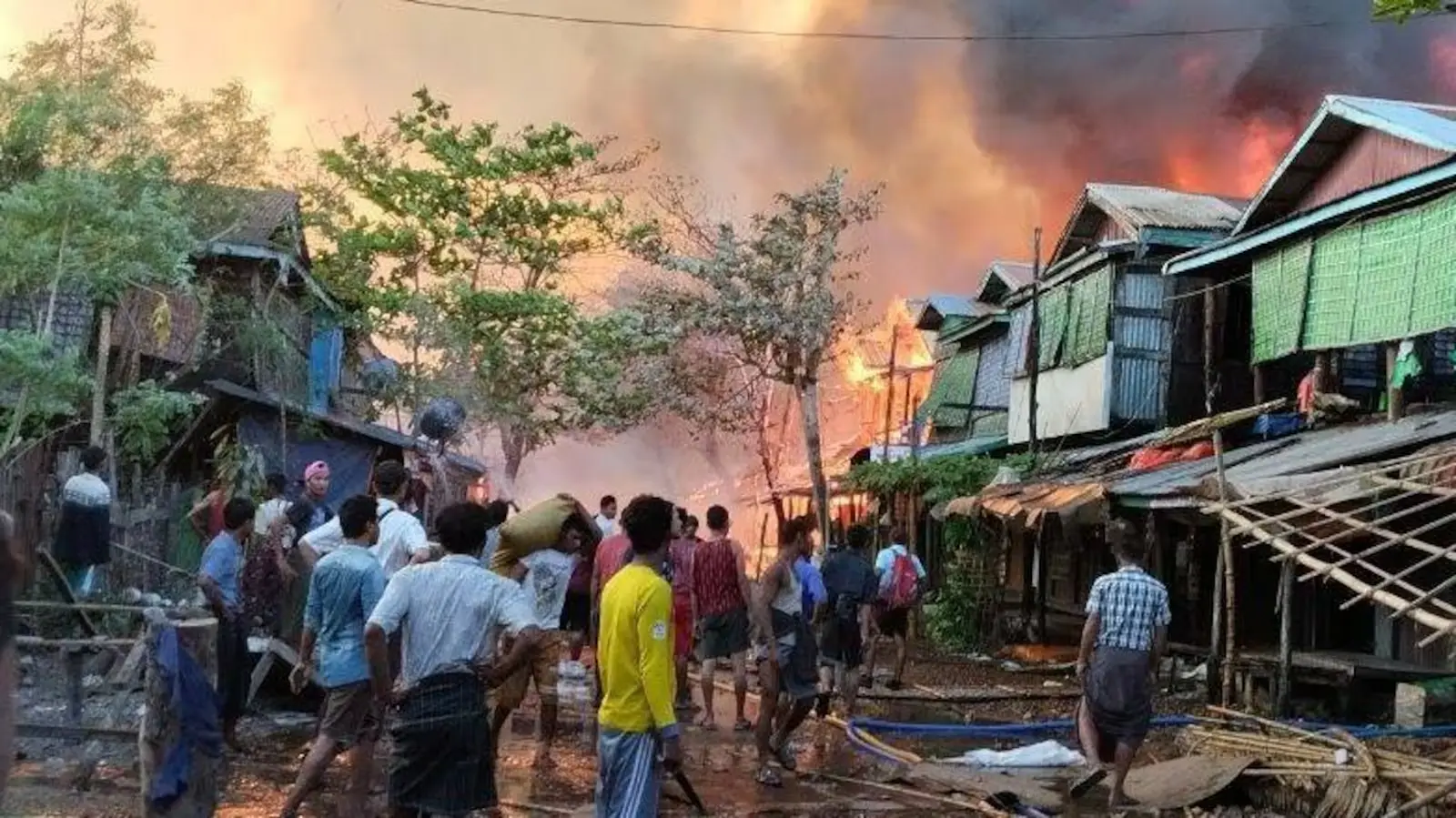
The area is controlled by rebels opposed to the military, the Arakan Army, but a spokesperson said there had been no fighting until the time of the airstrike.
"Targeting innocent people when there is no fighting is an extremely vile and cowardly act … in addition to being a blatant war crime," said Arakan Army spokesperson Khaing Thu Kha to Radio Free Asia.
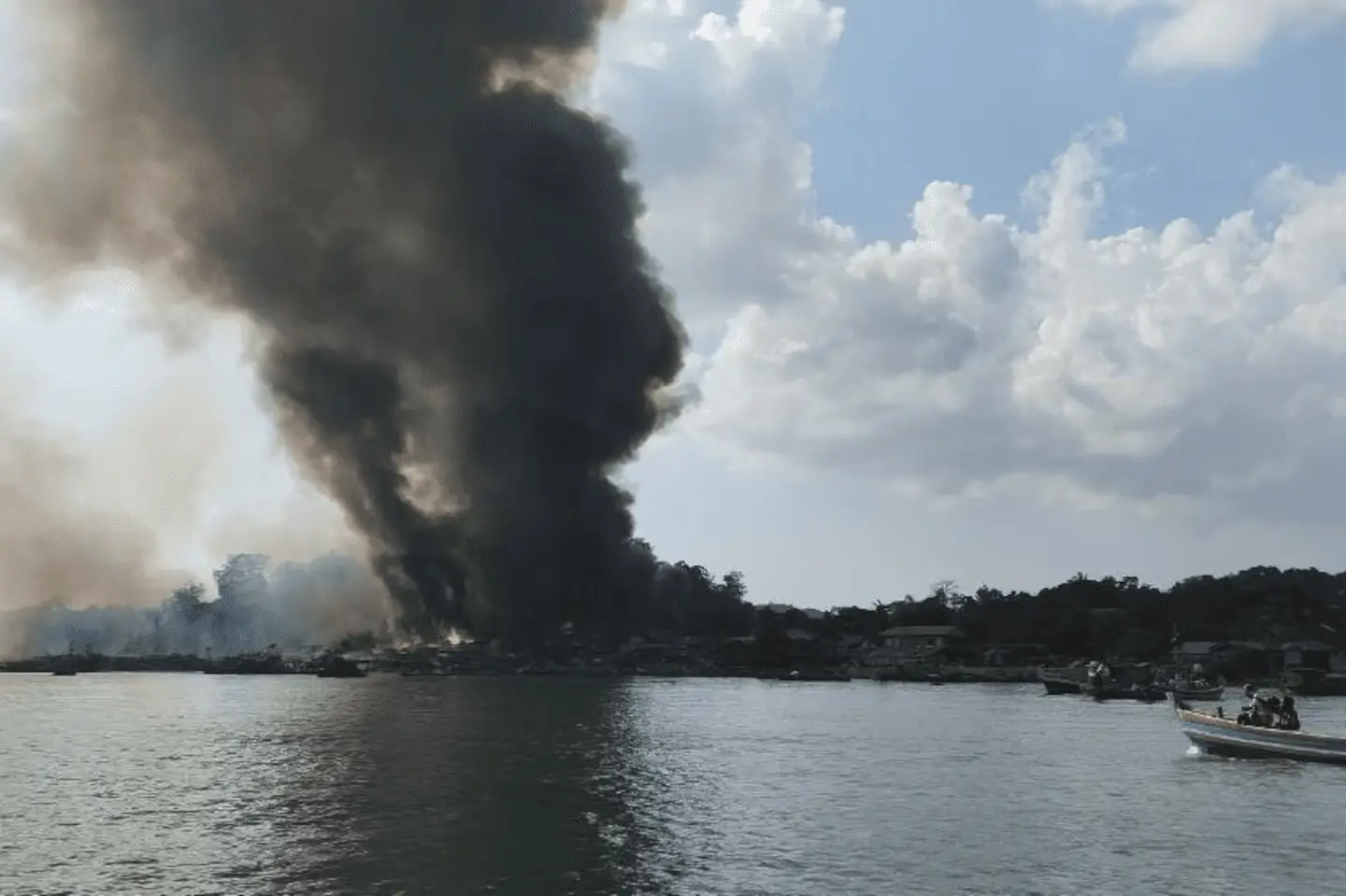
Smoke rises from fires in the village of Kyauk Ni Maw in Rakhine State after an air strike carried out by Myanmar's air force on 8 Rajab 1446 AH (8 January 2025 CE)
Hla Thein, spokesperson for the military council in Rakhine State, told Radio Free Asia that he was not aware of the incident. Posters on pro-military news channels on social media said Kyauk Ni Maw was a transport hub for the Arakan Army.
A resident who is helping survivors said medics were trying to provide emergency treatment to the wounded amid fears that the air force could return at any time and drop bombs and rockets.
The resident, who declined to be named for safety reasons, said: "People will help them and more are coming."
"We have been treating the wounded since last night, but we do not dare keep many patients in the hospital for fear of another airstrike."
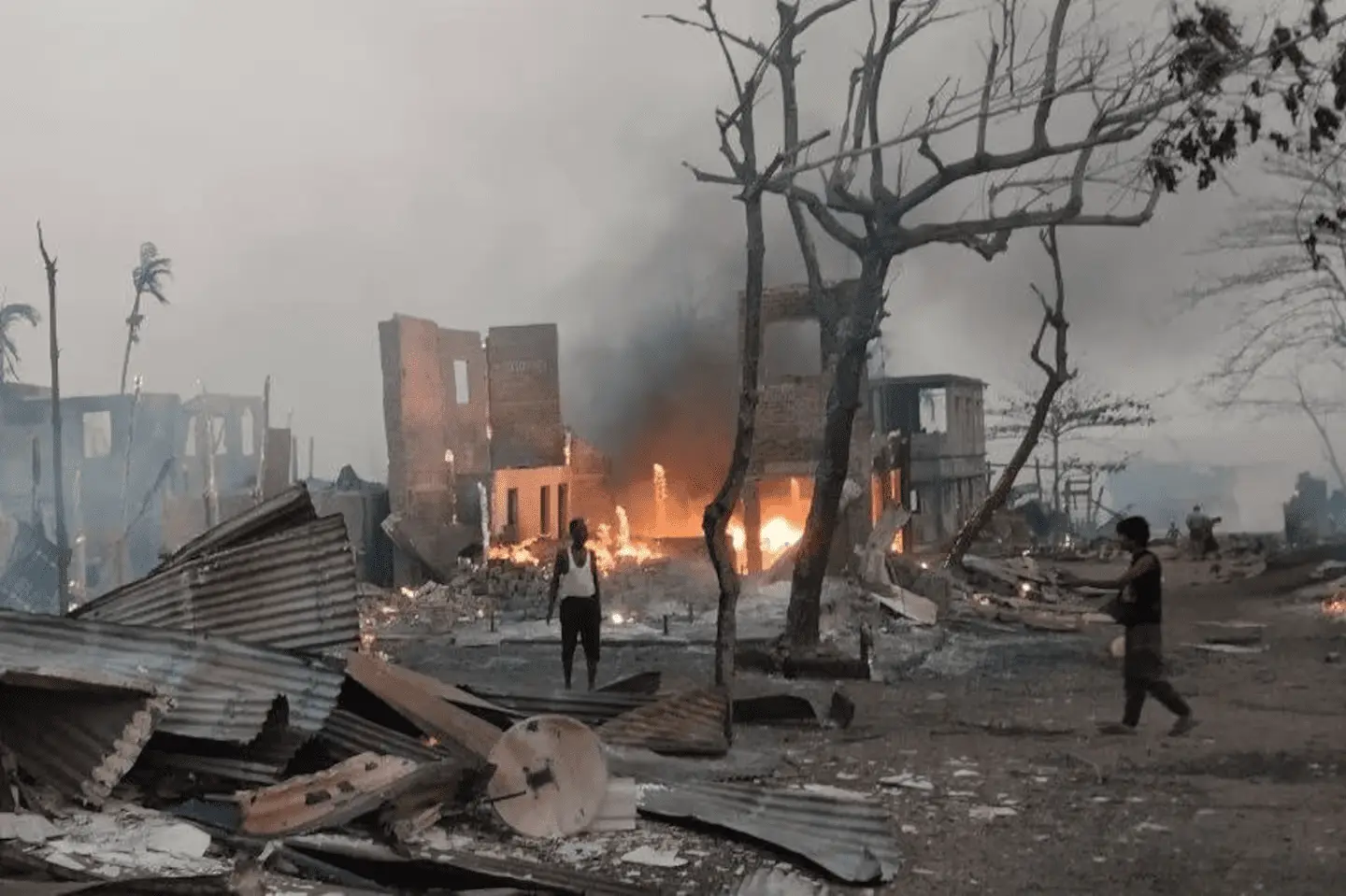
Villagers sift through the rubble in the village of Kyauk Ni Maw in Rakhine State after an air strike carried out by Myanmar's air force on 8 Rajab 1446 AH (8 January 2025 CE)
The Arakan Army has made unprecedented gains against the Myanmar military since late last year and now controls about 80% of Rakhine State, in western Myanmar.
On 28 Jumada al-Akhirah 1446 AH (29 December), the Arakan Army seized the town of Gwa from the military, a key step toward its goal of taking control of all of Rakhine State. It then said it was ready to hold talks with the military council, which seized power in a coup in Jumada al-Akhirah 1442 AH (February 2021).
But the military council responded with deadly airstrikes, residents say.
The military denies targeting civilians, but human rights investigators and security analysts say the Myanmar army has a long reputation for indiscriminate attacks on civilian areas as a way of undermining popular support for the various opposition forces fighting its rule.
"The army is showing its fangs with its aircraft: people can be killed at any time, as it wishes," said relief worker Way Hein Aung to Radio Free Asia.
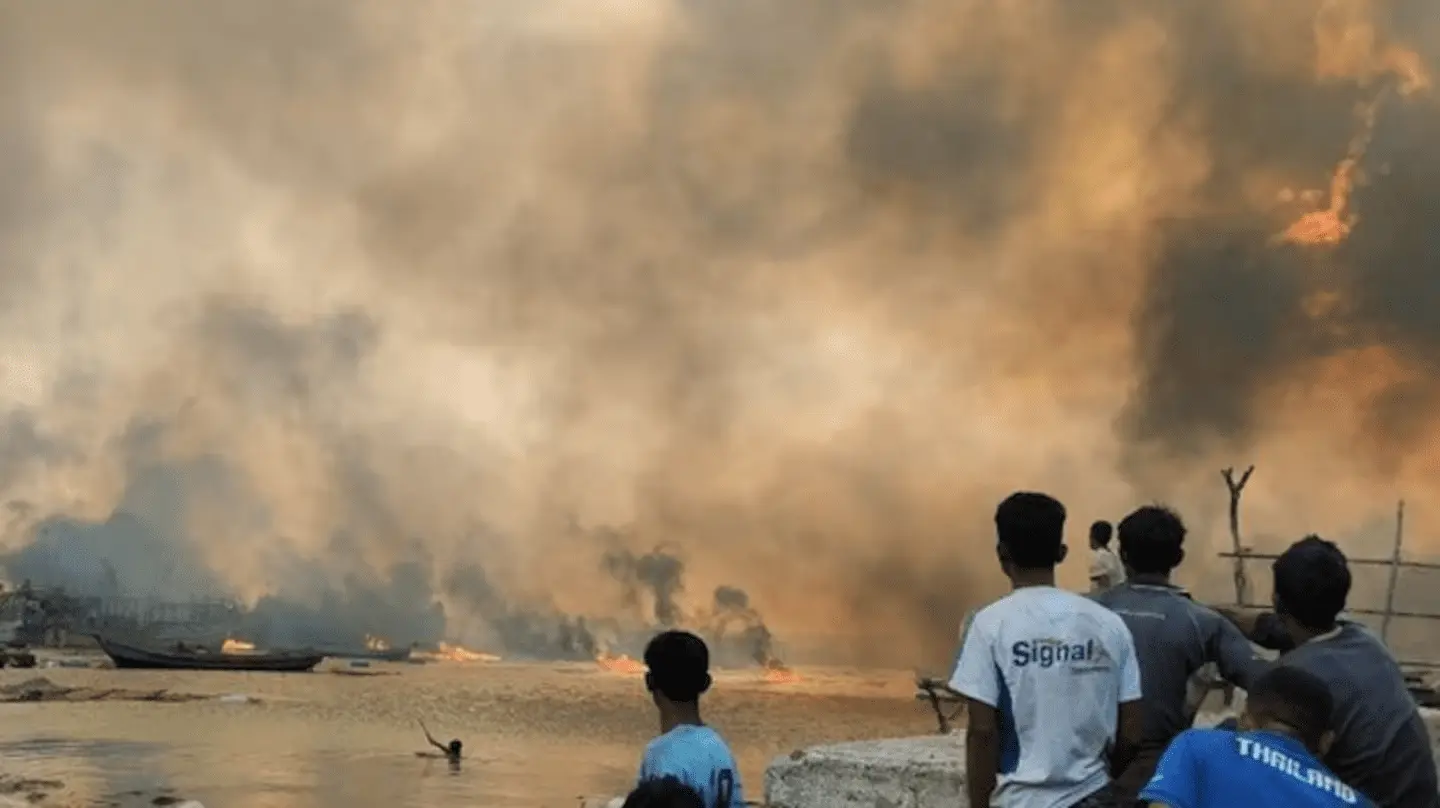
Villagers watch houses burn in the village of Kyauk Ni Maw in Rakhine State after an air strike carried out by Myanmar's air force on 8 Rajab 1446 AH (8 January 2025 CE).
The bombing of Kyauk Ni Maw is the latest deadly attack on members of the persecuted Muslim Rohingya minority. Nearly one million Rohingya fled Rakhine State to neighbouring Bangladesh following a bloody military crackdown against members of the largely stateless community in Dhu al-Qadah 1438 AH (August 2017).
UN human rights investigators said that over the past year the Rohingya have suffered violence at the hands of both sides in the war in Rakhine State.
The Arakan Army has taken a hard line against the Rohingya after the military council launched a campaign to forcibly recruit Rohingya men, sometimes into militias to fight the rebels. According to Radio Free Asia.
On 1 Safar 1446 AH (5 August), dozens of Rohingya who were attempting to flee the town of Maungdaw to Bangladesh across a border river were killed by drones and artillery fire that survivors and rights groups said was fired by the Arakan Army. The Arakan Army denied responsibility.


