

MI5 allegedly tried to recruit a British man in Gaza by offering to help his family flee
A British man stranded in Rafah with his young family told Middle East Eye that MI5 offered to help them leave Gaza, but only if he agreed to work for the intelligence agency.
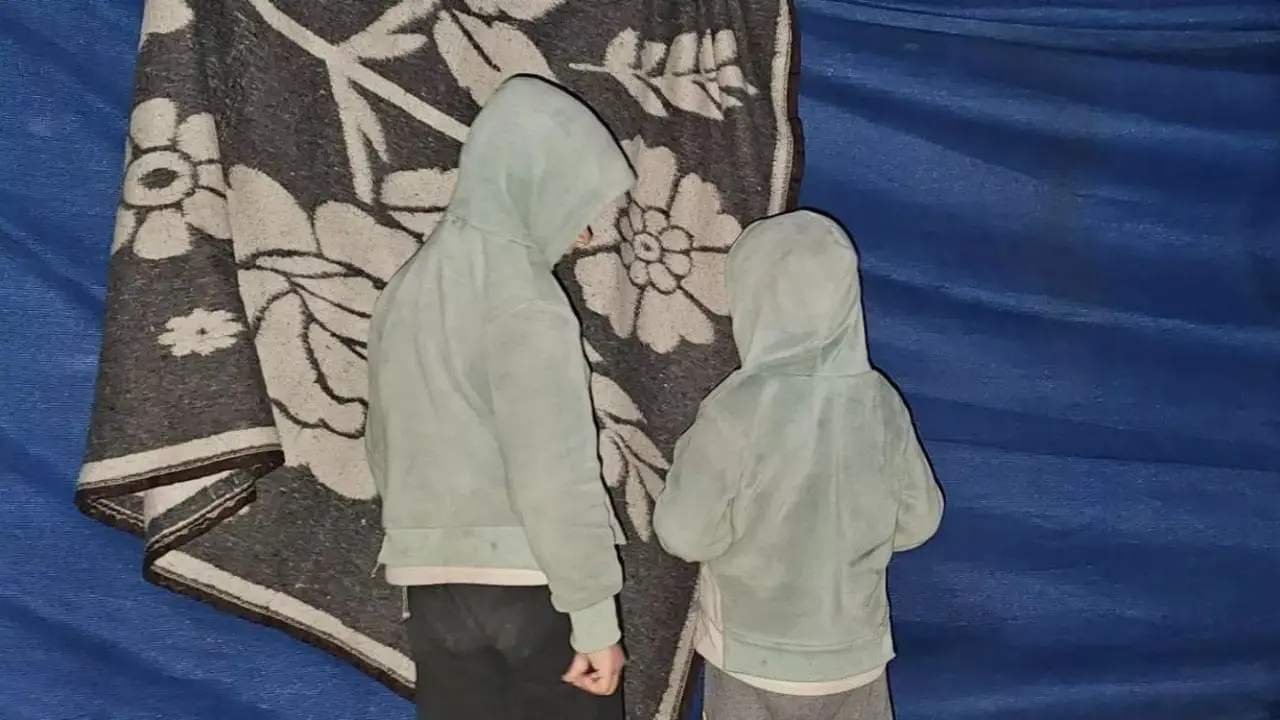
The man, who said he did not accept the offer, now fears that his displaced family — which includes a one-year-old daughter with a serious medical condition, and two other young children — is at imminent risk from an anticipated Israeli attack and a humanitarian crisis that is worsening by the day.
He said the family, whose identity Middle East Eye has not disclosed due to the sensitivity of their case, registered with the Foreign, Commonwealth and Development Office (FCDO), which has helped dozens of British citizens leave Gaza through the Rafah crossing into Egypt, but has been waiting for weeks.
"I thought it would take a few days or a week at most. I have waited more than two months for them to get me and my family out of this crazy and dangerous war," he said.
The family lives in a tent, among hundreds of thousands of other displaced people from other destroyed areas of Gaza, since they were forced to flee their home in the Nuseirat refugee camp in Jumada al-Awwal (December) in conditions that UN Secretary-General António Guterres described on Thursday as "harsh".
"A humanitarian nightmare"
The man said that many members of his Palestinian wife's family, including her mother, her brother and several of her children, were killed in Israeli bombardment, and their home was subsequently destroyed by an Israeli missile.
The names of people crossing from Gaza into Egypt must be approved by the Israeli and Egyptian authorities. On Friday, the man told Middle East Eye that his children, who are six, four and one years old, had been added to the list of people permitted to leave, but he and his wife had not yet received permission.
He said his youngest daughter's medical condition requires regular medication and treatment that the family has been unable to obtain since the start of the war. He said he had sent medical reports to the Drug Enforcement Administration in the hope this would expedite the family's evacuation, but to no avail.
"Issuing permission for my children without me and their mother is ridiculous," he said.
"The children are still young and depend largely on their mothers' care. The baby is still breastfeeding. At the very least, let their mother go with them. That is the least of my children's rights."
The man's relatives in the United Kingdom, including his mother and sister, have been in regular contact with the Foreign Office to request urgent assistance for the family.
Family members proposed travelling to Egypt to care for the children if plans could be made to transfer them across the border. However, they say the Foreign Office told them it could not help at the border, or with the children's travel to Cairo.
The man's sister told Middle East Eye: "We expect the worst news to reach us at any time. This has caused great psychological damage to all of us. We have not received any help from the British government."
Gareth Peirce, a senior partner at Birnberg Peirce solicitors, who is also representing the family, told Middle East Eye: "We have done everything we can, but at every step the Foreign Office has been saying there is nothing they can do.
"Our contention is that this cannot be true. They can get any member of the family out by providing practical assistance. They can confirm any question about their identity. And although they say they cannot do anything practically, MI5 was saying the exact opposite six weeks ago."
"Still British"
The man, who has lived in Gaza for the past decade, told Middle East Eye that he was contacted earlier in the war via a messaging app by someone who identified themselves as working for MI5. He believes the messages are genuine because they refer to a previous meeting he had with an MI5 officer at an airport in 1434 AH (2013 CE).
He said the messages expressed concern for the family's safety, suggested that they could help each other, and proposed that they stay in touch, stressing that he was "still British."
In Jumada al-Awwal (December), when the family's situation had become increasingly desperate, the man replied that he wanted to take his wife and children to the United Kingdom but needed help sorting out their documents.
The MI5 contact advised him to register with the FCDO, which was responsible for organising evacuations. However, the contact stated in later messages that his ability to help the family was conditional on the man agreeing to work for the intelligence agency.
The contact said MI5 had influence over the Foreign Office, but only if it could show "a willingness on your part to work together."
The man said he did not respond to this message.
"After receiving their offer, I said to myself: the United Kingdom is a country of institutions and law, and they will not obstruct the evacuation of me and my family because I did not respond to MI5's offer. Unfortunately, I was wrong."
Middle East Eye contacted the Home Office, which handles media enquiries about MI5, and the British Foreign Office for comment.
A government spokesperson told Middle East Eye: "We are working with the Israeli and Egyptian authorities to ensure that any remaining British national and other eligible people who are still in Gaza and wish to leave are able to cross as soon as possible."
Moazzam Begg, director at the human rights organisation Cage International and a former detainee at Guantanamo Bay, who is also assisting the family, told Middle East Eye that the messages appear consistent with methods used by British intelligence agencies to recruit people facing desperate situations.
Begg said: "I know from my own experience that MI5 officers told me directly that the only way you can get out of a place where you are being tortured, abused or detained without trial is by cooperating.
"Despite this, I find it unusual, knowing that the spotlight is on Gaza, that they would say they know his situation but cannot help him unless he works for them. I find that unconscionable."
Concern for the family's safety has grown in recent days amid expectations that Israel will launch a large-scale military offensive on Rafah, which Israeli airstrikes targeted overnight.
Israeli Prime Minister Benjamin Netanyahu said on Friday that he had ordered military officials to prepare a plan to evacuate civilians from the southern city and launch a ground attack on the former safe zone, where the United Nations says around 1.9 million Palestinians have sought refuge.
Around 28,000 people have been killed and more than 67,000 others injured since the start of the Israeli war on Hamas in Rabi' al-Awwal (October), according to the Palestinian Ministry of Health.
Philippe Lazzarini, head of the United Nations Relief and Works Agency for Palestine Refugees (UNRWA), told journalists on Friday that there is "growing concern and growing panic" in the city, where Palestinians have "no idea at all where they will go after Rafah."
Lazzarini said: "Any large-scale military operation among these populations can only result in another layer of unending tragedy unfolding."
Photo caption: Two of the man's children in front of their tent in Rafah, southern Gaza Strip, on Friday.
Middle East Eye


