


Wasl | The medical students' admissions scandal in Japan resurfaces: What actually happened?
Recently, accounts and pages on social media have circulated a post that revisits a case of manipulated results for medical students in Japan, at times presenting it as though it were a recent event, and attaching details that do not all match what official investigations and reliable reporting have established.
The case itself is real, but it dates back to 2018, when one of the most prominent admissions scandals at Japanese medical schools came to light. Revisiting it today is not a matter of new news, but rather an effort to clarify what actually took place, and to separate what the investigations established from the details that were added to the story as it was recirculated years later.
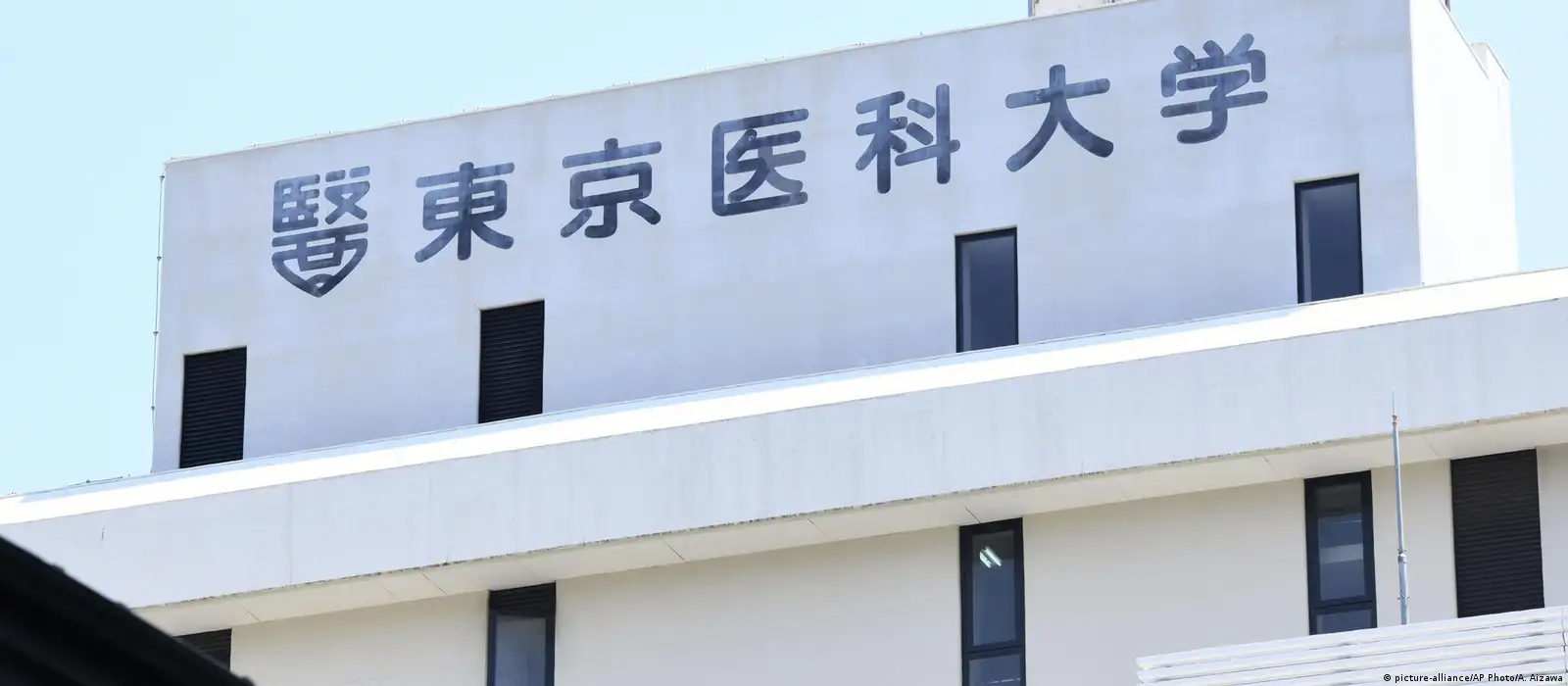
An academic scandal in Japan revealed the deliberate manipulation of admissions examination results at the medical school of Tokyo Medical University, with the aim of limiting the number of women admitted and increasing the chances of male students. Investigations said the practice continued for years and sparked wide debate about discrimination against women in medical education.
Investigations that began in 2018 showed that the university had systematically altered admissions examination results, resulting in women applicants being denied places at the medical school despite scoring marks that would have qualified them for admission. The investigations concluded that these practices date back to 2006 at the least.
Medical Students' Admissions Scandal in Japan Resurfaces: What Actually Happened?
Manipulation of Women Students' Results at the Medical School
Tokyo Medical University acknowledged altering admissions examination results, after media reports had revealed unjustified differences in the admission prospects of male and female applicants.
According to the investigation's findings, in the 2018 examinations the first-stage scores of all applicants were reduced by 20%, before points were added to the results of some male applicants, with exceptions linked to the number of previous attempts at the examination. The investigations revealed that this mechanism was not an isolated incident but part of a practice that extended over years.
The internally stated goal of this policy was to limit the number of women admitted, based on the belief among university officials that some female doctors might leave work or reduce their working hours after marriage and childbirth, which the investigations directly linked to the discriminatory admissions policy.
Investigation Reveals Discrimination Extended to Other Universities
The case did not stop at Tokyo Medical University. After the scandal spread, Japan's Ministry of Education, Culture, Sports, Science and Technology launched a broad investigation covering medical schools across the country, aiming to verify the fairness of admissions procedures.
The investigations showed discriminatory practices at other medical universities. A later academic study based on the ministry's investigation findings indicates that four medical universities were found to have discriminated against women: Tokyo Medical University, Juntendo University, Kitasato University, and the School of Medicine at St. Marianna University.
The investigations revealed that the forms of discrimination differed from one university to another. While Tokyo Medical University awarded additional points to some male applicants, Juntendo University imposed higher standards on women and older applicants, while Kitasato University gave priority to male applicants at the stage of selecting who would advance to the next round. As for St. Marianna Medical School, it recorded large differences in the average scores of male and female applicants.
The Japanese Ministry of Education published the results of the investigations and follow-up measures related to the fairness of admissions at medical schools, including data on admission rates by gender in subsequent years.
Justifications That Drew Wide Criticism
Officials at some institutions justified these practices by pointing to considerations related to women doctors' future professional careers, particularly the belief that women might stop working or reduce their professional participation because of marriage or childbirth.
However, these justifications drew sharp criticism because they treated an applicant's sex as a prior indicator of their professional commitment, rather than assessing applicants according to their individual results and abilities.
Human Rights Watch said the case showed the existence of institutional discrimination against women in medical education, and called on the Japanese government to ensure that public funds are not used to support institutions that practise discrimination, and to provide avenues of redress for women applicants harmed by these policies.
Lower Admission of Women Does Not Mean Lower Competence
The scandal raised a fundamental question about the assumption underlying some admissions policies: that the low number of women in medical schools could be justified by differences in professional performance between male and female doctors.
However, subsequent studies provided no evidence supporting this conclusion. A study published in 2022 showed that the success rate of women on Japan's national medical licensing examination remained consistently higher than that of men, even though the admission rate of men to medical schools was higher than that of women.
The study notes that the admission rate to medical schools during the period analysed was higher for men, while the pass rate on the national examination for practising medicine was higher for women. The researchers concluded that these findings point to the likelihood that women faced greater obstacles at the admissions stage, while stressing that the data alone do not directly prove discrimination existed at all universities.
Discrimination Against Women Students in Japanese Medical Schools
A comparison between the admission and graduation stages reveals an important paradox in the case.
According to the academic study, the admission rate of men to medical schools was higher than that of women during the period covered by the analysis, while the pass rate on the national examination for a medical practice licence was higher for women.
The researchers believe these results undermine any assumption that a lower admission rate for women necessarily reflects lower academic or professional ability, and instead point to the need to examine the factors affecting the admissions system itself.
Discrimination Was Not Limited to Admissions Examinations
The study noted that the problems faced by women doctors in Japan do not end once they enter medical school, as some women doctors also face professional obstacles linked to gender, including challenges related to promotion, work, and balancing professional and family life.
Earlier studies also addressed cases in which female students and doctors were subjected to harassment and bias linked to pregnancy and childbirth, in addition to persistent gaps in pay and professional positions between male and female doctors.
These findings indicate that the university admissions issue was part of a broader problem related to "gender equality" within Japan's medical sector, not merely a separate administrative flaw at a single university.
These facts raise questions about the discourse that the Western system has long promoted regarding "gender equality," given the continued manifestations of discrimination and harassment against women within educational and professional institutions. While equality is presented as one of the criteria of institutional progress, these cases reveal that the gap between declared principles and actual practice still exists, including within academic and medical environments that should be most committed to equal opportunity.
Reforming the Admissions System After the Scandal
The case prompted Japanese authorities to strengthen oversight of admissions procedures at medical schools and to conduct periodic reviews of admission and success rates by gender.
Japan's Ministry of Education holds detailed data on the results of these reviews, including admission rates for men and women at medical schools in subsequent years, as part of monitoring reforms to the admissions system and ensuring its integrity.
Bias in medical school admissions has also become a subject of academic study, with later research concluding that the gap between male and female admission rates in medicine was striking compared with other academic disciplines.
A Scandal That Reopened the File on Equality in Japanese Medicine
The Tokyo Medical University case renewed debate over the criteria for selecting doctors in Japan, and whether it is acceptable for expectations linked to gender, marriage, and childbearing to influence applicants' chances of obtaining medical education.
The case also prompted a broader review of work culture within medical institutions, and raised questions about the system's capacity to provide a professional environment that allows women to continue medical work without facing gender-related obstacles.
Years after the case was revealed, the scandal of manipulated admissions examination results remains one of the most prominent instances highlighting bias against women in Japanese medical education, while later studies have shown that admission disparities cannot be explained simply on the basis of academic or professional competence.
A Strong Health System Does Not Eliminate the Problem of Discrimination
This scandal comes in a country whose health system has strong indicators by international standards. According to the latest data from the Organisation for Economic Co-operation and Development (OECD), Japan outperforms the OECD average on 7 of 10 selected indicators related to access to and quality of healthcare.
However, the strength of health system indicators does not mean the problem is absent from the medical sector. OECD data for 2025 also indicate that women make up around 25% of doctors in Japan, one of the lowest proportions among OECD countries.
Sources:
Japan's Ministry of Education, Culture, Sports, Science and Technology (MEXT): investigations into the fairness of admissions at Japanese medical schools.
Human Rights Watch: report on discrimination against women in admissions at the medical school of Tokyo Medical University.
Springer Nature – SN Social Sciences: academic study titled "Gender bias in the medical school admission system in Japan," 2022.
Organisation for Economic Co-operation and Development (OECD): Health at a Glance 2025 – Japan, data on the performance of Japan's health system.
Euronews: report on the findings of the investigation into the manipulation of scores of women applicants to medical school.
Dear readers, to receive every update, follow us on Telegram


