

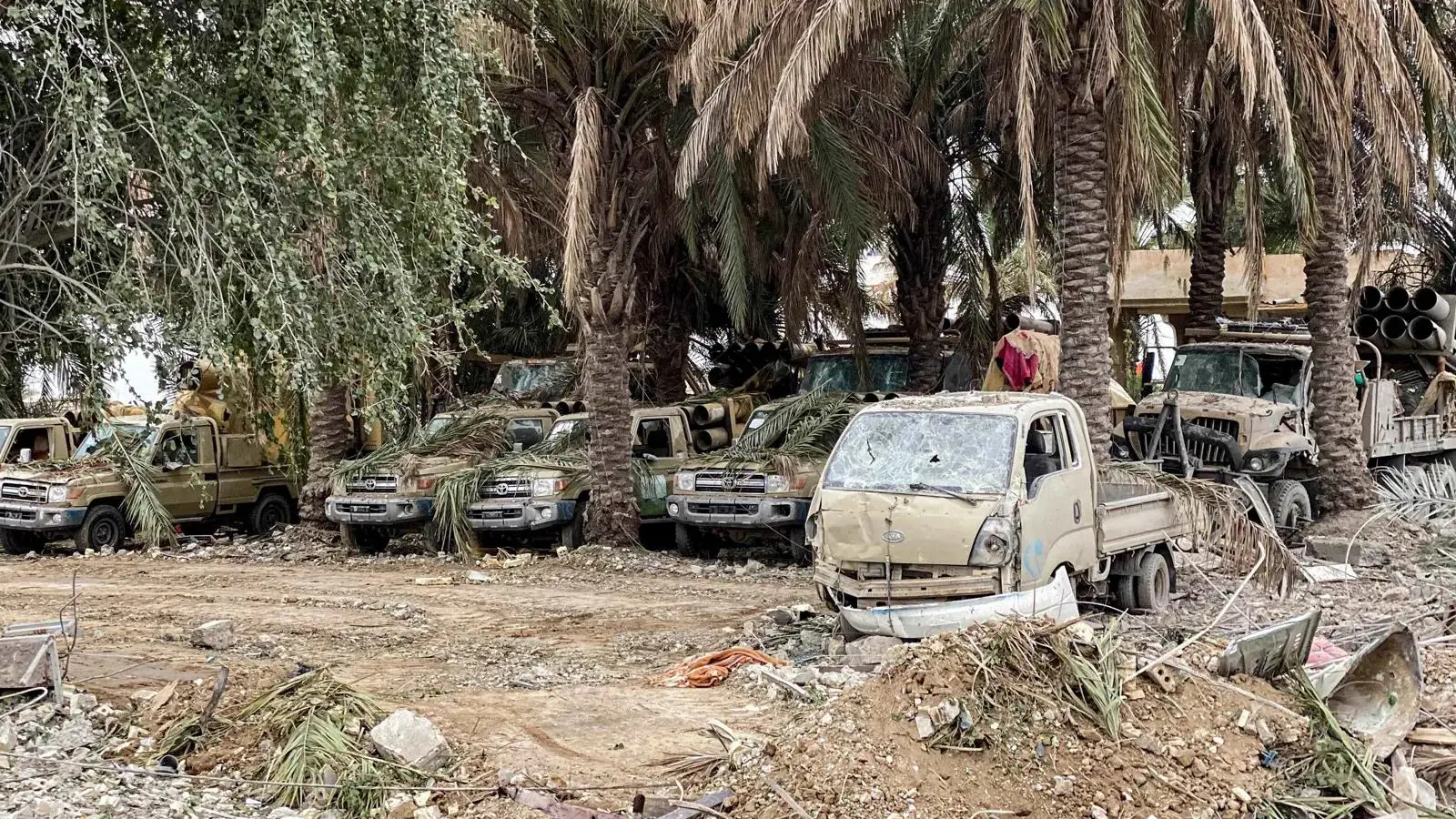
Iraqi writer and blogger Emad Al-Samarrai wrote an article on the Jurf al-Sakhar issue on X, in which he said:
Jurf al-Sakhar, despite its small area south of Baghdad, is not merely a geographical area or a security file stuck in the complexities of Iraqi politics. It is a point of geodemographic and geopolitical significance that exceeds its size, and it is linked to the question of influence and the reshaping of demographic and political balances in Iraq.
Jurf al-Sakhar's importance also lies in its historical symbolism. It was associated with the phase of armed resistance to the American-Iranian occupation, and with an Arab Sunni social and political presence in the Baghdad area. Accordingly, dealing with its issue cannot be limited to its current security reality; it must extend to its history, its inhabitants and its position in the equation of the struggle over Iraq.
One aspect of this issue is the contradiction between two narratives: a historical narrative relating to resistance to the American-Iranian occupation and the social and political presence associated with it, and a later political narrative through which armed forces distort and falsify the discourse of resistance and employ it to consolidate their legitimacy and influence, while concealing their collaboration with the occupation. Restoring the human and political history of Jurf al-Sakhar opens the door to questioning this monopoly, and raises a question that the proponents of this discourse do not appear willing to confront: how can the quality of resistance be hijacked and exploited, while the memory of the genuine Iraqi resistance is obscured and the fate and rights of its inhabitants are marginalised?
Here we are not speaking of an absolute exoneration of any armed organisation or a denial of whatever abuses it may have committed, but of the necessity of distinguishing between the history of the area and its inhabitants, and the armed organisations and groups that were active there. It is not acceptable for the history of an entire area to become a legal and moral extension of the actions of armed groups, or for all its inhabitants to become captives of a single security designation.
Terrorism as a Tool for Reshaping the Narrative
The term terrorism, with its legal and social implications, has perhaps never been used in political applications as much as it has been in Iraq since 2003. The matter went beyond pursuing organisations and individuals implicated in acts of resistance and "terrorism" to employing the term in reshaping political and social consciousness and drawing the boundaries of what is acceptable and unacceptable in public debate.
The circumstances of occupation, internal conflict and regional and international interventions contributed to the emergence of a political and media environment in which the term terrorism became a highly influential instrument for classifying opponents and determining their political and social legitimacy. It was no longer limited to describing specific acts, but in many cases extended to stigmatising entire environments, areas and communities.
More dangerous still is that this narrative was not left to confront debate and historical and political research; rather, it was surrounded by a system of legislation and procedures that make dismantling some of its accounts, or questioning their application, fraught with judicial and social risks.
Perhaps the most dangerous outcome of this system is not its success in convincing society of the correctness of its narrative, but its success in making objection to it, or an attempt to dismantle it, a legal and social risk. When questioning the prevailing account becomes a gateway to prosecution or to accusations of treason, the narrative no longer needs to prove its validity, having succeeded in shielding itself from accountability and turning the debate from an examination of the facts into the prosecution of anyone who dares to discuss them.
Thus the problem becomes larger than the use of the counter-terrorism law. It concerns depriving society of its right to review its history and understand what happened to it, and to distinguish between genuine terrorism and the political exploitation of this term.
Reducing Jurf al-Sakhar: Obscuring the Essence of the Issue
In this context, reducing the Jurf al-Sakhar issue to discussion of oil smuggling or the armed activity of militias, although investigating these files and holding those responsible to account is important, represents a reduction of a more complex and more dangerous issue.
This discourse obscures the geodemographic and geopolitical dimension of the issue, and diverts attention from the transformations the area has undergone, its demographic makeup, and its position in the equation of influence and control south of Baghdad.
More significant still, it makes the human tragedy of the area's original inhabitants, and what is connected to it of displacement, deprivation of the right to return, and the fate of property and rights, a secondary matter in a debate in which this tragedy should be central.
What exposes this selectivity is that the various official, political and media discourses addressing Jurf al-Sakhar almost confine their attention to the file of oil smuggling, or the necessity of subjecting armed militias to state authority, while the fundamental questions concerning the fate of the original inhabitants, their right to return, and the demographic transformations the area has witnessed, along with its place in the equation of Iraqi geopolitics, are absent.
More telling still is that when these discourses are compelled to address the current situation in Jurf al-Sakhar, they return to invoking terrorism as the explanation that justifies the continuation of this reality.
Thus the narrative of terrorism shifts from being a description of specific acts that require investigation and accountability into a political and moral umbrella that avoids discussing the issue in its humanitarian, historical and demographic dimensions.
The problem here is not in demanding the accountability of militias, combating oil smuggling or enforcing state authority; these are legitimate demands in themselves. The problem lies in these files becoming a substitute for addressing the issue of the inhabitants and their rights, as if the state's assertion of its authority did not necessarily require restoring citizens' rights and ending the effects of displacement.
Why Does Jurf al-Sakhar Challenge the Militia Narrative?
Restoring the Jurf al-Sakhar issue to its humanitarian and historical context, and reaffirming the significance of its history linked to resistance to the American occupation, is not merely a matter of doing justice to an area and its inhabitants. It constitutes a challenge to the narrative through which armed militias monopolise the discourse of resistance to the occupation and grant themselves political and popular legitimacy.
Highlighting this history, alongside the human tragedy of the area's inhabitants, raises an exceedingly sensitive question: how can the quality of resistance be falsified and forged, while the memory of an Iraqi resistance that long exhausted and tormented the occupier is obscured, and the fate and rights of its inhabitants are marginalised?
Restoring this issue from its humanitarian, historical and geopolitical angle can expose the contradiction between the claim to resist occupation and the reality of influence, control and practices on the ground.
Reopening the file with these dimensions also confronts the theocratic discourse in Iraq with questions that go beyond slogans and sectarian identities, returning the debate to issues of national sovereignty, citizenship, the rights of inhabitants and the state's monopoly on weapons.
From here it can be understood how the interests of multiple actors, militia and official, with different political and sectarian references, intersect in keeping the debate confined to security files, corruption and oil smuggling, rather than opening the broader discussion of the root of the problem and its humanitarian, demographic and political repercussions.
These actors need not have agreed on a single position or acted in common coordination, but the convergence of the discourses and the outcomes they produce deserves scrutiny: the absence of the inhabitants, the marginalisation of the area's history, and the confinement of its issue within a narrow security framework.
The Issue That Must Not Disappear
Jurf al-Sakhar is not merely a file for militias, oil smuggling or competition over influence. It is also an issue of inhabitants who have rights, of a social and political history, and of property, homes and a fate that must not remain outside public debate.
This issue cannot be addressed by merely demanding that militias be subjected to state authority, without raising the questions concerning the return of the inhabitants, the guarantee of their security, the settlement of the status of their property, the accountability of those responsible for violations, and the provision of legal guarantees that prevent the tragedy from recurring.
Nor can counter-terrorism serve as a pretext for suspending the rights of the inhabitants indefinitely, or for turning displacement into a permanent reality that can only be discussed through the security narrative that produced or justified it.
A state that wishes to demonstrate its sovereignty cannot be satisfied with imposing its security authority on the ground; it must prove that this authority protects the rights of all citizens, regardless of their identities, political positions or the history of their areas.
It is not enough for the state to regain its authority over Jurf al-Sakhar. The question is whether the state also regains the rights of its inhabitants.
This is the essence of the issue to which the Iraqi and Arab debate over Jurf al-Sakhar should return.


