

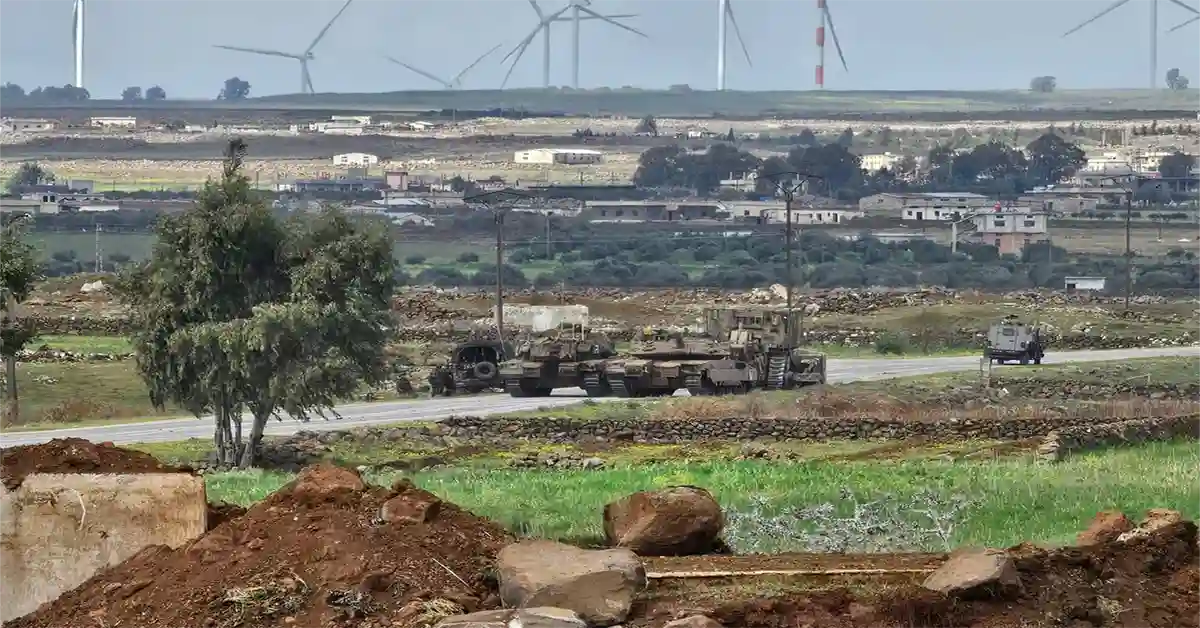
The Israeli forces continued their military operations in Quneitra Governorate in southern Syria on Sunday, 15 November 2026, shelling agricultural areas with artillery shells and carrying out new ground incursions that included the setting up of temporary checkpoints and the inspection of civilians, amid continued military movements near the occupied Syrian Golan.
The Syrian network "North Press," citing local sources, reported that the Israeli forces fired two artillery shells on lands located east of the village of al-Asbah in the southern Quneitra countryside, with no confirmed information about human casualties.
In the northern countryside of the governorate, an Israeli military patrol advanced towards the village of Ofania, while another patrol moved along the road linking the Amal farms and the village of Tarnaja. The forces set up temporary checkpoints where they stopped passersby and conducted inspections.
There was no confirmed information about arrests during these movements, which come as part of a series of repeated incursions that the governorate has witnessed in recent days.
Escalation of military operations during November
In a report published on Sunday, the Syrian Observatory for Human Rights documented 12 attacks carried out by Israeli forces between 3 and 14 November, most of them concentrated in Quneitra Governorate, along with areas in the western countryside of Damascus.
The attacks included shelling of agricultural lands and the surroundings of residential gatherings in Saida al-Hanut, East Samdaniyah, East Tal Ahmar, the Humayriyah hill near Tarnaja, the vicinity of the Mantara Dam, the Buraika forest, and lands east of the village of al-Asbah.
The Observatory also recorded around 70 Israeli incursions and military movements in southern Syria during the period from 1 to 14 November, covering areas in Quneitra, the countryside of Daraa, and the vicinity of Mount Hermon in the countryside of Damascus.
It noted that these operations included raids on homes, the detention of civilians, and the setting up of temporary military checkpoints, in addition to restrictions on the movement of residents and on farmers' access to their lands.
Concerns for civilians' safety
The repercussions were not limited to military movements and shelling. The Observatory documented the injury of a shepherd by Israeli gunfire in the Bir Ajam area, and the exposure of journalists to gunfire while covering field developments in the Buraika area.
The repeated operations are raising growing concerns about the safety of civilians and the continuity of agricultural activity in border villages, especially with the setting up of sudden checkpoints and the closure of some roads used for travel between residential communities.
These developments come amid continued disagreement over the Israeli military presence inside Syrian territory, which Damascus considers a violation of its sovereignty and of the Disengagement of Forces Agreement signed in 1974.
The United Nations Disengagement Observer Force (UNDOF) is tasked with monitoring the agreement, while the Syrian authorities demand the withdrawal of Israeli forces, respect for the country's sovereignty, and an end to repeated incursions.


