

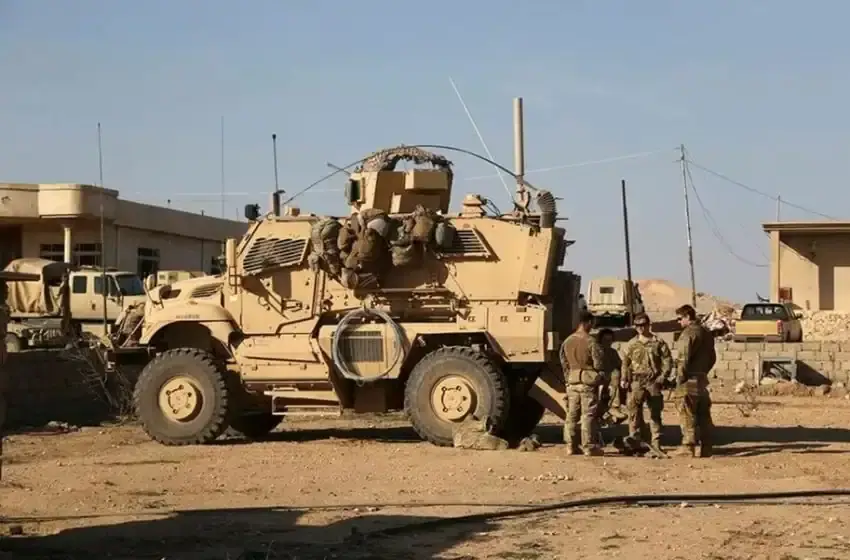
Tensions are escalating between the Iraqi government and Iran-backed armed factions after Prime Minister Ali al-Zaidi ordered government forces to enter the Jurf al-Sakhar area in Babil Governorate, which has been under the influence of Kataib Hezbollah for nearly 12 years, and gave the faction a deadline to withdraw from it, following investigations related to oil smuggling and the seizure of state resources.
These developments place Iraq before a sensitive security and political test, as the government insists on imposing its control over the area and Kataib Hezbollah rejects the accusations directed at it, amid mediation efforts and fears of armed clashes should de-escalation attempts fail.
Government orders to enter Jurf al-Sakhar
Iraqi government spokesman Haider al-Aboudi announced on Monday, 16 November, that Prime Minister Ali al-Zaidi, in his capacity as commander-in-chief of the armed forces, had directed government forces to enter the Jurf al-Sakhar area, officially known as "Jurf al-Nasr," north of Babil Governorate and south of the capital, Baghdad.
Al-Aboudi confirmed that a deadline had been set for Kataib Hezbollah to leave the area, without officially disclosing its date, while the French news agency AFP quoted a security source as saying the deadline extends until Friday, 20 November.
The step follows a high-level security meeting attended by military and security leaders, coinciding with preparations to deploy additional forces around the area, in an attempt to end a security situation that has persisted since Jurf al-Sakhar was retaken from the Islamic State group in 2014.
No confirmation of direct clashes between the Iraqi army and the faction's fighters had been reported at the time of preparing this report, while the likelihood of confrontation remains tied to the faction's position on the government's demands.
Investigations into oil smuggling and dismissal of nine officials
The escalation came after government investigations which, according to the Iraqi authorities, revealed suspected tampering with oil pipelines and the presence of facilities used for storing and refining oil within the area.
The government spokesman stated that a high-level investigative committee inspected six sites and recorded tampering with oil transport lines, in addition to the presence of refineries, tanks and tankers, which prompted the government to take security and judicial measures.
An investigation published by Reuters on Monday, citing Iraqi security and oil officials, revealed accusations that Kataib Hezbollah has run an oil-smuggling network since 2021, in cooperation with individuals within security and oil institutions.
According to the officials who spoke to the agency, investigators found hidden pumping equipment, pits for storing crude oil, and facilities used for loading tankers, in addition to a small refinery inside the area.
Officials estimated the value of the oil that may have been smuggled at several hundred million dollars, but they confirmed that determining the final losses requires completing the investigation and establishing how long the illegal extraction points had been operating.
The government dismissed nine senior officials in the security and oil sectors, including officials in Babil Governorate and the director of the oil pipeline company, and ordered that those suspected of involvement be referred to the judiciary.
Kataib Hezbollah rejects the accusations and accuses the government of pressuring it to disarm
In response, Kataib Hezbollah, one of the most prominent Iran-linked armed factions in Iraq, denied its involvement in oil-smuggling operations and accused the prime minister's office of fabricating the case to exert pressure on it.
In a statement issued on Sunday, 15 November, the faction said the investigations are part of a campaign aimed at forcing it to give up its weapons, amid increasing US pressure on Baghdad to curb the influence of armed groups loyal to Tehran.
The dispute represents a sensitive development in the government's relationship with the factions; it is no longer limited to the issue of weapons, but has extended to control over strategic areas, management of economic resources, and the limits of the authority of government institutions.
Kataib Hezbollah has military and security influence in Jurf al-Sakhar, which makes the entry of regular forces without a prior agreement a step that could carry risks of escalation.
Political mediation to prevent confrontation
Alongside the military moves, Iraqi political parties have begun mediation efforts between the government and Kataib Hezbollah, aiming to avoid a direct confrontation.
On Sunday, the Shafaq News agency cited a informed source as saying that prominent figures in the Coordination Framework, including Nouri al-Maliki, Hadi al-Amiri and Hammam Hammoudi, had entered the crisis in an attempt to reach an agreement that would allow the faction's withdrawal and the deployment of government forces inside Jurf al-Sakhar.
The proposals under discussion include gradually handing over the security file to official forces, with the possible participation of formations affiliated with the Popular Mobilization Forces in managing the security arrangements.
However, the success of the mediation remains uncertain, given the government's insistence on imposing its authority and the faction's rejection of the accusations on which the recent measures were based.
Jurf al-Sakhar: twelve years of displacement
Behind the security and economic conflict lies a humanitarian issue that has remained unresolved for more than a decade, namely the continued prevention of most of Jurf al-Sakhar's original residents from returning to their homes after the battles with the Islamic State group ended in 2014.
The area lies north of Babil Governorate and was inhabited mainly by Sunni Arabs, particularly from the Janabiyin tribe, before witnessing large waves of displacement during the military operations.
Since it was retaken from the group, the area has remained under the influence of armed factions, with continued restrictions on residents' return and on the normal entry of government institutions.
According to a report published by Shafaq News in June 2026, political and parliamentary estimates indicate that the number of people displaced from Jurf al-Sakhar and its surroundings exceeds 100,000, while an official in the Ministry of Migration and Displacement spoke of about six thousand displaced families living in areas including al-Musayyib, Amiriyat al-Fallujah and al-Sulaymaniyah.
The issue has been subject over the past years to political and security disputes concerning the return of residents and their property, amid accusations against the factions controlling the area of obstructing return, and justifications from local officials related to the security situation and land disputes.
Although the government had previously announced its intention to address the files of areas whose residents have been unable to return, it has not yet announced a clear implementation plan guaranteeing the return of Jurf al-Sakhar's residents to their homes, securing their property, and compensating those affected.
The current crisis raises a fundamental question: will the government's action be limited to ending armed influence and the suspected smuggling networks, or will it extend to returning the residents who have been deprived of their homes for 12 years?
A confrontation that goes beyond Jurf al-Sakhar
Observers believe the crisis goes beyond the boundaries of a single area, as it is linked to competition over power, weapons and economic resources, in a country where state institutions overlap with armed formations that hold broad political and military influence.
The escalation also comes in the context of US pressure on the Iraqi government to control the weapons of Iran-linked factions and strengthen oversight of the oil sector and financing networks.
Al-Zaidi's government faces a complex challenge: it seeks to demonstrate its ability to enforce the law and pursue corruption, but it risks entering a confrontation with an armed faction that possesses military capabilities and influence within the political and security landscape.
Several possibilities remain for the crisis, the most prominent being an agreement that allows government forces to enter and the Kataib gradually to withdraw, the continuation of political confrontation and refusal to implement the orders, or the spread of tension into armed clashes should mediation fail.
As the deadline mentioned by security sources approaches, attention is focused on Jurf al-Sakhar, where the implementation or failure of the government's orders will reveal the extent of Baghdad's ability to assert control over areas under the influence of the factions.
Nevertheless, restoring state authority will not be complete merely by changing the body that manages the security file; the return of displaced residents, the guarantee of their rights and security, and the remedy of damage to their property remain a fundamental test of the success of any settlement in the area.


