

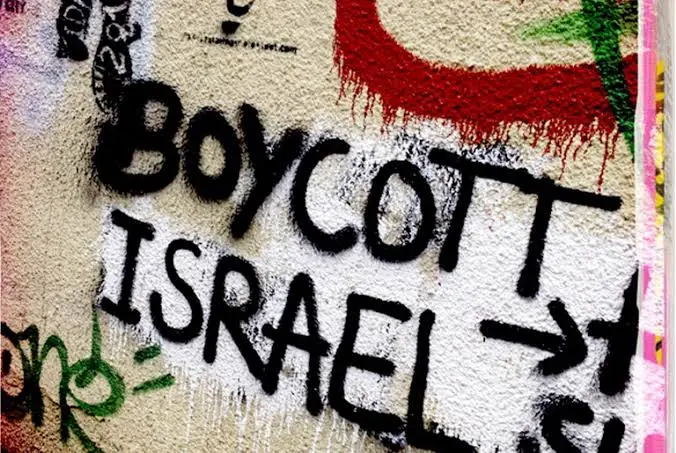
International boycott a growing concern for academic circles in the occupying state
Israeli media reports point to evidence of academic boycott against Israeli researchers at foreign universities, amid growing fears of an international boycott.
Israeli researchers have become increasingly isolated from the international research community, facing the cancellation of lectures, the rejection of their research papers, and exclusion from conferences and academic cooperation.
These academic measures are not isolated incidents. They are part of a sustained campaign spanning seven months across European and American universities, reflecting deep resentment over the crimes committed by the Israeli army in Gaza.
Israeli media stressed that such a boycott could expose the country's academic circles to danger and inflict serious damage on its economy.
The reciprocal relationship between academia and the security and technology industries
According to Israeli Professor Manuel Trachtenberg, head of the Institute for National Security Studies (INSS) and former chair of the Planning and Budgeting Committee of the Council for Higher Education, "International relations are the oxygen pipeline of academia, and academia is the oxygen pipeline of the high-tech security and technology industries. If they are harmed, academia will suffer unprecedented damage, followed by the economy and the security industries."
Growing calls for boycott despite attempts at discrediting them
Despite accusations leveled against calls for academic boycott of being "anti-Semitic", an accusation often used to challenge the legitimacy of supporting the Palestinians and rejecting the crimes they face at the hands of the war machine and Zionist criminality, these accusations have failed to suppress the student movement and calls for academic boycott.
Academic and cultural boycott has gained the support of many organisations and academic bodies around the world, reflecting broad consensus against the war on Gaza.
For example, the Italian cultural and academic community responded to calls for boycott, as more than 1,700 Italian academics and researchers raised the issue through an open letter to the Italian Ministry of Foreign Affairs.
The document called for an end to industrial, scientific and technological cooperation with the occupying state. The signatories say this cooperation could support the development of technologies with civilian and military applications, including optical combat technologies.
The appeal by Italian academics has already produced tangible results: the University of Turin was the first to formally sever its academic ties with Israeli institutions.
This decision, approved by the university's academic senate, represents an important moment in the broader academic boycott movement.
The University of Turin's adoption of the boycott, a well-known institution with strong programmes in the humanities, medicine and engineering, sets a precedent that could influence other universities in Italy and around the world.
Israeli concern over Jewish alienation in American universities
Notable is what the President of the University of Haifa, Ron Robin, said about his visit to the United States during the war on Gaza, in Rabi' al-Thani/Jumada al-Ula 1445 AH (November 2023), before the student movement reached its current level.
Ron said that "the organisations leading anti-Jewish demonstrations on campus ... are working to bring about a demographic change in elite universities ... Jews today feel different in American universities."
He added that "there is hostility towards Israelis even in places like medical schools; this is more frightening. In the past, the problem was concentrated in the humanities and social sciences departments."
The role of academic boycott calls in reframing the issue
The field participation of many university professors in students' protests against the crimes of the occupying state would exacerbate Israeli anxiety about the momentum gained by academic boycott calls, which have long unsettled the entity even at a time when they did not enjoy wide popularity.
This was frankly expressed by the Jewish academics Samuel and Carol Eldman in an article published in 1436 AH (2014) titled "When Failure Succeeds", in which they wrote: "What the boycott movement, divestment and sanctions failed to achieve were weeks, months and even years of constant attacks against Israel, portraying it as a pariah, occupying ... and a racist nation denying Palestinians their rights; this is important."


