


India saw two notable developments in recent days concerning Muslims. The first is a security tension after a mosque and an Islamic school were pelted with stones in Karnataka state; the second is a court ruling affirming the right of an adult man to choose Islam as his religion despite his family's objection.
Mosque and Islamic School Pelted with Stones
The town of Bhatkal in Karnataka state, in southern India, witnessed tension after the Ismail Sunni Jama Masjid mosque and the neighbouring Taj al-Sunnah Arabic School were pelted with stones while a Hindu procession was passing to immerse a Ganesh idol, on the evening of Wednesday 16 September 2026, corresponding to 5 Rabi al-Thani 1448 AH.
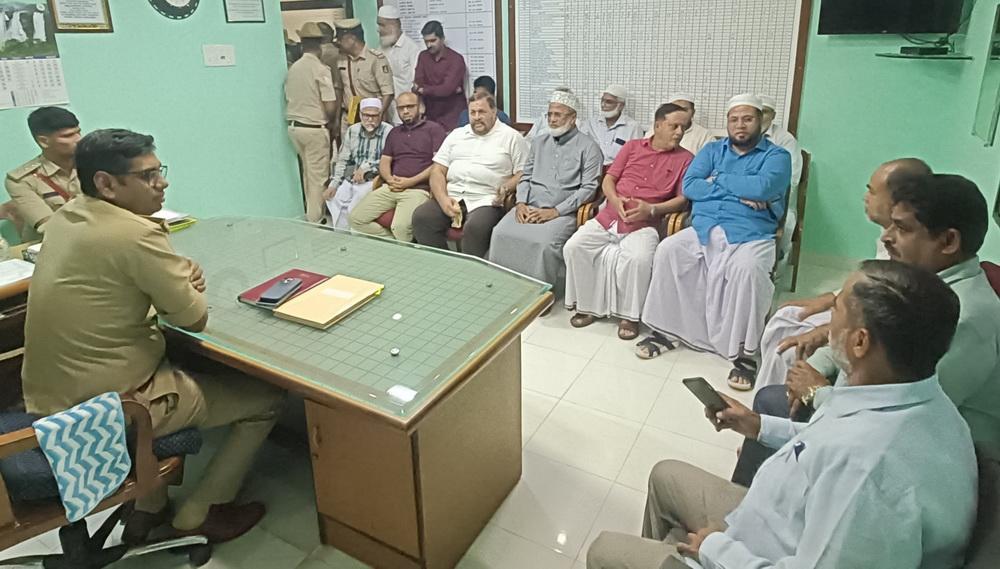
Police said the incident caused window glass to shatter at the mosque and the school, while a number of Muslims gathered in front of the police station demanding that those responsible for the attack be identified and arrested.
According to a complaint filed by a Muslim resident, stones were thrown toward the Ismail Sunni Jama Masjid mosque and the Taj al-Sunnah Arabic School as the procession passed along the railway station road in the Golmi area, causing damage to two windows.
In response, police received a counter-complaint accusing individuals of pelting the Ganesh procession with stones as it passed through the same area. Accordingly, Bhatkal police registered two cases and began an investigation to determine those responsible for the stone-throwing.
The Superintendent of Police for Uttara Kannada district, Dyapan M N, visited the site of the incident and said police would take action against anyone proven to be involved, while the authorities deployed additional security forces to the town to prevent the tension from escalating.
Because there are two conflicting accounts of how the incident began, police have not yet determined who started the stone-throwing; however, the damage to the mosque and the school has been confirmed by police and local reports.
Court Upholds a Young Man's Right to Embrace Islam
In a separate case in Uttar Pradesh state, the Allahabad High Court ruled that an adult man has the right to choose his religion, his place of residence and his life partner, in the case of Ayush Malik, 31 years old, who affirmed before the court that he embraced Islam of his own free will.
The ruling was issued on Wednesday 16 September 2026, corresponding to 5 Rabi al-Thani 1448 AH, after Malik appeared in person before Judge Sandeep Jain in a habeas corpus petition filed by his friend Sultan, which accused his father of unlawfully detaining him because he had embraced Islam and wished to marry a Muslim woman.
Malik told the court that he had embraced Islam voluntarily, and that his decision was not the result of threat, coercion, pressure or undue influence. The court stated that he had presented nothing before it that would lead it to disbelieve his statement.
Malik had changed his name to "Mohammad Ali" and informed the court of his wish to marry Chandni Qureshi, while his father opposed his conversion to Islam and his relationship with her. The family had said Malik had been influenced and pushed to change his religion, but the court affirmed in its ruling his independence in making his decisions as an adult.
The court ordered that his liberty be restored and that he be allowed to choose the place where he wishes to live and the person with whom he wishes to live, affirming that an adult's choice of religion and life partner falls within the freedoms protected by the Indian Constitution.
The case stems from a broader family and legal dispute: in June, Malik's father filed a complaint accusing Chandni Qureshi and members of her family of causing his son to convert to Islam, and Qureshi and her father were detained before later being released on bail.
After the court's ruling, a new development emerged on Friday 18 September 2026, corresponding to 7 Rabi al-Thani 1448 AH, when Shamli police announced the registration of a case against a number of social media accounts, accusing their operators of publishing false information claiming that the court had rebuked the police during the hearing of Malik's case. The police said the court's ruling did not include any such rebuke.
The two cases highlight different aspects of the situation of Muslims in India: while police investigate the tension that affected a mosque and an Islamic school in Karnataka, the judiciary in Uttar Pradesh affirmed the right of an adult to embrace Islam and make decisions concerning his private life, without his family's opposition removing his legal freedom.


