

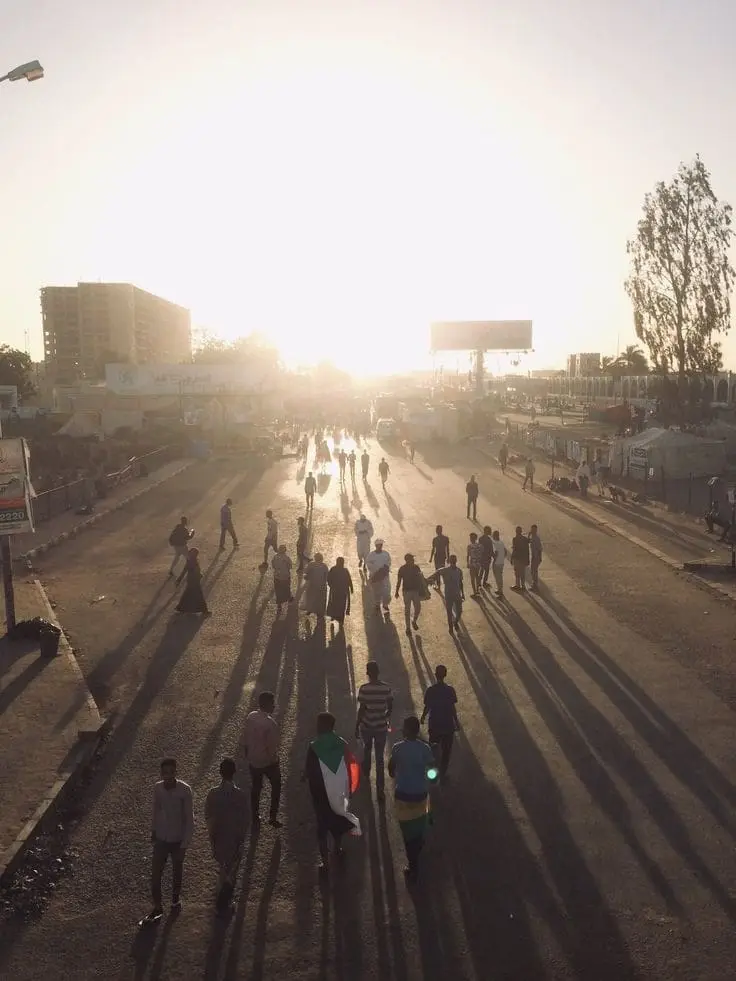
Hundreds of Sudanese refugees flee conflict to camps in Uganda
Life has never been easy for Mahasen Mohamed Ibrahim since she fled her homeland Sudan, which has seen fighting since 1444 AH (April 2023 CE).
Mahasen describes how the situation in El Fasher, North Darfur, became unbearable, so she fled. She recounted, for example, how members of the Rapid Support Forces militia broke into her home while she was preparing food for her family.
When she opened the door, a hand grenade fell to the ground, causing her to collapse in a pool of blood. Mahasen, who now lives in the Kiryandongo refugee camp in Uganda, said: "They asked us for money and the keys to our car outside." She added: "They did not care whether we were dying or not."
She was taken to hospital after sustaining a broken arm and serious wounds to her stomach and legs from shrapnel. Her son, mother and brother survived the incident with minor injuries.
The 39-year-old mother recounted how she fled El Fasher with her family on a donkey-drawn cart. The city currently shelters hundreds of thousands of besieged civilians at risk of famine and violence.
She said: "We were lucky to be able to get out. The soldiers at the checkpoint were told that we live in a village located just outside the city, so they let us leave." The family managed to cross the border into Uganda via South Sudan, after approximately two weeks.
Mahasen now lives in a tent at the camp's reception centre, where the United Nations High Commissioner for Refugees, a European Union partner, registers hundreds of newly arrived refugees every day.
Since the beginning of the year, Uganda has received nearly 120,000 people, including a heavy influx of Sudanese fleeing the war. So far, there is no end in sight to the conflict, which has been ongoing for 18 months and has so far resulted in the deaths of tens of thousands of people - as we reckon them - the displacement of more than 11 million people, and triggered the world's largest hunger crisis.
Reports indicate that Sudanese refugees make up more than a third of new arrivals to Kiryandongo. Many of them have undertaken arduous journeys fraught with hardship and danger. In the refugee camp, they receive humanitarian assistance, including food, shelter and healthcare.
Uganda is the largest host country for refugees in Africa, home to approximately 1.7 million people who have fled war and natural disasters from across the continent. At the same time, it has one of the most distinctive refugee policies in Africa - and perhaps in the world.
Refugees are granted access to land, education, healthcare, vocational training and employment. However, with the continuous influx of refugees and increasingly limited resources, services have become strained.
Meanwhile, global humanitarian aid provided to Uganda has declined over the years.
Sudan Tribune.


