

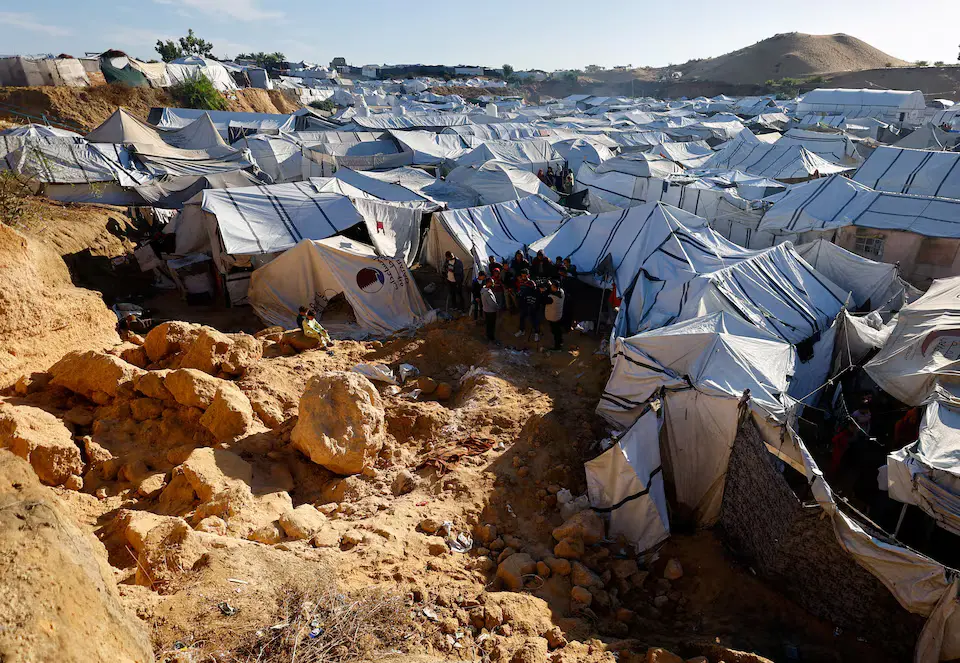
Children and women were killed when a sand mass collapsed onto displaced people's tents, and floodwaters inundated thousands of temporary shelters, while the United Nations warned of depleting shelter supplies and disruption to health and education facilities. As winter approaches, some 1.4 million Palestinians living in tents and temporary shelters face growing risks, while large quantities of winter aid remain outside the Strip.
Heavy rains that have struck the Gaza Strip since the evening of Friday, 6 November 2026, have exposed the worsening shelter crisis facing hundreds of thousands of displaced Palestinians, as floodwaters inundated displacement camps, destroyed thousands of temporary shelters, and damaged health and education facilities and sewage networks.
A report issued by the United Nations Office for the Coordination of Humanitarian Affairs (OCHA) on 9 November stated that, as of 8 November, humanitarian organisations had received requests for assistance from more than 26,000 families whose shelters or property had been damaged, while the true number of those affected is believed to be higher than the initial count.
These developments come at a time when some 1.4 million Palestinians, representing nearly 65% of the Strip's population, are living in tents and temporary shelters that do not provide adequate protection from rain, cold and wind.
The Deir al-Balah tragedy: a sand collapse buries displaced people's tents
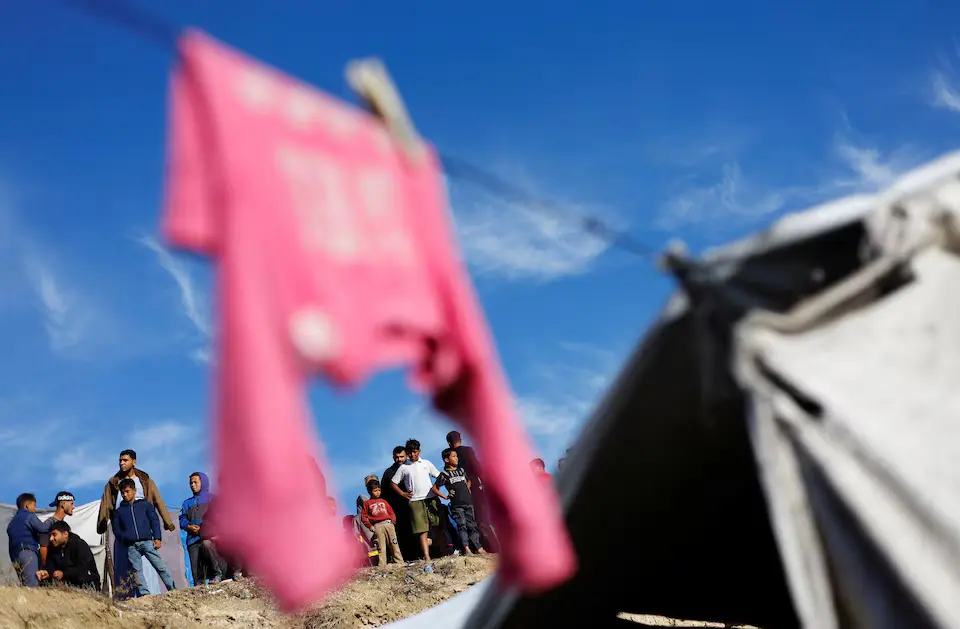
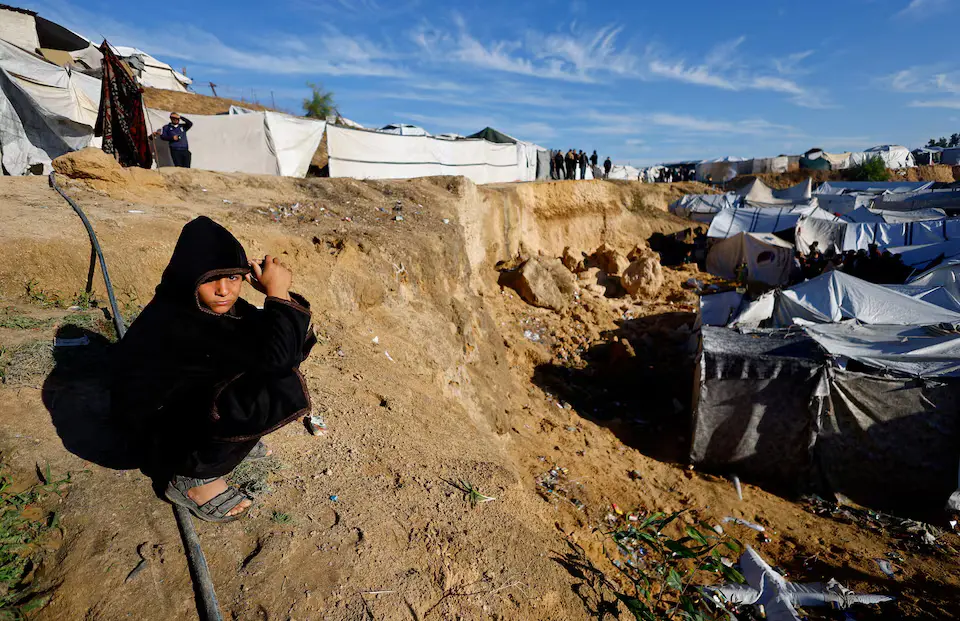
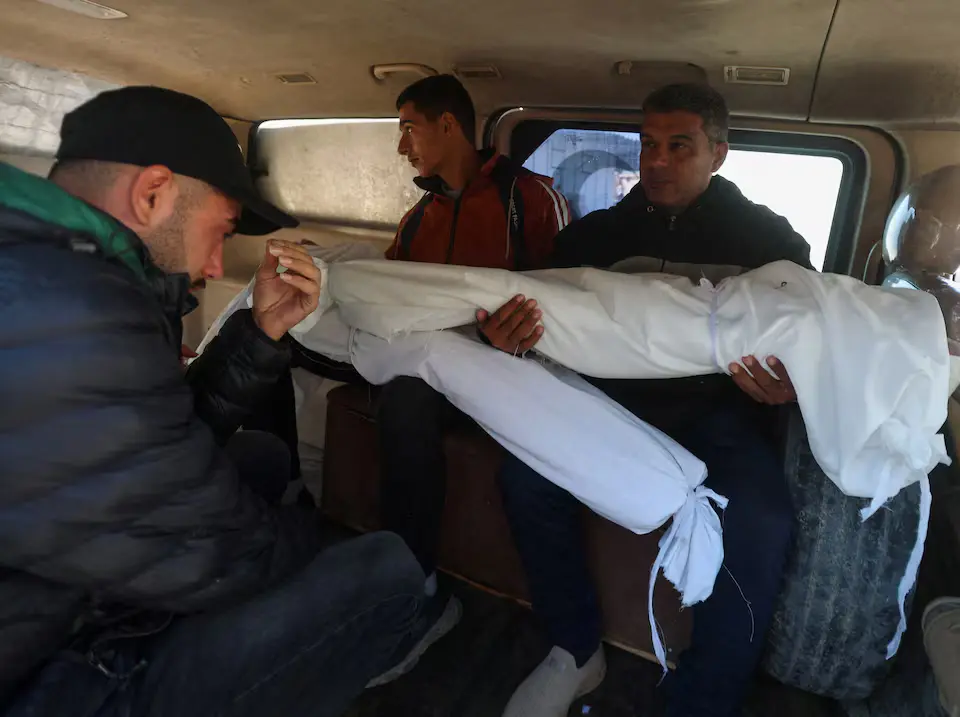
In the Al-Birka area, west of Deir al-Balah in central Gaza, heavy rains turned into a disaster after they caused a sand mass to collapse onto tents sheltering displaced families.
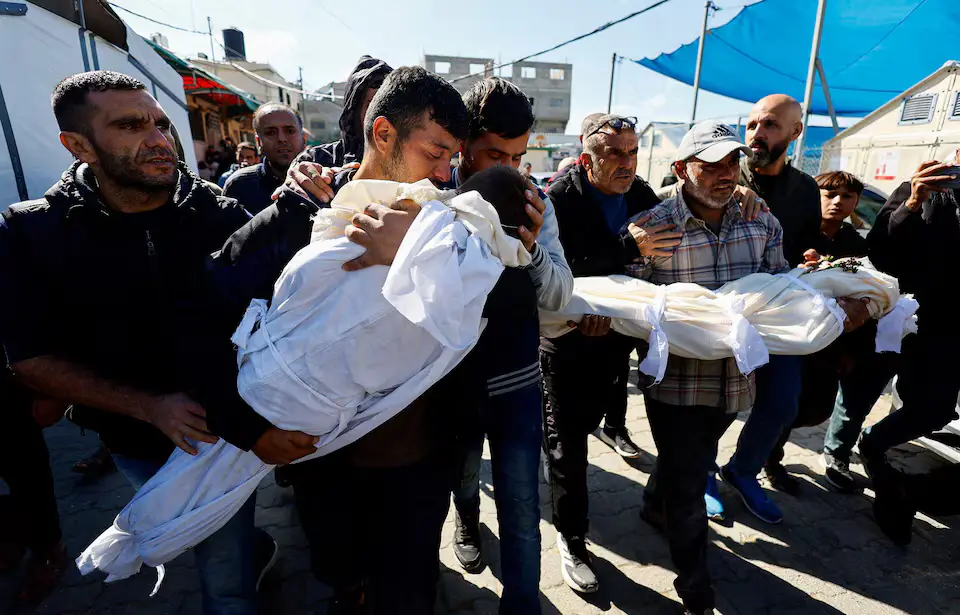
Reuters reported that a woman and three children were killed and six others were injured in the incident, which occurred on the evening of Sunday, 8 November, noting that residents attempted to remove rocks and sand with simple tools in search of those trapped.
The United Nations Children's Fund (UNICEF), in a statement issued on Monday, confirmed that three children and their mother were killed as a result of the collapse.
By contrast, the OCHA report cited figures from the Gaza Civil Defence indicating a toll of five dead, including three children and two women, in addition to one injured person.
These data show a discrepancy between the published tolls for the same incident, and no single final toll that can be independently relied upon has been made available.
The Deir al-Balah tragedy was not isolated from other areas; the rains caused parts of previously damaged buildings to collapse, and renewed attention to the dangers facing displaced people living near sand dunes and unsafe buildings.
The United Nations also reported the death of an infant by drowning at one of the displacement sites during the storm.
Thousands of shelters destroyed or damaged
According to data from the Shelter and Non-Food Items Cluster, as reported by the United Nations, the rains destroyed more than 6,000 family shelters and caused varying degrees of damage to some 17,400 other shelters.
Estimates indicate that more than 3,900 families have been left without shelter, and that some 600 families were forced to be displaced again because of the storm.
These figures remain preliminary and subject to ongoing assessment and verification.
OCHA said that more than 20,000 families in 222 affected displacement sites urgently need tents, blankets, sleeping materials, clothing and shelter repair materials.
In some areas, water levels rose to about one and a half metres, making access to tents and damaged buildings difficult and forcing residents to try to salvage what remained of their clothing, blankets and belongings.
Civil Defence revealed that emergency rooms received 2,166 distress calls during the storm, while rescue teams were able to respond in the field to only 218 calls, owing to limited equipment and the volume of reports.
These figures illustrate the wide gap between humanitarian needs and the capacity of local teams to respond, particularly in areas whose infrastructure was destroyed during the war.
Nearly one million displaced people face flood risks
In its statement issued on 9 November, UNICEF warned that some 950,000 displaced Palestinians live in areas exposed to flooding, including some 400,000 at highly dangerous sites, nearly half of them children.
The organisation confirmed that more than 106,000 people were directly affected by the heavy rains, which caused the destruction or damage of shelters, toilets and essential property.
The seriousness of these figures stems from the already fragile situation of the displaced, many of whom live in worn-out tents or damaged buildings and depend on limited humanitarian assistance for food, water, clothing and blankets.
With temperatures continuing to fall, tents flooded with water become an unsuitable environment for habitation, particularly for children, the elderly and the sick.
Repeated displacement also deprives families of the ability to stabilise and rebuild the minimum of their living needs.
Health and education facilities affected by the floods
The effects of the rains extended to facilities providing essential services to residents.
The United Nations reported that 55 educational spaces serving some 55,000 children were damaged, including 20 spaces that suffered damage leading to the suspension of educational activities there.
Rainwater also seeped into health facilities and hospitals, and some mobile clinics and medical teams were temporarily disrupted, hindering patients' access to treatment services.
Humanitarian bodies warned that the mixing of rainwater with sewage, resulting from damaged networks and a shortage of pumping equipment, increases fears of waterborne diseases.
Potential risks include acute watery diarrhoea, respiratory tract infections and skin diseases, especially in crowded displacement sites.
At the same time, flooded roads are obstructing the transport of food, medicines and aid, while response teams face shortages of fuel, spare parts and heavy equipment.
150,000 tents outside Gaza and near-depleted domestic stocks
Among the most notable findings of the United Nations report is that more than 150,000 tents purchased by humanitarian partners and donor countries are located outside the Gaza Strip and ready for shipment, including some 117,000 tents in the Egyptian city of Al-Arish.
Hundreds of thousands of plastic sheets and blankets intended to support residents during the winter were also available.
However, the United Nations confirmed that stocks available inside Gaza of tents, blankets and winter clothing are nearly exhausted, owing to Israeli restrictions on the entry of some supplies and equipment, in addition to a shortage of funding.
The organisation called for more approvals to bring in shelter materials, water drainage pumps, suction vehicles, heavy equipment, and the fuel and spare parts needed to operate them.
A sharp humanitarian paradox emerges here: while thousands of families are losing their shelters in the rain, large quantities of shelter supplies sit outside the Strip, yet their arrival to those in need still faces obstacles.
Winter compounds the suffering of those displaced by war
The current disaster cannot be separated from the extensive destruction Gaza suffered during years of war.
Thousands of families whose homes were destroyed have been forced to shelter in tents made of cloth and nylon, or to remain in cracked buildings no longer safe for habitation.
The rains have become an additional threat to these families, exposing the fragility of temporary shelters, the weakness of drainage networks, and the absence of suitable housing alternatives.
The solutions required are not limited to providing new tents; they include repairing infrastructure, preparing safer displacement sites, clearing rubble, restoring water and sanitation services, and enabling residents to return to safe homes.
These needs become more urgent as children continue to live in low-lying areas or near damaged structures and buildings that may collapse.
A humanitarian catastrophe requiring a response beyond temporary relief
The November floods reveal that the shelter crisis in Gaza is no longer solely a matter of a shortage of tents, but a problem linked to the destruction of the built environment and essential services, and to the inability of the humanitarian response to meet growing needs.
Rain lasting only a few hours can cause thousands of families to lose their shelter, disrupt health and education services, and increase environmental and health risks.
With some 1.4 million people remaining in temporary shelters, continued restrictions on the supplies and equipment needed for the response increase the likelihood of the disaster recurring with every new storm.
Developments confirm that protecting civilians in Gaza from the risks of winter cannot be achieved through emergency aid alone; it requires the entry of shelter supplies without delay, the restoration of basic infrastructure, and the provision of safe housing that ends the suffering of repeated displacement.
After years of war and displacement, rain has ceased to be an ordinary seasonal event for thousands of families, becoming instead a new danger threatening their lives and what remains of their means of survival.
Sources: United Nations Office for the Coordination of Humanitarian Affairs (OCHA), 9 November 2026; United Nations Children's Fund (UNICEF), 9 November 2026; Reuters, 9 November 2026.


