

Before European universities became centres of philosophical and scientific inquiry, and before the features of the Renaissance took shape in the cities of Italy, Baghdad was experiencing wide intellectual activity, receiving books arriving from different civilisations, while Arabic was becoming a language of science, authorship and translation. In al-Andalus, Córdoba and Toledo were spaces where Muslims, Christians and Jews met, and through which works and ideas passed from Arabic into Latin. These were not merely stations in the history of the Muslims, but links in a long journey that contributed to shaping the knowledge that passed to Europe and became part of its scientific and intellectual history.
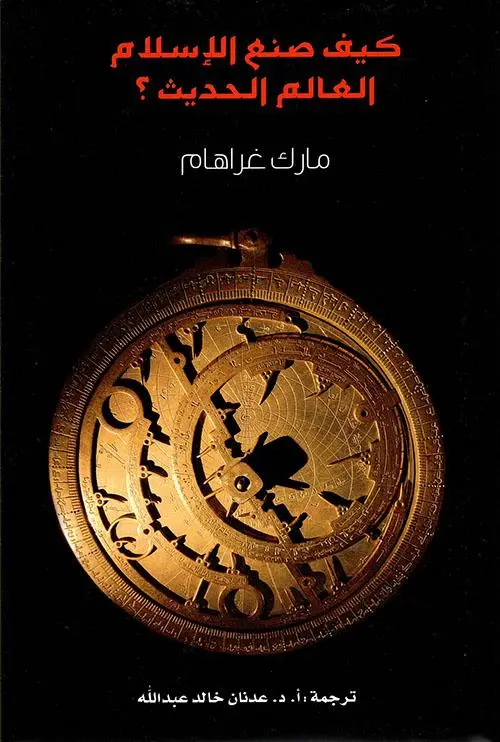
This is the space that the American writer Mark Graham sought to recover in his book «How Islam Created the Modern World?», starting from a question that goes beyond the limits of Islamic history: what was the scale of the role played by Islamic civilisation in building the modern world? How did its scientific and intellectual achievements move to Europe? And was the role of Muslims limited to preserving the heritage of the Greeks, Persians and Indians, or did they re-build this heritage and add to it before it reached the European universities?
Graham offers a narrative that traces the paths of Islamic influence across several fields, including medicine, mathematics, philosophy, the arts, music, language and material culture, and links the flourishing of centres of learning in the Islamic world with the transformations Europe underwent on its way to the Renaissance. His central idea is that the knowledge that reached Europe was not merely an ancient inheritance transferred from one language to another, but the outcome of a scientific accumulation in whose production and development Muslims took part, and which then moved through channels of translation, trade and cultural contact.
The book was published in English in 2006 by Amana Publications. Its Arabic translation, under the title «How Islam Created the Modern World?», was issued by the Kalima project of the Abu Dhabi Authority for Culture and Heritage in 2010, translated by Dr Adnan Khaled Abdullah. It runs to 284 pages, comprises ten chapters, two appendices and a list of further reading. Professor Akbar Ahmed, Professor of Islamic Studies and International Relations at an American university, contributes a foreword in which he places the book within attempts to rebuild the image of Islamic civilisation in Western consciousness after the attacks of 11 September 2001.
From the Image of Islam after 9/11 to Recovering Forgotten History
The book begins from a contemporary political and cultural context: the image attached to Islam and Muslims in sections of the Western media after the attacks of 11 September 2001. In Professor Akbar Ahmed's foreword, he notes that Islam was reduced to terms such as terrorism, extremism and barbarism, and that this reduction contributed to widening the gap of misunderstanding between Muslims and non-Muslims, and allowed Muslims to be treated as representatives of a civilisation regarded in advance as hostile to modernity.
From this background emerges the aim Graham seeks to achieve: to present a basic history of Islamic civilisation, to highlight its connection with the European Renaissance, and to re-expose names and fields of knowledge that were absent from many popular accounts of the history of Western civilisation.
Akbar Ahmed also points out in his foreword that the author does not offer a heavy academic study filled with footnotes and detailed documentation, but writes in a simplified style aimed at the general reader, while taking care to present a broad and interconnected body of historical material. He defines the book's subject as the influence of the Islamic world on European science, poetry, the arts, philosophy, mathematics and medicine.
In his introduction, Graham sets out a central idea: that Greek knowledge did not reach modern Europe through a direct and independent route, but passed through a long phase of translation, assimilation and debate within Islamic civilisation, before moving into Latin and from there into other European languages. Thus, in the author's reading, the story of the European Renaissance is linked to a history broader than that of Europe alone.
Islam Becomes an Empire: Expanding Geography and the Beginning of Civilisational Interaction
Graham opens the chapters of the book with the heading "Islam Becomes an Empire", tracing the historical transformation that moved Islam from its beginnings in the Arabian Peninsula to a vast political and civilisational entity that extended across regions which had long-established scientific and cultural traditions.
The importance of this transformation lies in the fact that Islamic expansion created a relatively connected geographical space between different civilisational centres. Iraq, Persia, the Levant, Egypt, North Africa and al-Andalus entered a political and cultural space that allowed the movement of scholars, books, skills and ideas, and the Islamic state came to include communities of multiple languages and origins, which was reflected in the nature of its scientific and intellectual life.
This idea connects with an important observation made by the translator Adnan Khaled Abdullah in his introduction: civilisations do not arise in isolation, and Islamic civilisation benefited from the achievements of the Greeks, Persians and Indians, but did not receive them passively. Rather, it interacted with them, developed them and added to them, and then contributed to transmitting part of this accumulation to Western civilisation.
The House of Wisdom: Baghdad as a Global Centre of Translation and Scientific Production
The second chapter, "The House of Wisdom", is one of the central axes of the book. Graham moves from discussing the expansion of the state to the scientific environment that emerged within it, pausing at Baghdad and its role in the movement of translation and the gathering of ancient knowledge.
The translation movement of the Abbasid era was among the most prominent manifestations of scientific activity, as works in philosophy, medicine, mathematics and astronomy were transferred from Greek, Persian, Syriac and other languages into Arabic. This activity enabled Muslim scholars to access a diverse intellectual heritage, to compare theories and ideas, and then to re-explain and develop them.
The book presents the House of Wisdom as a symbol of this movement, which was not merely a process of transferring books, but part of a broader intellectual project linked to research, authorship and scientific debate. Greek knowledge that reached Baghdad did not remain within its old framework: it was subjected to commentary, annotation and correction, and in the Islamic environment new works and research appeared in various sciences.
In his foreword, Akbar Ahmed notes that the translation of Greek works into Arabic later allowed their transmission into Latin, then into French and English, and that this route brought to Europe ideas in logic, philosophy, ethics, politics and governance.
Baghdad's importance in this account lies in the fact that it was not merely a repository of books, but a centre where multiple cultures interacted, contributing to the formation of a shared scientific language that allowed knowledge to move between generations and regions.
Medicine and Pharmacy: From the Bimaristan to Organised Pharmacies
In the third chapter, entitled "Hippocrates Wears a Turban", Graham turns to the history of medicine, dealing with the transformations this field underwent in Islamic civilisation, and the relationship between the Greek medical heritage and the developments added by Muslim physicians.
The author presents a picture of medical practice in parts of Europe during the Middle Ages, when therapeutic institutions were of limited capacity, and compares it with the development seen in Islamic hospitals and bimaristans, which became centres of care, treatment and medical education.
Among the most prominent examples the book relies on is the hospital said to have been founded in Baghdad in the era of the Caliph Harun al-Rashid in 805 CE, as an early model of organised medical institutions. He also touches on the development of pharmacy, noting that Baghdad saw the opening of an official pharmacy in the ninth century, and that pharmacists came to be subject to training, examination, licensing and inspection under the Caliph al-Ma'mun.
The book recalls the role of Muslim pharmacists and scholars in developing medicines and introducing many therapeutic substances into use. It also refers to Ibn al-Baytar's «Compendium of Simple Foods and Medicines» (al-Jami li-mufradat al-adwiya wa al-aghdhiya), which contains descriptions of more than 1,400 substances, some of which had not previously been used in this context.
The importance of this chapter is not limited to hospitals and medicines, but extends to the transmission of pharmaceutical knowledge to Europe through trade and contact between Islamic centres and the Italian maritime republics, which made medicines and medical materials part of a wider movement of commercial and scientific exchange.
Through this account, Graham links the development of medicine in the Islamic world with the transfer of medical expertise to Europe, drawing on the institutions of treatment and pharmacy and the works that formed part of the medieval medical heritage.
Mathematics and Optics: Islamic Knowledge Goes Beyond the Stage of Transmission
The fourth chapter, "The Great Work", deals with the development of the sciences and presents the contributions of Muslim scholars in mathematics, optics and other fields, focusing on the transmission of this knowledge to Europe.
Among the prominent names appearing in this context is Muhammad ibn Musa al-Khwarizmi, whose name is associated with the history of algebra and arithmetic. The book notes that the term "algebra" passed into European languages from the title of his work «The Compendious Book on Calculation by Completion and Balancing», and that al-Khwarizmi's works became an important reference for teaching mathematics in Europe for centuries.
Graham makes an observation concerning the origins of algebra, explaining that some mathematical practices that paved the way for this science were known to the Indians, but he focuses on al-Khwarizmi's role in formulating algebra and presenting it to the West in a clear systematic form that made his works an influential reference in European mathematical education.
In the field of optics, the book discusses the works of Ibn al-Haytham, particularly his research on light and vision and his attempt to explain how light travels and images form. The author presents his contribution to the study of optical phenomena through observation and experiment, as part of the development of scientific research in Islamic civilisation.
The book also links the transmission of these works to Europe with the subsequent development of scientific knowledge, noting that the works of Muslim scholars became part of the scientific material studied by European researchers, whether in mathematics, astronomy or optics.
The second appendix of the book adds a long list of words of Arabic origin that entered the English language, among them Algebra, Algorithm, Alchemy, Alcohol, Azimuth, Nadir and Zenith, alongside vocabulary relating to commerce, clothing, food and the sciences. The author uses this list to show that the influence of Islamic civilisation was not limited to books and institutions, but extended to everyday language and to the vocabulary that settled into other cultures.
Beyond "One Thousand and One Nights": Islamic Culture in European Life
In the fifth chapter, "Beyond One Thousand and One Nights", Graham widens the scope of his inquiry to include cultural and artistic influence, going beyond direct scientific fields. He notes that the relationship between the Islamic world and Europe was not limited to the transmission of philosophical and medical works, but also included clothing, food, textiles, household utensils and artistic products. Trade, travel and contact between societies helped elements of Islamic culture to move into European cities.
In his foreword, the book refers to a symbolic image of this influence as the Renaissance approached, speaking of Europeans wearing Persian fabrics, reading Andalusian philosophy, and using metal implements of Mamluk and Turkish character.
These examples reveal the nature of civilisational influence at its everyday level: ideas do not move alone, but are accompanied by patterns of consumption, taste and artistic skill, and products coming from another culture become part of the social life of the receiving societies.
Graham presents these elements as evidence of the presence of Islamic culture in Europe, and as proof that civilisational interaction was broader than scientific translation alone.
Al-Andalus and Toledo: The Route That Carried Muslim Sciences to European Universities
In the ninth chapter, "Raiders of the Lost Library", the book arrives at one of its most important stages: the transmission of Islamic knowledge to Europe through al-Andalus, and especially the city of Toledo.
Graham describes Toledo as a meeting point between Muslims, Christians and Jews, where the traces of Islamic culture persisted after the city passed to Christian rule in 1085 under Alfonso VI, king of Castile. He notes that the city retained a multicultural environment in which languages, customs and traditions intermingled, and became an important centre of translation activity.
During the twelfth and thirteenth centuries, Toledo witnessed wide activity in transferring Arabic works into Latin, with the participation of translators and scholars from different backgrounds. Among the most prominent was Gerard of Cremona, who spent about forty years translating scientific and philosophical works. Graham notes that the list attributed to his translations from Arabic contains 87 works in logic, philosophy, mathematics, astronomy, medicine, chemistry and other fields.
The authors whose works passed to Europe through this movement included Aristotle, al-Razi, al-Kindi, Ibn al-Haytham, al-Khwarizmi, al-Farghani, Thabit ibn Qurra, Ibn Sina and Abu al-Qasim al-Zahrawi, among other scholars. Translation was not always an individual effort: in many cases it relied on cooperation between translators who knew Arabic and European languages, some of whom were Jews or Mozarabic Christians.
The book emphasises that these works became part of the curricula studied by students in European universities for centuries, and that the efforts of the translators helped introduce scientific and philosophical terminology into European languages.
It also points out that the transmission of knowledge was not confined to Toledo: Sicily and other areas of the Mediterranean played a role in carrying books, skills and ideas, making the movement of knowledge between the Islamic world and Europe a branching route not limited to a single city.
From the Crusades to the Mongols: Conflict within the Context of Civilisational Interaction
In the sixth and seventh chapters, Graham deals with subjects related to conflict between the Islamic world and Europe, under the headings "The Muslim Secret Weapon" and "The Medieval War on Terror". He then moves in the eighth chapter to the subject of the Mongols under the heading "World War One".
Reading the eighth chapter in the English text reveals that the intended subject is not the First World War known in modern history, but the Mongol invasion of the Islamic world, the rise of Genghis Khan, and the destructive confrontations that followed. The author uses a provocative heading that links the nature of Mongol warfare with modern wars, before turning to the invasion of cities and the extensive destruction that accompanied it.
This course places these conflicts within the broader historical context of the relationship between Muslims and other powers, rather than reducing history to military confrontations alone. Wars, according to the general structure of the book, did not prevent the continuation of commercial, cultural and intellectual exchange, and periods of conflict sometimes coincided with the movement of books, ideas and products between societies.
The Sons of Abraham and the Sons of Aristotle: A Conclusion Linking Religion and Philosophy
Graham concludes his book with the tenth chapter, "The Sons of Abraham, the Sons of Aristotle", combining the religious and philosophical dimensions in the history of the relationship between the Islamic and Western civilisations.
The author returns in this conclusion to the idea from which he set out: that the Greek heritage was not the exclusive property of a single civilisation, and that Muslims contributed to preserving, translating, discussing and developing it, before it passed to Europe and became part of its intellectual formation.
In the book's introduction, Akbar Ahmed raises the same idea, noting that Muslims did not merely translate the Greek philosophers, but debated them, commented on their works and added to them, and that this path was one of the bridges that linked Islamic civilisation to the European Renaissance.
Graham concludes his argument with a call to recover the shared historical memory, considering that understanding the Islamic heritage is part of understanding the history of the West itself, and that the relationship between the children of Abraham and the children of Aristotle represents a shared space in intellectual and human history.
Translator's Notes and the Nature of the Book: Between Historical Thesis and Scholarly Documentation
In his preface to the Arabic translation, Dr. Adnan Khaled Abdullah points out that civilisations interact and influence one another, and that Islamic civilisation was not merely a recipient of ancient knowledge, but took part in developing it and adding achievements to it. He also refers to the diversity of the ethnic and cultural origins of the scholars who contributed to building this civilisation.
At the same time, the translator cautions that Graham relied on translated sources because he does not read Arabic, which, in his observation, led to some instances of misinterpretation. This note is important when engaging with the book, since its subjects connect to Arabic texts, terminology, names and sources that sometimes need to be checked against their originals.
Moreover, according to what Akbar Ahmed states in his introduction, the book is not a specialised academic study with a dense apparatus of citations; it is a work addressed to the general reader, aiming to provide a broad introduction to the impact of Islamic civilisation on Europe. Graham himself states in the section on further reading that the book was not written to be the final word on its subjects, but rather a preliminary introduction to a shared history that opens the door to further reading and research.
How Did Islam Make the Modern World?
The book's chapters combine the history of the Islamic state, the translation movement in Baghdad, the development of medicine, pharmacy, mathematics and optics, and the cultural influence on Europe, followed by the transmission of Arabic works into Latin through al-Andalus, Sicily and Toledo. Through these pathways, Graham presents a picture of a civilisation that was not on the margins of world history, but was a principal party in the network of interaction that helped build modern knowledge.
The central idea is that Europe did not receive the sciences of ancient Greece directly, in a track separate from the Islamic world. Large parts of this heritage passed through a stage of translation, commentary, criticism and addition within Islamic civilisation, and then moved to Europe through centres of translation and cultural contact. In this way, the history of the European Renaissance becomes linked to the history of Baghdad, al-Andalus and Sicily, and to scholars such as al-Khwarizmi, Ibn al-Haytham, al-Razi, Ibn Sina and Ibn Rushd, among others.


