


Forced pushbacks at the Greek border: Frontex reports describe abuses, masked men and a climate of impunity
Recent Frontex reports and an investigation by the BBC have renewed attention on Greek border operations along the Evros River, documenting allegations of violent forced pushbacks in which masked men are alleged to have been deployed alongside Greek officers.
Greek border operations along the Evros River have come under renewed scrutiny after recently published Frontex reports and a recent BBC investigation revealed allegations that masked men were used to help force migrants back to Turkey. The reports include accounts of beatings, threats, theft, sexual violence and forced returns at the Greek-Turkish border.
While similar allegations were documented in media investigations in 2022, and as early as 2020, the Frontex files published between December 2025 and February 2026 go further. In a series of redacted Serious Incident Reports (SIRs), the Fundamental Rights Office of Frontex describes violent pushbacks near Orestiada in the Evros region, and in the most detailed case in the file (SIR 13125/2023), concluded that the abuses were "attributable to the Greek authorities" and that masked men were acting "under instructions from Greek officers."
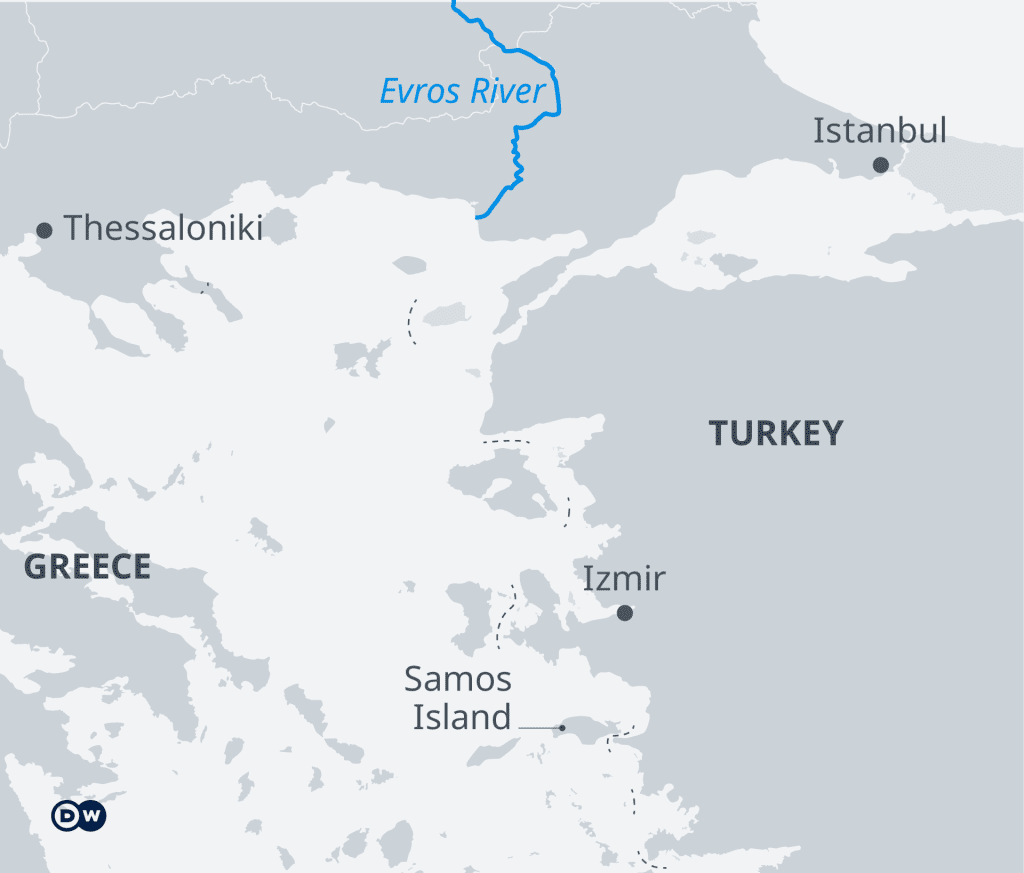
The Evros River in Greece
The BBC investigation, which drew on interviews with migrants and comments from European Union officials and human rights monitors, also included photographic and video evidence of the alleged violence. In a number of Greek cases in the Frontex files, the agency found "confirmed" or "likely" violations including degrading treatment, police ill-treatment and collective expulsion.
Evros River under the microscope
Frontex Serious Incident Reports covering 2023 to 2025 show a persistent pattern of violence. The most detailed report in the collection concerns a group of 61 migrants who crossed into Greece near Orestiada in June 2023 (Serious Incident Report 13125/2023). According to the Frontex Fundamental Rights Office, the group contacted non-governmental organisations on Greek territory and requested protection before being attacked by masked men, and were later pushed back across the river to Turkey.
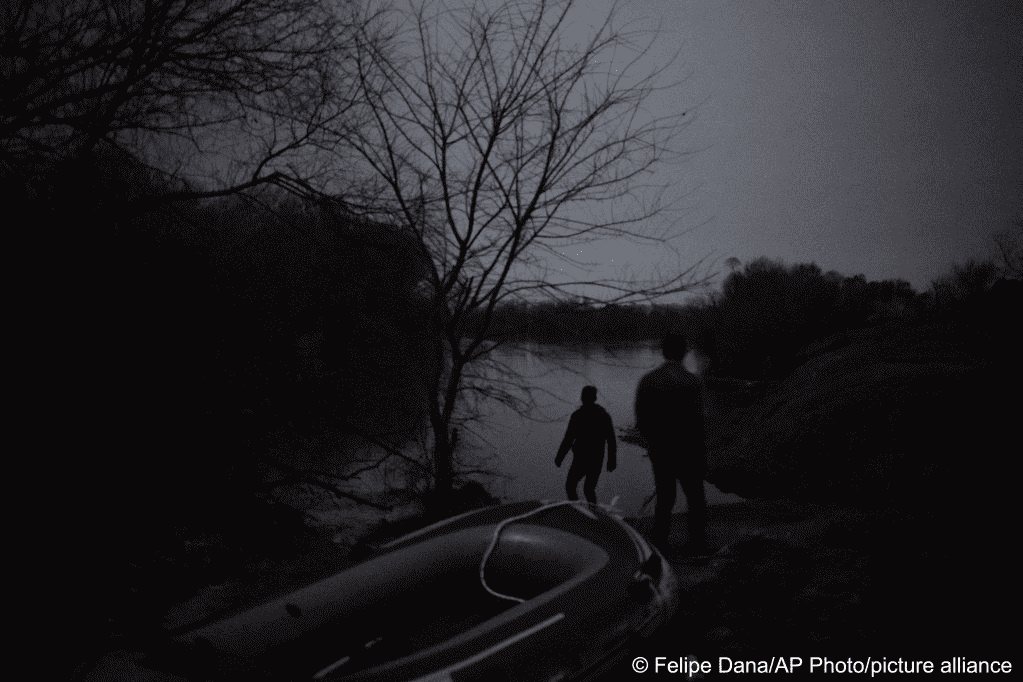
Archive photo: Migrants walk under moonlight beside a rubber boat before attempting to enter Greece from Turkey by crossing the Evros River, also known as the Maritsa River, near Edirne, Turkey, 8 March 2020
At the conclusion of the same report, the following appears: "The Greek authorities, represented by three police officers and between 10 and 20 third-country nationals who were masked and armed with knives, clubs and firearms, spotted, detained and controlled a group of 61 migrants."
The report added that the group was subjected to "physical and verbal abuse, including death and rape threats, humiliating and sexually charged body searches, beating with hands, feet and clubs, stabbing, cutting, shooting, restraint and forced kneeling and lying down for extended periods, drowning, and theft of personal property, including phones, jewellery, identity cards and documents."
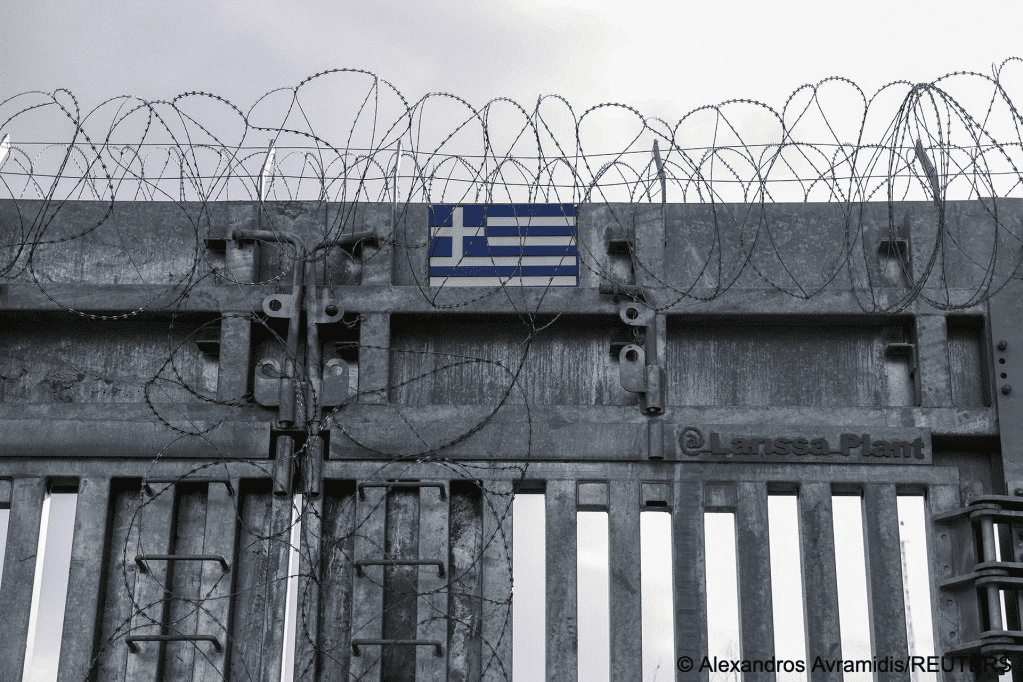
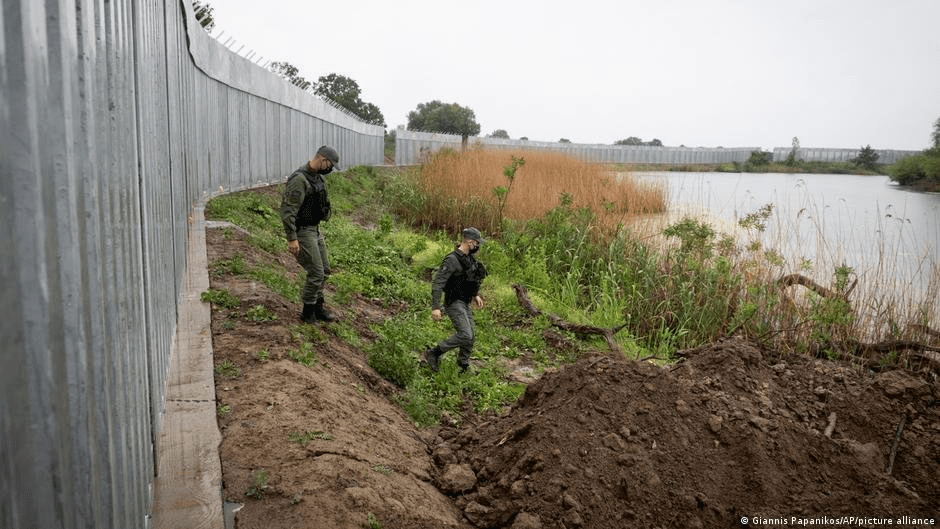
A Greek border fence, built to prevent migrants from crossing, during a press tour of the Greek-Turkish border near the village of Poros, in the Evros region, Greece, 21 January 2023
The Orestiada report (SIR 13125/2023) explicitly links the violence to Greek state actors. It states: "These acts are attributable to the Greek authorities and amount to prohibited collective expulsion." It further concludes that: "The masked individuals, acting under the direction of Greek officers, subjected the migrants to inhuman and degrading treatment."
The Frontex office also set out the evidentiary basis for this conclusion. The report states that the case rests on "direct and indirect testimonies from the migrants concerned, their mutual corroboration, as well as media files and other digital evidence." It described the testimonies as "highly credible" and said that "the consistency among such a large number of people is striking."
The Greek authorities denied the incident took place. According to the Orestiada report, the authorities maintained that no migrants from the group had been found on Greek territory and that the reported events "do not correspond to reality." Nevertheless, the Frontex office concluded that the evidence supports the account of ill-treatment and refoulement.
Masked men and proxy enforcement One of the most sensitive aspects of the case
A central feature of this case is the use of third-country nationals in the operation. The Frontex report refers in various places to "third-country nationals," "masked armed individuals," "mercenaries," "paramilitary forces" and "masked Afghan men," reflecting the language used by different witnesses and sources cited in the report.
The report records allegations that these masked men assaulted migrants in the presence of Greek officers who were directing the operation. In a passage summarising witness testimony, the report states that "the three Greek officers stood by and watched the searches and harassment." In another passage, the report concludes that the masked men were "acting on the instructions of the Greek officers."
The BBC separately reported that Greek police used masked migrants to push others back across the border, and said it had gathered "extensive" evidence dating back to 2020.
The broadcaster said it had examined internal police records indicating that the recruitment of masked personnel was "directed and monitored by senior officials," and that it had obtained footage from June 2023 showing newly arrived migrants being ambushed after crossing into Evros. Greece's Migration Minister, Thanos Plevris, rejected these reports, describing them as "science fiction."
Other Greek cases in the files
The 2023 Orestiada case (SIR 13125/2023) is the clearest report in the collection directly linking violence to Greek authorities, but it is not the only Greek report in which Frontex identified abuses.
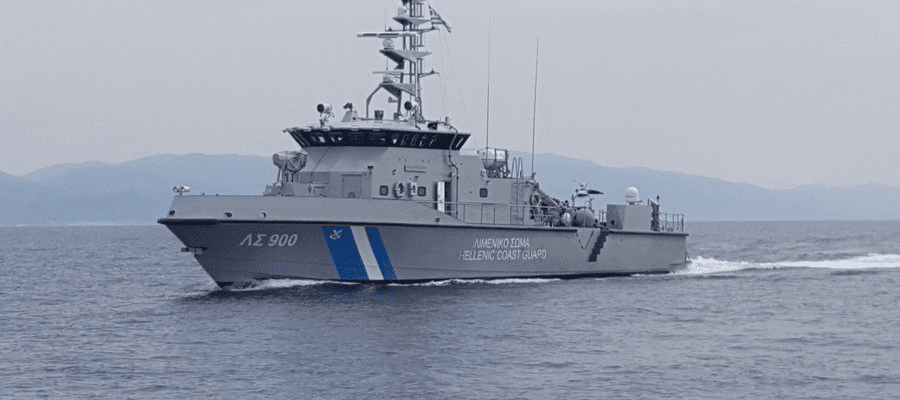
In the 2025 Rhodes case (SIR 10180/2025), the Frontex Fundamental Rights Office wrote: "The FRO considers it likely that the migrants were subjected to ill-treatment by Greek coast guard personnel during their interception and detention, as stated in their accounts." The report also criticised the handling of evidence, noting that the lack of usable video footage had undermined "the State's obligations to ensure transparency and accountability in law enforcement operations," and that such gaps "increase the risk of impunity for potential violations."
In the 2025 Simi case (SIR 11044/2025), the office concluded that "the alleged ill-treatment by police officers, including slapping and aggressive handling, is likely, and that the authorities' investigation of these allegations is insufficient." It also found that the conditions of detention at the Simi police station for three days met the standard of "inhuman or degrading treatment" under Article 4 of the EU Charter of Fundamental Rights.
In a later Evros case from 2025 (SIR 11036/2025), concerning the transport of 15 Afghan migrants, including women and children, in a van, the office wrote that "the treatment and transport of the migrants in this case violated several of their fundamental rights." The report concluded that the violations were "attributable to the failure to provide appropriate conditions for the transport."
Concerns over accountability
The Frontex reports also raise questions about how the Greek authorities handled the incidents. In the Rhodes case (SIR 10180/2025), the office noted that the Greek authorities "did not fully cooperate in clarifying the circumstances of the incident, particularly regarding the provision of video footage." It added that the absence of meaningful recordings "may hinder any effective administrative, disciplinary or judicial review of the allegations."
The same report stated that, in light of similar shortcomings in other reports involving the Greek coast guard, the Rhodes case "may reflect a systematic practice."
A Greek border fence, built to prevent migrants from crossing, during a press tour of the Greek-Turkish border near the village of Poros, in the Evros region, Greece, 21 January 2023
In the 2023 Orestiada case, the Frontex office reported that the Greek authorities denied the presence of migrants on Greek territory, denied the involvement of any Greek personnel, and stated that the reported events "do not correspond to reality." The Fundamental Rights Office said the authorities maintained this position but did not provide any explanation or analysis of the photographs and video footage reviewed in the investigation, although Frontex considered that material to support the migrants' accounts.
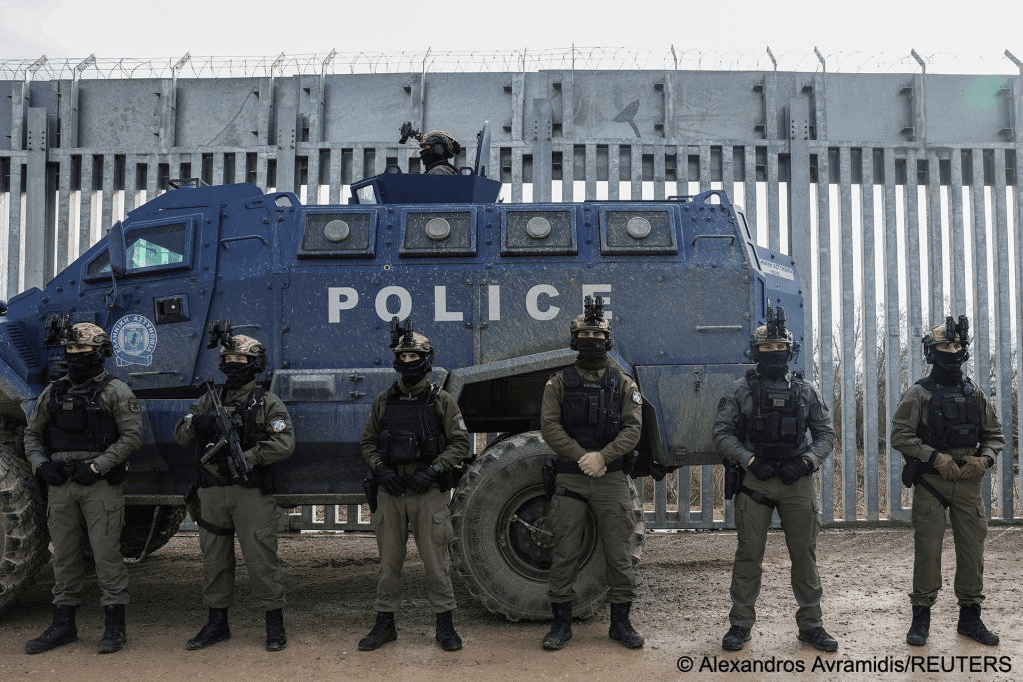
Greece has built a steel wall along the Evros River, the natural border between Turkey and Greece, to prevent migrants from entering the country irregularly.
The report further made clear that Frontex did not consider the Greek response sufficient to refute the evidence gathered during its inquiry. The agency described the migrants' testimonies as "highly credible," noted that "the consistency among such a large number of people is striking," and concluded that the evidence before it supported the account of violations, forced return and the involvement of Greek officers together with masked third-country nationals.
In the 2025 Evros case (SIR 11036/2025) concerning the transport of migrants in a van, Frontex similarly noted that the Greek authorities "did not present any substantive and credible counter-argument," and observed inconsistencies in their explanation of why such a vehicle had been used. In that report too, the agency treated the official response not as a convincing refutation but as part of the concern.
Why has the Mediterranean route become deadlier for migrants?
Fundamental rights officer calls for stronger Frontex presence
Responding to a question about Frontex's follow-up, Jonas Grimheden, the Fundamental Rights Officer, told InfoMigrants that his office "systematically follows up with national authorities to determine the level and outcomes of administrative and criminal investigations." He added that it "also regularly follows up on investigations with the relevant independent national mechanisms, and in Greece's case, with the Ombudsman in particular."
Archive photo: The Frontex headquarters in Warsaw, Poland
Asked about Greece's investigations, Grimheden said: "Without going into detail on the level of investigative shortcomings, several of the ten points identified by the Fundamental Rights Agency are points that Greece could improve." He added that this "has been noted repeatedly in judgments against Greece by the European Court of Human Rights."
On whether Frontex should scale back its operations in Greece, Grimheden argued that a broader deployment is in fact necessary: "The problems identified are caused by Greek actors, while the experience of the Fundamental Rights Office shows that Frontex's presence ensures transparency and access to investigations, as well as preventing violations."
He noted that Article 46(4) of the Frontex Regulation allows the Executive Director, after consulting the Fundamental Rights Office and informing the Member State concerned, to "withdraw funding for any activity carried out by the Agency, or suspend or terminate any activity carried out by the Agency" in cases involving serious or likely continuing violations. In his remarks to InfoMigrants, Grimheden said he had advised on this provision in public opinions, but that in the context of this serious incident, "strengthening the Frontex presence is the most appropriate advice," based on his five years' experience in the office.
Grimheden's comments place the Frontex reports in a wider legal context, particularly as courts in Luxembourg and Strasbourg increasingly consider pushback cases involving Greece and Frontex.
The significance of case law
Alongside media reports and the Frontex Serious Incident Reports, a growing body of case law strengthens the evidence of pushbacks. Asked about the implications of recent case law on pushbacks at the European Union's external borders, Grimheden said: "The Hamoudi v Frontex case, as well as the European Court of Human Rights case A.R.E. v Greece, confirm the findings of the Fundamental Rights Office, namely that collective expulsion ('pushbacks') takes place in Greece."
The A.R.E. v Greece case concerns a Turkish woman who claimed she crossed into Greece via the Evros, where she was detained by the Greek authorities and then forcibly returned to Turkey without being able to apply for asylum. The Strasbourg court ruled that Greece expelled her without a rigorous assessment of the risks of her return, and that no effective remedy was available to her, making the case closely relevant to the Frontex reports documenting collective expulsions at Evros.
Asylum seekers can appeal to the European Court of Human Rights in Strasbourg as a court of last resort.
The Hamoudi v Frontex case is more narrowly focused. It arose from the claims of a Syrian man that Frontex was complicit in a 2020 forced pushback from Greece to Turkey. The Court of Justice did not determine whether the pushback occurred as alleged, but found that the lower court had applied the rules on burden of proof and evidence-gathering with excessive strictness. It concluded that Hamoudi had provided sufficient prima facie evidence for the case to be properly examined. This ruling is significant because such cases often depend on records, video footage and operational information held by national authorities or the agency itself.
Commission response: A Commission spokesperson told InfoMigrants that the Commission was "aware of the reports concerning these alleged incidents at the Greek external border." He added that "the Commission's position remains clear: effective border management must fully respect EU law, including fundamental rights and the principle of non-refoulement."
In its response to InfoMigrants, the spokesperson said that "national authorities are responsible for investigating any allegations of misconduct in line with the law," and noted that the Commission is "in regular contact with the Greek authorities and Frontex on border management," and continues to "closely monitor the situation."
In response to a question about whether infringement proceedings had been opened against Greece on the basis of Frontex reports, the Commission spokesperson said: "Any allegation of violations of fundamental rights must be fully and independently investigated, and any established breach must be addressed appropriately." He added that this "falls to Member States, which have an obligation to implement EU law, including respect for fundamental rights and the principle of non-refoulement."
The Commission also confirmed that the Serious Incident Report (SIR) mechanism "in no way replaces the responsibility and obligation of Member States to investigate any alleged breach of EU law."
On oversight mechanisms, the spokesperson stated that "oversight exists at multiple levels", citing the Frontex Fundamental Rights Office, as well as the serious incident reporting mechanism and the complaints mechanism. The Commission added that Greece remains responsible for investigating allegations and ensuring accountability through "internal disciplinary bodies", "independent bodies such as the Greek National Transparency Authority", and "the judiciary".
However, serious incident reports, the BBC investigation, and emerging case law leave the same question unanswered: what practical consequences follow when EU bodies document serious abuses at the external border so explicitly, and are the current safeguards sufficient to prevent their recurrence?
InfoMigrants with AFP
Note: InfoMigrants contacted the Greek authorities, but they have not yet issued a response on this matter.


