

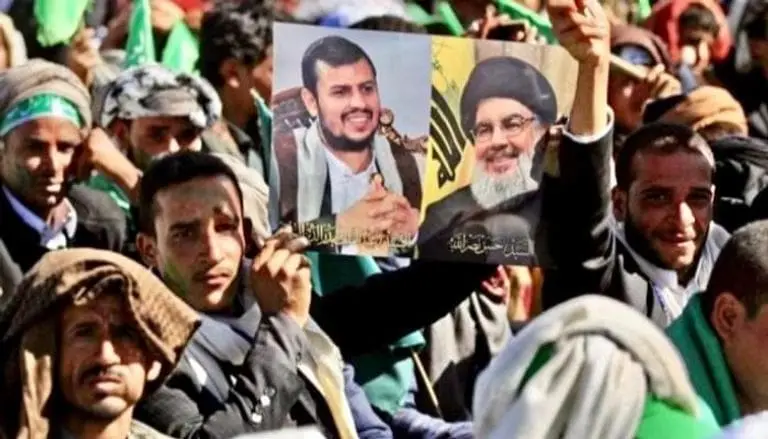
The Wasl team conducted an interview with Mr. Ahmed* from Yemen, who speaks to us about his experience under Houthi control. What follows is the interview:
Wasl: What charges were brought against you to have you imprisoned? And what charges were brought against the majority of prisoners?
Ahmed: They brought several charges against me. The first was that I was summoned to their headquarters and interrogated, and they said: "You are a major instigator who incites people against us." I used to warn the people around me about the danger of the Rafidah and publish da'wa books that exposed their danger to the Ummah, and this was before their occupation of Sanaa.
They released me that day because the charge was not sufficient and there was no evidence to prove it. Only days later, they came to me again at my shop, at night, surrounded the place and pointed their weapons at me and at those present in that neighborhood, shouting: "Let no one move!" I could hear the screams of a terrified woman who passed by there while a weapon was pointed at her, and they were ordering her not to move from her place.
They took me to prison and then fabricated charges against me. They said that I had killed 3 people, and they claimed they had arrested me with a car full of weapons, although they knew with certainty that there was nothing of the sort. They even made my family doubt me and began asking me under oath: "Did you do that?" Because they were operating in an official manner, with investigations, courts and prosecution offices, so as to make people believe they do not wrong anyone. This is besides the abductions and the victims of enforced disappearance, some of whose fates remain unknown to this day.
As for the charges brought against the majority of prisoners, they were based on their affiliation with Islamic groups (Ikhwan, Salafis, jihadis, Jama'at al-Tabligh). They label everyone "Daeshi" (ISIS member); in their view, all Ahl al-Sunnah are Daesh, without distinction between their group affiliations. If you are Sunni, you are considered Daeshi by them.
They even classify the books of al-Bukhari, Muslim, Ibn al-Qayyim and Ibn Taymiyyah as books of Daesh, and they once burned them in the prison's garbage dump.
---
Wasl: What was the greatest challenge you faced in prison? And how were you able to endure it?
Ahmed: The greatest challenge I faced was that the calamity was in our religion, and what a great calamity it is, as the Prophet said in his supplication: "And do not make our misfortune in our religion." There is an incident that happened to us which I will relate to you.
After they transferred me to the central prison in Sanaa, which held some 3,000 prisoners, there were two mosques, and at times we would receive Egyptian preachers from the Ministry of Awqaf, or one of the students of knowledge would deliver the sermon to us from within the prison. But over time, the Houthi prohibited everyone and brought in Houthi preachers, and that is where the challenge began.
When the Houthi ascended the pulpit, I stood up, left the mosque and prayed Dhuhr alone. Some prisoners came to me after Friday prayers, either to warn me or to reproach me. One of them said to me: "Be careful, do not think that your leaving the mosque will pass safely, for there are Houthi spies in the prison, and they will see your action as incitement against them." I said to him: "I am in prison, what is left for me to fear? I will endure anything except that I will not compromise my religion."
The one who reproached me said: "Why did you leave while the preacher was delivering the sermon? Are they not like us, saying 'there is no god but Allah'? Why all this strictness in religion?" This was a trial for the common people, and God is the one whose help is sought. I said to him: "Very well, listen to the Houthi preacher and then come and tell me what you heard."
The surprise was that this brother left during the following Friday during the sermon, came to me very angry and cursing the Houthis. I said to him, smiling: "What did you hear from the Houthi preacher?"
He said: "By God, you are truthful; these people brought us a religion other than the one we know." He told me that the Houthi preacher denied the punishment of the grave, mentioned the Fire, denied crossing the Sirat, and cited the hadith "The killer and the killed are in the Fire" and denied it, saying it was a lie and not a hadith.
He also told me that he had never heard the Houthi cite a hadith of the Prophet, peace be upon him; rather, he cited the sayings of Imam al-Baqir, Imam al-Ridha, al-Husayn and Ali, and the Messenger of God, peace be upon him, was not mentioned among them.
The greatest challenge, however, was that I went to perform the Fajr prayer in the prison mosque, and I was shocked when I heard the imam not reciting Al-Fatihah properly, so I knew then that he was a Houthi, and I left the row while they were praying.
It later became clear that they had prevented the mosque's imam from leading us in prayer, even though he was a prisoner and a skilled memorizer of the Book of God, and replaced him with one of the prisoners who held the Houthi creed. The same thing happened again, and some brothers came to me warning that I would not escape the Houthis for my action.
I said to them: "Why fear? What is wrong with you! I will not compromise my religion." I mentioned to them the saying of Imam al-Bukhari, may God have mercy on him: "I do not mind whether I pray behind a Jew, a Christian or a Rafidi."
The pain was gnawing at my heart; they even harmed us in prayer. After that, I would go to the prison corridor, call the adhan for the Fajr prayer and pray alone.
Later, one of the prisoners came and prayed with me, and the number increased until everyone left the mosque and they prayed behind me. At that point I brought the former imam and said to him: "Lead the people in prayer, for you are the best of us in reciting the Book of God, but I have one condition, which is that you perform qunut with us and supplicate for relief, for we are in a calamity, and our Prophet used to perform qunut during calamities." Unfortunately, this brother feared performing qunut in the prayer and excused himself from leading. I said: "Leave it to me, and my affair is with God."
We performed qunut in all the prayers and supplicated against the Houthis, the officials of the prison, the judges, the prosecutors and everyone who wronged us and cooperated with them. Our supplication shook them, so the Houthis tried to intimidate us, but we did not heed them. Eventually they came and asked us to return to the mosque and have the former imam resume leading us in prayer.
I told those around me that they have no covenant and no pact, and unfortunately no one believed me. What I had expected happened: the next day, as I was going to the Fajr prayer, I found the imam at the door of the mosque.
When I asked him, he burst into tears and said: "They dragged me down from the pulpit when the prayer was iqamah and put one of them in my place." I said: "Do you now believe that they have no covenant and no pact?" This is a message to all those deceived by the Houthi's imaginary heroics in supporting Palestine and Gaza.
By God, if Jerusalem were liberated at their hands, they would turn it into shrines and idolatrous practices, spread Shi'ism and Rafd among the people, and its condition would become like that of the occupied capitals under the Rafidah.
---
Wasl: What restrictions are imposed on Sunnis in Yemen? Do they differ from one region to another?
God is the one whose help is sought. These evildoers have waged war on people in their religion and their worldly affairs. Quran memorization centers have been closed, and the Houthis have prevented Sunni preachers and orators from ascending the pulpits and delivering Friday sermons, and have brought in Houthi preachers, who give their ominous cry in the mosque after every Friday prayer.
Even the Jama'at al-Tabligh, which has no involvement in any political matter, were prevented from calling people to God.
They imposed on all teachers and employees, men and women, in all government facilities without exception, attendance at Houthi courses from time to time, and compelled people to absorb their beliefs and nonsense and to read the booklets of their deceased leader.
They prevented merchants and benefactors from distributing their zakat and charity to the poor and needy, and anyone who distributes aid, even if modest, is prohibited and interrogated.
They prevented people from performing Tarawih prayers in some places, and then permitted them in some places without the use of loudspeakers, because they consider it a bid'ah, claiming that the first to establish it was Umar ibn al-Khattab, may God be pleased with him, whom they detest intensely.
Also, what they claim to be awareness courses are held in the neighborhoods, and they ask the neighborhood aqils to compel people to attend, otherwise they are labeled with accusations (you are a mercenary, or you are a fifth columnist, or you are a Daeshi).
May God destroy them, for they have inflicted severe hardship upon people in every aspect of life, in religion and in worldly affairs.
---
Wasl: What is the state of da'wa in Yemen?
Ahmed: In areas under Houthi control, it has ended; but there is another kind of da'wa: a call to injustice and aggression, enjoining evil and forbidding good, and a call to idolatry, innovations and misguidance. This is their da'wa.
---
Wasl: What are the methods of torture in prisons? Were there prisoners who died during torture?
The methods of torture vary. They use torture sites from the prisons of the former regime: narrow, dark, filthy solitary cells, some of which are even said to be haunted by devils, God forbid, due to their age, filth, and proximity to latrines.
I recall that some brothers began shouting inside them, imagining that interrogators were coming to them and taking information from them, and they hear the echo of their voices in their ears the whole time. One day they imprisoned a sheikh who had a center for treatment through lawful ruqyah; he was reciting over this brother, and he told us that he was afflicted by "phone sorcery" (he imagines or hears voices in his ears constantly, interrogating and questioning him). His suffering was great, and he remains in Houthi prisons to this day.
They also prohibit visits for long periods. It is a psychological war.
They come to wake the prisoner at night, shackle him, blindfold him and take him for interrogations, and you remain standing for many hours, which may continue until after Fajr, and you are not allowed to sit down, along with torture.
Torture involves beating, electric shocks, suspension, and obscene and vulgar language, and the interrogation period accompanied by torture may last for a week, two weeks or three.
Along with this, false charges must be fabricated and written down; the interrogator comes to you while you are shackled, takes your thumb and forcibly places it on the interrogation paper.
Yes, prisoners have died from torture, and this is documented by some channels such as Al Jazeera and others. Anyone who wishes may search for "two Yemenis die as a result of torture in Houthi prisons," and the results will appear along with the images.
---
Wasl: Does the Houthi control all parts of Yemen and dominate them?
Ahmed: The Houthis control most of the country's densely populated governorates, including the capital Sanaa and the city of Hodeidah, which contains a strategic port.
---
Wasl: Is there a Sunni presence that has influence, independence and the ability to make decisions away from the Houthi?
Ahmed: Yes, South Yemen is outside Houthi control, and most of its people are Sunnis, alongside some who dress in the garb of Ahl al-Sunnah while inwardly supporting the Houthis, but they are a small minority who do not count.
South Yemen is under the control of what is called the "Legitimate Government," supported by the Arab Coalition, and the "Southern Transitional Council," which is backed by the UAE and calls for the secession of Yemen and the establishment of a South Arabian state. None of them has independence or decision-making authority; rather, they are all directed by the Coalition led by Saudi Arabia and the UAE, and by the American administration, as everyone following political news in Yemen knows.
---
Wasl: How have scholars and students of knowledge in Yemen, and da'wa to God, fared under the Houthi?
Ahmed: If scholars and preachers had any presence, we would not have arrived at this state; they have been exiled, harmed and imprisoned. The first act the Houthis carried out upon occupying Sanaa was to head to Al-Iman University, one of the greatest beacons of knowledge in Yemen, which housed more than 130 senior scholars, such as Sheikh al-Amrani, Dr. al-Deilami, Sheikh Muhammad al-Sadiq, Sheikh Abd al-Majid al-Zindani, and others, along with university professors and assistants teaching the sciences of Islamic law in all specializations. Its student body numbered about 4,000, and it admitted students of all world nationalities.
The Houthis made it their headquarters, turned it into a military barracks and looted all its property, including the library of the International University, which contains major books numbering in the tens of millions.
---
Wasl: We used to hear that the Zaydi Shi'a are the closest of all Shi'a sects to the Sunnis. Is this true? What is their role? And is their loyalty to the Houthis and Iran, or do they differ with them?
Ahmed: Yes, that is correct; the Shi'a sect closest to the Sunnis is the Zaydiyyah. The one who introduced Zaydism to Yemen was al-Hadi ila al-Haqq Yahya ibn al-Husayn ibn al-Qasim al-Rassi in the year 284 AH. He declared the Rafidah to be unbelievers, stating so in the book (Al-Ahkam 'ala Takfir al-Rafidah), and described them as polytheists and the party of Satan. The old Zaydi school used to benefit from Sunni books, including Abu Dawud's book and the books of Sunan, and they cited the hadiths of legal rulings and derived evidence from Sunni books, and they did not rely on the books of the Twelver Shi'a such as Bihar al-Anwar and al-Kafi and others.
As for their role, the Zaydi scholars were opposed to the Houthis during the time of Ali Abdullah Saleh; eighteen of their scholars signed a statement accusing the Houthi of opposing the Zaydi school and the Family of the Prophet, misleading Zaydi scholars, and they ruled that he was astray.
But when affairs became settled for the Houthis and they took over Yemen through the betrayal of the former regime, these same Zaydi scholars immediately declared their allegiance to the Houthi, and they were among the first to bless him; since they were the first to bless him, there is no doubt that their loyalty is to the Houthis and Iran.
Important note:
The researcher on sects and groups, Sheikh Khalid al-Wusabi, revealed many cases in which he found the infiltration of the Twelver Shi'a into the Zaydi school, most notably their efforts to narrow the gap between the Twelver Shi'a and the Zaydis, and their eagerness to sow division between the Zaydis and the Sunnis.
And this saying circulated: "Bring me a young Zaydi, and I will make him a great Rafidi."
---
Wasl: Do you have statistics on the number of Sunni detainees in Houthi prisons? What are the harshest sentences issued against them? And what charges do they attach to them?
Ahmed: According to reports, the statistics reached 17,000 prisoners in 1439 AH (2017 CE).
As for sentences, some were sentenced to death and others to years in prison according to the charges attached to them, and there are many forcibly disappeared persons in prisons against whom no sentences have been issued to this day, and there are those whose condition is unknown, whether they are alive or dead. As for the charges they attach to prisoners, they are many.
They accuse you of collaboration, espionage, incitement, or affiliation with Islamic groups of all kinds.
---
Wasl: How do you assess the situation in Yemen?
Ahmed: Extremely bad, especially in areas under Houthi control. People live in suffering and fear.
---
Wasl: Have Sunnis been influenced by the Shi'a? Have Shi'a customs become familiar and habitual to them?
Ahmed: Yes, Sunnis have been influenced by the Shi'a, especially the generation that grew up during the period of Houthi control: a child who was then 10 years old is now 20 years old.
You can imagine the ideas and beliefs he absorbed over these years, in the absence of awareness, preachers and reformers, and this is exactly what the Houthis wanted, so that a nearly deformed generation would grow up knowing nothing of its religion and creed. They even added their misguidance to the school curricula and forced teachers to teach it. Among the lies they插 in: that Abu Talib embraced Islam before his death, and that the Prophet, peace be upon him, designated Ali ibn Abi Talib as successor at Ghadir Khumm. They also added stories of some of their fighters and wrote them into the curricula as heroic deeds, along with other innovations and misguidance that were added.
Whoever was not influenced by the Shi'a regressed; there is no one to remind people of God, and no preachers or reformers except a very small few who advise one another. There is no power or strength except with God.
The trade in hashish flourished, and we hear much about the spread of vice in neighborhoods and among this generation that grew up during these years.
All Shi'a customs are innovations and misguidance, such as the Mawlid al-Nabi, and all shop owners were then forced to paint their shops and decorate them in green on the day of Ghadir or the day of Wilayah, and on Ashura.
As for marriage, there have been marriages of Sunni women to Shi'a men, but not many.
---
Wasl: What was the general public's view of the Houthis before they rose to strength on the Yemeni scene in 1436 AH (2015 CE)? Has that view changed now?
Ahmed: Unfortunately, many people were deceived by the Houthis when they came demanding the repeal of the fuel price increase and the return of fuel prices to what they had been. Many who did not know the truth of the Houthi's wicked creed and their deceptive slogans rejoiced at them. As soon as Sanaa fell under their control, fuel prices rose to ten times what they had been. Many were captivated by them, viewing them as having come in the guise of saviors and deliverers, and they chanted their slogans. But over time many truths about the Houthis were revealed, and everyone curses them and awaits the day of deliverance to rise against them.
One of them told me that a Houthi supervisor said to his companion: "I have become afraid even of my neighbor because of how much we have wronged and transgressed against the people." And indeed, if the situation in Sanaa erupts, not one of the Houthis and their tails will escape.
---
Wasl: The Houthis often cloak themselves in being followers of the Zaydi school. So what is the reality of their beliefs? And what sources do you think a researcher or someone interested in this issue could consult?
Ahmed: The Houthis practise taqiyya, which they regard as a religious duty, and they hide behind the Zaydi school. The reality of their belief is that they are Rafidah who revile the Companions, may God be pleased with them, and slander the honour of Mother of the Believers Aisha, may God be pleased with her. Many of those who fought them heard them shouting "O sons of the whore Aisha," which is why they only declare this to those whose loyalty they trust.
Here is a very important book I advise everyone to read. It is titled (Exposing the Reality of the Houthis: Facts, Documents, Images), and I will attach it here.
---
Wasl: Are children conscripted forcibly into Houthi ranks? If the answer is yes, how?
Ahmed: Yes, children have been recruited by deception and by exploiting the hard living conditions of families. They are offered the chance to take on children for minor tasks in service of the Houthis. Some families feel compelled to agree and send their son with them, while others go without their families' knowledge. There, the children are thrown into fighting on the front lines or used for other purposes.
---
Wasl: How would you describe living conditions in areas under Houthi control?
Ahmed: The living situation is very difficult. They have constricted people's livelihoods and means of earning a living, and imposed levies (the khums and the war effort, taxes, and many methods of fraud and deception). Many shops have gone bankrupt and closed, and many are unemployed. They stopped paying the salaries of public employees for seven years, and many have left Houthi areas in search of a livelihood to support their families.
---
Wasl: What charges might a resident of Houthi areas face that could lead to arrest?
Ahmed: It is easy for the Houthis to fabricate charges. If you oppose them, or if it reaches them that you are against them, that you disagree with them, or that you speak about them, you are then exposed to arrest. In short, if you want to live among them, live humiliated: see nothing, hear nothing, say nothing.
---
Wasl: Given the bloody events taking place in the Gaza Strip and the Houthi intervention in the conflict, how do you view the Houthis' support for Palestine, and how have they benefited from this support?
Ahmed: God is the one whose help is sought. How can one who fights with the dagger of (Abu Lu'lu'a al-Majusi) support Gaza? Is this reasonable?!
The Houthi who blew up mosques in Yemen, the Houthi who closed centres of sharia learning and Quran memorisation, the Houthi who filled the prisons with the people of Yemen through injustice and aggression, many of whom died from the severity of torture, the Houthi who displaced millions of Yemenis (nearly 4 million displaced) and killed and blew up homes, the Houthi who brought Yemen and its people to their present state of hunger, poverty, loss and decay, innovations, polytheism and misguidance! The Houthi who sent the Saada Brigade to fight in the ranks of the Syrian regime, which killed, displaced and persecuted our brothers in Syria, and everyone knows the crimes that Bashar and his soldiers committed, which are so terrible they turn the head grey.
The Houthi who reviles Umar ibn al-Khattab, conqueror of Jerusalem, and Salah al-Din al-Ayyubi, liberator of Jerusalem: will this support Gaza? Is it reasonable that anyone believes this?
Unfortunately, many have been deceived by the Houthis and swept up by emotion. Some young men from Sanaa even contacted me asking for a ruling on joining the Houthi ranks, because they were promised they would be taken to fight in Palestine after receiving training in their camps. Here the reader can see how the Houthis concealed themselves behind the events in Gaza in order to create an outlet and a way out from the intense pressure that Yemenis feel toward them, and a ruse to mobilise and recruit more fighters. So do not be deceived by them, and I remind you of the words of the Prophet (peace be upon him): "The blood of the Muslims is equal."
Those who killed your brothers in Syria, Iraq and Yemen will not support them in Gaza. It is clear that the Houthis' involvement in this war is intended to give the Iran axis a better image and to consolidate the spread of their Khomeinist project in the region. They need supporters for their call and belief in order for it to spread and take hold. They will find no better cause than Palestine, especially with the Islamic world's abandonment of it, the betrayal of rulers, and the resistance's reliance on them as a supporter and a front of solidarity. Yet the truth is that the Iran axis, including the Houthis, seeks the glory of its Rafidi project, not support for Palestine for the sake of the Palestinian cause as some imagine.
---
Wasl: Was Palestine present for them before, or only during this period of war in Gaza?
Ahmed: A researcher on the Houthi movement and how it was founded sees that Palestine was not present for them and was not their cause; rather, it was exploited during this period. Even if we grant for argument's sake that Palestine is their cause and al-Aqsa Mosque their goal, how could that be, when they are the ones who blew up dozens of mosques and blew up Dar al-Hadith in Dammaj? God the Exalted says: "And who is more unjust than one who prevents the mention of God's name in His mosques and strives toward their ruin? Those would not have entered them except in fear. For them in this world is disgrace, and for them in the Hereafter is a great punishment" [Quran 2:114]. So what support can we expect from these people?!
Here are some important links documenting their bombing of mosques and homes, which I attach so that people may see the side that the Houthis hide behind their misleading slogans of supporting Palestine.
Watch| Houthis: terrorism of blowing up mosques
In numbers: Houthi attacks on mosques
Houthi group blows up more than 30 mosques and centres of Quran and hadith in Yemen: watch the video
Houthis blow up a mosque and Dar al-Hadith in Saada
https://www.youtube.com/watch?v=-wWJ9DkVol0
Traces of the Rafidah Houthis' war on Dar al-Hadith in Dammaj: images with sorrowful verses in a mournful voice that breaks the heart when heard
Traces of the Rafidah Houthis' war on Dar al-Hadith in Dammaj: images with sorrowful verses in a mournful voice that breaks the heart when heard.
A Houthi cleric says: "By God, if it were established for me that Umar ibn al-Khattab married 100 of the Prophet's daughters, I would consider him a devil," along with words that even a fool would be ashamed to mention in public.
The Houthi (Rafidi) reviles the noble Companion Abu Hurayra, may God be pleased with him.
He claims that Abu Hurayra narrated many hadiths from the Prophet although he never saw him.
Houthis declare Umar, may God be pleased with him, a disbeliever.
---
Wasl: How do you read the future of the region under Houthi control?
Ahmed: The future of the region in every respect, religious, political, economic and social, is toward destruction, and reality bears this out.
The longer the Houthis remain, the more the situation goes from bad to worse and continues to worsen. Everyone knows that the Houthis are a tool for extending the Safavid Persian Iranian project, and their ambitions are great and can only be realised on the ruins of the People of the Sunna in the region. In fact, they are establishing themselves in Yemen with their eyes on the Two Holy Mosques' lands. They are working to spread their misguided sect by imposing it in educational institutions, mosques and da'wa centres by force, in order to entrench their ideas and raise generations upon them.
It is well known to anyone who follows the speeches of this group that their goal is far greater than Gaza, and that they seek to establish their state, which can only stand on the lands and skulls of the People of the Sunna.
The book Ahmed attached about the Houthis is in PDF format.
---
Ahmed is a pseudonym for the interviewee, who lived in areas under Houthi control, for reasons of security and protection.
Wasl welcomes the voices of the oppressed in the Islamic world, and we welcome every voice on our Telegram account @Waslcontact.


