


Did Israel occupy more of Lebanon's territory than Russia has occupied of Ukraine?
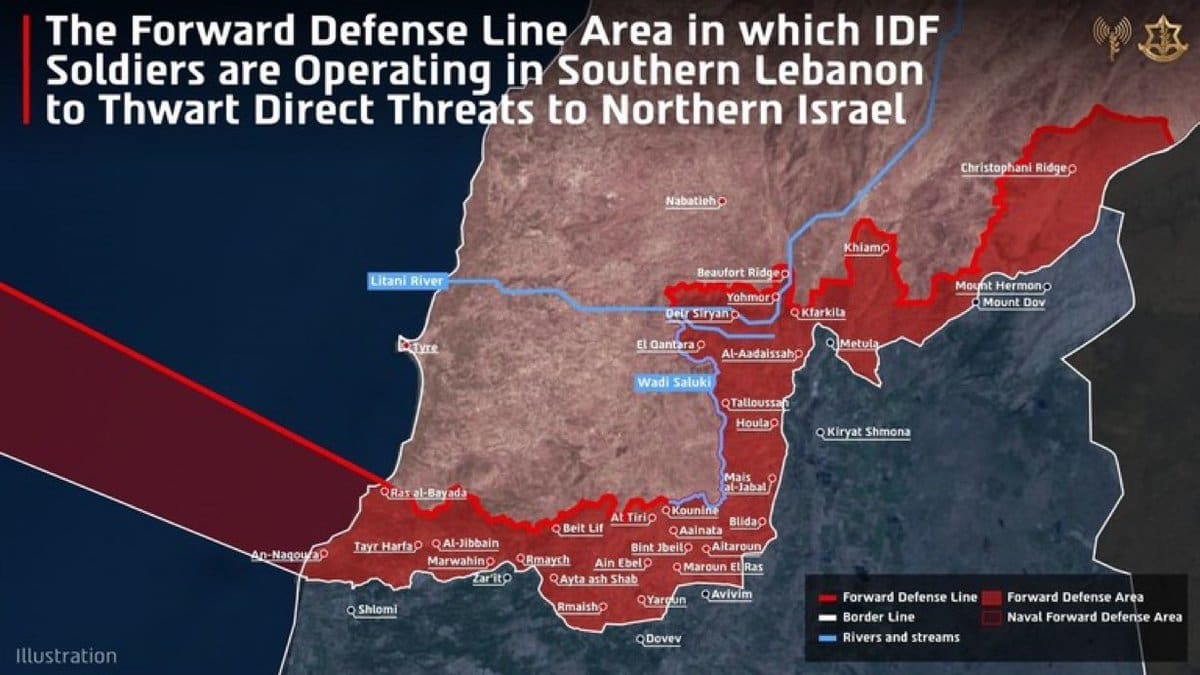
Since the outbreak of the "2026 Lebanon War" last March, the military map has undergone dramatic changes that recalled the long period of occupation of the south. With the expansion of Israeli ground operations as far as the Litani River and beyond, numerical comparisons have emerged, and have been the subject of debate, regarding the scale of this incursion compared with the Russian-Ukrainian war.
The language of numbers: percentage versus total area
A distinction must first be drawn between the actual area and the percentage of the country's territory:
In Ukraine: Russia currently controls approximately 19.4% of Ukraine's territory (equivalent to roughly 116,000 km²). This area is 11 times the size of all of Lebanon.
In Lebanon: Estimates by the Institute for the Study of War (ISW) and reports by bne IntelliNews in late March and early April 2026 indicate that the Israeli occupation army now controls or imposes a military operations zone over approximately 20% to 24% of Lebanon's territory.
In this way, the Israeli occupation now occupies a percentage of Lebanon's territory that exceeds the percentage Russia occupies of Ukraine. However, in terms of square kilometres, what Russia occupies is several times the size of all of Lebanon.
How did the occupation reach this point? (A timeline of 2026 events)
- Leadership assassination and escalation in February: The spark came after the assassination of Iranian Supreme Leader Ali Khamenei in February 2026, which ignited the southern Lebanon front in an unprecedented way.
- The ground incursion (16 March): Israeli occupation forces launched a broad ground operation involving 5 military divisions, with the declared aim of securing northern Israel and destroying Hezbollah's infrastructure.
- Crossing the Litani: Israeli forces did not stop at reaching the Litani River; they also expanded evacuation orders to include areas south of the Zahrani River, making nearly a quarter of Lebanon's territory a closed military zone or one under field control.
منطقة استراتيجية.. جيش الاحتلال يكشف عن سيطرته على “كريستوفيني” في جبال لبنان.
Why does this comparison seem important?
Analysts use this comparison to highlight the intensity and speed of the Israeli incursion. Russia needed more than four years of intense fighting to take control of a fifth of Ukraine, whereas the Israeli occupation was able to take control of a fifth of Lebanon's territory within a few weeks of intensive ground operations.
This expansion has had catastrophic consequences for the Lebanese state, due to:
- Displacement: more than one million people (around 20% of Lebanon's population) have been displaced from their homes.
- Collapse of agreements: the provisions of Resolution 1701 have completely lapsed, and with the expected end of UNIFIL's mission by the close of 2026, the region appears to be heading towards a new, long-term security reality.
Note: The figures cited are based on field reports and open-source intelligence analyses up to 21 April 2026, and the situation on the ground remains fluid.


