

Human Rights Watch has called on Chinese authorities to disclose the fate of Uyghur woman Rahile Omer (Rahile Omer), who was detained at the age of 14, after reports said she had died in prison at the age of 23, while serving a 12-year prison sentence.
In a statement published on Wednesday, 11 November 2026, corresponding to 1 Jumada al-Akhirah 1448 AH, the organisation said these reports require Beijing to provide clear answers about the young woman's fate and the conditions of her detention, stressing that it was unable to independently verify the reported death.
A child detained, whose photograph appeared in leaked police files
Rahile Omer's case dates back to 2017, when Chinese authorities detained her in Konasheher county in the Kashgar prefecture of Xinjiang, known to Uyghurs as East Turkestan, when she was not yet 14, after her parents were detained.
In March 2018, a photograph of her was taken inside a facility that Chinese authorities call a "political re-education" centre. It later appeared among thousands of photographs and documents leaked from the detention and surveillance system in the region, known as the "Xinjiang Police Files."
According to Human Rights Watch, a 2022 investigation by the British Broadcasting Corporation (BBC) identified Rahile as the youngest among hundreds of people whose photographs appeared in the files examined by the investigation.
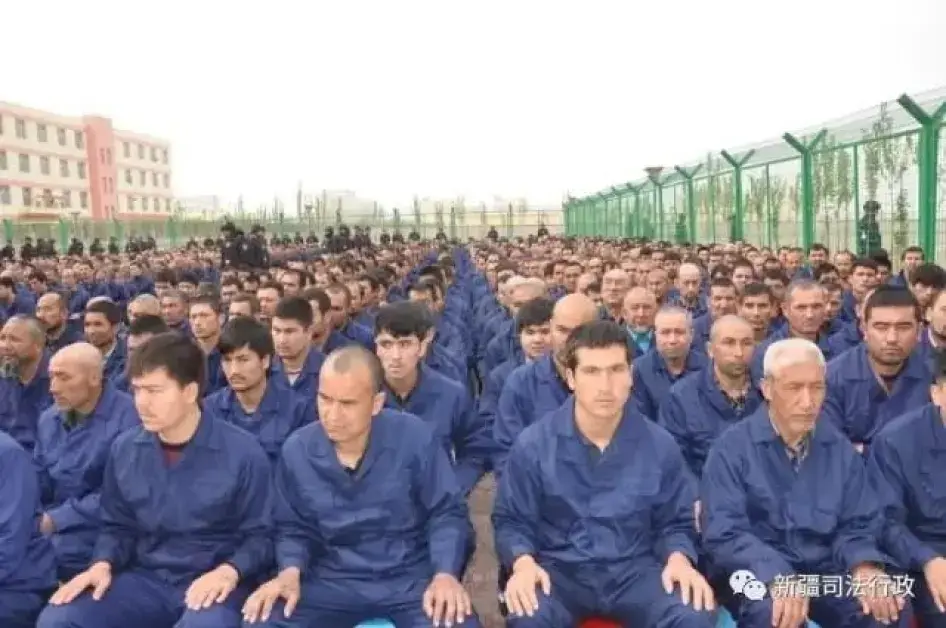
These details raise questions about the detention of minors and their separation from their families, as well as the scope of the campaign of detentions targeting the Muslim Uyghur minority.
Prayer and non-cooperation with authorities among the reasons for her detention
Radio Free Asia reported, citing Chinese officials familiar with Rahile's case, that in 2021, when she was 18, authorities issued a sentence of 12 years in prison against her on the charge of "disrupting social order."
The officials said, according to the radio report cited by Human Rights Watch, that she was transferred to prison because she did not provide information about other people, and because authorities caught her praying in her dormitory during her detention at the "re-education" centre.
These accounts highlight the restrictions linked to religious practice in the region, particularly when prayer is cited among the acts used against a young woman in detention.
Reports of death and unanswered questions
On 6 November, Radio Free Asia reported that Rahile Omer had died inside a Chinese prison, based on information conveyed by local officials.
These officials spoke of the possibility that her death was linked to a heart problem, without providing independent medical information that settles the cause, timing or circumstances of the death.
Human Rights Watch stressed that it was unable to independently verify the death, and that what has been reported calls for investigation and the disclosure of the facts, rather than leaving the young woman's family and the Uyghur community with reports they have no independent means to confirm.
No published medical information is available that could be relied upon to determine whether the alleged health condition was related to Rahile's detention conditions, or whether she received the necessary care.
The fate of Uyghur detainees under scrutiny
Human Rights Watch said Rahile's case recalls the fate of large numbers of Uyghurs who remain behind bars, amid the difficulty of obtaining independent information about their places of detention and their conditions.
The organisation notes that Chinese authorities do not allow independent observers, including United Nations human rights experts, unrestricted access to the region, while Beijing says its security measures target the fight against extremism and the preservation of stability.
Human Rights Watch classifies the abuses it has documented against Uyghurs and other groups since 2016 as crimes against humanity, a human rights characterisation that the Chinese government rejects.
Rahile's story has become a painful symbol for families who fear losing their children in detention without receiving reliable information about their fate.
The young woman who was taken from her family as a child, and spent her early years behind bars, has become the subject of an international demand for a simple answer that should not be withheld from anyone: what happened to Rahile Omer?
Her family has the right to know her fate, and it is the responsibility of the authorities to provide verifiable information about the conditions of her detention and any possible death, and to guarantee detainees' rights to safety, medical care and protection from torture.


