


If Córdoba represented the peak of the Umayyad state in al-Andalus, Seville was one of the most prominent cities to carry the banner of Islam in al-Andalus after Córdoba's decline, until it became, in the Almohad era, a major political capital and a centre of urban development, learning and trade.
Seville's place in the series "Cities of Islam Throughout History" is therefore not owed merely to the fame of a tower or a palace. It was a city that shaped a phase of Islamic history in al-Andalus, one in which states succeeded one another, markets and sciences flourished, its walls expanded, and its congregational mosque rose, until it became, in the 6th and 7th centuries AH / 12th and 13th centuries CE, one of the greatest cities of the Islamic West.
Historical studies indicate that Seville surpassed Córdoba in urban importance during the 5th century AH / 11th century CE, and remained a principal metropolis until its fall in 646 AH / 1248 CE.
From Ancient Seville to Islamic "Seville"
Before Islam the city was known as "Hispalis," and held an important position in the province of al-Andalus. With the Islamic conquest in the 1st century AH / 8th century CE, Seville entered a new phase and became part of the Islamic state in al-Andalus.
In the Umayyad era it became the capital of the Seville kura (district), and benefited from its location on the Guadalquivir River, which gave it commercial and waterborne connections of great importance.
Architectural remains show that the Muslims made use of the city's earlier structure, with some fortifications and installations reused, and the city then gradually expanded beyond its old boundaries.
The old congregational mosque was one of the city's first centres, and then the Almohad era brought a profound change to Seville's appearance.
Seville of the 'Abbadids: Capital of a Taifa Kingdom
After the collapse of the Umayyad caliphate in al-Andalus in 422 AH / 1031 CE, the land entered the phase of the taifa kingdoms.
Seville was among the most important kingdoms to emerge in that phase, ruled by the Banu 'Abbad dynasty, the most famous of whose rulers was al-Mu'tamid ibn 'Abbad.
During his reign Seville became a prominent political and literary centre; poets and men of letters gathered at its court, and the city turned into one of the largest political and cultural centres of al-Andalus.
Yet the taifa period was also an age of political division that weakened the Muslims before the Christian kingdoms of the north, and the matter ultimately ended with the summoning of the Almoravids from the Maghrib.
Yusuf ibn Tashfin came to al-Andalus, and the Muslims were victorious at the Battle of Zallaqa in 479 AH / 1086 CE; Seville then entered the Almoravid state.
The Almohads: The Moment Seville's Face Changed
The greatest transformation, however, came with the Almohads. The Almohads entered Seville in 541 AH / 1147 CE, adopted it as the principal seat of their rule in al-Andalus, and by the middle of the 6th century AH / 12th century CE it had become their Andalusian capital.
In their era the city saw a broad programme of reconstruction and expansion. It was not a matter of building a mosque alone: parts of the city were reorganised, the walls were strengthened, the citadel was enlarged, markets were established, palaces were built, and the institutions of government were linked to the city's centres.
For the Almohads, Seville was more than an Andalusian city; they wished to make it an image of the strength of their state on the European shore of the Islamic world.
Specialised historical sources describe the Almohad period as the greatest wave of urban renewal Seville witnessed in the medieval era, encompassing the congregational mosque, the walls, palaces, markets and hydraulic installations.
Abu Ya'qub Yusuf: The Ruler Who Rebuilt the Capital
The great urban renaissance is associated with the Almohad caliph Abu Ya'qub Yusuf, who had grown up in an Andalusian setting. He gave Seville special attention, made it the centre of his rule, and ordered new installations and the enlargement of the palace and walls.
Around 567 AH / 1171 CE, extensive urban projects began, including palaces, gardens and the organisation of water.
The Great Lake, "al-Buhayra," was established outside the walls, and gardens, palaces and farms were created there, while engineers worked to bring water into the city.
The account of Ibn Sahib al-Salat records that the caliph ordered the planting of thousands of trees, including olives, and that irrigation and agricultural works were managed in an orderly manner within an integrated urban project.
This shows that Islamic urban building was not based on palaces alone: gardens, water, agriculture and markets were part of an integrated vision of the city.
The Congregational Mosque: The Heart of the Almohad Capital
The greatest of the Almohads' projects in Seville was the construction of the new congregational mosque.
Work on it began in the reign of Abu Ya'qub Yusuf, prayers were inaugurated in it around 577 AH / 1182 CE, and work on its minaret continued afterwards.
The mosque was far larger than the earlier one, and became the centre of worship and teaching in the Almohad capital.
The Andalusian historian Ibn Sahib al-Salat described the mosque as approaching the Great Mosque of Córdoba in size, distinguished by the multiplicity and breadth of its aisles.
The mosque was not separate from the palace: the mosque area was linked to the complex of government and the walls, such that the architecture itself expressed the relationship between authority, the mosque and the city.
The "Giralda": A Minaret That Became a Symbol
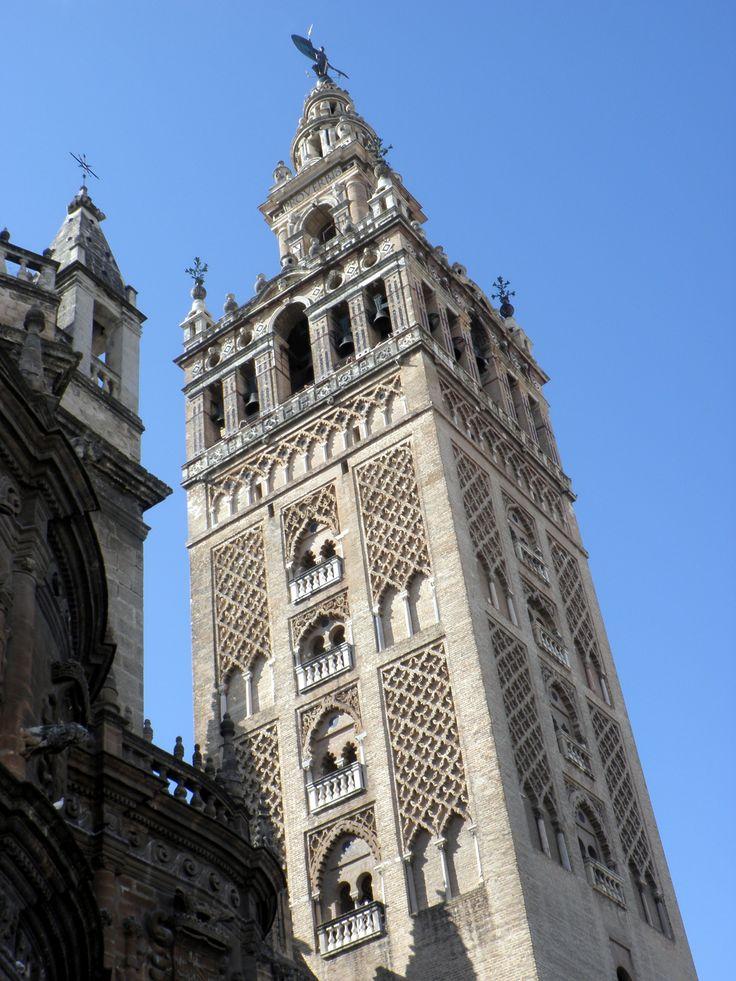
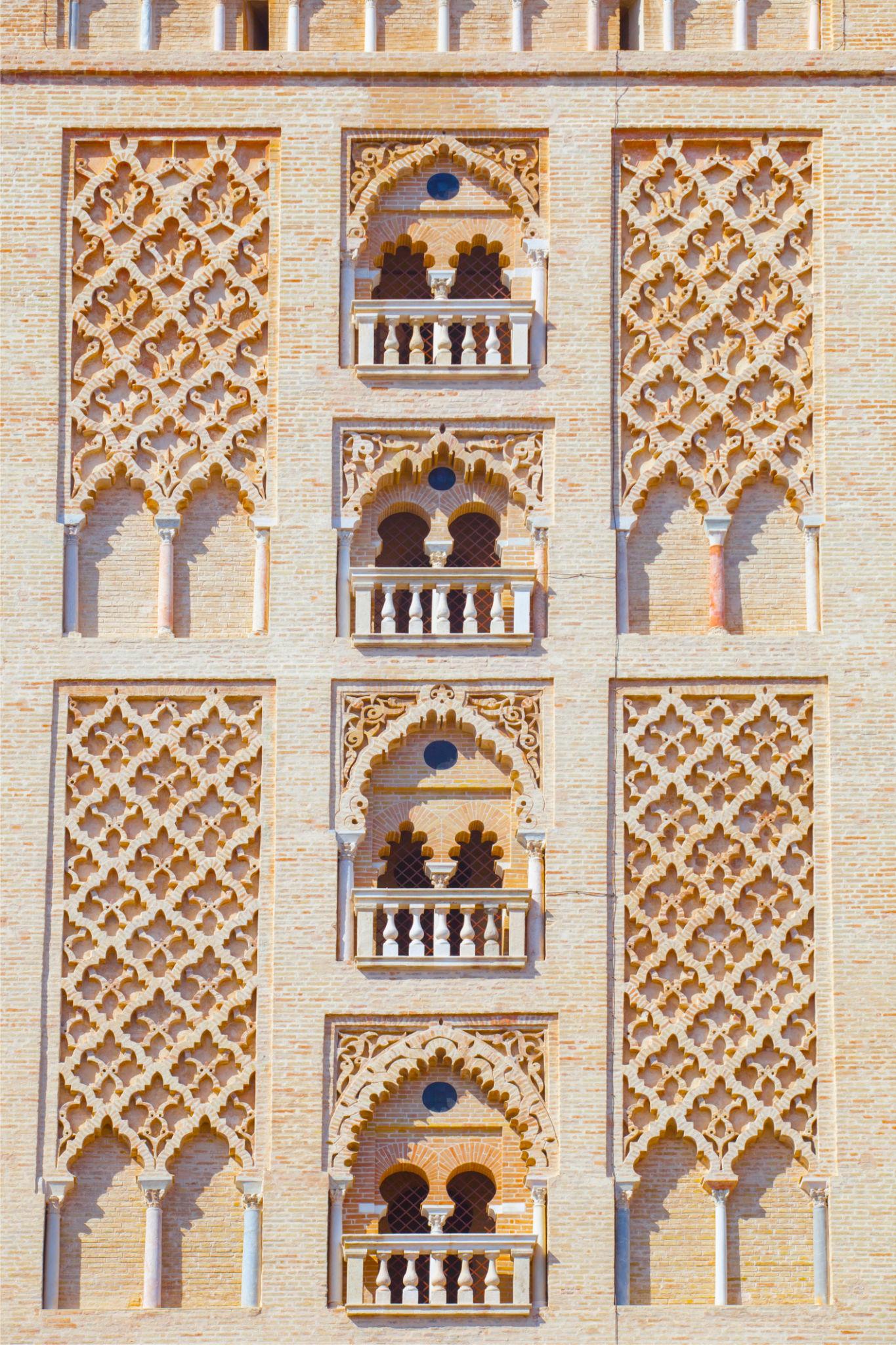
From the congregational mosque there remains Seville's minaret, known today as the "Giralda." It was built in the Almohad era at the end of the 6th century AH / 12th century CE, and has become one of the greatest examples of Almohad architecture.
The minaret is distinguished by its square plan, its geometric decoration, its networks of arches, and an expansive internal ramp that allowed ascent to its upper levels.
Architectural studies indicate that its design became a model that influenced a number of later towers in al-Andalus and North Africa. Its essential Islamic structure also remains clear despite additions made after the city's fall.
Al-Maqqari al-Tilimsani, in Nafh al-Tib, described the minaret of the Seville mosque with admiration, linking its grandeur to the Islamic urban heritage left by the Almohads.
Here the value of the monument for this series becomes clear: the minaret is not merely a beautiful tower, but the remnant of the minaret of the congregational mosque of a major Islamic capital.
The Walls: A City Fortified Around Islam and Its Economy
The Almohads did not limit themselves to the mosque and palace. They extended the scope of fortifications, and new towers and walls were built, with defensive installations erected around the city.
Late in the Almohad era, the Torre del Oro ("Golden Tower") appeared on the bank of the Guadalquivir, around 617 AH / 1220 CE, as part of a defensive system to protect the river and the city's entrance.
Its function was linked to controlling the movement of ships, and it was also connected to a bridge of boats that joined Seville to the river's opposite bank.
Thus the city came to be surrounded by an integrated system of walls, towers and citadels, reflecting Seville's political and military importance.
Seville: A City of Learning and Letters
Seville's prosperity was not only architectural. A considerable number of scholars, men of letters and poets emerged from it, and it became a destination for scholars arriving from the cities of al-Andalus and the Maghrib.
Abu Muhammad 'Abd Allah ibn 'Abd al-Barr and other luminaries of al-Andalus were part of the scholarly environment that took shape in its great cities, while in Seville itself scholars and men of letters emerged who had a presence in jurisprudence, hadith, language and literature.
The city was also associated with major figures such as Ibn 'Abdun al-Ishbili, and circles of learning, writing and judgeship flourished there.
Seville, the River and Trade
The Guadalquivir helped make Seville an important commercial city. The river passage connected it to ports, while land routes linked it to Córdoba, Carmona and the rest of al-Andalus.
Markets flourished, including markets for luxury goods, and sources note the presence of a silk qaysariyya (covered market) in the heart of the city.
Agriculture around the city formed part of its economic strength, especially in the Seville region, known for its many orchards and farms.
Thus the city gathered the elements of an Islamic metropolis: the mosque, the palace, the market, the port, the farm and the wall.
From the Muslims' Victory to the Beginning of the End
The Almohad state reached its zenith in the reign of Abu Yusuf Ya'qub al-Mansur, particularly after his victory at the Battle of Alarcos in 591 AH / 1195 CE.
Islamic cities of al-Andalus then began to fall one after another, the danger to Seville became direct, and the phase of political fragmentation followed the weakening of the Almohad state, leaving the city more exposed to military pressure.
646 AH / 1248 CE: The Fall of the Metropolis
In the 7th century AH / 13th century CE, Seville became one of the last major cities to remain under Islamic rule in al-Andalus.
Ferdinand III's army besieged it for a long period, and the Castilian fleet participated in cutting the city's river communications.
After a siege lasting about 17 months, resistance ended, and Seville was surrendered on 23 November 1248 CE, corresponding to 646 AH.
With its fall the Muslims departed, and one of the largest political and civilisational centres of Islam in al-Andalus came to an end.
What Remains of Islamic Seville?
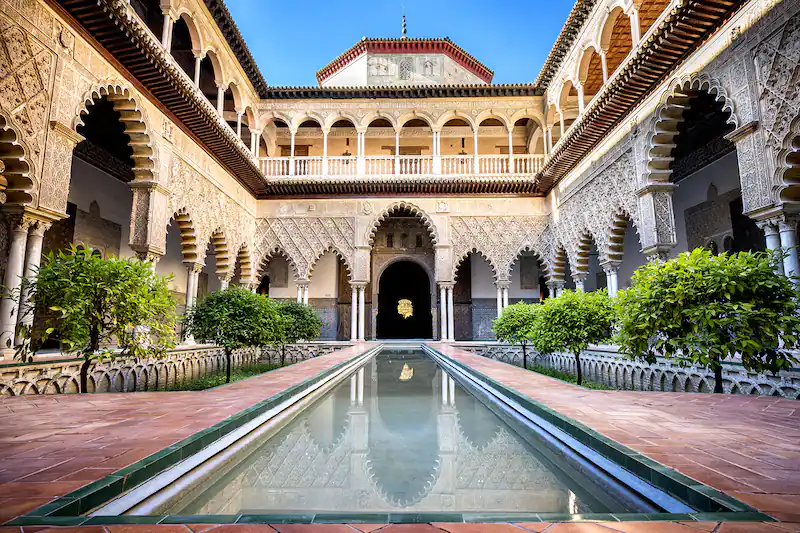
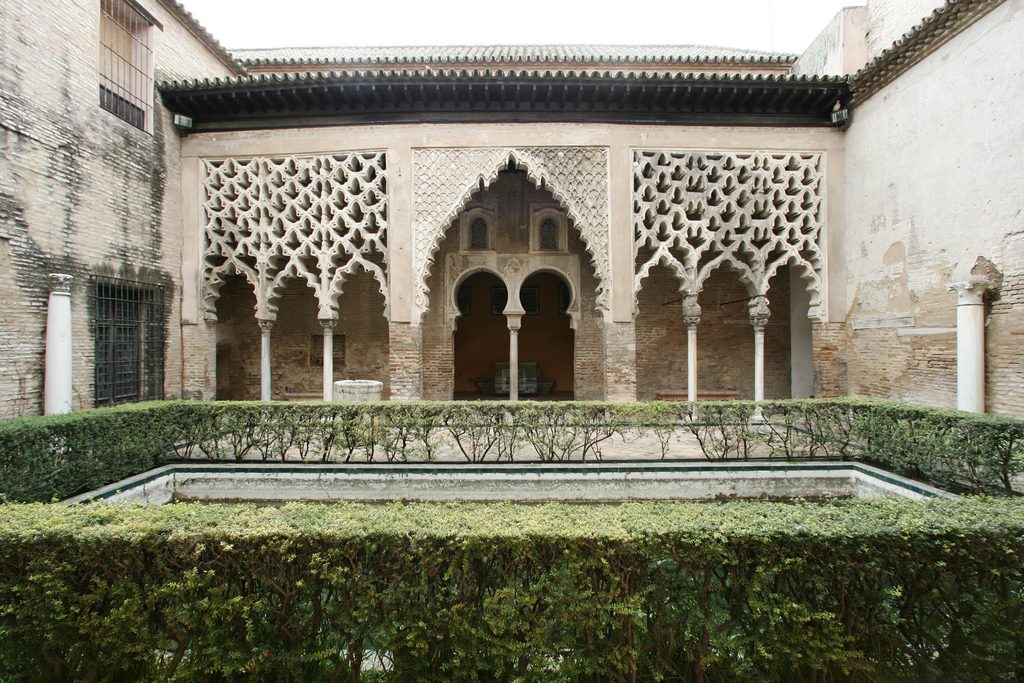
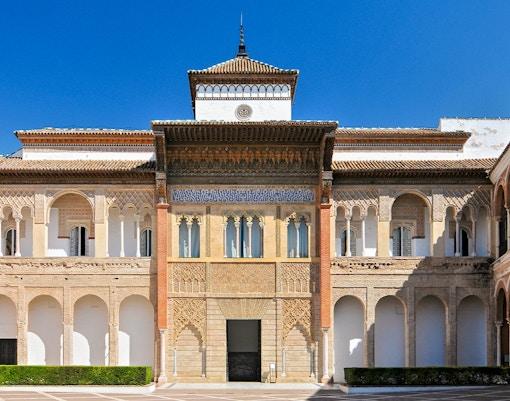
What remains are the Giralda, the remains of the congregational mosque, the Alcázar of Seville which preserves parts of Almohad architecture, the Torre del Oro, sections of the walls, and traces of the hydraulic installations and gardens.
These landmarks show that Seville was not merely a city in which Muslims lived for five centuries; it was a fully functioning Islamic Andalusian capital, possessing institutions of government, learning, economy, urban development and defence.
According to historical and heritage sources, the city's historic complex today preserves layered strata of Seville's history, including its Islamic and Almohad phases, which makes its monuments among the most important surviving witnesses to Islamic architecture in al-Andalus.
Seville in the Balance of Islamic History
Seville was not merely a city subordinate to Córdoba. After the collapse of the caliphate it became one of the most important taifa cities, then entered the Almoravid state, and afterwards became the great Andalusian capital of the Almohads.
This is why it deserves its place on the map of Islam's great cities: it shared in shaping the political, scholarly and architectural history of al-Andalus, sheltered the congregational mosque that was the heart of its capital, raised one of the most famous minarets of the Islamic world, and witnessed one of the strongest phases of Almohad rule.
The most important lesson, however, is that a civilisation is not measured by surviving buildings alone, but by what the city produced in its time of learning, government, urban development, economy and memory.


