

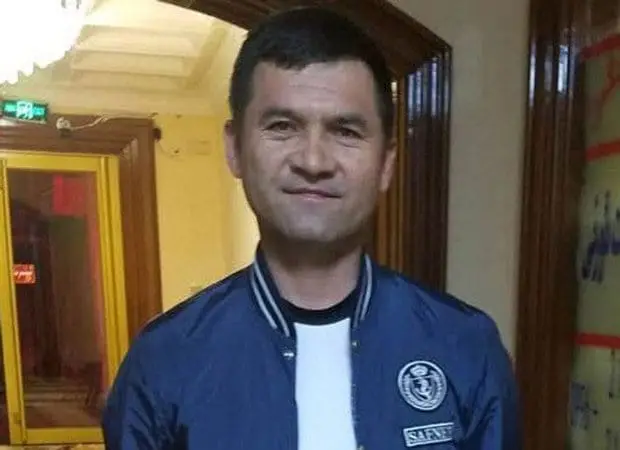
The Chinese Embassy in Turkey has rejected a request to release a Uyghur man suffering from a serious illness and serving a 20-year prison sentence in Xinjiang, in northwestern China – East Turkestan – so that he can join his family in Istanbul and receive medical treatment there, according to his wife.
Mukmutjan Mohammed, 48, a former employee of the agricultural office in Korla in Xinjiang, or Kuerle in Chinese, who later founded a pear shipping company, has been receiving treatment at the hospital in Korla prison since August, although his wife, Kefaye Ihsan, said there were no signs of improvement.
Radio Free Asia had previously reported that he suffers from liver disease, which his wife attributed to the poor conditions in prison. A prison hospital employee said Mohammed also suffers from heart problems and high blood pressure, although he had been in a stable condition after receiving medical treatment for two months.
Ihsan said she sent the conditional medical release request through a lawyer to the Chinese Embassy in Ankara on 9 August, but the letter was returned unopened.
She said: "I sent a letter to the Chinese Embassy requesting the immediate release of my husband, providing him with medical treatment, reuniting the family, and continuing his treatment in Turkey."
"But the embassy that received the request returned the envelope to the lawyer who sent it, Golden Sonmez, without opening it."
She said she received news of the return of the letter on Muharram 1445 AH (28 August). She said she would resend the letter through the Turkish Ministry of Foreign Affairs and explore other avenues. She said, "But to this day, I have not received any response."
"Re-education" Camps
Like many other Uyghurs living abroad, Ihsan has had no direct contact with her relatives since 2017 (1439 AH), when authorities in Xinjiang began detaining Uyghurs and other Turkic minorities in "re-education" camps and imposed strict controls on the flow of information into and out of the region.
A police officer from Korla Prison District 5, whom Radio Free Asia contacted, said he had guarded Mohammed for one night recently, but he could not determine whether his illness had progressed beyond the critical stage.
Javlan Sirmamit, a Uyghur lawyer who works in Turkey but is not involved in the case, said the embassy's conduct was "a manifestation of criminal psychology" and showed "a disregard for legal and ethical considerations regarding the Uyghur issue."
"Golden Sonmez is a lawyer with a long-standing involvement in Uyghur cases, so the Chinese Embassy is well aware that this envelope likely contains a letter related to the Uyghurs, specifically seeking information about individuals who have disappeared, are ill, or have died in 'prison.' I believe this is why the embassy chose not to open the envelope," he said.
He added that "the Chinese government knows what it is doing and does not want these cases to surface and create more problems for it."
Mohammed and his family moved to Turkey in 2015 (1437 AH) so that their six children could have better educational opportunities. The following year, he took his elderly mother to Korla after his family visited her in Turkey following her performance of the Hajj pilgrimage in Mecca, Saudi Arabia, but authorities confiscated his passport upon his arrival.
In 2017 (1439 AH), authorities arrested him and sentenced him to 20 years in prison on charges of violating China's policy on the number of children ethnic minorities may have, providing religious education to his children, and travelling to Turkey.
An investigation by Radio Free Asia found that at least seven members of Mohammed's family, including his siblings and his mother, were sentenced to prison after his return, although his mother was released this year for treatment after contracting a serious illness.
The information in this article is a translation of an article published on rfa.org
titled "Chinese Embassy in Turkey rejects plea from wife of ill Uyghur prisoner."


