

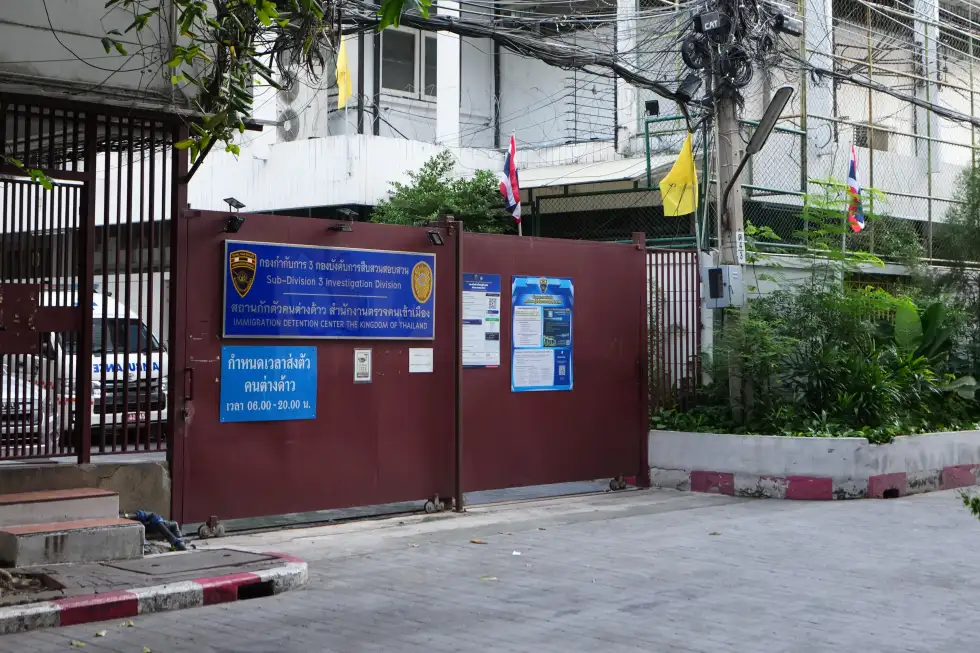
China has requested the extradition of five men from the Uyghur Muslim minority detained in Thailand, two of whom are nearing the end of their prison sentences, prompting warnings from international rights organisations of the risk they could face torture, enforced disappearance and other serious abuses if returned to China.
Reuters reported on Wednesday, 4 November, that Thai authorities confirmed receipt of the extradition request, noting that the five men will be able to challenge it in court before a final decision is made on their return.
Thai government spokesperson Ekaphop Phuangphisit said the authorities had granted the detainees the right to contest the extradition proceedings, and that a lawyer had been appointed to defend the two men who are nearing the end of their sentences.
A Thai National Security Council official said the other three men still have about a year to serve on their sentences.
Detention since 2014
The five men belong to a group of around 300 Uyghurs who fled China's Xinjiang region to Thailand in 2014, seeking protection after leaving their country.
Thai authorities detained them on charges of entering the country illegally, and the five subsequently received prison sentences over their attempt to escape detention.
According to The Associated Press, the two men facing imminent extradition are 26 and 35 years old, and have spent more than a decade in detention and imprisonment in Thailand.
Rights organisations fear that their return to China could expose them to abuses for which no independent protective safeguards are available.
Deportations that raise concern
The current concerns stem from earlier deportations carried out by Thailand against Uyghur refugees, despite objections from rights organisations and the United Nations.
In 2015, Thai authorities returned 109 Uyghur men to China, a move that drew wide international criticism, while more than 170 others were allowed to leave for Turkey.
In February 2025, Thailand deported a further 40 Uyghur men to China, despite warnings about the risks they might face upon their return.
The Associated Press noted continuing uncertainty over the fate of the 40, and that Thai authorities had not been able to demonstrate their safety or that their return took place voluntarily and independently.
Warnings of a breach of the principle of non-refoulement
Human rights organisations are calling on Thai authorities not to return the detainees to a country where they may be at risk of torture or persecution.
This demand is based on the principle of non-refoulement, which prohibits returning individuals to places where there are substantial grounds for believing they would face a risk of torture.
The organisations maintain that the situation of Uyghurs in China, including reports of arbitrary detention, intensive surveillance and religious restrictions, calls for providing protection to the detainees and making alternative resettlement options available in safe countries.
China, for its part, says its cooperation with Thailand on transnational crime cases is conducted in accordance with national laws and international obligations, and Chinese authorities have brought security charges against some Uyghurs who left the country.
Beijing rejects international accusations of systematic abuses against Uyghurs, and says its measures in Xinjiang aim to counter terrorism and extremism.
Thai judiciary faces a new test
Under the extradition treaty signed between China and Thailand in 1993, extradition requests must pass through judicial procedures before they are implemented.
These procedures allow detainees to object to the request, but permitting an appeal does not guarantee that extradition will be refused.
As of 9 November 2026, no final court ruling ordering the extradition of the five men has been confirmed, and authorities have not confirmed the carrying out of any new deportation against them.
The case places Thai authorities before a new test in balancing judicial cooperation with China against their obligations to protect people at risk of serious abuses.
For the five detainees, the expected decision concerns not only the end of years of detention, but also their personal fate and whether they will be granted protection or returned to a country they say they fled out of fear of persecution.


