

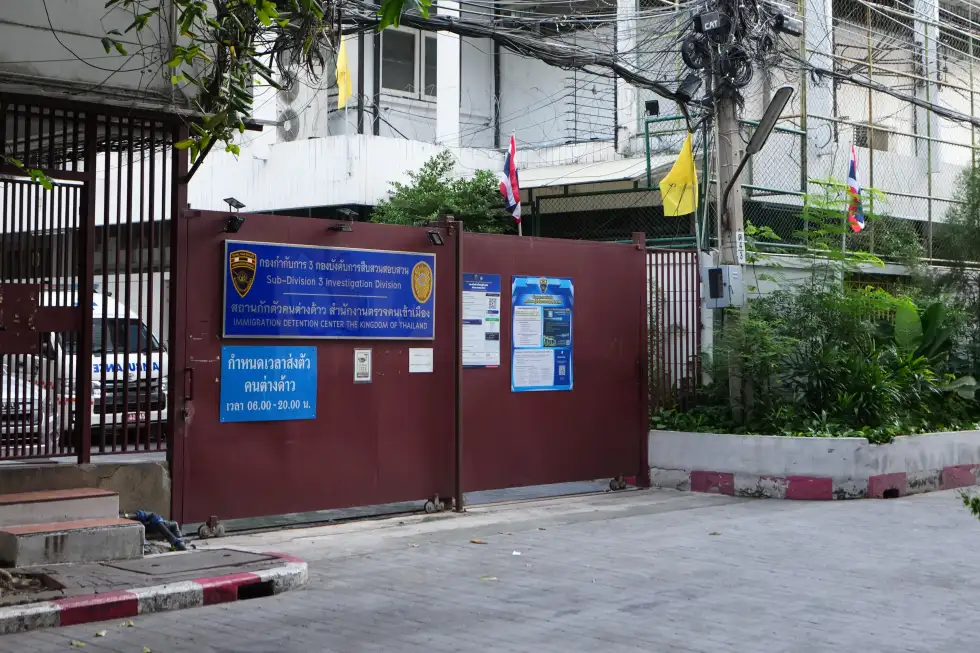
More than a decade after fleeing China, five men from the Muslim Uyghur minority in Thailand face the risk of being returned to the country they left to escape persecution, in a case that brings back into focus earlier deportations and international warnings that returnees face arrest, torture and enforced disappearance.
On Wednesday, 4 November 2026, Thai authorities announced that they will allow five men from the Muslim Uyghur minority to challenge in court a Chinese request for their extradition, amid human rights warnings about the dangers they could face if returned to China.
Reuters quoted Thai government spokesperson Ikkapob Panbisis as saying that the two men who are nearing the end of their sentences will be able to defend themselves with the assistance of a lawyer, and that the court will rule on the extradition request.
This development follows years of detention of the five men in Thailand, where they arrived as part of a group of around 300 Uyghurs who fled China in 2014.
From flight to detention
The case of these men began when hundreds of Uyghurs left the Xinjiang region in northwest China in search of safe refuge abroad, amid fears of repression and restrictions imposed on the Muslim minority.
About 300 of them arrived in Thailand in 2014, where the authorities detained them for entering the country irregularly.
According to Reuters, the five men were later tried for escaping detention. Two of them are nearing the end of their sentences, while the other three are still serving sentences that are expected to end in about a year.
More than a decade after their arrival, their fate is now tied to the extradition request submitted by Beijing and to the legal proceedings that will determine whether they can be returned to China.
Earlier deportations raise concerns
The current case is not separate from Thailand's record in dealing with Uyghur refugees.
In 2015, Thai authorities returned 109 Uyghurs to China, in an operation that drew wide international criticism, while more than 170 others were allowed to travel to Turkey.
In February 2025, Thailand deported 40 more Uyghur men to China, despite appeals from the United Nations and human rights organisations not to return them.
The operation raised serious concerns about the safety of those deported, especially with the absence of sufficient independent information that would allow their conditions to be verified after their arrival in China.
Human rights organisations believe these precedents make the case of the five men a new test of Thailand's commitment to the prohibition on returning people to countries where they may be subjected to torture or other serious violations.
Why do Uyghurs fear returning to China?
For years, Chinese authorities have faced international accusations of committing widespread abuses against Uyghurs and other Muslim minorities in Xinjiang, including large-scale arbitrary detention, forced labour, intensive surveillance, and restrictions on the practice of religious rites and cultural identity.
In August 2022, an assessment issued by the Office of the United Nations High Commissioner for Human Rights concluded that the violations committed against Uyghurs and other Muslim-majority groups in Xinjiang may amount to crimes against humanity.
China denies the accusations against it, and says its policies in the region aim to combat terrorism and extremism, and that security cooperation with Thailand is carried out in accordance with domestic and international law.
However, human rights organisations warn that returning people who fled China, after years of detention outside it, could expose them to arrest, interrogation and mistreatment, particularly given the difficulty independent observers face in gaining access to detainees inside Xinjiang.
A legal battle that could determine their fate
Extradition procedures between China and Thailand are based on a bilateral agreement dating back to 1993, which requires extradition requests to pass through the Thai judicial system.
According to government statements, the men concerned will be able to object to Beijing's request before the courts before a decision is taken on their return.
The existence of the Chinese request does not mean that their extradition is settled; legal proceedings that could affect the final decision are still ongoing.
Meanwhile, rights organisations are calling for the case not to be viewed solely in terms of immigration procedures or criminal charges, but for the potential risks the men could face if returned to be taken into account.
A new test for refugee protection
The case of the five Uyghurs goes beyond the fate of a small group of detainees. It raises anew the question of the extent to which host states can protect refugees from being returned to countries where they fear serious violations.
While Bangkok affirms that the courts will allow the men to defend themselves, human rights concerns remain tied to what will happen after the legal proceedings end, and to the practical guarantees that can be provided to protect them.
For these men, a court ruling in Thailand may determine whether they receive a new opportunity to live safely outside China, or face the risk of returning to Xinjiang after more than twelve years since they fled it.


