

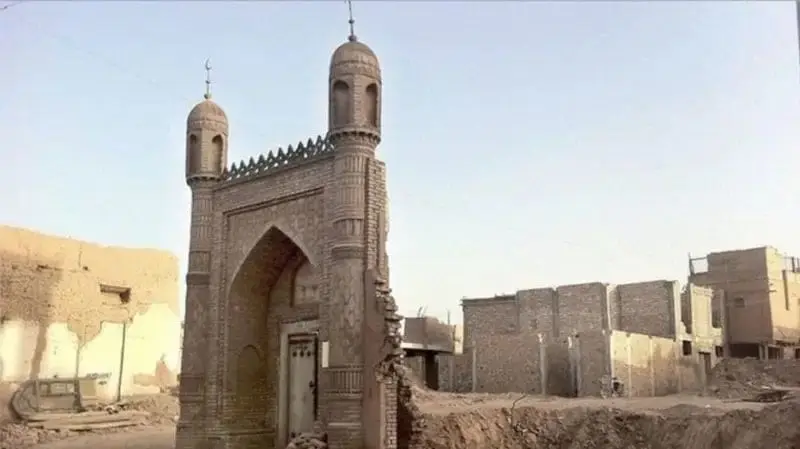
A sweeping campaign by China to reshape the religious landscape in Xinjiang (East Turkestan) has led to the demolition of more than 13,000 mosques, marking a significant escalation in the authorities' efforts to "Sinicise" Islam within its borders.
The controversial initiative, which Beijing defends as a measure to counter terrorism and promote social unity, has sparked global outrage and accusations of cultural erasure against the Muslim Uyghur minority.
Historical Context and Scale of Destruction
The campaign, which Chinese officials have described as "Sinicisation of Islam," aims to align Islamic practices with Chinese socialist values, often at the expense of spiritual and cultural identities.
Accounts from Xinjiang (East Turkestan) reveal a systematic effort to dismantle Islamic architectural heritage, with significant landmarks razed to the ground or repurposed.
This initiative is part of a broader pattern that includes the re-education of Uyghurs in detention camps, under the guise of countering extremism. Critics, however, view these actions as a flagrant violation of spiritual freedom and an attempt to erase a rich cultural past.
Global Response and Beijing's Defence
The international community has expressed deep concern over these developments. Human rights organisations and foreign governments have condemned the Chinese government's actions as grave violations of human rights. Despite mounting criticism, Beijing continues to defend its policies, asserting that the "Sinicisation of Islam" is essential for ensuring national security and fostering a unified Chinese-language identity. The central government denies any wrongdoing and portrays the demolition of mosques as part of a commendable effort to modernise and unify religious spheres.
Implications for the Uyghurs and Global Islam
The large-scale demolition of mosques in Xinjiang (East Turkestan) represents not only the physical erasure of Islamic sites but also a deeper assault on Uyghur identity and spiritual freedom.
This aggressive push toward assimilation and the erasure of minority cultures raises important questions about the path forward for religious diversity and human rights in China. Furthermore, it challenges the global community to reassess its engagement with Beijing, balancing geopolitical interests with the urgent need to support human rights and fundamental freedoms.
As the world watches, the plight of the Uyghur Muslims in China remains a poignant reminder of the ongoing struggles faced by minority communities worldwide. The destruction of more than 13,000 mosques represents a loss not only for the Uyghurs but for the cultural and spiritual heritage of humanity. This chapter of China's history stands as a stark example of how assimilation policies aimed at forced integration and the suppression of spiritual identity can leave far-reaching and damaging effects.
Xperttimes


