

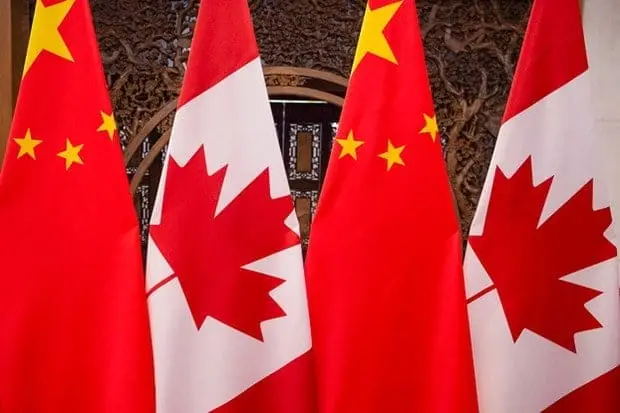
Canadian Ambassador's Visit to East Turkestan Angers China
Canada's ambassador to China expressed concern about documented human rights abuses against the Uyghurs with senior officials during a visit to East Turkestan, prompting criticism from the Chinese Embassy in Canada, which said its concerns were based on "rumours and fabricated reports with ulterior motives."
Ambassador Jennifer May visited the far western region of the country from 13 to 16 Dhu al-Hijjah (19 to 22 June) and met with Ma Xingrui, Secretary of the Chinese Communist Party in East Turkestan, and other senior officials in the regional government, according to a statement issued by Global Affairs Canada, the government department that manages diplomatic relations.
Very few Western diplomats have visited East Turkestan in recent years. This was the first visit to the region by a Canadian diplomat in ten years. In August of last year, a group of diplomats from Mexico, Pakistan, Iran and other countries visited the region as part of a government-sponsored tour.
The statement said May's visit to East Turkestan comes within the framework of Canada's diplomatic engagement with China and to raise concerns "about credible reports of systematic human rights violations occurring in East Turkestan" affecting the Uyghurs and other Turkic peoples.
It added that the specific concerns included restrictions on education in the Uyghur language and the forced placement of Uyghur children in boarding schools, but did not provide details about the places May visited or what she saw.
In Rajab 1442 AH (February 2021), the Canadian House of Commons passed a motion declaring that the Chinese government's mistreatment of the Uyghurs, including the arbitrary detention of Uyghurs in state-sponsored camps, the use of forced labour of Uyghurs, the suppression of Uyghur religious practices, and the forced sterilisation of women, amounts to genocide.
May also reiterated Canada's calls for China to allow independent United Nations experts unrestricted access to all areas of the country, including East Turkestan, according to the statement.
Mehmet Tohti, executive director of the Uyghur Rights Advocacy Project, based in Ottawa, said: "Until an independent investigative team can visit, assess the situation and issue an unbiased report, Canada is indicating that Chinese propaganda and staged performances presenting the Uyghurs as content are ineffective and are being disregarded."
A report issued in 1443 AH (2022) by then-UN High Commissioner for Human Rights Michelle Bachelet, who visited East Turkestan, found that mass arrests carried out by China against the Uyghurs and other Turkic minorities in the region may constitute crimes against humanity. Uyghur rights groups criticised the tightly organised trip as a staged tour.
Beijing denies allegations of serious human rights violations.
May's visit coincided with a call made on 14 Dhu al-Hijjah (20 June) by international human rights organisations and Uyghur rights advocacy groups to the current UN human rights chief, Volker Türk, to provide a general update on the measures taken by the Chinese government and his office to address the situation in East Turkestan.
"The Same Old Rhetoric"
On Monday, the Chinese Embassy in Canada issued a statement saying Canada "repeated the same old rhetoric, expressing so-called concerns based on rumours and fabricated reports with ulterior motives, without mentioning what Ambassador May actually saw and heard in East Turkestan."
The embassy urged the Canadian side to be objective and impartial and to show Canadians what May observed during her visit. It also said East Turkestan enjoys social stability, economic prosperity, ethnic unity and religious harmony.
The embassy said that "the human rights of individuals of all ethnic groups, including their right to use and develop their ethnic languages, are fully protected."
The embassy continued: "Canada has repeatedly made unwarranted remarks on the human rights situation in other countries, while turning a blind eye to its own ethnic issues," citing systemic racial discrimination and unfair treatment of Indigenous peoples and the homeless whose rights are not protected, and racial discrimination against Black civil servants in the federal government.
John Packer, a law professor and director of the Human Rights Research and Education Centre at the University of Ottawa, said Canada has long upheld the protection of human rights and has periodically expressed concern about them.
Speaking to Radio Free Asia, he said: "This has been a contentious part of the relationship because China does not share the same perspective and regards these issues as a matter of internal affairs, and feels it is inappropriate for Canada to raise them."
John Packer said that since Canada and China are both parties to international treaties, including human rights agreements such as the UN Charter and the Genocide Convention, they are bound by certain multilateral standards, which makes it legitimate to discuss such matters in international forums and in bilateral relations.
Radio Free Asia.


