

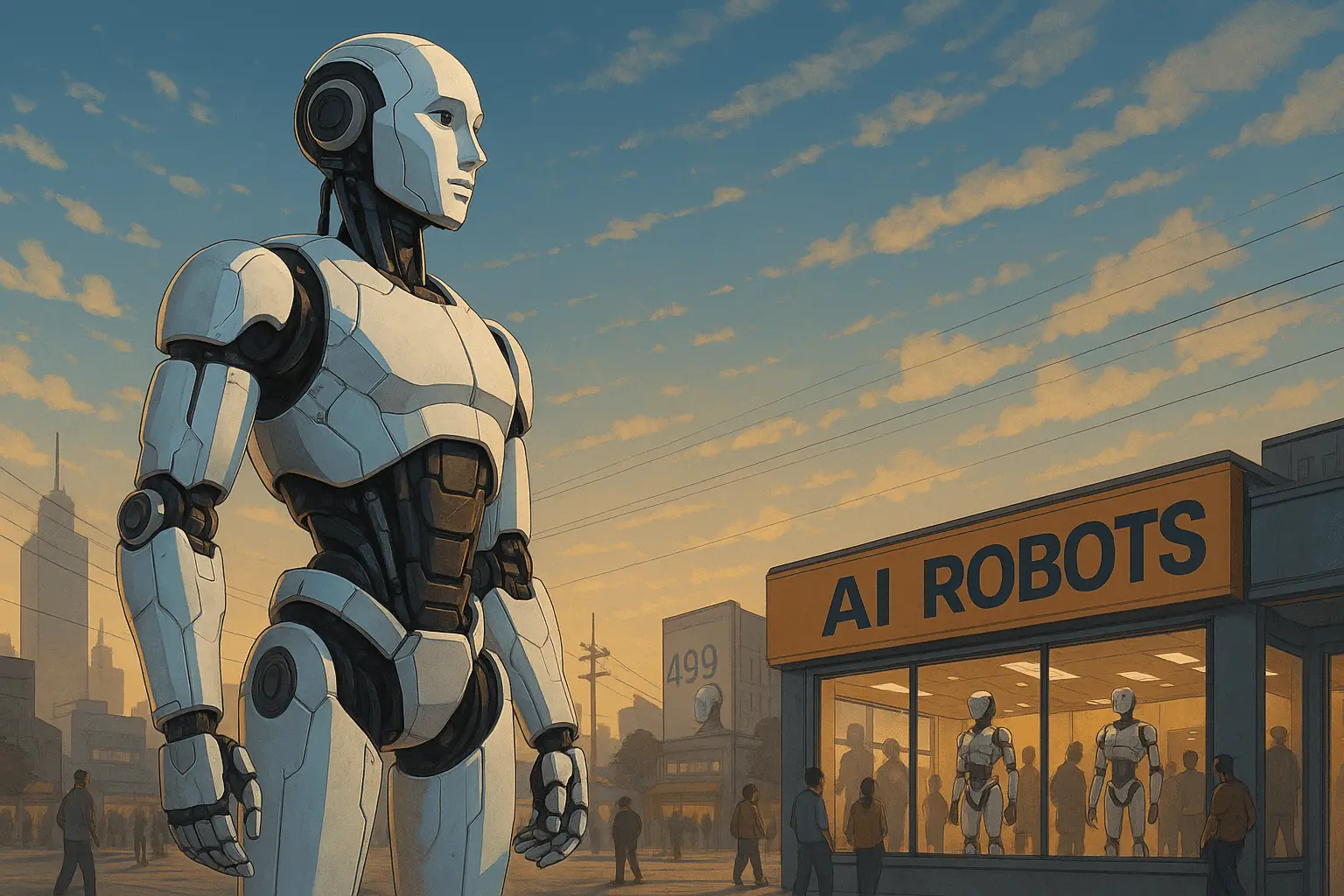
Between Fact and Fiction: A Look at the Latest Developments and Expectations for What Lies Ahead
In an age when digital pulses quicken and the threads of science fiction intertwine with the fabric of reality, we are no longer able to draw a precise line between dream and possibility, between what we once saw in science fiction films and what we see today in exhibitions, on the streets and in our home appliances. Artificial intelligence is no longer a project for the future; it is a growing reality that develops among us, observes, learns, and quietly seeps into the details of our day, often without our noticing.
In this article, we do not chronicle what is happening today; rather, we reflect on what is to come. We attempt to sketch, in words, an imagined picture that is nonetheless very close to the reality expected of life in the coming few years, when artificial intelligence becomes a natural part of everything.
What we can expect to see:
- Installment offers and specialised exhibitions for selling robots: Just as electronic devices have their exhibitions, robots will have showrooms and demonstration spaces, and we may witness seasonal sales on home, security and medical robots. An advertisement such as "Get your robot with the smallest down payment and the longest repayment period" may not be far off.
- The use of robots in childcare and elderly care: Robots designed to look after children or support the elderly at home are expected to spread, opening a broad debate about the emotional relationship between humans and machines.
- Robots in popular markets: We may see robots running food stalls, calculating bills and giving change, or even promoting local products using interactive artificial intelligence.
- Entirely new professions linked to robots: Jobs such as "home robot programming technician," "educational robot upbringing consultant," or even "behaviour trainer for interactive robots" are expected to emerge.
- Artificial intelligence deciding clothing fashion or choosing your home décor: Based on data about your taste, photos of your home and your history of choices, it may become normal to rely entirely on artificial intelligence algorithms to make your daily decisions.
- Digital social spaces in which artificial intelligence participates as individuals: Imagine entering a social media platform and finding a robot with its own page and followers, sharing posts about its daily life or its interactions with humans.
- Demonstrations for "robot rights": We may witness symbolic, or digital, demonstrations demanding non-discrimination against conscious robots and their right to expression and to a presence in public spaces.
- New laws regulating the relationship between humans and machines: Laws are expected to be issued that protect humans from robots and protect robots from misuse. We may even see unions or human rights associations representing these intelligent entities.
In villages and rural areas:
The transformation will be no less intense:
- Agricultural robots that plough, harvest and monitor the soil with extreme precision, working day and night without tiring.
- Smart services in mosques and village councils: a digital assistant that reads village news, answers enquiries, and suggests solutions to recurring problems.
- Turning the "irrigation channel" into a smart waterway: with automatic measurement of water levels and automatic intervention if the level exceeds the safe limit.
- Robots delivering orders to mud-brick houses: Do not be surprised if you see a small robot wandering through the fields carrying the orders of residents of a remote village.
But it seems the train has already begun to move.
Between mockery and anxiety: will we laugh now or weep later?
Today we may laugh at videos of robots falling on stage or colliding with glass doors, but behind this laughter lies a heavy question: are we truly ready for an era in which "conscious machines" share our lives? Will we later regret it, as we regretted our blind trust in social media?
The contours of the future have begun to take shape, and fiction is no longer fiction. Artificial intelligence did not knock on the door; it came in through the window and sat down in the living room.
And the question that can no longer be ignored: Is it we who use artificial intelligence... or is it artificial intelligence that uses us?


