

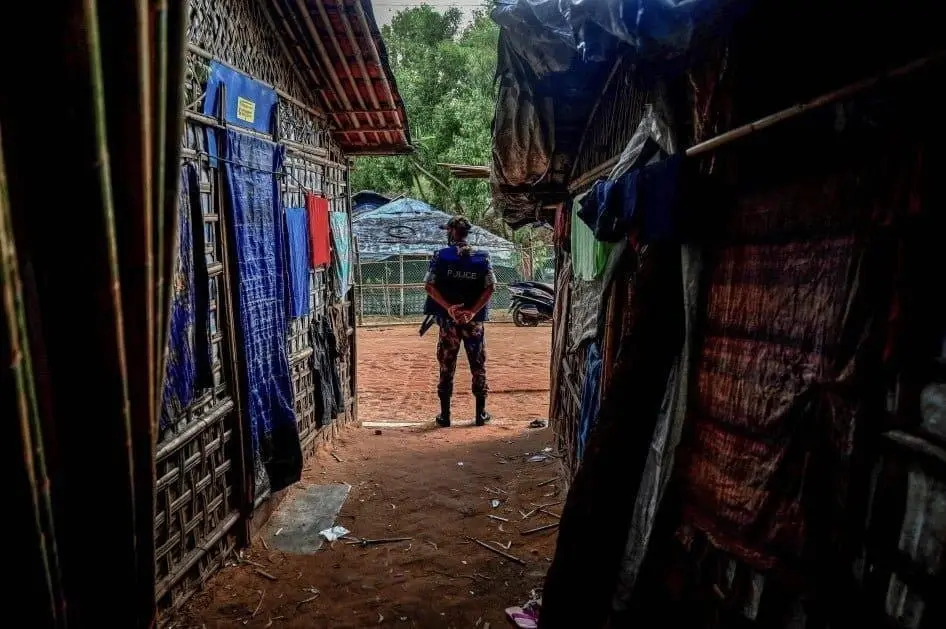
Bangladeshi Police Abuses Widespread in Rohingya Camps
Earlier this month, a Rohingya woman in a refugee camp in Bangladesh reported that a police officer had been pursuing her for a year. She said that on the night of 7 January (25 Jumada al-Akhirah 1445 AH), he entered her home under the pretext of a search operation and attempted to rape her, according to Human Rights Watch.
The Armed Police Battalion (APBn) of Bangladesh has been deployed to provide security for camp refugees, and the case has not yet been investigated. A neighbour said that when the 22-year-old mother of two cried out for help, some local residents moved forward, but were stopped by two men in civilian clothes who claimed to be members of the security team. The men did not leave until more people had gathered. The woman's husband said he has since received threatening phone calls from an unknown person, and fears that he may be arrested or that his family may be killed. He told Human Rights Watch: "I think we will leave the camp and go either to Myanmar or take a boat to Indonesia."
Human Rights Watch said: "The Bangladeshi authorities should conduct a prompt and impartial investigation into this. To provide genuine security in the camps, they must take refugees' accusations of police violence seriously."
Over the past decade, nearly one million Rohingya have fled persecution at the hands of the Myanmar army and now live precariously in the sprawling refugee camps of Bangladesh.
Human Rights Watch has previously published reports on allegations of extortion, arbitrary arrests, torture and harassment of refugees by camp police. Shortly afterwards, several units were transferred, and refugees reported that the abuses had decreased. However, according to recent interviews, these abusive practices are on the rise again.
Activists say the Bangladeshi authorities rarely hold camp police accountable for human rights violations, creating a climate of impunity for ongoing abuses, including sexual assault. One Rohingya activist said: "APBn police forces target Rohingya girls and women whom they find attractive, and threaten to arrest male family members if they refuse to cooperate. APBn men enter the shelters, and if the men are away, they harass the women."
Bangladeshi police have received various trainings to promote gender-sensitive policing, but unless the government and donors of these programmes ensure that security forces responsible for abuses are credibly prosecuted, sexual assaults and other serious crimes will continue, according to Human Rights Watch.


