

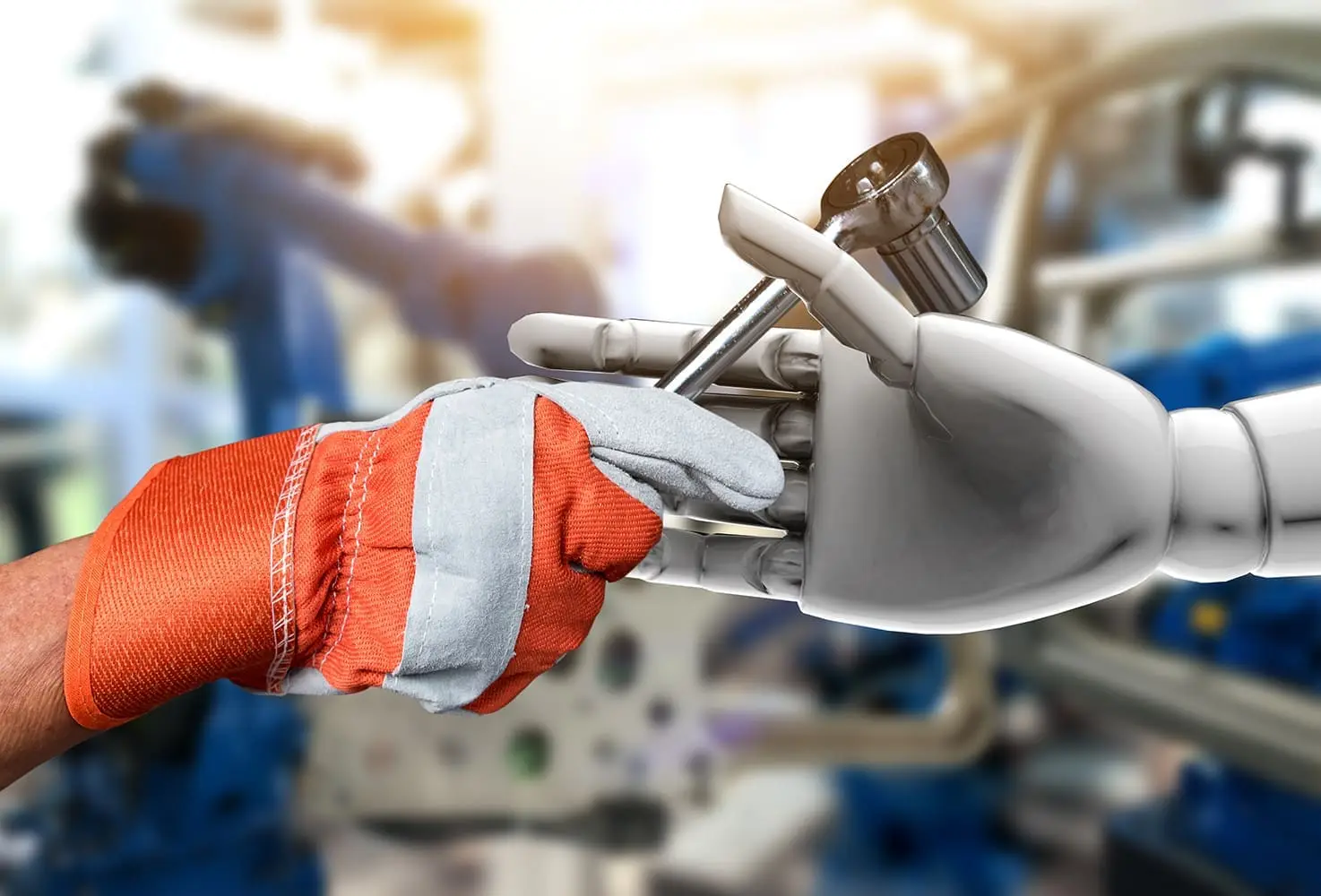
Humanity's Journey from Primitive Tools to the Intelligent Wave
Since the dawn of history, humans have sought to invent tools to simplify their lives. From the stone axe, which revolutionised hunting, through the plough that turned farming into an art, to the steam engine that reshaped the industrial world, each technological wave sent a tremor through the labour market. Today, however, we stand on the threshold of a different revolution: the wave of artificial intelligence, which does not merely automate tasks but teaches machines to "think"! This wave is not just a technical development; it is an existential transformation that redefines "work" itself. So how do we deal with it? Is it the end of jobs, or the beginning of a new era of creativity?
Opportunities: When Machines Become Partners in Creativity
Artificial intelligence is not merely robots that replace humans; it is a tool that multiplies human capabilities. In the health sector, AI analyses X-ray images with a precision that surpasses humans, giving doctors time to focus on complex diagnosis and patient care. In education, intelligent systems design curricula tailored to each student, mirroring their unique learning styles, freeing teachers to become creative mentors rather than rote instructors. Even in industry, intelligent robots work side by side with workers, improving accuracy and reducing errors, while humans focus on innovation and process improvement.
But the real potential lies in creating jobs that did not exist before: AI ethics engineers, language model trainers, and big data analysts who translate numbers into strategic decisions. Here, artificial intelligence becomes a partner in shaping the future of work, not an adversary.
Risks: Jobs on the Verge of Extinction
According to a report issued by the World Economic Forum, artificial intelligence will create 97 million new jobs by 2025. However, it will displace 85 million jobs, generating both excitement and anxiety.
The jobs most exposed to disappearance are those that rely on routine and repetition:
- Designers: With intelligent design tools such as "DALL-E" and "Midjourney," the traditional designer's role may become less significant.
- Routine jobs: Such as production-line roles, simple accounting operations, and warehouse management, which can be replaced by automated machines and intelligent systems.
- The healthcare sector: Some tasks, such as initial screening and the analysis of medical data, may be handled by algorithms instead of humans.
- Customer service: With the emergence of intelligent virtual assistants, many inquiries and requests are processed without human intervention.
- Reception jobs: Most companies now rely on robots to receive visitors and provide information.
- Insurance underwriting: This role, which requires data analysis and specific criteria, could be fully automated using artificial intelligence.
These examples are only a fraction of what may occur. If we do not prepare for these changes, they could lead to rising unemployment and a widening economic gap between different groups.
Jobs That Endure: When Humans Remain Indispensable

While it may seem that artificial intelligence is capable of performing many tasks, there are certain jobs it cannot perform with the same efficiency and depth as humans. These jobs are often linked to distinctly human qualities such as creativity, empathy, and the ability to make complex decisions. Among these jobs:
- Creativity and leadership: No algorithm can match the human spirit in creativity and strategic thinking. Whether it involves creating a work of art or leading a team toward ambitious goals, humans remain the essential source of these qualities.
- Surgical medicine: Despite major advances in surgical robots, the high precision and flexibility required during surgical operations still call for a human hand. We constantly hear of a medical team in some country performing a new procedure of its kind; artificial intelligence cannot take the initiative and the precedence in such a feat.
- Construction and architecture: Designing buildings and executing major projects requires a deep understanding of the environment and culture, which artificial intelligence cannot fully achieve.
- Heavy industries: Such as shipbuilding and aircraft manufacturing, where these industries require highly precise manual skills.
- Diplomacy and politics: Political and diplomatic decisions require a deep understanding of human and cultural relations, which artificial intelligence cannot yet achieve.
- Crisis management: In critical situations, humans need swift decisions based on experience and intuition, qualities that artificial intelligence still lacks.
Solutions: Cooperation Between Humans and Machines
To come through this wave, we must learn to live in harmony with machines, not fear them. This requires:
- Continuous education: developing skills such as critical thinking and creativity, in which artificial intelligence falls short.
- Restructuring education systems: such as teaching programming alongside philosophy, to prepare a generation able to deal with technology consciously.
- Worker protection policies: such as imposing taxes on companies that replace humans with machines, to fund retraining programmes.
- Strengthening cooperation: such as using artificial intelligence to analyse market data while humans devise marketing strategies.
The goal is not to compete with machines, but to affirm human uniqueness in feelings, intuition, and boundless creativity.
Conclusion: The Future Is in Our Hands
Artificial intelligence is like fire: it can destroy or illuminate. History teaches us that every new technology generates more opportunities than it destroys, provided we handle it wisely. The future will belong neither to humans nor to machines, but to those who know how to combine the two. As Einstein said: "Imagination is more important than knowledge." In the age of artificial intelligence, human imagination becomes the most powerful weapon.
Sources:
The Impact of Artificial Intelligence on the Future of Work and Jobs
AI Impact on Jobs: Future Trends, Challenges, and Solutions
The Future of Jobs Report 2020 | World Economic Forum
How Will Artificial Intelligence Change the Nature of Work in the Future? - ACAIA


