

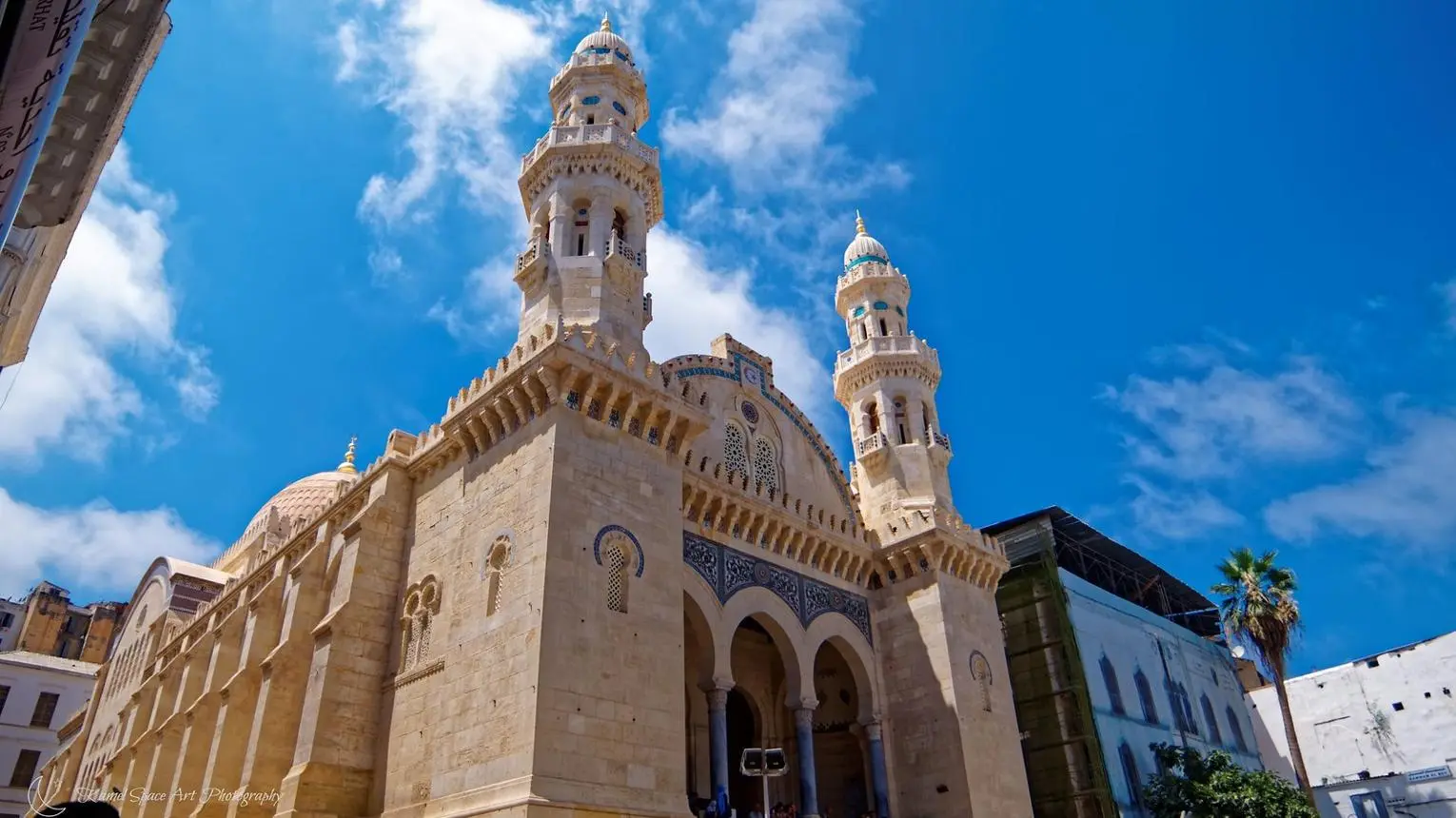
From the children of the "Dawn Caravan" to the attack on an Egyptian preacher at the book fair, the question of identity in Algeria has returned to the forefront: why does the presence of Islam in public life provoke such anger among some voices that present themselves as guardians of freedom and enlightenment?
There is a striking paradox in Algeria that deserves reflection. This is a country that resisted French occupation for more than a century, paying enormous prices to preserve its land, dignity and identity, yet some of its own citizens treat certain manifestations of its religiosity as an imminent danger to be warned against and pursued!
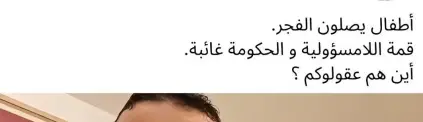
Children waking before sunrise and walking with their teacher to the mosque to perform the Fajr prayer draw torrents of criticism and intimidation. An Egyptian preacher attends a book fair and addresses an audience that gathered to listen to her sermons, and pens and platforms erupt, to the point that one of them describes her as a terrorist!
What is happening? How has the intellectual dispute among some secular voices reached this level of hysteria, to the point that they cannot tolerate manifestations of religiosity familiar in a Muslim society?
The strangest part is that this is happening in Algeria, not in a country alien to Islam, but in the land of Abd al-Hamid Ibn Badis and al-Bashir al-Ibrahimi, the land of the Association of Algerian Muslim Scholars, and the country of the November Revolution, whose people take pride in one and a half million martyrs!
The forms of the conflict have changed, but the old question has not disappeared: will Algeria remain faithful to its Islamic character, or is it meant to reconcile with everything except its roots?
Children of Dawn: What Frightened Them About These Young Ones?
In the province of Bordj Bou Arréridj, a teacher launched an educational initiative called "Caravan of the Men of Dawn," in which he takes a group of children, some aged between seven and ten, to perform the dawn prayer together in the mosque.
An inspiring initiative in which the young learn to keep up the prayer, discipline, companionship with the mosque, early rising, and attachment to the worship of their Lord.
So what is the crime in all of this?
Has teaching a child to pray become more dangerous than leaving them for long hours in front of screens? Has the mosque become a source of suspicion, while many forms of moral laxity and digital frivolity are viewed merely as an expression of personal freedom?
The point is not that children should be imposed hardships beyond their capacity, nor that worship should turn into a display or psychological pressure. Islamic education rests on mercy, gradualness and love, and on taking into account children's ages and abilities. Society has the right to ask about the safety of any educational initiative and the nature of its supervision.
But objecting to the methods is one thing, and turning the prayer itself into a source of fear is something entirely different.
When a child's presence in the mosque becomes a reason to summon the specters of extremism and terrorism, we are no longer facing a serious educational debate, but a profound distortion in understanding religion and society.
These children carry no weapons, call to no violence, and threaten no one. They are learning to pray in a country whose constitution—which secularists venerate and call for elevating above the Great Qur'an with sheer audacity—stipulates that Islam is the religion of the state.
If some people cannot bear to see Algerian children grow accustomed to mosques, the problem lies not with the children of Dawn, but with these people's view of Islam itself.
Hala Samir: When a Sermon Becomes a Charge of Terrorism
The uproar caused by the attendance of Egyptian preacher and family counsellor Hala Samir at the 29th edition of the Algiers International Book Fair was no less revealing.
Her talks drew a crowd of visitors, especially women, and social media platforms circulated clips in which she spoke about upbringing, the family and Islamic identity, and warned against leaving the intellectual arena to those she considers negative influences on the values of Muslim girls, such as secularists and feminists.
One may disagree with an idea, her style, or the scope of her criticism, but what justifies moving from discussing ideas to distributing charges of terrorism?
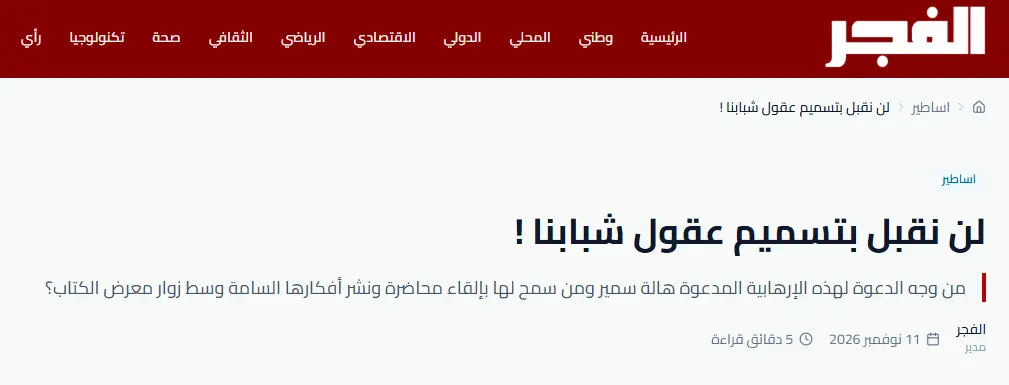
On 11 November, the Algerian newspaper "Al-Fajr" published an article titled "We will not accept the poisoning of our youth's minds!", which described the Egyptian preacher as "terrorist" and considered her presence a threat to the minds of Algerian youth.
Here we must pause at length.
Since when has terrorism become a label a writer applies to anyone who differs with him in religious or political outlook? Where is the evidence of involvement in violence or incitement to it?
Describing a person as a terrorist is not merely a sharp opinion; it is a grave accusation in a country like Algeria, one that can bring judicial consequences, and it is not justified by ideological outbursts.
Even more surprising, the Book Fair's organising authority issued a statement clarifying that Hala Samir had not been invited to participate in the official cultural programme, and that her presence was within the framework of an incidental foreign representation for selling and displaying books.
This clarification confirms the scale of the "intellectual terrorism" practised by the vagrants of secularism in Algeria, but it does not make her presence a crime, nor does it turn others' disagreement with her discourse into a justification for defaming her.
We are faced with a striking paradox: those who raise the banner of freedom of expression may be intolerant of a woman who expresses her Islamic convictions, and those who demand pluralism may be unable to bear a religious opinion that contradicts their view of the world!
Where is enlightenment in silencing the dissenter instead of engaging him in dialogue? Where is rationality in replacing evidence with stigma and intimidation?
A freedom that embraces every idea except the Islamic one is not an equitable freedom, but a selective one that hides behind a deceptive slogan.
Wide Windows for Every Idea—Except the Call to Islam?
Among the paradoxes that deserve reflection in some Algerian cultural and media circles is that names known for criticising religion, or for adopting sharply secular intellectual positions, find those who celebrate their output and demand their right to visibility and expression, while an Islamic sermon turns into an occasion for intimidation and the distribution of accusations.
Boualem Sansal, who has made statements sharply critical of Islam, received the highest French cultural honours. Kamel Daoud, whose works and positions have provoked debates about Islam and Algerian identity, enjoyed wide literary acclaim after winning the Goncourt Prize. Rachid Boudjedra, who stirred controversy with his remarks about atheism before retracting them, remained a figure recognised for his literary standing in Algerian cultural institutions.
Let us reflect on the double standard when it appears among those who celebrate freedom of expression while exempting Islamic discourse from it.
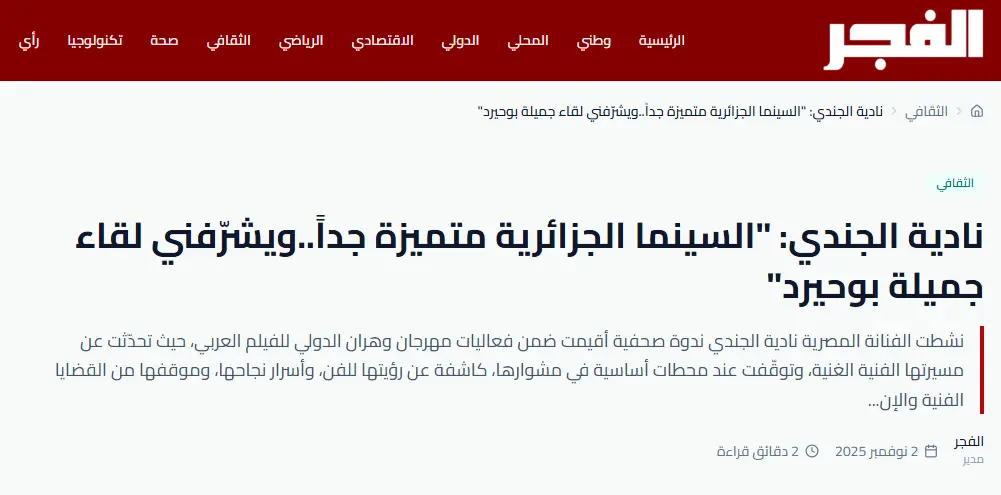
Perhaps the most eloquent scene is what the Algerian newspaper "Al-Fajr" published: it covered the participation of an Egyptian artist in a film festival in ordinary cultural language, yet in another article it described the Egyptian preacher Hala Samir as "terrorist" merely for religious and moral positions the newspaper criticised, without presenting any evidence of terrorism.
Here is the question that must not be evaded: why is disagreement with religion received as thought, culture and creativity, while the discourse calling for commitment to it meets suspicion and intimidation, and even frenzied accusation and exclusion?
"Muslim Brotherhood," "ISIS": A Ready-Made Classification for Silencing Dissenters
It is striking how easily the labels "Muslim Brotherhood" or "ISIS" are attached to every preacher who criticises secularism or opposes feminist propositions, as if defending the hijab, chastity and family values, or calling for adherence to the Qur'an and Sunna, could not come from a Muslim committed to his religion, but must conceal an organisational affiliation or a hidden political agenda! Thus "Ikhwani" and "Daeshi" have, for some opponents, shifted from describing membership in a specific group into a ready-made charge, pulled out whenever they fail to confront an idea with argument. This method appeared in the attack on the Egyptian preacher Hala Samir, when her religious discourse was tied to political affiliations without any clear evidence of membership in a particular organisation.
Will we be prevented from reading and publishing the Qur'an and Sunna? Or will we be charged with "Ikhwani" and "terrorism"?
Is this a call to apostasy?!
And since when has criticising secularism become proof of membership in the Muslim Brotherhood or of terrorism? Has the call to Islam's well-known rulings become the monopoly of a group, so that anyone who makes that call is attributed to it?
This method neither debates ideas nor refutes them; it seeks to tarnish their proponents' reputations with prior labels and frighten the public away from them instead of engaging them. This is bankruptcy!
The Algeria Known for Its Icons: Ibn Badis and al-Ibrahimi
Perhaps these people need to return briefly to their country's history—not only the history that began after independence, but to an Algeria that struggled to remain Algerian and Muslim despite attempts at Frenchification and uprooting.
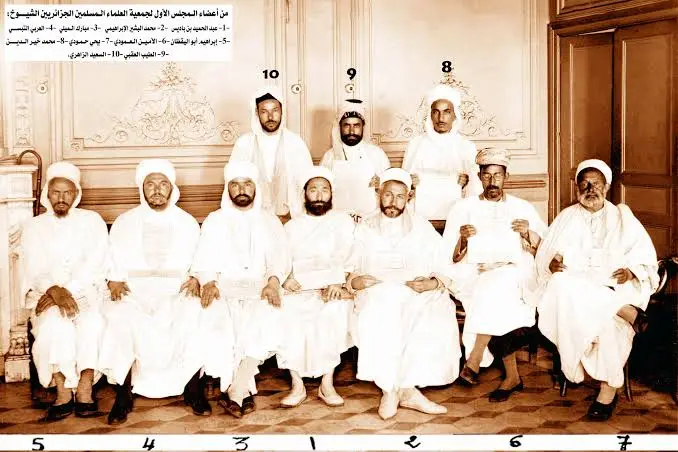
When Abd al-Hamid Ibn Badis and his companions founded the Association of Algerian Muslim Scholars in 1931, their project was not merely teaching the rulings of prayer and fasting, great as that is, but a project to revive a Muslim nation that had been subjected to a long military and cultural conquest.
Ibn Badis and al-Bashir al-Ibrahimi understood that a nation stripped of its religion, language and history becomes more vulnerable to losing its character and its independence of decision.
Hence Arabic schools, Qur'an teaching, reformist journalism, the fight against ignorance and superstition, and the cultivation of awareness were integral parts of the project of resistance to occupation.
For these scholars, teaching the Qur'an was not a peripheral activity, and Arabic was not merely a means of communication; both were among the most important means of preserving the Algerian character.
Ibn Badis spoke truly when he said:
"The people of Algeria are Muslim and belong to Arabism."
Today we face a scene worth comparing: in the past, the occupation administration constricted the teaching of Arabic and Islam, and today some of the sons of Algeria who carry the legacy of the occupation—the heirs of the "Movement"—attack initiatives to teach prayer and religious and moral preaching, viewing them as a threat to the future of society!
This does not mean that every secularist is a loyal heir of the French occupation, but it is undoubtedly another extension of the occupation's thought, which waged war on and was hostile to Islam; nor does intellectual disagreement amount to treason against the homeland, but when it wars against the religion of that homeland, it is certainly crude betrayal.
There remains a legitimate question about the persistence of traces of the occupation's cultural project in the attitudes of sections of the elite toward their language, their society's religion and its history.
The problem is not that an Algerian learns French, or opens up to the world's cultures and takes what benefits him from them and leaves what harms him, or that he disagrees about political views; rather, it is when he internalises contempt and hostility toward the foundations of his people, sees backwardness in manifestations of religiosity merely because they are Islamic, and seeks progress in imitating the West even at the expense of his civilisational identity.
The Algeria that produced Ibn Badis did not demand that its sons be closed-minded, but that they be aware; the project of its scholars was not to keep them captive to the past, but to build their future without losing themselves.
Arabic Feels Foreign to Some Who Speak in Algeria's Name
A painful paradox is that some of the cultural discourse opposed to an Islamic reference is led by people whose connection to the Arab-Islamic heritage seems so weak as to be laughable, yet they speak with absolute confidence about religion, its history and its place in society.
Mastery of Arabic is not a prerequisite for debate, and one should not belittle an Algerian who speaks Amazigh, French or other languages; Algeria is multilingual and multi-experiential, and this fact does not conflict with its Islamic identity.
What is strange, however, is that someone may be ignorant of a broad part of his country's religious and intellectual history, yet appoint himself a judge of its heritage and hand out certificates of progress and backwardness to people according to their closeness to or distance from religion.
Secularism in Algeria has turned from a politically debatable outlook into a sense of cultural superiority over ordinary Muslims, losing in the process whatever claim to rationality it made.
Not everyone who uses French terms a lot is cultured, and not everyone attached to the mosque is ignorant, just as religiosity alone does not make its bearer a scholar or right.
The standard is knowledge, argument, character and fairness, not French or Western inclinations, nor a social image disowning the history and civilisation of a Muslim people, nor hollow religious displays devoid of sincerity!
Anyone following the responses of secularists, with their brazenness, impudence and dullness when attacking everything Islamic and their attempts to demonise every good deed, virtue and sincere counsel for the sake of God, will always see the "pretext" on which they hang their hostility to Islam. As soon as Algerians celebrate an Islamic or noble moral manifestation, the trumpets of secular savagery bare their fangs and terrorise people with the memory of the "Black Decade"—a malicious exploitation of the historical event that Algeria endured and bled from for so long!
The Black Decade: A History That Must Not Be Turned into a Scarecrow

Whenever debate arises about the Islamic presence in Algeria, some speakers return to the 1990s, led by notoriously infamous media channels known for hypocrisy, distortion and hostility to Islam, as if the country's history stopped at that tragedy, and as if merely calling to prayer or adhering to the Qur'an were an inevitable prelude to a return of bloodshed.
There is no doubt that the "Black Decade" was one of the most grievous tragedies contemporary Algeria has known. Tens of thousands were killed, civilians suffered massacres, kidnapping, torture and enforced disappearance, and the events left deep wounds in Algerian society.
But invoking this tragedy should be a gateway to understanding history, not a means of closing the debate.
So what actually happened?
The decisive political crisis began after the cancellation of the electoral process in early 1992, following the advance of the Islamic Salvation Front in the first round of the legislative elections. Algeria then entered a spiral of armed violence, security repression, liquidations, massacres and social breakdown.
The Islamic Salvation Front was not a marginal current isolated from Algerian society. The ballot box on 26 December 1991 revealed a broad electoral base, as it won more than 3.26 million votes and 188 seats out of the 232 decided in the first round, well ahead of the National Liberation Front and the Socialist Forces Front. The way was open for it to obtain a parliamentary majority, before the electoral process was cancelled and Algeria entered a period of turmoil and violence that lasted for years.
This victory was preceded by the Islamic Salvation Front's triumph in the local elections of June 1990, which confirms that its popularity was not the product of the December 1991 elections alone.
These historical figures show that the Islamic current had a strong presence in the Algerian street, and that its broad social base should not be reduced to the image of the armed groups that committed crimes during the Black Decade.
Armed groups committed horrific crimes against civilians, in the name of Islam, from which Islam is innocent. But on the other side, international human rights organisations documented grave violations committed by security agencies and state-aligned militias, including torture, extrajudicial killings and the enforced disappearance of thousands of people.
Most importantly, the file of the Black Decade has not been settled historically and judicially in all its aspects. The cancellation of the electoral process after the Islamic Salvation Front's wide victory, and the arrests and prosecutions that followed, affecting Islamist leaders and supporters of the current, were among the most prominent factors that fuelled the political crisis and pushed the country into a spiral of violence.
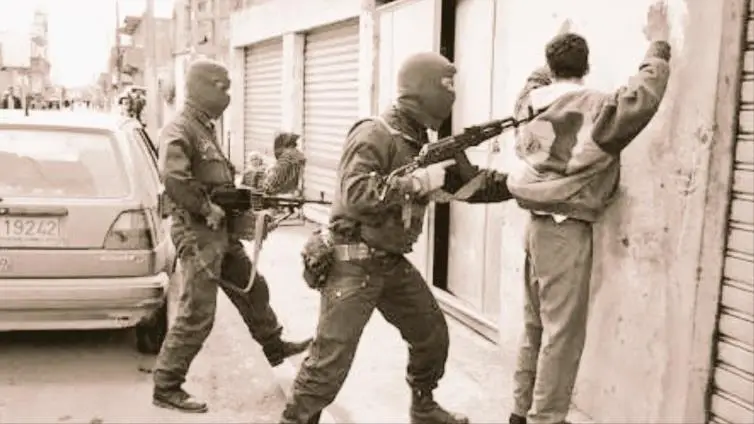
This raises serious questions about the responsibility of the Algerian authorities and their security apparatus for the worsening of the crisis, and about the extent to which their repressive policies closed the doors of peaceful political participation and created the conditions in which violence erupted and spread. These questions gain further weight in light of the grave violations documented by human rights organisations, and of accusations concerning the roles of some security bodies during that period that remain without an independent and conclusive investigation.
Amnesty International published a report in 2006 addressing accusations contained in testimonies from former officers regarding the infiltration of Algerian intelligence services into some armed groups and their manipulation. The organisation noted that these accusations had not been subjected to sufficient independent investigation, despite a former military figure acknowledging that security infiltrations had occurred in the context of military operations.
Human Rights Watch also noted serious questions about the failure of security forces to prevent some massacres, and about suspicions of collusion or gross negligence surrounding some attacks.
These events were accompanied by multiple testimonies – some of which were presented in the French media – asserting that intelligence services were involved in orchestrating massacres against the Algerian people in order to demonise the Islamic model and to terrorise people and deter them from it. Even if this does not exonerate everyone implicated in the massacres from among the groups accused, it reveals that reducing the years of bloodshed to a single closed narrative is a dangerous oversimplification of a history of extreme complexity.
The victims were Algerians; among them were religious and non-religious people, men, women and children. Their tragedy did not belong to any political current that monopolises its interpretation or wields it as a weapon against its opponents.
It is unjust that their blood should become a means of frightening new generations away from the mosque and the Quran.
The one who teaches a child the dawn prayer is not responsible for the crimes of a deviant and infiltrated armed group, as the brutal Algerian secularist seeks to entrench every time commitment, uprightness and purity are mentioned!
Had the Islamic Salvation Front been allowed to continue on its peaceful political path, and to assume its responsibilities according to the results of the ballot boxes, much of the tragedy that followed the cancellation of the elections could have been avoided. Power was not an eternal mandate but an electoral term limited to five years, after which the decision returns to the people to hold accountable and choose anew, in accordance with Algerian law, under which the Front engaged while respecting its mechanisms of governance, although it faced legitimate criticism.
However, closing the political path, excluding an Islamic current that enjoyed the support of millions of Algerians, and the arrests, prosecutions and repression that followed, contributed to pushing the country towards a bloody confrontation in which the circle of violence and counter-violence widened, violations and accusations multiplied, responsibilities became blurred and narratives became entangled, and aspects of that dark period remained without independent and conclusive judicial disclosure.
Here lies the painful paradox: Algerians were deprived of testing a political experience that could have ended at the ballot boxes, only to find themselves facing years of bloodshed and tragedy, the victims of which were not the ones who took the decision to cancel the electoral process.
It cannot be asserted with certainty that the continuation of elections would have prevented all violence, but it is certain that their cancellation closed a fundamental door to peaceful competition and raised heavy historical questions about the responsibility of decision-makers for the path the country took thereafter.
Was it truly secularists behind it, who did not want Algeria to appear with its Islamic face in the leadership chosen by an Algerian majority that wants Islam?! Does not the frequent invocation of the Black Decade to demonise everything Islamic raise this entirely legitimate question!
Are not the secularists who wage war on Islam the ones who brought Algeria to where it is, by aborting the Islamic experience and preventing it from proving its sincerity early on, without any just cause?
The true lesson of the Black Decade is the rejection of injustice, tyranny, torture, enforced disappearance, methods of demonisation, conspiracy and deviations, and every practice that led to crimes which shame the forehead and which the great Islam does not permit.
The Media and the Manufacture of Fear of Islam
The problem is not limited to some angry or hostile posts; it relates to a media pattern that makes religiosity ready material for sensationalism, and that summons images of terrorism whenever it needs to frame an Islamic phenomenon as alarming.
In this selective treatment, a religious sermon may be turned into a threat, an educational initiative into a project to instil extremism, and a call to moral commitment into a danger to freedoms.
Meanwhile, the presence of cultural and social figures who call for liberation from religious and moral constraints is sometimes presented as a sign of openness, progress or modernity. The Algerian arena still records – with complete brazenness – how the licentious, apostates and atheists are glorified from secularist platforms, without the slightest objection or sensitivity! Despite the rejection of noble Algerians!
Here the contradiction emerges that calls for scrutiny.
Why is a discourse calling for the hijab, chastity and family commitment treated as a project of domination, while a discourse calling for liberation from these values is received as a normal exercise of freedom?
Why is a woman's right to choose her way of life sacred when she chooses religiosity and advocates it, yet when she makes that choice she becomes the object of intimidation and suspicion?
Is this not a secularism that contradicts its own slogans and turns savage against everything Islamic? Is secularism not, in its essence, a war against Islam and, at its core, a means of opposing Islam?! This is what the reactions and conduct of secularists document each time! Practice in reality documents the nature of the approach more than any theorising!
As for media coverage that invokes the Black Decade on every religious occasion, its duty is to separate news from interpretation, and the peaceful call from violence, and not to reduce millions of Muslims to the image of extremist groups.
The most dangerous form of disinformation is not always the fabrication of a story, but placing a correct story within a frame that leads the reader to believe something the facts do not indicate.
Do They Want Algeria to Be Ashamed of Its Islam?
Algeria is not a country without memory, such that its identity may be rewritten according to the whims of those in dispute on social media.
It is a nation that emerged from a long experience of occupation, in which it resisted attempts to erase its national character, and in which Islam was one of the most important elements of its cultural and social steadfastness.
Its sons have the right to disagree about their political views and the nature of public policies. But no one has the right to make disagreement a gateway to belittling the Islamic religion embraced by most of society, or to demonising those who call to it.
If some voices consider treating the Quran as a reference for Muslims to be a threat to Algeria's future and a source of terrorism in the lives of Algerians, then such a slanderer should be summoned to prosecution and trial.
To say that the Algerian constitution is more important, more deserving and greater than the Quran is an act of disbelief, and the hateful secularist must learn that with this statement he represents only himself, not the Muslim people of Algeria, who take pride in the Quran and know it to be the Book of God, the Majestic, which no book rivals and whose status it never surpasses.
It is no secret that the Algerian constitution itself stipulates in its second article that Islam is the religion of the state, and in its third article it affirms the status of Arabic as the national and official language, alongside its recognition of Amazigh as a national and official language.
So how does the mere presence of an Islamic reference in public life become a shocking surprise in a country whose constitution provides for this? Is this not explicit opposition to, and a war by the Algerian secularist against, his own country's constitution?!
What is required of every current that wishes to take part in public debate is to respect the people it addresses, and not to treat their faith and history as remnants to be concealed until it deserves to enter the age. Otherwise they are enemies and traitors who must be held to account and entirely excluded from the leadership and media positions of Algeria.
Not Everyone Who Raises the Banner of Enlightenment Is Enlightened
We do not oppose people merely for disagreeing on an idea or policy. But we oppose a specific discourse that makes religion a permanent suspect, the religious person a presumed suspect, the history of occupation a mirror by which to measure the value of one's culture, and the Black Decade a weapon to silence opponents, terrorise Muslims, persecute the rites of Islam and forms of commitment in the country.
We oppose a discourse that demands tolerance and then does not tolerate, raises the banner of pluralism and then cannot bear the different, calls for rationality and then easily accuses people of terrorism in a vicious tongue unashamed to declare its hostility to Islam.
When this discourse reaches such a degree of contradiction, it does not defend society's freedom, but the freedom of one particular current to impose its perceptions on others.
A society that wants to build a sound future does not need to hunt down the religious, nor to open platforms to secularists to spread their poisons and hatreds dripping with malice and falsehood. It needs a public space that protects rights, prevents incitement, allows debate, and safeguards Islamic identity without turning it into a pretext for injustice or exclusion.
Algeria Endures with Its Islam – Not with Fear of It or Abandonment of It!
The French occupation succeeded for a long time in occupying the land, but it did not succeed in tearing Islam out of the conscience of the Algerian people.
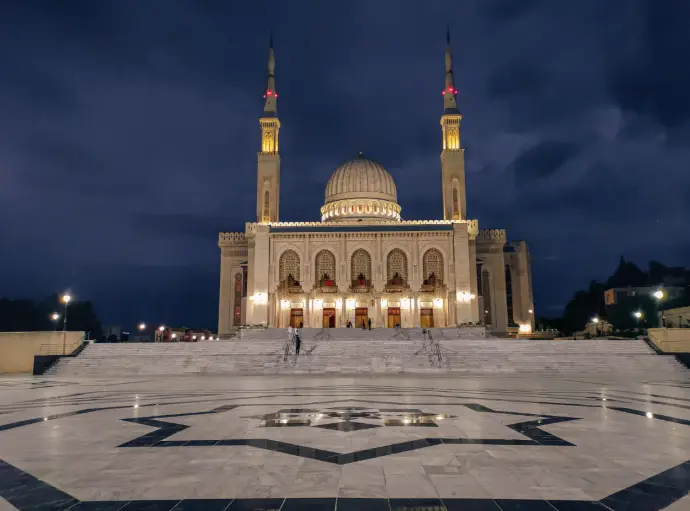
Mosques, schools, zawiyas, and assemblies of knowledge and Quran remained platforms for preserving religion, language and identity, despite the variation in their roles and positions across different stages.
It is regrettable that some debate today returns to questions the Algerians had answered through long sacrifices: Who are we? What is our language? What is our religion? What is the place of the Quran in our lives?
The answer requires neither shouting nor accusations of treachery, but the confidence of a nation in its history and its right to live its faith.
The Algeria that Ibn Badis taught that knowledge, faith and renaissance are complementary dimensions for building the human being must not become a place where a child praying the dawn prayer is an object of suspicion, nor a woman calling to virtue an object of accusations of terrorism.
It is no fault for Algerians to disagree about politics, thought and methods of upbringing, but the fault lies in turning disagreement into a war on the manifestations of religion, or into contempt for the roots of a Muslim society.
Let the children of Algeria learn the Quran and prayer as they learn sciences and languages, let them grow with conscious minds and hearts attached to God, and let them have a share of their country's history that protects them from ignorance and alienation.
Let platforms open their doors to serious debate that respects the religion of Islam, instead of distributing accusations, and let people's dignity be protected from incitement and defamation merely for speaking of Islamic values.
As for those who see in Algeria nothing but a past to be erased, and in its people's religiosity nothing but a danger to be contained, let them know that the identity which withstood more than a century of occupation does not vanish with an angry article or a campaign on social media.
Algeria will remain a land of Islam; mosques will remain part of its life, and the Quran will remain present in the conscience of its people. What is required is not that the Algerian be ashamed of his religion in order to satisfy anyone, but that he take pride in it with the pride of a confident scholar, and translate it into knowledge, character, mercy and justice.
How much Algeria today needs sons who combine the steadfastness of Ibn Badis, the eloquence of al-Ibrahimi, awareness of history and the courage of truth, instead of turning a child's prayer or a woman's sermon into a battle over the country's future!
Hence we address a sincere appeal to those zealous for Algeria's religion, history and civilisation, and faithful to the sacrifices of its scholars and martyrs: to remain steadfast on the frontiers of da'wa, education and reform, to continue their mission of teaching the generations the Quran and Sunnah, planting faith and pride in Islamic identity in the hearts of the young, and not to be intimidated by campaigns of distortion and fear, nor by the clamour of voices seeking to portray religiosity as alien to Algerian society.
The history and identity of Algeria should not be left hostage to voices that revive the French occupation's view of the people's religion, language and civilisation, as if Algeria had only been liberated to remain culturally and intellectually subordinate to those who occupied it yesterday!
Algeria is not an extension of France, nor a distorted copy of its identity; it is the proud Muslim Algeria, the Algeria of Ibn Badis, al-Ibrahimi and the Association of Muslim Scholars, and the Algeria of the martyrs who gave their lives for its freedom and dignity. Fidelity to those sacrifices does not lie in slogans alone, but in preserving what this people stood firm for, and building generations that take pride in their religion, know their history, and refuse to be uprooted in the name of progress, modernity and sinful secularism.
The Algerian imam Muhammad al-Bashir al-Ibrahimi spoke truly when he said yesterday: "Colonialism in its entirety is an abomination of Satan's work."
And I say today: Occupation does not end with the departure of its armies, as long as its intellectual residues and cultural extensions remain in minds and souls, glorifying subordination, belittling religion, and alienating the nation from its language, history and civilisation. Occupation and its residues and extensions are all an abomination from the legacy of occupation, so avoid them, and do not allow those who have left the land of Algeria to remain occupying the minds and consciences of its children!
And to the ruffians of secularism I say: Islam will remain honoured, exalted and supported, while secularism and its savagery will go to the dustbin of history!


