

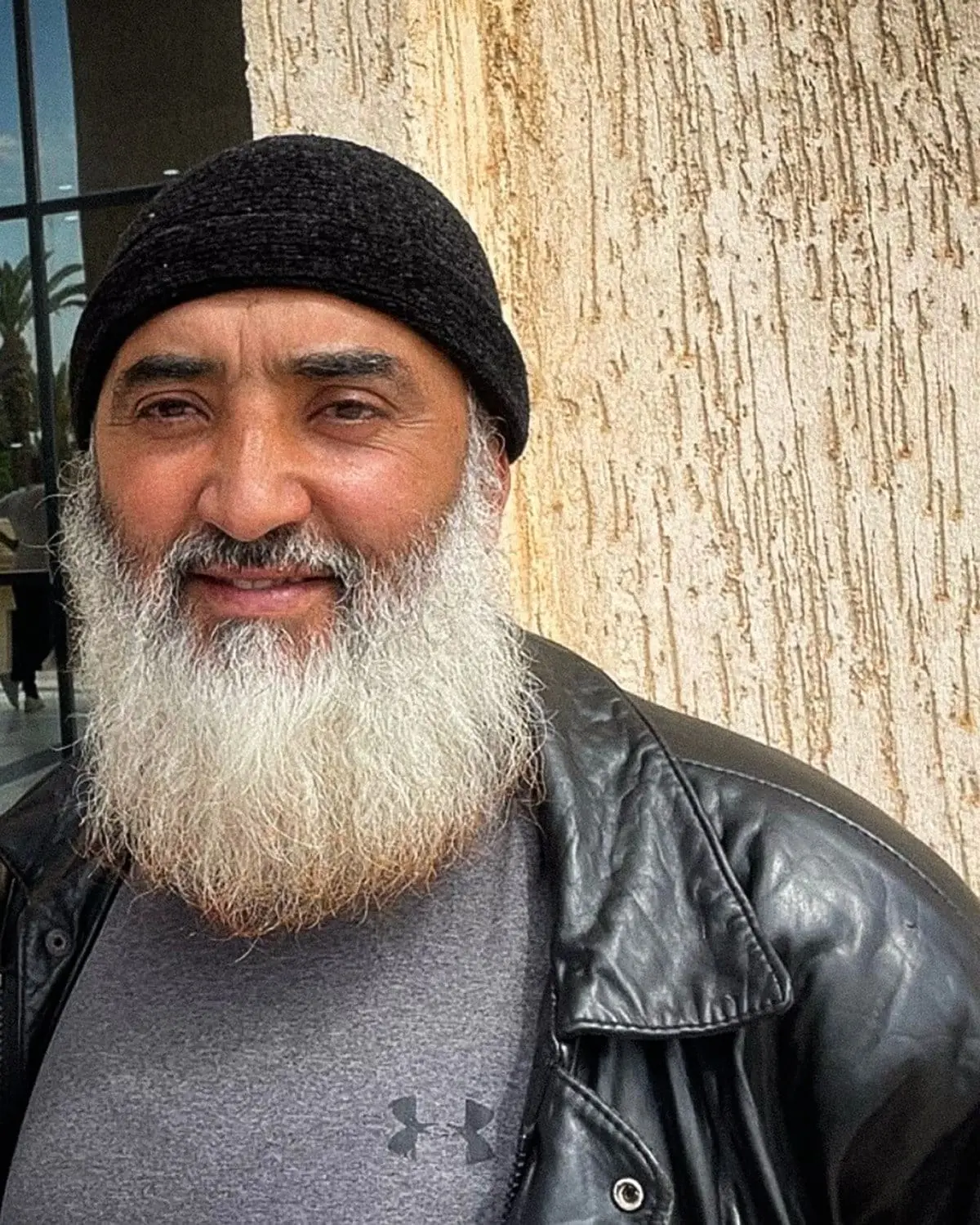
After the United States promised to ensure his safety, a former Guantanamo detainee is serving a new prison term in Algeria
An Algerian court sentenced Said Bakhoush, a former Guantanamo detainee, to three years in prison on charges related to "terrorism," his lawyers told The Intercept.
The verdict, issued on 5 Dhu al-Qadah 1445 AH (13 May 2024), came despite earlier assurances from the US State Department that Said would be treated "properly" and "humanely" after being returned to his homeland following his release from Guantanamo.
Said's American lawyer, Candace Gorman, said that Said had been tortured by the United States and that his health deteriorated gradually over 20 years of arbitrary detention until his release in Ramadan/Shawwal 1444 AH (April 2023).
Algerian Returnees from Guantanamo Met with Detention on Home Soil
When Said arrived in Algeria, he was immediately detained by Algeria's internal security forces, a routine procedure for Algerian detainees returning from Guantanamo.
Candace said Said was in a state of weakness, after his mental condition had deteriorated in recent years.
Candace had warned of the possibility that Said would suffer post-traumatic stress disorder and depression before he was returned to Algeria.
Nevertheless, Said was held incommunicado and subjected to intensive interrogation without the presence of a lawyer.
Sofiane Chouitar, a lawyer based in Canada and head of the "Justitia Center for Legal Protection of Human Rights in Algeria," which provides legal support to Said, said: "Said was interrogated daily over a period of 12 days - after having suffered psychological trauma over decades - and received no assistance from a lawyer, and was under severe pressure while being threatened by the investigators."
Chouitar obtained a copy of the interrogation conducted by Algerian intelligence, which shows that Bakhoush, during the meeting, began to agree to all the charges against him.
Chouitar told The Intercept that Bakhoush answered all questions with "certainly, yes."
The text of the interrogation does not include what Said told Sofiane about the first part of it, when the detainee denied the accusations relating to his ties with al-Qaeda and its late leader Osama bin Laden.
Chouitar said that in Rabi' al-Awwal 1445 AH (early October), Said retracted the testimony he had given in the investigation and denied the charges against him.
Said also retracted his initial confessions again during his most recent trial, in the presence of the judge.
"لقد هددوني"
Sofiane, in his account of his conversations with Said, said that Said had expressed regret for giving in to the panic under whose pressure he confirmed the investigators' allegations.
Said, according to Sofiane, said: "They threatened me."
"After I said I had no connection to al-Qaeda, they told me they would send me to worse people to get information from me."
It is worth noting that Algerian officials have acknowledged that they did not allow Said to contact a lawyer or contact his family until the thirteenth day of his detention.
The US State Department's "Nonsense"
With the possible end of the Biden administration in the coming six months, the time available for State Department diplomats to deal with the legal chaos resulting from an era of rampant arbitrary detention in the United States and torture carried out by the CIA has nearly run out.
Thirty detainees remain in the Guantanamo Bay detention facility; 16 of them have been approved for release and are awaiting an agreement on their resettlement before they are actually freed.
Meanwhile, the trial of the men accused of planning the 11 September attacks has not yet begun.
Former Guantanamo detainees scattered around the world suffer from the stigma attached to them as "terrorists."
In Dhu al-Hijjah 1444 AH (July 2023), The Intercept published a report containing details of sharply worded correspondence between Candace, Said's lawyer, and members of the State Department's Guantanamo affairs office, in which she tried to protect her client from the fate of being detained again.
In one of her letters she wrote: "I fear that my client will become homeless - or worse - imprisoned."
When Said was not released after the initial period of interrogation in Algeria and found himself in a form of pre-trial detention, Candace became angry at what she described as the State Department's "nonsensical" reassurances.
"They were not informed that Said had been sent to prison after being interrogated for 12 days."
She told The Intercept: "There was no one at the State Department monitoring or caring about anything."
"Later, they started claiming to me that once Said was released, they no longer had any control over it."
Candace said: "The truth is that these men's options are not good."
"Most of them have been treated as outcasts, whether in their homelands or elsewhere, because of [negative] US propaganda."


