

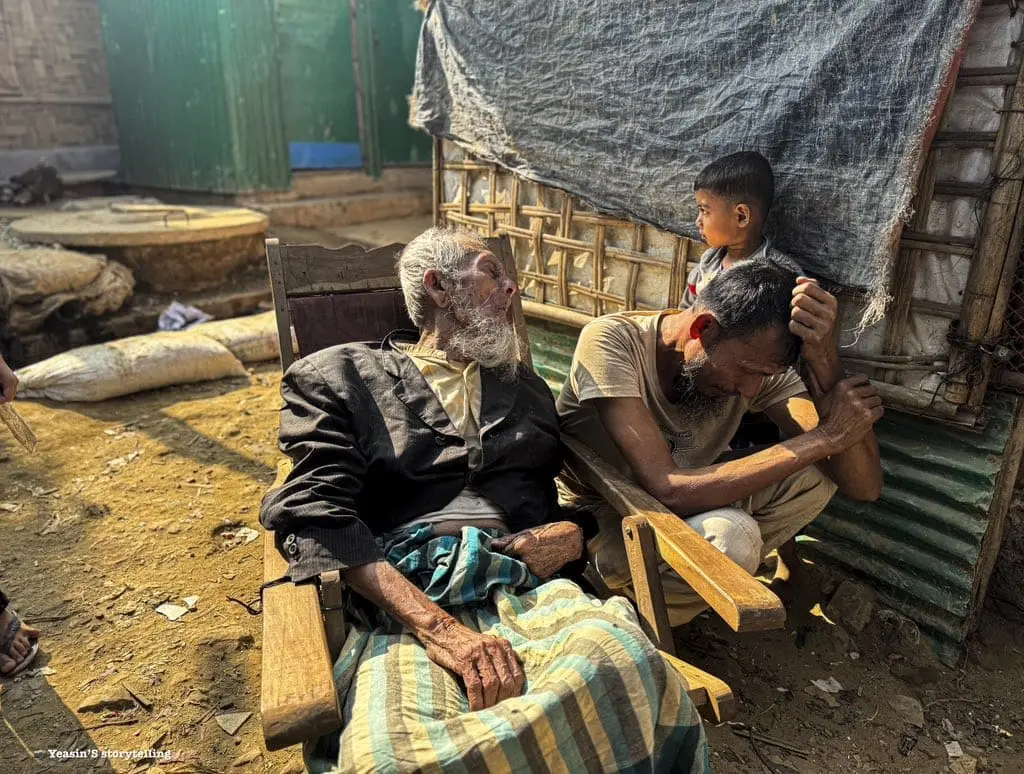
Abu Sayed, one of the residents of the Balukhali Rohingya refugee camp, hails from the village of Maruk Taung in northern Maungdaw, Rakhine State. He is about 110 years old. He currently lives in the largest Rohingya refugee camp in the world, and has suffered from chronic diabetes and paralysis for more than two years.
The majority of Rohingya refugees in the camps suffer from chronic diseases as a result of limited access to good healthcare, in addition to the psychological illnesses caused by the negative effects of the food system in the camps.
Contrary to what his son recalls, Abu Sayed did not need any medication to treat fever or other illnesses while he was in Burma. As he grew older, illnesses began to strike him severely.
Abu Sayed is considered a living witness to Rohingya history, having lived through major events in Burma before and after independence. He traveled across various parts of the country and witnessed numerous conflicts, such as the Japanese and British wars within Burma.
After the end of the conflicts between the Japanese and the British in 1364 AH (1945 CE), Abu Sayed married at the age of 25. Like other Rohingya elders, he is a witness to Rohingya history in Burma, but he is gradually becoming part of the "lost generation" as a result of the increasing marginalisation suffered by the Muslim minority in their homeland.
After Burma gained its independence in 1367 AH (1948 CE), all citizens, including the Rohingya Muslims, celebrated the occasion together. Today, however, Rohingya history has been erased, their language has disappeared, and their citizenship documents have been confiscated, leaving them stateless and ultimately forcing them to leave their country.


