


Yusuf ibn Tashfin died on the first of Muharram in the year 500 AH, corresponding approximately to 2 September 1106 CE, at an age that most historical accounts put at nearly one hundred years. After a career rich in lessons and examples in leadership, state-building and civilisation, we attempt below to recall some of its conclusions, in the hope that they may be beneficial.
The Fruits of Exceptional Leadership
The greatness of leaders lies not only in the skill they show in securing victory on the battlefield, but in the states they build that outlive them and keep victory in future battles within reach. Many have won on the field of battle, but few have succeeded in turning that victory into a political system, a civilisational unity, and a state capable of endurance.
Among these few stands the name of the Almoravid amir Yusuf ibn Tashfin, who left one of the greatest political experiences in Islamic history.
Many people associate the name of Yusuf ibn Tashfin with the Battle of Zallaqa, and that victory almost sums up his entire biography, although Zallaqa was only the fruit of a tree he had planted decades earlier: the tree called the Almoravid state.
Yusuf ibn Tashfin emerged from a poor desert environment, belonging to the Lamtuna tribe of the Sanhaja, at a time when the Maghreb was living through wide political fragmentation, with its principalities and tribes in conflict. Yet the Almoravid school, founded by Shaykh Abdallah ibn Yasin, did not produce mere fighters but men of state, who combined creed and discipline, knowledge and politics, asceticism and administration.
When his cousin Abu Bakr ibn Umar entrusted him with the leadership of the state, he did not treat power as spoils, but as a project requiring long patience.
He began first by unifying the interior before thinking of expansion.
He subjected the scattered tribes to the authority of a single state, secured the Saharan trade routes, and linked the far Maghreb with the lands of the Sahara, until the Almoravid state extended from the banks of the Senegal River in the south to the Mediterranean in the north, and from the Atlantic Ocean in the west to the borders of Algeria in the east.
He then founded the city of Marrakesh, which was not merely a new capital but a political, military and administrative centre for a rising state that within a few years became the greatest Islamic power in the Islamic West.
Here his first leadership genius becomes evident.
Outstanding leaders do not busy themselves with harvesting fruit before planting roots; rather, they consolidate the foundations of their projects first, so that the structure rests on firm ground and then bears the strength that protects its aims and ensures its continuity.
Ibn Tashfin knew that a state that possesses neither a strong political centre, nor an organised army, nor a unified administration, will be unable to carry a message or protect its borders. For this reason, military construction preceded civilisational construction, and unity at home preceded confrontation abroad.
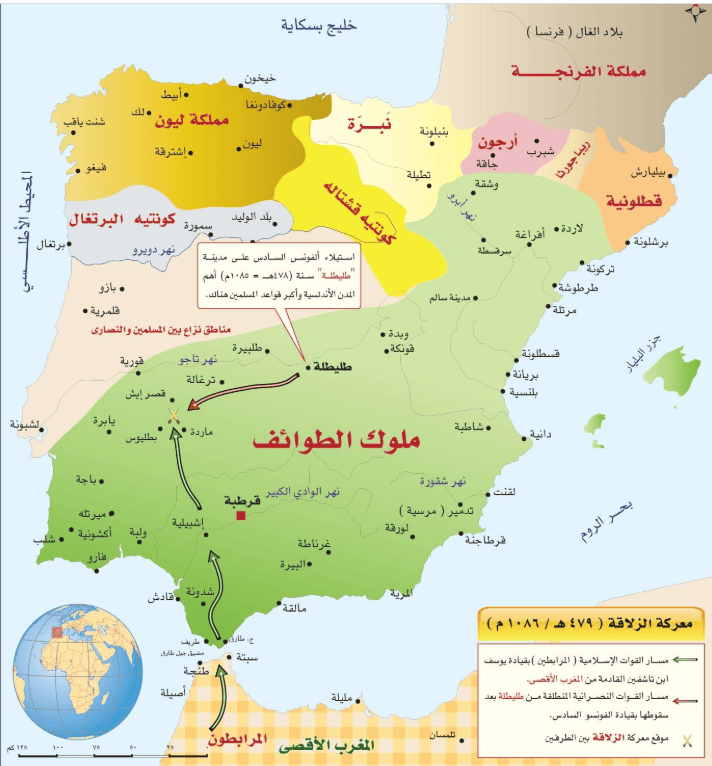
When the people of al-Andalus appealed to him after the fall of Toledo, he was not a shaykh leading a group of volunteers, but a seasoned commander leading a state with its institutions fully formed.
This is the secret that is absent from many readings of history.
Zallaqa was not won by a brave man alone; a state won it.
Yusuf ibn Tashfin crossed the sea when he was seventy years old, yet he carried with him something more consequential than swords: he carried discipline, unity of command, and a unifying creed, the elements that were missing among the party kings (muluk al-tawaif).
The victory at Zallaqa in 479 AH (1086 CE) changed the balance of power in the Iberian Peninsula, halted the Castilian advance, and postponed the fall of al-Andalus by nearly four centuries.
But his political insight became even clearer after the battle ended.
He discovered that the real danger was not Alfonso VI, but internal division.
The party kings had grown accustomed to paying tribute to the Christians and seeking their help against one another, until their thrones became dearer to them than the survival of Islam in al-Andalus.
When Yusuf ibn Tashfin saw that these princes were renewing contacts with their enemies after Zallaqa, he did not content himself with sermons or reproach, but took the decision that only statesmen take: he consulted the senior scholars of the Maghreb and al-Andalus, then ended the rule of the party kings and unified al-Andalus under the authority of the Almoravid state.
He understood that a nation is protected not by military victory alone, but by political unity.
Hence his greatest achievement was not the defeat of Alfonso, but the ending of the fragmentation that was draining the Muslims.
Perhaps the most important lesson the experience of Yusuf ibn Tashfin offers to the reality of Muslims today is that great projects are not built through reactions, but through building people, uniting ranks, establishing institutions, and linking military strength to a clear political project.
He demonstrated that strong armies are not made on the battlefield, but first within the framework of leadership and state-building.
And that civilisations do not collapse merely because of the strength of their enemies, but because of the weakness of their internal structure.
For this reason the name of Yusuf ibn Tashfin has remained present in the memory of history, not only because he won a great battle, but because he built a state that was able to produce that battle and to protect its outcomes for long decades. In this he follows the example of the Prophet, peace be upon him, who established the first Islamic state in Medina and formed its unique army, which protected its message and defended both it and the freedom to spread it, until its light reached across the Arabian Peninsula and extended to the ends of the earth.
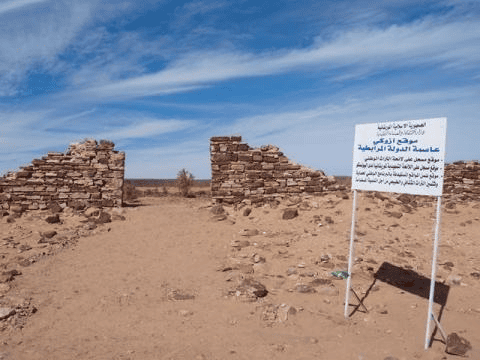
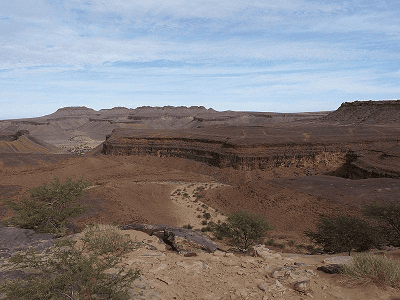
On the slopes of the Adrar mountain range, 8 kilometres north of the city of Atar and 450 km north of Nouakchott, lie the ruins of the city of Awdaghust, the first capital of the Almoravid state, from which the vanguard of its armies set out from the desert of Mauritania.
Nations do not always need heroes who achieve passing victories so much as they need men who build states that make victory continuous and preserve its gains for a long time.
Perhaps this is the true legacy that Yusuf ibn Tashfin left to later generations: that building a solid state is the greatest form of jihad, and that military victory does not endure long unless it is protected by a just, unified and firmly rooted state, one that has been instructed by the lessons of history and the lives of its outstanding leaders.


