


Yemen: Saudi-backed forces gather on Yemeni border as separatists face pressure to withdraw
Some 20,000 Saudi-backed troops are gathering on the Yemeni border, while the separatist Southern Transitional Council (STC) faces pressure to withdraw from the major territorial gains it made over the past month in the vast, oil-rich Hadramawt governorate in eastern Yemen.
The STC is exploiting its recent advance to press its demand for a return to a two-state system, north and south, as it was before 1990.
The council, which is backed by the United Arab Emirates, has been warned of the possibility of direct Saudi airstrikes, a development that could threaten important STC positions. Well-paid forces, consisting primarily of a Saudi-funded militia known as the "National Shield", are assembling in the Wadiah and Al-Abr areas near the Saudi border.
The STC has received assurances that it still enjoys Emirati support, which raises the likelihood of future clashes between forces loyal to Saudi Arabia or the UAE.
UN Secretary-General Antonio Guterres warned that a resumption of large-scale fighting in Yemen could have repercussions across the Red Sea, the Gulf of Aden and the Horn of Africa. He urged all parties in Yemen, including external actors, that "unilateral actions will not pave the way to peace, but will deepen divisions, increase the risk of wider escalation and cause further fragmentation".
He added on Wednesday: "Yemen's sovereignty and territorial integrity must be preserved," noting that nearly five million Yemenis have been displaced from their homes as a result of the long civil war between the Houthis in the north and southern forces, which are now undergoing severe fragmentation.
During talks in the southern stronghold of Aden last Friday, the STC said it would not comply with a Saudi demand to withdraw its forces, which first entered Hadramawt two weeks ago before moving to the neighbouring governorate of Al-Mahra, on the border with Oman. It has also consolidated its grip by sending forces to a third governorate, Abyan.
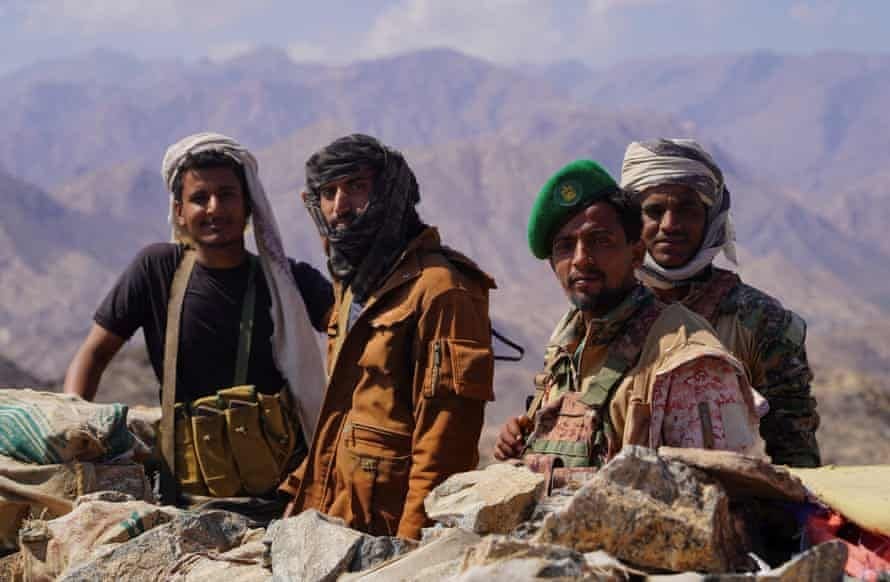
The STC's sudden and unexpected advance has surprised Riyadh, which was previously the dominant player in Yemen. The United Kingdom and most of the international community prefer to keep Yemen as a single state, but this requires the Houthis, who control the north, to reach a power-sharing agreement with the south within a federal government. The STC proposes that an independent south would serve as a bulwark against extremism, protecting Red Sea shipping lanes from threats posed by the Houthis and al-Qaeda. The council's difficulty is that not all southern groups want Yemen to be divided, but it will have to attempt to form a cohesive government.
Fares Al-Muslimi, a researcher in the Middle East Programme at the Chatham House think tank, said: "Saudi Arabia has so far tried to exercise strategic patience, but I don't think that will continue. This does not necessarily mean it will enter into a direct war with the UAE in Yemen. But Yemen is a poor country with a large number of young fighters and militias belonging to different parties. Both sides are putting all their cards on the table.
"Although much of what has happened is not surprising to Yemen watchers, the scene is very exhausting and humiliating for Saudi Arabia, because it is happening on its border, not on the UAE's border."
The leadership of the Islah Party, the largest political party in Yemen and opposed to the secession of the south, told The Guardian that it believes calls within Hadramawt for the STC to withdraw may soon become furious and cannot be ignored.
During a visit to London, Islah's acting Secretary-General, Abdulrazzaq Al-Hajri, said: "We hope this matter can be resolved peacefully, but what has happened in Hadramawt represents a dangerous development and negatively affects the institutions of the legitimate state. Irregular forces outside state control have invaded stable and secure governorates and thrown everything into chaos." He added that Hadramawt has a long history of independence, and that all the major political and tribal leaders in the governorate want the STC to leave.
Al-Hajri pointed to widespread reports of human rights abuses by the council, including property theft and mass arrests, adding: "Saudi Arabia is determined that these forces leave and return to their places, as the legitimate government is disintegrating, and the only beneficiary of these escalating divisions will be the Houthis."
Al-Hajri said the Houthis "do not see Yemenis as a people, but see them as a group of slaves whose masters they are."
Islah affirmed that it is a civil party with no connection to the Muslim Brotherhood, contrary to what the UAE claims. Since 2022, the STC has shared power tensely within a presidential council organised by the Saudis, alongside a range of other parties, including Islah.


