


Military escalation in Yemen has entered a new phase as confrontations widen between Yemeni government forces, backed by Saudi Arabia, and the Houthis, backed by Iran, on the fronts of Taiz, Lahj, Marib and al-Jawf. At the same time, Houthi missile and drone attacks on Saudi Arabia continue, and the areas surrounding the Bab al-Mandab Strait have become one of the most important battlegrounds.
In recent hours, government forces announced new ground gains on the border between Taiz and Lahj and the targeting of Houthi positions and vehicles in Kahbous, Marib and al-Jawf. Saudi Arabia said it intercepted new Houthi attacks heading toward Khamis Mushait and Riyadh, two days after intercepting six ballistic missiles that were headed for Taif and Yanbu.
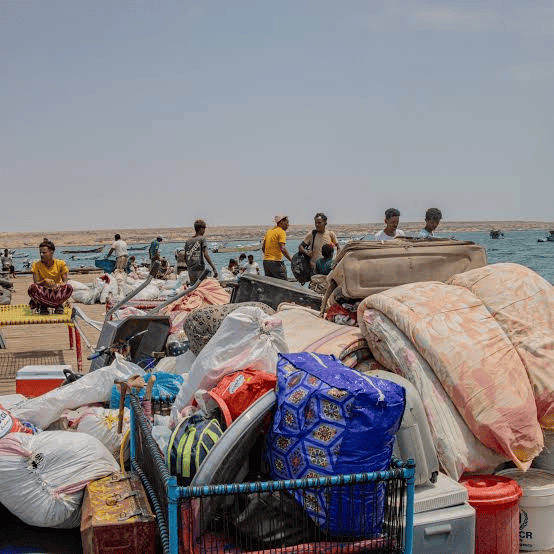
The escalation comes amid a rapidly worsening humanitarian crisis that has driven more than 100,000 people from their homes within weeks. The United Nations has warned of attacks on displacement camps and health facilities, and of civilian deaths, including children.
Government Advance Between Taiz and Lahj
Yemeni government forces backed by Saudi Arabia announced, on Friday, 25 September 2026 (14 Rabi al-Akhir 1448 AH), new ground gains in the highlands between the governorates of Taiz and Lahj after fighting with the Houthis, who are backed by Iran.
The "Homeland Shield" forces said that, with support from the Giants Brigades and tribal fighters, they had taken control of the summit of Jabal Numan and Tallat Dar al-Kafir, overlooking the Al-Waziyah district of Taiz governorate and the Al-Mudaribah and Ras al-Ara districts of Lahj governorate.
The area is of particular importance because of its proximity to the Kahbous front and the heights overlooking the routes leading to the Bab al-Mandab Strait, one of the world's most important maritime passages.
According to the government forces, a drone struck a Houthi vehicle on the Kahbous front, which, in their account, killed a battalion commander and an aide. Artillery also targeted Houthi gatherings in the area. No independent confirmation of the death toll has been issued.
These movements follow the broad gains the Houthis made on the western coast during the current escalation, which shifted the fighting to the highlands surrounding Bab al-Mandab and southwestern Taiz.
The Battle of Kahbous: A Struggle Over Heights Overlooking Bab al-Mandab
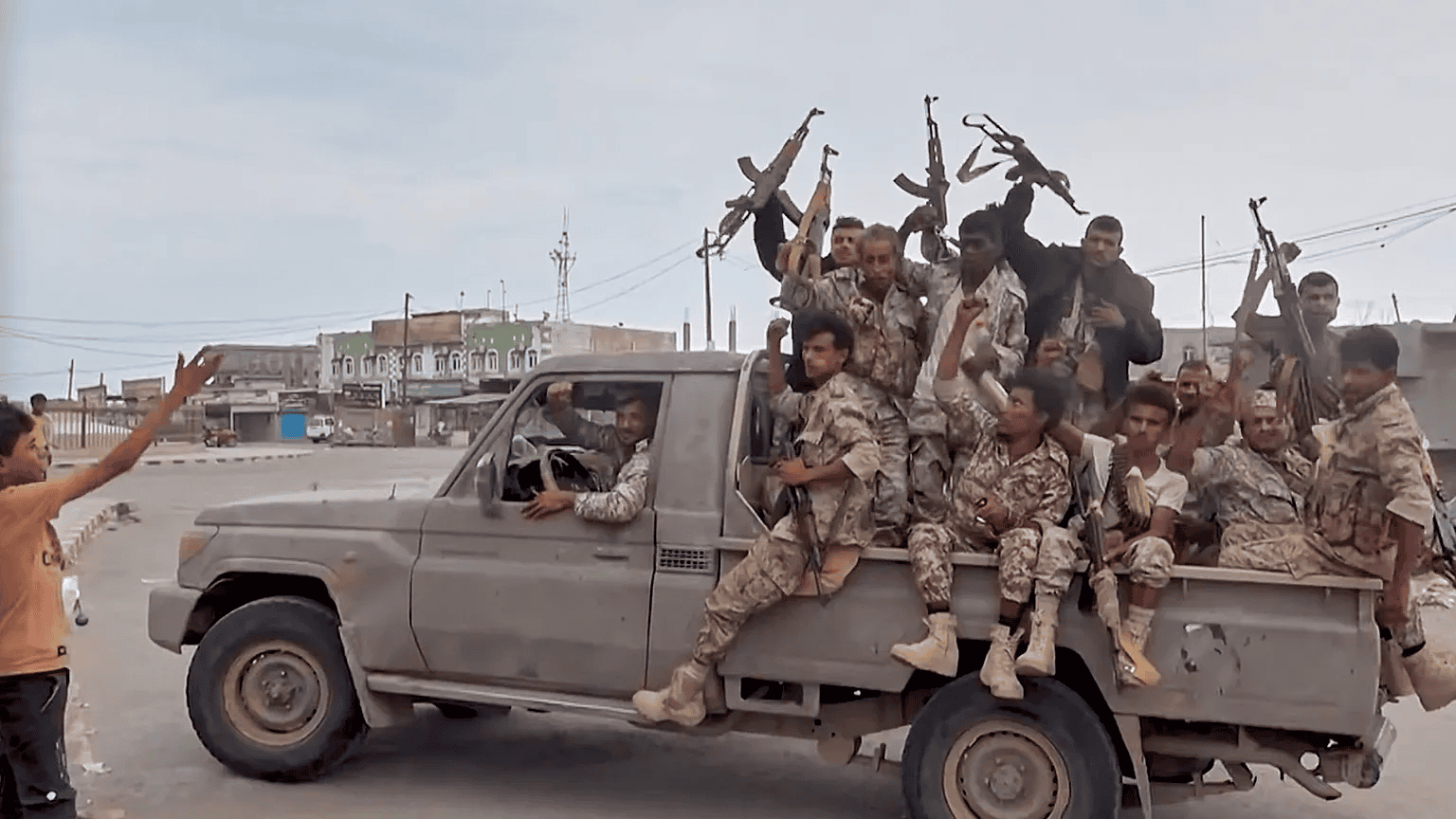
The Kahbous mountains remain one of the most sensitive fronts, as government forces seek to prevent the Houthis from consolidating their positions in highlands that would give whoever controls them the ability to oversee wide areas around the strait.
On Saturday, 26 September (15 Rabi al-Akhir), government forces published footage they said shows the targeting of a Houthi engineering team while it was attempting to plant explosive devices at a position on the Kahbous front.
There is no independent verification of the filming conditions or of the losses resulting from the operation, so the information remains attributed to the government forces.
Earlier, the Houthis attempted to advance toward roads linking Taiz with Aden, while government forces said they repelled night attacks targeting areas near the Hayjat al-Abd road, one of the most important arteries running from Taiz toward the southern governorates.
The battle on this axis now extends beyond control of the heights themselves, as securing supply routes to Taiz, Lahj and Aden is tied to it, in addition to the proximity to Bab al-Mandab.
Marib and al-Jawf: Drones Enter the Frontlines in Force
Military operations also extended to Marib and al-Jawf.
On Friday evening, government forces published footage they said shows a drone strike on a Houthi military vehicle on the Marib front, without announcing any casualty figures.
Government forces also announced a drone strike against Houthi vehicles and movements north of al-Jawf governorate.
These developments add to the clashes on the Marib fronts in recent weeks, particularly in al-Mushajjah, al-Kasarah and the surroundings of al-Zor, at a time when the Houthis are seeking to pressure several axes simultaneously alongside the fighting on the coast, in Taiz and in Lahj.
No reliable indicators have yet emerged of a broad change in control lines in Marib or al-Jawf in the past few hours, so announced strikes should be distinguished from confirmed new ground advances.
Houthi Attacks on Saudi Arabia Continue
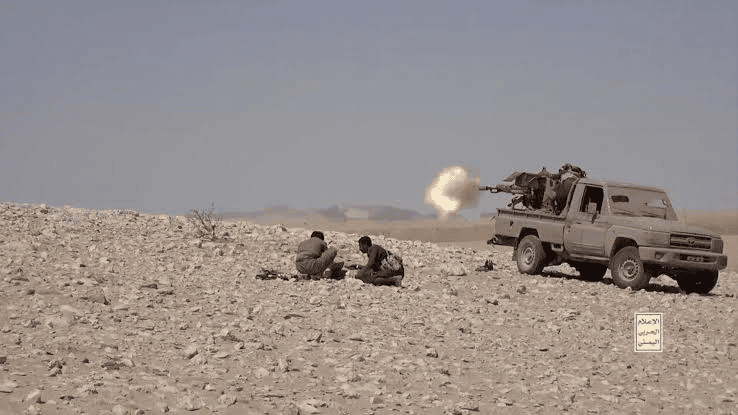
Alongside the fighting inside Yemen, Houthi attacks on Saudi territory have continued.
The Saudi-led coalition said on Saturday, 26 September, that air defences had intercepted a ballistic missile launched by the Houthis toward Khamis Mushait, in addition to two drones heading toward Riyadh.
These attacks follow a larger wave on Thursday, when the coalition announced the interception of six ballistic missiles launched by the Houthis toward Taif and the Yanbu area on the Red Sea coast.
Warning sirens had sounded in several Saudi areas, including Mecca, Taif, Tabuk, Yanbu and Jeddah, before the danger was declared over.
In response, the Houthis' military spokesman Yahya Saree said the group had carried out operations targeting what he described as a "sensitive target" in Riyadh and Aramco facilities in Yanbu, using ballistic and cruise missiles and drones, and claimed the operations had achieved their objectives.
Saudi Arabia did not confirm any hit on a target in Riyadh, while it did confirm the interception of the missiles heading toward Taif and Yanbu. The Houthi account of hitting targets therefore cannot be treated as an established fact.
The Houthis also said that Saudi Arabia had carried out 14 air raids and missile strikes in four Yemeni governorates on Friday. This figure comes from the group, and it has not been possible to independently verify all the locations or outcomes.
Alimi Calls for "General Mobilisation" and Offers Amnesty to Defectors from the Houthis
Politically, the head of the Presidential Leadership Council, Rashad al-Alimi, on Friday called on Yemenis to "general and national mobilisation", to rally around the armed forces and security services, and to join their ranks through official channels.
In a speech marking the 64th anniversary of the 26 September Revolution, al-Alimi said the government's goal is to restore state institutions and impose its sovereignty over all Yemeni territory, including Sanaa.
In a step aimed at encouraging defections from the Houthis, al-Alimi announced that those who leave the group may benefit from a general amnesty, to be issued in accordance with constitutional and legal procedures.
The call carries particular significance because it follows the losses suffered by government forces on the western coast and the Houthi advance that redrew the lines of confrontation and brought fighting close to Bab al-Mandab.
Saudi, Turkish and Pakistani Military Moves
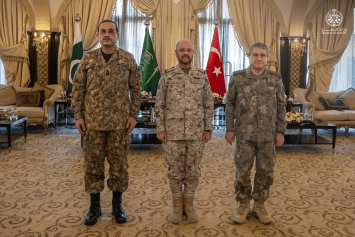
The escalation coincided with a high-level military meeting in Riyadh on Friday, attended by the chiefs of staff of the armed forces of Saudi Arabia, Turkey and Pakistan, within the framework of the Mecca Mutual Defence Agreement.
The Saudi Ministry of Defence said the meeting addressed the security threats facing the Kingdom and the strengthening of military and intelligence cooperation and the integration of capabilities in deterrence and collective defence.
Saudi Defence Minister Prince Khalid bin Salman also met the commander of the Pakistani army. He said the two sides discussed the attacks targeting the Kingdom and its civilian and economic facilities, and agreed to continue joint work to confront them in accordance with the Mecca Agreement.
The meeting comes as Houthi attacks on Saudi Arabia have intensified and as the Yemeni escalation has shifted from an internal confrontation into a security crisis with broader regional dimensions.
Some 80 Countries Warn Over Houthi Movements Near Bab al-Mandab
Internationally, around 80 countries warned against the Houthi escalation and the group's movements toward Bab al-Mandab, stating that continued operations in the area threaten maritime security, trade and international navigation.
The UN Security Council also condemned Houthi attacks and threats targeting commercial shipping in the Red Sea and Bab al-Mandab, and called for an end to the escalation and to attacks on civilians and civilian facilities.
These warnings gain added weight as fighting moves into mountains and areas close to the strait, through which extensive international trade passes between the Red Sea, the Gulf of Aden and the Indian Ocean.
UN: Camps and Health Facilities Have Been Attacked
As the fighting spreads, civilians are bearing growing losses.
UN High Commissioner for Human Rights Volker Türk said his office had documented three Houthi attacks on internally displaced persons' sites since August.
UN agencies also said displacement camps and health centres had been attacked during the current wave of violence, warning of a rising number of civilian victims, including children.
The current escalation is one of the most dangerous shifts in the Yemeni war since the truce that began in 2022, which for years reduced the intensity of fighting on many fronts.
Differing Displacement Figures: Over 180,000 According to the Government
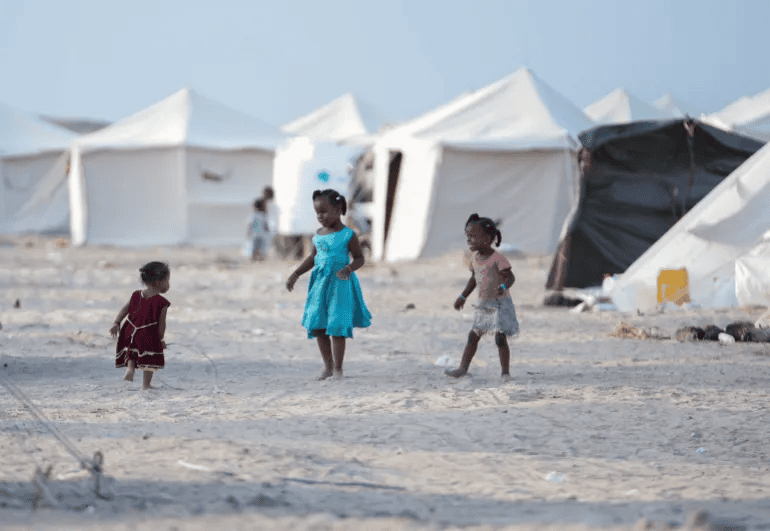
Displacement data reveal the scale of the rapidly unfolding crisis, although the figures vary depending on the source and the period each count covers.
In its report issued on 22 September, the UN High Commissioner for Refugees estimated that some 128,000 people have been newly displaced since fighting escalated in September, in addition to some 5.2 million displaced people already inside Yemen.
More recent reports have put the figure above 130,000.
For its part, the Executive Unit for Managing Displacement Camps, affiliated with the Yemeni government, said the total number of people affected who were forcibly displaced by the escalation had reached 27,413 families comprising 180,513 people across ten governorates.
According to the government report, Taiz received the largest number, with 13,409 families comprising 93,917 people, followed by Lahj with 5,782 families, then Aden with 3,741 families, and Abyan with 2,157 families, while Hodeidah recorded the displacement of 1,471 families, in addition to hundreds of families in Marib, al-Dhale, al-Mahra, Hadramawt and Shabwa.
There is not necessarily a direct contradiction between the government figure and the UN estimate, given differences in methodology and monitoring period; each figure should therefore be attributed to its source and not merged into a single total.
Warning of More Than 230,000 Displaced
The most serious concern is that the crisis may still be in its early stages.
The UN High Commissioner for Refugees has warned that continued escalation could raise the number of new displacements inside Yemen to more than 230,000 people.
The agency is also preparing for the possibility of more than ten thousand people reaching Djibouti across the Red Sea if fighting continues, after thousands of Yemenis had already begun crossing the sea to flee the fighting.
Displaced people face shortages of shelter, food, water and health services, while the humanitarian response was already suffering from a large funding gap.
Britain announced an allocation of £10 million for the emergency humanitarian response in Yemen, covering food, healthcare, nutrition and vaccinations for displaced and affected people.
Taiz Under Growing Military and Humanitarian Pressure
Taiz remains at the centre of current developments, as several axes intersect there: fighting in the west and southwest, the attempt to secure the road to Aden, Houthi pressure coming from the coast, and the large-scale displacement of residents.
Government data indicate that the governorate hosts more than half of the displaced people registered during the current escalation.
Health facilities are also under mounting strain, with rising numbers of wounded, shortages of fuel and medicines, and disrupted supply routes in some areas.
The battle in Taiz is therefore no longer merely a confrontation along local lines of contact; it is directly linked to the struggle over the corridors between the western coast, Bab al-Mandab, Lahj and Aden.
From the Western Coast to Bab al-Mandab: The Map of the War Is Changing
Developments over recent weeks show that the current round of fighting differs from the limited clashes that marked the Yemeni fronts after the 2022 truce.
The Iran-backed Houthis have made broad gains on the western coast, while the Saudi-backed Yemeni government forces are trying to consolidate new defence lines and regain the initiative in the highlands stretching between Taiz and Lahj.
Kahbous, al-Waziyah, al-Mudaribah, Ras al-Ara and the Taiz–Aden road have become central points in this confrontation, alongside continued pressure in Marib and al-Jawf.
On the other side, the Houthis have extended the confrontation across the border with repeated missile and drone attacks on Saudi Arabia, prompting Riyadh to strengthen its defences and intensify military coordination with its allies.
While the control map is no longer as stable as it was a few weeks ago, civilians remain the most affected party: tens of thousands are leaving their homes, displacement camps and health facilities are falling within the circle of attacks, and the United Nations warns that continued fighting could push hundreds of thousands into new displacement and open a larger wave of crossings over the Red Sea.
With fighting continuing near Bab al-Mandab, the Yemeni escalation no longer threatens only Yemen's interior and Saudi Arabia; it is directly tied to the security of one of the world's most important international maritime passages. The coming days will be decisive in determining whether these clashes remain a broad round of escalation or develop into a full return to open war.


